

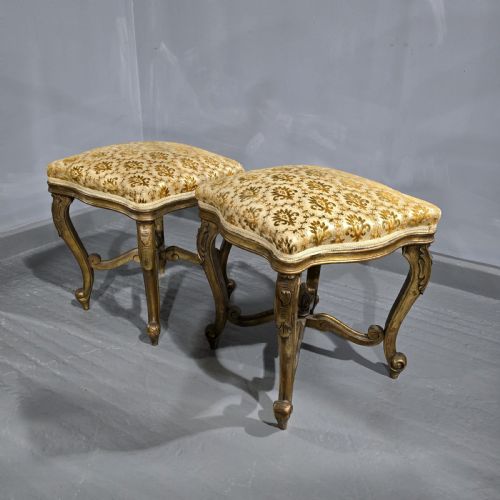
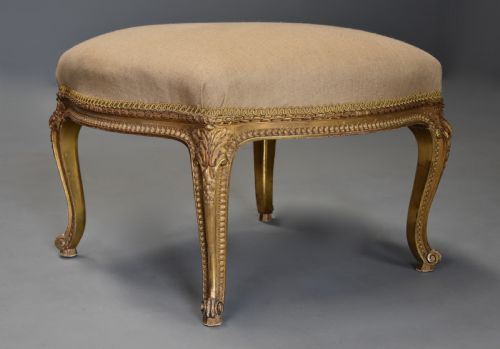


Gold Carved Stool
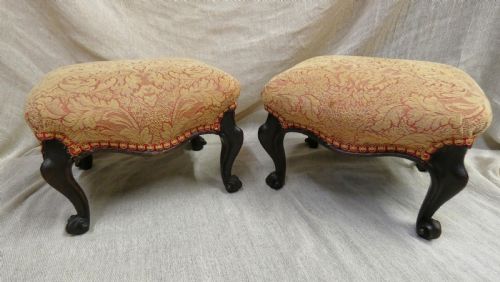
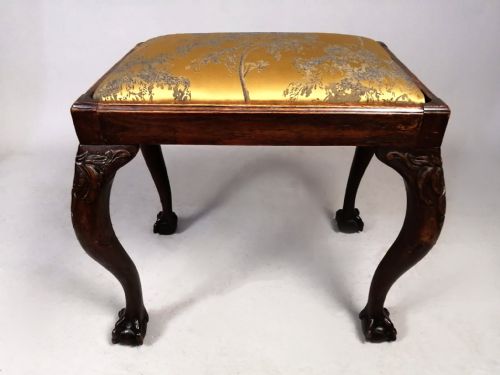
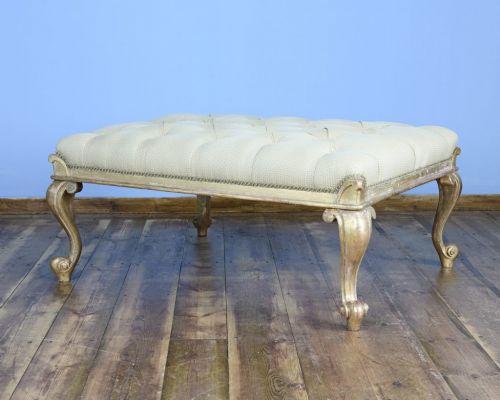
A gold carved stool brings warmth and rich texture to an interior, joining gilded woodwork with traditional upholstery.
Gold Carved Stool
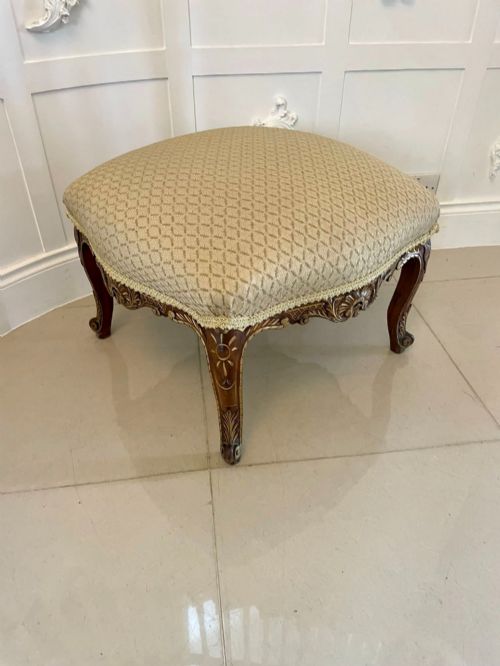
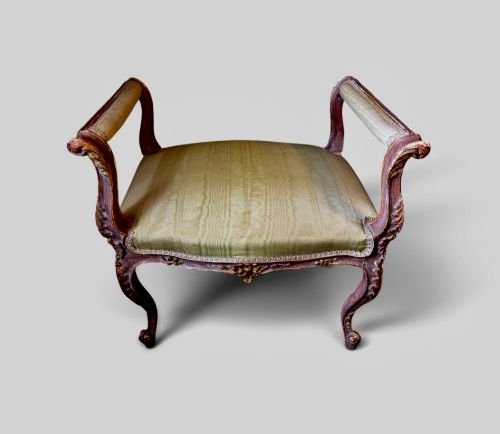
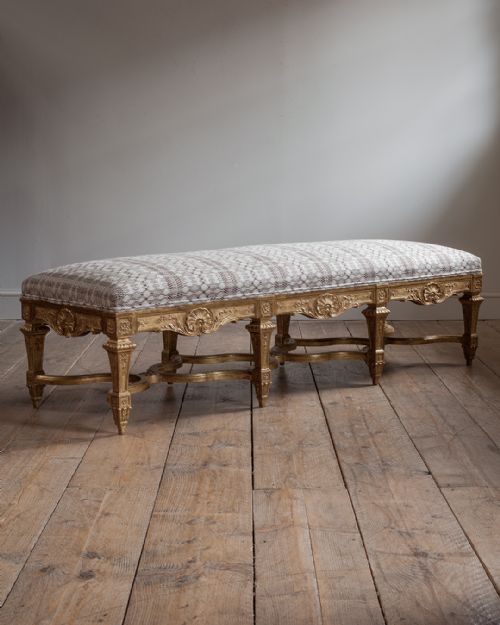
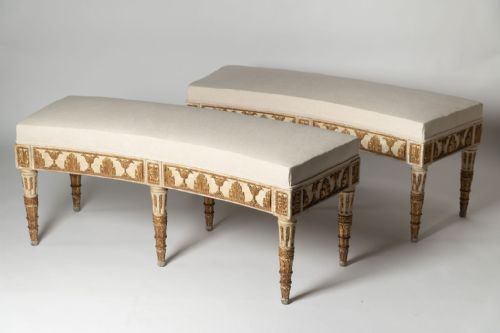
A gold carved stool encompasses various seating forms designed for parlours, dressing rooms, and drawing rooms, ranging from compact footstools to expansive window seats. The search phrase covers pieces originating predominantly from the nineteenth century, including Victorian creations and revivalist interpretations.
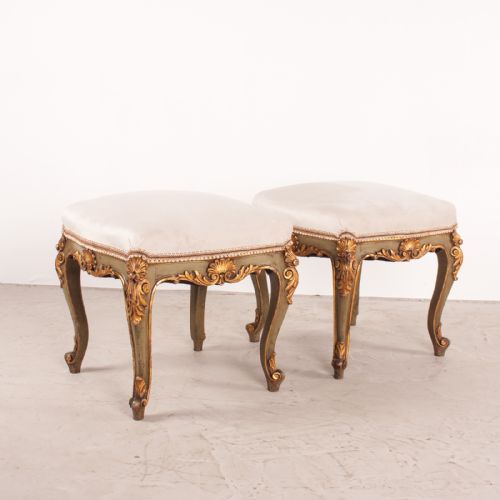
Buyers frequently encounter French and Italian examples displaying Louis style influences, alongside British Victorian walnut and mahogany framing. These objects serve both functional resting purposes and decorative roles within period room schemes.
Materials and construction methods
Craftsmen built the structural frames using hardwoods such as walnut, mahogany, and elm, carving intricate ornamentation directly into the timber before applying surface decoration. Giltwood, parcel gilt finishes, and gesso provide the characteristic metallic lustre seen across these seating forms.
Traditional upholstery techniques complete the construction, utilising supportive webbing and padding beneath textile coverings. Silk, velvet, and patterned fabrics are secured to the frames, frequently finished with buttoning or decorative trim.
Some nineteenth-century examples incorporated rocking mechanisms into gout stools, providing restless feet with gentle motion alongside gilded luxury.
Assessing quality in carved and gilded seating
The refinement of the timber carving distinguishes exceptional examples from standard production, with deep, crisp relief work indicating skilled hand labour. The application of gold leaf or gilding layers also dictates overall visual success, showing durability and depth rather than flat, uniform paint.
Structural integrity of the joints and the quality of the underlying frame construction affect the longevity of the piece. Upholstery execution, from the tension of the springs to the choice of covering fabric, reflects the original tier of the commission.
LOIDRAULT FRERES PARIS·A.M.E. Fournier
The Gold Carved Stool Glossary
- Giltwood
- Timber that has been coated with gold leaf or powder over a prepared gesso ground. This finish provides a luminous surface that catches ambient light in a room.
- Curule stool
- An ancient Roman shape of seating featuring X-shaped legs curving outward. Nineteenth-century revival makers adapted this form with gilded frames.
- Parcel gilt
- A decoration method where only specific carved details or raised ornaments are gilded while the remaining timber surface shows its natural grain or paint.
- Gesso
- A plaster mixture applied to wood frames to create a smooth, sealed surface for subsequent gilding. It allows carvers to achieve sharp definition in ornamental motifs.
- Window seat
- An elongated stool or low bench sized specifically to fit within a window recess. These forms often feature upholstered tops and carved wooden frames.
Gold Carved Stool: Frequently Asked Questions
Where should I place a gilt stool?
These pieces suit placement at the foot of a bed, beneath a window, or beside a fireplace where their gilded surfaces reflect light.
Their compact proportions also allow them to sit neatly beneath dressing tables or function as movable extra seating in living spaces.
How do I care for antique gilding?
Gilt surfaces require gentle dusting with a dry, soft cloth to prevent abrasion of the delicate metallic leaf. Moisture and harsh cleaning chemicals must be avoided entirely to preserve the original gesso and gold layers.
Direct sunlight can also affect the finish over extended periods, making careful placement within a room essential.
What is the difference between Victorian and Louis style stools?
Victorian versions often feature robust walnut or mahogany frames with buttoned upholstery, reflecting mid-nineteenth-century British tastes for comfort and heavy ornamentation.
Louis style pieces emulate eighteenth-century French royal aesthetics, displaying lighter neoclassical lines, delicate floral carvings, and bright giltwood finishes.
Can these stools be used for daily seating?
Stools with sound frame construction and stable joints support regular sitting, though delicate antique upholstery may benefit from gentle use.
Footstools and ottoman variants are primarily engineered for resting feet rather than bearing full sitting weight, so checking the frame is advisable.