


Italian Carved Stool
An italian carved stool brings instant architectural weight to a room, offering centuries of hand-chiselled walnut and giltwood craftsmanship.
Italian Carved Stool
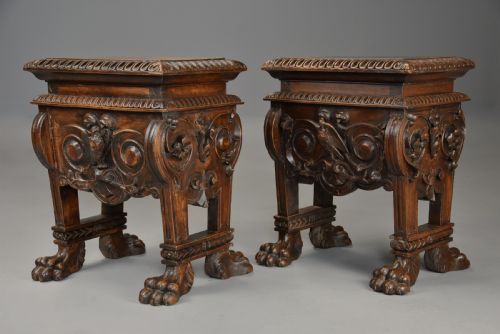
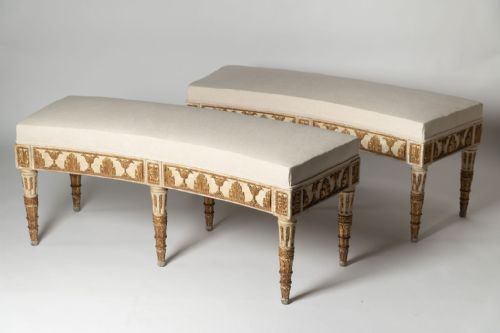
When you search for an italian carved stool, you encounter seating forms ranging from robust walnut X-framed benches to gilded neo-classical curule models and revolving grotto pieces. The majority of pieces on this page date from the nineteenth century, though eighteenth-century examples also appear alongside window seats and sgabello chairs.
These items originate primarily from Italian workshops spanning multiple revivals, including Renaissance and Rococo styles. Buyers find both single statement pieces and matched pairs intended originally for grand salons and halls.
Materials and construction
Makers shaped these seats primarily from solid walnut and mahogany, applying deep relief carving directly into the timber. Giltwood and gesso finishes provide opulent reflective surfaces on neo-classical and revival forms.
Upholstery techniques involve traditional textiles such as linen, leather, and needlework fixed to frames, whilst structural integrity relies on sturdy joinery like the X-frame configuration.
Several grotto revolving music stools wait patiently to spin you back into Victorian parlor daydreams.
Judging quality and character
The distinction between ordinary and exceptional work lies in the depth and crispness of the hand-carving. Master carvers executed foliage, figures, and architectural motifs with sharp undercut details that lesser hands left shallow and blunt.
Material selection also dictates standing, with dense figured walnut and heavy gessoed giltwood commanding greater presence than plain painted softwoods. Original upholstery or period needlework further elevates a piece above later replacements.
The Italian Carved Stool Glossary
- Gesso
- A plaster-like mixture applied to wood surfaces to provide a smooth base for gilding or painting. It accepts intricate low-relief ornamentation before being covered in gold leaf.
- Curule stool
- An ancient Roman magistrate seat shape featuring intersecting curved legs forming an X. Nineteenth-century Italian makers revived this ancient form in giltwood and walnut.
- Sgabello
- A light wooden chair or stool featuring a high back and solid trestle supports rather than four legs. They typically display flat carved decoration popular during the Renaissance.
- X-framed stool
- A seating form constructed with crossed diagonal supports beneath the seat. This ancient design allows for robust weight distribution while offering ornamental flair.
- Giltwood
- Timber coated with thin layers of gold leaf over a prepared ground. It provides a brilliant metallic finish common on decorative Italian seating.
Italian Carved Stool: Frequently Asked Questions
How were these stools used historically?
Historically, these items served as movable seats in grand hallways, antechambers, and salons where heavy fixed furniture was impractical. Owners placed them near windows or used them as footstools and music seats.
They also functioned as decorative status symbols, displaying the wealth and artistic taste of the household through elaborate woodcarving.
How do I care for antique wood and gilt surfaces?
Maintain these pieces by keeping them away from direct sunlight and dramatic humidity shifts, which cause timber to split and gesso to flake. Dust them gently with a soft dry cloth.
Avoid modern liquid polishes or moisture on giltwood and gesso, as water strips the delicate gold leaf permanently.
How can I tell a nineteenth-century revival piece apart from an eighteenth-century original?
Eighteenth-century examples typically exhibit tool marks consistent with period hand-chiselling and timber patination developed over decades of use. Revival pieces from the nineteenth century often borrow sixteenth or seventeenth-century motifs while utilising contemporary nineteenth-century construction methods.
Examine the underside and joints for clues regarding tool usage and timber ageing.
Can I use an antique stool for daily seating?
Most pieces handle normal daily sitting provided the frame and joinery remain sound and stable. Sturdier X-framed and walnut models support regular use better than fragile giltwood variations.
Consider the original scale and height when choosing a seat for daily comfort.