

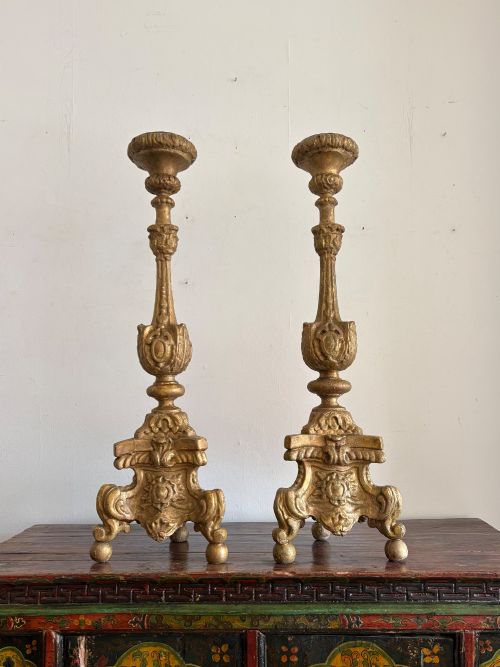


Italian Giltwood Altar Lights
Italian giltwood altar lights are carved church furnishings brought into domestic interiors as candlesticks, lamps, and pricket sticks.
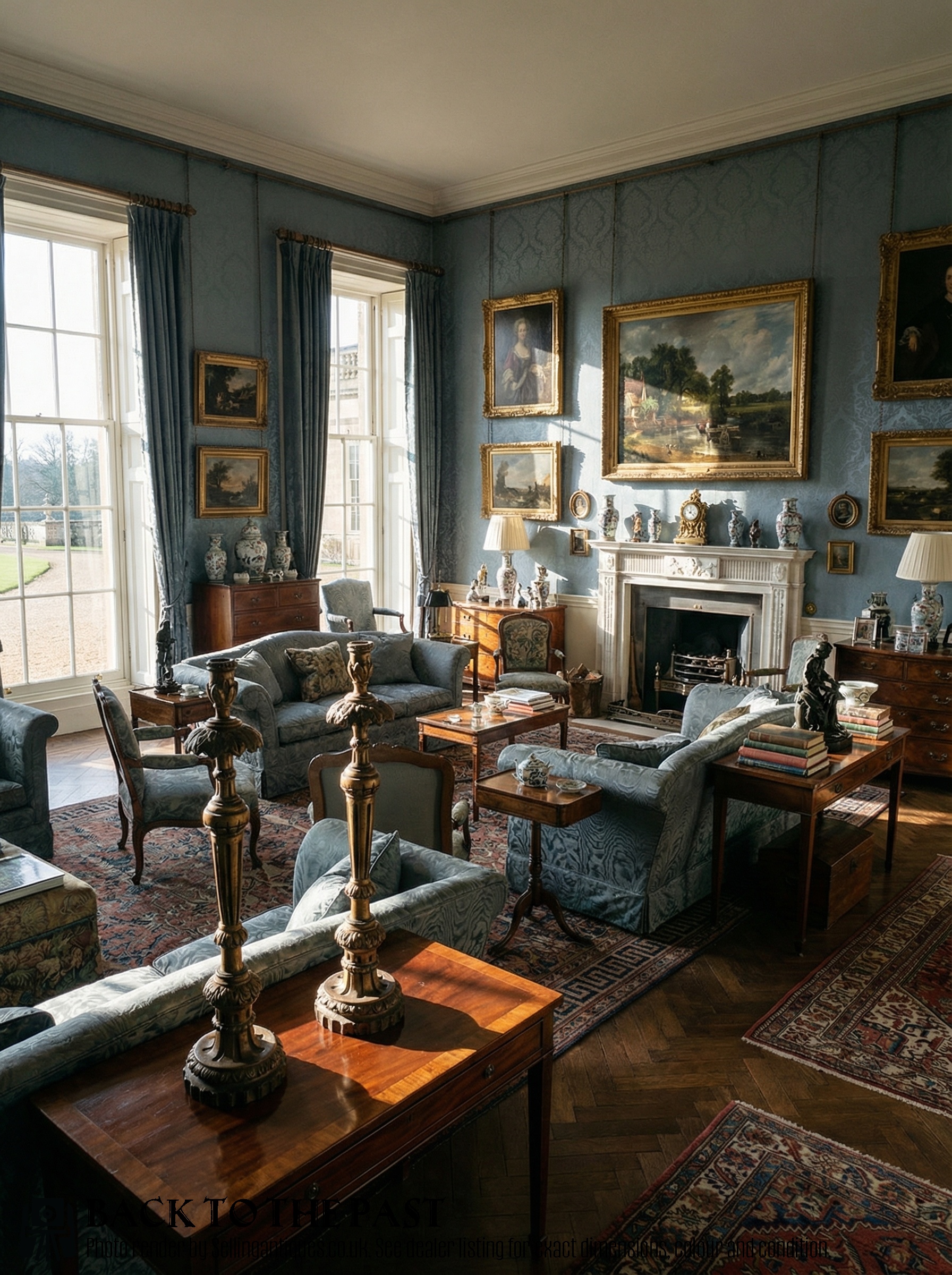
Italian Giltwood Altar Lights
Italian giltwood altar lights appear across this selection as candlesticks, candle holders, pricket sticks, table lamps, and standard lamps. These pieces originate primarily from the eighteenth and nineteenth centuries, reflecting Italian Baroque, Venetian, and Neoclassical styles.
The version most commonly met on this page is the carved wooden candlestick or candle-holder pair from the eighteenth century. Alongside these, buyers find standard lamps and table lamps adapted from earlier altar fittings.
Many examples demonstrate impressive proportions, standing tall with carved decoration suited to ecclesiastical settings. Their forms range from simple turned shafts to elaborate Baroque and Rococo designs.
How they were made
Makers shaped these items from carved wood, applying gesso to create smooth surfaces for decoration. Gold leaf and silvered mecca finishes were then laid over the substrate to achieve a luminous appearance.
Some examples incorporate polychrome paint or marbleized effects alongside the traditional gilding. Iron and brass components occasionally appear in the internal structure or fixings of the lamps and sticks.
Italian Giltwood Altar Lights Retail Price Guide 2026
Typical asking prices for italian giltwood altar lights among the pieces listed under this phrase on Sellingantiques today, from the lower quarter to the upper quarter. They describe what is for sale here now, not the wider market.
Some of these towering church candle holders spent their retirement moonlighting as standard lamps in nineteenth-century drawing rooms.
What varies in quality
The depth and crispness of the wood carving distinguish finer examples from simpler production. Master carvers achieved fluid lines and intricate relief work that hold the eye across the entire height of the shaft.
The application and survival of the gold leaf and gesso layer determine the visual richness of the surface. Patination built up through centuries of handling and age separates exceptional pieces from later adaptations.
The Italian Giltwood Altar Lights Glossary
- Giltwood
- Wood that has been coated with gold leaf or gold paint. This technique gives the carved surfaces a metallic radiance.
- Gesso
- A plaster mixture applied to wood as a base for paint or gold leaf. It provides a smooth surface for detailed carving and gilding.
- Pricket stick
- A candlestick featuring a metal spike at the top to secure a candle. These are commonly found on older altar furnishings.
- Mecca
- A transparent golden varnish applied over silver leaf to imitate gold. It creates a warm, distinctive metallic sheen on period pieces.
- Baroque
- An ornate artistic style marked by dramatic movement and rich detail. It heavily influences the grander Italian altar lights.
Italian Giltwood Altar Lights: Frequently Asked Questions
How were altar lights used originally?
These pieces stood on church altars to hold candles during religious services and ceremonies. Their grand scale ensured they were visible from a distance in large sacred spaces.
Over time, many of these liturgical objects transitioned into domestic settings, serving as decorative lamps and candlesticks in grand houses.
Can I use modern bulbs in these lamps?
Many examples on this page have been adapted into table lamps and standard lamps with modern electrical fittings. This allows them to function safely as lighting in contemporary rooms.
Buyers should check the wiring of each individual piece to ensure it meets current safety standards before plugging it in.
How do I date an eighteenth-century candlestick?
Dating relies on observing the style of the carving, the method of construction, and the materials used in the base. Eighteenth-century pieces often display Baroque or Rococo characteristics with hand-carved wooden structures.
Comparing the wear of the gesso and gold leaf to documented pieces helps confirm the period of origin.