


Islamic Revival Furniture
Islamic revival furniture brings intricate brass inlay, carved hardwood and mother-of-pearl geometric patterns straight into your home.
Islamic Revival Furniture
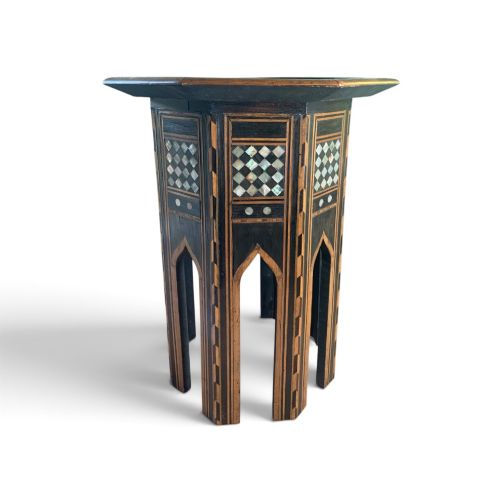
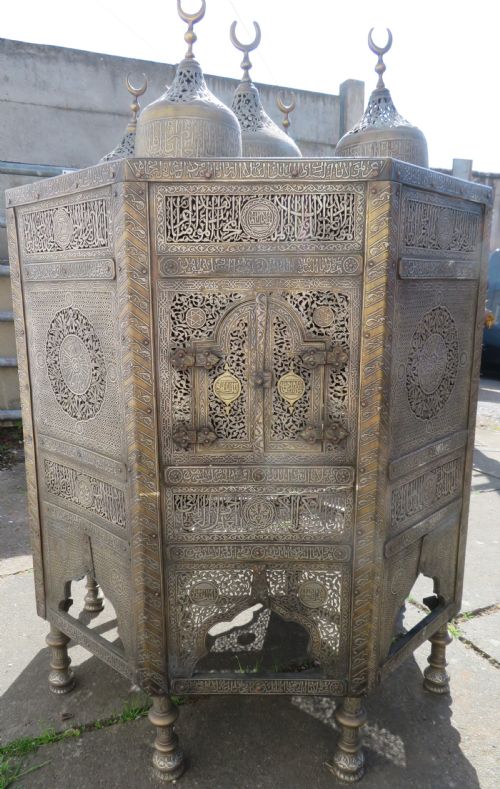
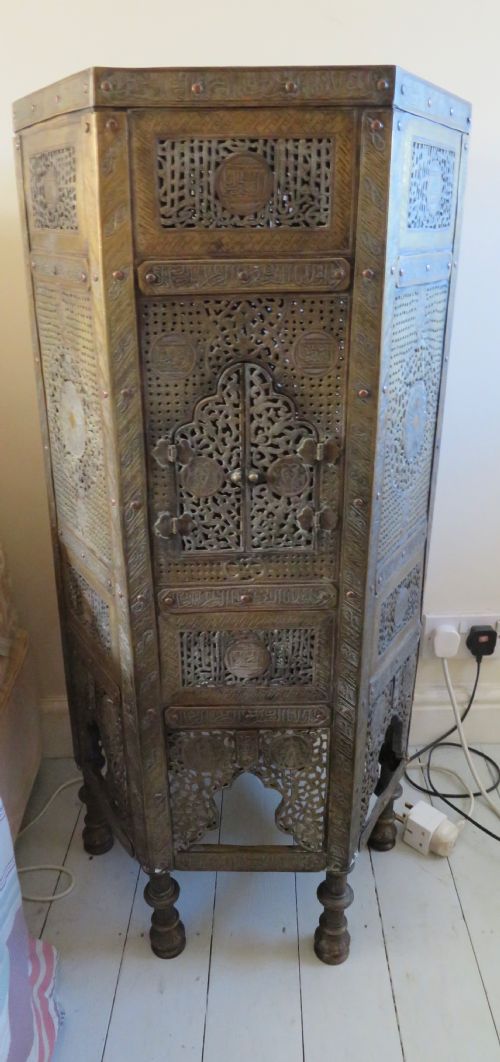
Islamic revival furniture encompasses heavily inlaid and carved seating, tables, cabinets and desks produced across the Victorian, Edwardian and early twentieth century periods. When searching for islamic revival furniture, you encounter pieces designed in Moorish, Mamluk, Syrian and Moroccan styles that reflect nineteenth and early twentieth century European fascination with Orientalist design.
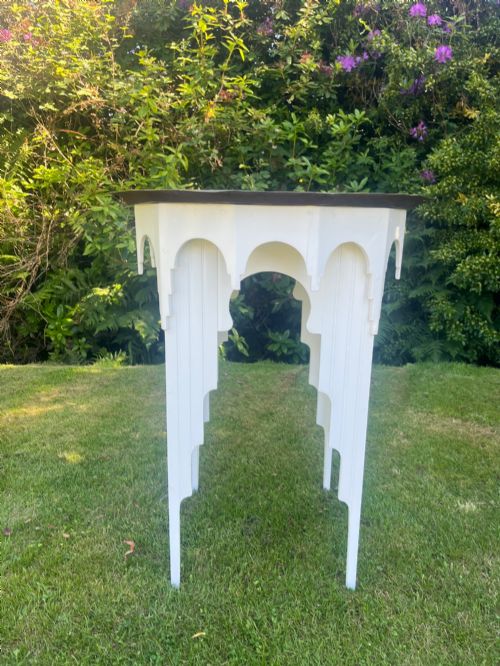
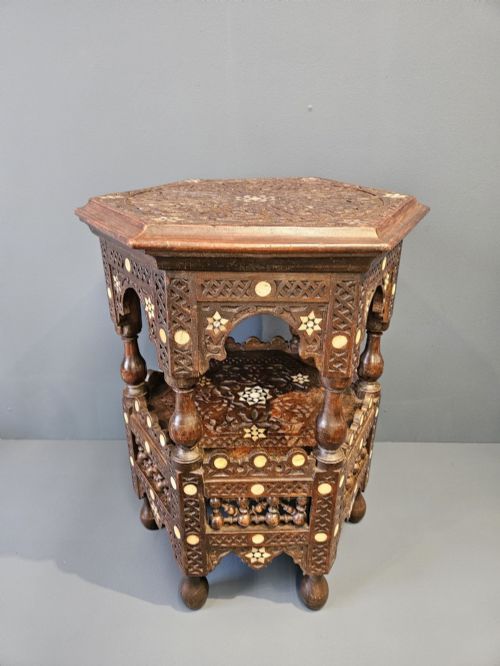
Hexagonal occasional tables, folding kursi stands, low window seats and elaborate cabinets dominate the selection. These functional objects frequently feature dense geometric woodwork combined with contrasting metallic or organic inlays.
Makers and workshops from these eras drew heavily on traditional Middle Eastern and North African motifs, adapting local domestic forms for Western drawing rooms and libraries.
What Varies in Quality
The density and precision of the inlay work distinguish finer examples from simpler production. Superior pieces exhibit tight, continuous patterns of mother-of-pearl and bone with minimal filler, whereas lesser items rely on painted substitutes or sparse metal wire.
Structural integrity and timber selection also divide the range. Robust hardwoods like walnut support intricate openwork without warping, while secondary timbers often require extensive reinforcement over time.
Listings for islamic revival furniture span the Victorian and Edwardian eras up to the 1930s, featuring walnut, hardwood, brass and mother-of-pearl.
The Islamic Revival Furniture Glossary
- Kursi
- A low hexagonal table or stand traditionally used in Middle Eastern interiors for holding Qurans, coffee or lamps. These items frequently display intricate openwork and metal inlay.
- Cairoware
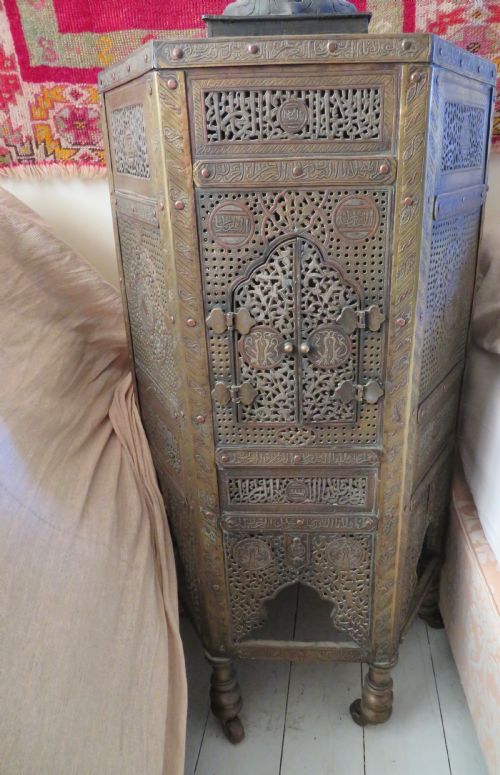
- Metalwork originating from Cairo, typically consisting of brass or copper vessels and furniture parts inlaid with silver, gold, white metal or copper wire.
- Moorish Revival
- An architectural and decorative style popular during the nineteenth century incorporating Islamic design elements such as horseshoe arches, intricate carving and geometric tracery.
- Mother-of-Pearl
- The iridescent inner layer of mollusc shells utilised extensively in these pieces for cutting thin geometric tiles that catch the light.
- Boulle Inlay
- A technique involving intricate marquetry of tortoiseshell and brass, occasionally adapted in revival pieces alongside traditional Middle Eastern motifs.
Islamic Revival Furniture: Frequently Asked Questions
What is islamic revival furniture?
Islamic revival furniture comprises tables, seating and cabinets made mainly during the nineteenth and early twentieth centuries in European-influenced interpretations of Middle Eastern and North African styles.
These objects use dense hardwood construction combined with extensive inlay of mother-of-pearl, bone and brass to create highly decorative domestic items.
How do I style an occasional table?
An occasional table functions well as a central focal point in a living room, often holding a single lamp or decorative object that complements its metallic or inlaid surface.
Because these tables feature intricate geometric patterns on every side, placing them where light can catch the mother-of-pearl and brass inlay enhances the visual detail.
How do I care for inlaid wood?
Inlaid wooden surfaces require gentle dusting with a dry, soft cloth to prevent moisture from loosening the delicate bone and mother-of-pearl pieces set into the timber.
A light application of appropriate natural wax preserves the hardwood frame without damaging the metallic wire and organic inlays.
How do I identify a Syrian table?
Syrian tables from this period typically feature hexagonal or octagonal forms constructed from walnut, heavily decorated with intricate bone and mother-of-pearl inlay.
They often include fitted cupboards or complex geometric openwork panels that distinguish them from simpler European occasional furniture.