

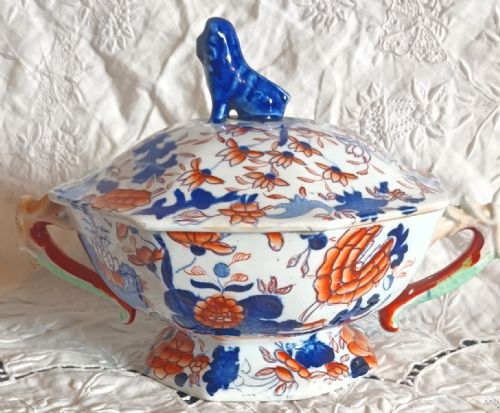


Ironstone Ceramic Covered Dish
These ironstone ceramic covered dish examples are heavy, durable vessels built for the table, offering both robust utility and bold nineteenth-century decoration.
Ironstone Ceramic Covered Dish
When you search for an ironstone ceramic covered dish, you encounter utilitarian serving vessels designed for nineteenth-century dining, ranging from large soup tureens to cheese domes and vegetable dishes. These pieces originate primarily from English potteries during the Georgian and Victorian periods.
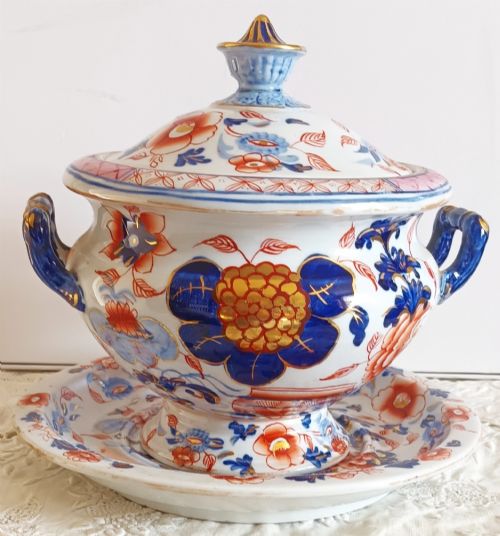
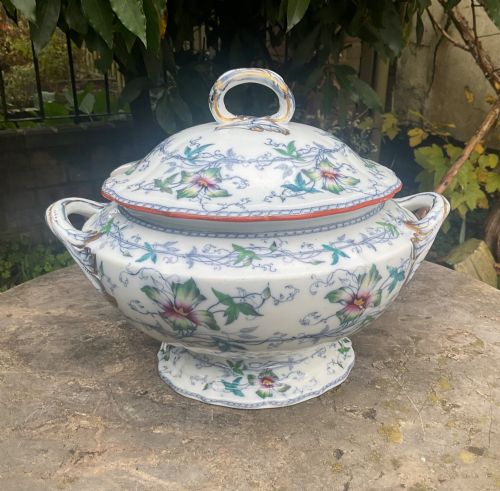
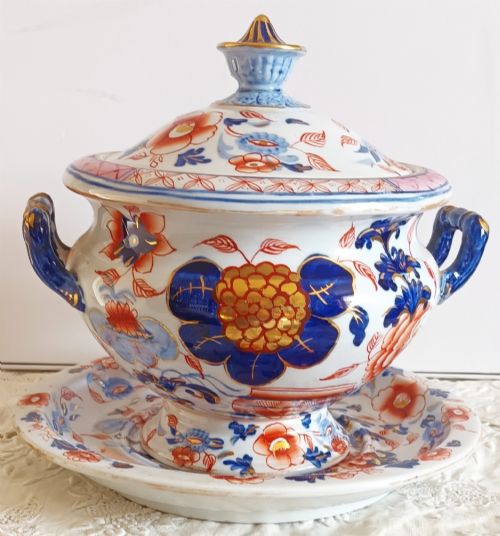
The selections available here lean heavily toward substantial tureens and cheese domes featuring distinct patterns such as Chinoiserie, Japan, and floral motifs. Forms span from sauce tureens with ladles to grand soup tureens and covered bowls intended for heavy household use.
How they were made
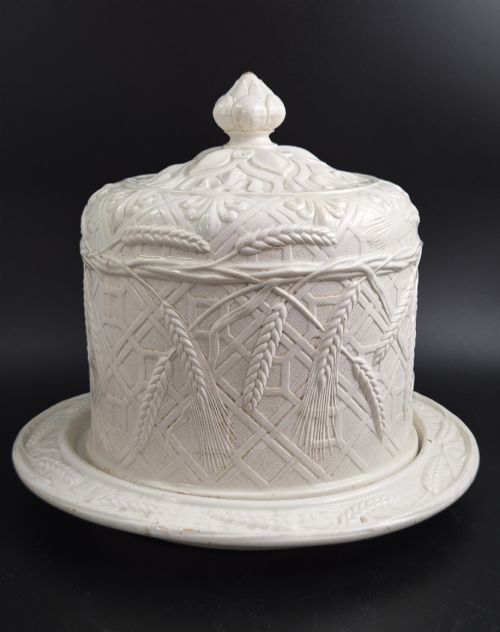
Potters formed these heavy vessels from ironstone china and earthenware, applying dense glazes to create a durable, non-porous body designed to withstand daily service. Many pieces incorporate moulded details such as wheat, lattice, or lion mask handles directly into the ceramic body.
Decoration relied on hand-applied enamel and transfer-printing, occasionally supplemented with gold leaf or gilt highlights. This combination of robust ceramic formulas and vibrant surface pattern allowed utilitarian wares to mimic oriental porcelain at a fraction of the cost.
Ironstone Ceramic Covered Dish Retail Price Guide 2026
Typical asking prices for ironstone ceramic covered dish among the pieces listed under this phrase on Sellingantiques today, from the lower quarter to the upper quarter. They describe what is for sale here now, not the wider market.
What varies in quality
Quality in these vessels rests upon the crispness of the moulded relief and the precision of the hand-painted enamel work. Pieces featuring sharp, deep moulding and rich, multi-coloured patterns sit at the upper end of the scale.
The weight of the ceramic body and the preservation of any gilt or enamel highlights also dictate the standing of a piece. Finer examples retain clear maker marks and display careful alignment between the transfer print and the hand-applied colour.
Mason's Ironstone·Coalbrookdale·Copeland·Staffordshire
The Ironstone Ceramic Covered Dish Glossary
- Ironstone china
- A dense, durable ceramic perfected in the nineteenth century as a tough alternative to porcelain. It absorbs minimal moisture and holds heavy glazes well.
- Cheese dome
- A large, bell-shaped cover with a matching stand, utilised for storing and presenting cheese at the table. These often feature elaborate knob handles.
- Tureen
- A deep covered bowl designed for serving soups, sauces, or vegetables. They frequently include fixed handles and matching stands.
- Chinoiserie
- A decorative style employing European interpretations of Chinese and East Asian motifs. It appears widely on nineteenth-century ceramic patterns.
- Enamel
- Coloured glass paste fired onto the surface of the ceramic to create vibrant patterns. It provides the bright greens, reds, and blues seen on patterned wares.
Ironstone Ceramic Covered Dish: Frequently Asked Questions
What is an ironstone ceramic covered dish used for?
These covered vessels served practical dining functions in the nineteenth century, holding hot soups, sauces, vegetables, or cheeses at the table.
Today, collectors utilise them as decorative centrepieces, storage bowls, or striking standalone display objects in dining rooms and kitchens.
How do I care for an ironstone ceramic covered dish?
Wash these heavy ceramic pieces by hand using warm water and mild soap to protect the nineteenth-century enamel and glaze.
Avoid dishwashers and harsh scouring pads, which can dull the surface gloss and wear away delicate gilt highlights or transfer prints.
How can I tell the period of these dishes?
Examine the base for impressed or printed maker marks, which often indicate specific nineteenth-century registration dates or manufacturing eras.
The weight of the ironstone, the style of the hand-painted enamel, and the decorative motifs like Chinoiserie also point toward Georgian or Victorian origins.
Are these dishes safe for food use?
While ironstone is fundamentally a dense and durable ceramic, nineteenth-century glazes and enamel decorations may contain trace elements.
It is generally wiser to enjoy these historical vessels for display, serving dry items, or tabletop presentation rather than daily dining.