



Georgian Imari Ceramic Tureen
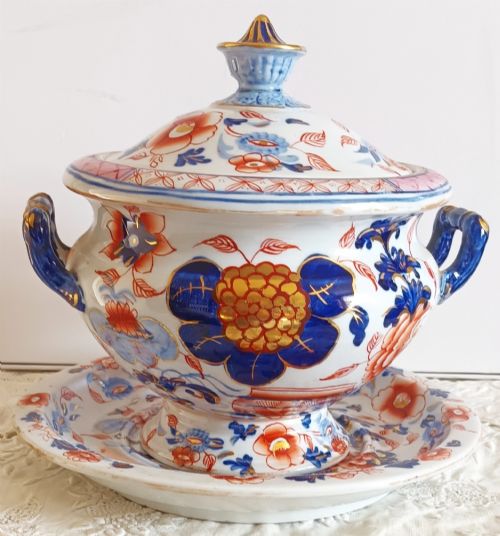
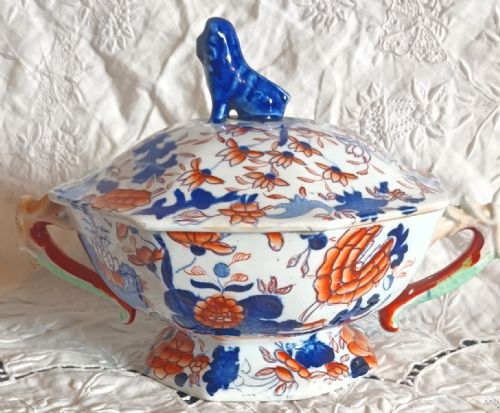
These georgian imari ceramic tureen examples combine robust ironstone and porcelain with striking orientalist patterns for serious collectors.
Georgian Imari Ceramic Tureen
A georgian imari ceramic tureen brings together the utilitarian demands of late Georgian and Regency dining with the vibrant palette of traditional Japanese export porcelain. Buyers searching for a georgian imari ceramic tureen will encounter substantial serving vessels, vegetable dishes, souptureens, and smaller sauce tureens designed for formal tables. These pieces frequently appear under various historical designations such as Japan pattern, Chinoiserie pattern, or specific factory bodies.
The objects on this page span the 19th century, drawing from Georgian, Regency, and early Victorian production periods. Forms range from large covered bowls with stands to matched pairs of sauce tureens fitted with gilt handles. The material execution relies heavily on durable ironstone china and refined felspar porcelain rather than standard earthenware.
How they were made
Potters constructed these tureens using dense ceramic bodies like ironstone china and felspar porcelain, which offered superior strength for heavy domestic service. Manufacturers then applied intricate underglaze and overglaze hand painting, frequently incorporating rich enamel colours alongside applied gold leaf and gilt highlights. Many bodies show the heavy vitreous composition typical of patent ironstone developments from firms like Mason's.
The decorative schemes relied on complex Japanese-inspired motifs, often described historically as Japan patterns or Chinoiserie designs. Kiln firing fixed the cobalt blues, iron reds, and enamel details beneath or above a clear glaze, sealing the intricate palette against wear.
Georgian Imari Ceramic Tureen Retail Price Guide 2026
Typical asking prices for georgian imari ceramic tureen among the pieces listed under this phrase on Sellingantiques today, from the lower quarter to the upper quarter. They describe what is for sale here now, not the wider market.
Several tureens retain their original matching stands, proving that nineteenth-century dining tables took sauce containment very seriously indeed.
What varies in quality
Quality in a georgian imari ceramic tureen rests upon the crispness of the moulding and the depth of the ceramic body, with dense ironstone sitting at the heavier end and translucent felspar porcelain at the finer end. Finer pieces demonstrate superior control during the multi-stage firing process, maintaining sharp definition in the moulded handles, finials, and stands without warping.
The hand-painted decoration introduces further distinction, where skilled brushwork and generous application of gold leaf elevate a standard pattern into an exceptional decorative statement. The precision of the enamel alignment and the richness of the gilding separate standard utility tablewares from high-status cabinet pieces.
Spode·Mason's·Flight, Barr and Barr Worcester·Coalbrookdale
The Georgian Imari Ceramic Tureen Glossary
- Ironstone
- A dense, durable type of heavy earthenware patented in the early nineteenth century to rival true porcelain. It resists chipping and formed the sturdy body for many large soup and vegetable tureens.
- Felspar porcelain
- A refined ceramic body containing feldspathic rock, developed during the Regency period to increase whiteness and translucency. It allowed for thinner walled vessels and sharper moulded details.
- Japan pattern
- A western decorative style imitating traditional Japanese Imari export wares, characterised by a palette of cobalt blue, iron red, and gilt. It dominated much of the porcelain and ironstone production in this period.
- Chinoiserie
- European artistic interpretation of Chinese and East Asian decorative motifs, frequently blended with Imari palettes on nineteenth-century tableware. This style appears across many covered bowls and serving dishes.
- Gilt
- A thin layer of gold applied to ceramic handles, rims, and borders to enhance visual richness. It requires careful low-temperature firing to bond securely with the glaze.
Georgian Imari Ceramic Tureen: Frequently Asked Questions
What is a georgian imari ceramic tureen used for?
These covered vessels served soups, sauces, and cooked vegetables at formal dining tables throughout the Georgian and Regency periods. Their deep bowls and matching covers kept contents warm during long multicourse meals.
Today, collectors use them as striking centrepieces, decorative bowls, or display items on sideboards and dining tables. Their robust construction allows them to function visually without demanding everyday culinary use.
How do I identify a Regency period tureen?
Regency tureens often exhibit refined felspar porcelain bodies, classical moulded forms, and delicate gilt handles that reflect the neoclassical tastes of the early nineteenth century. Factory marks or specific pattern numbers painted on the base also help pinpoint the exact era.
Comparing the decorative weight helps too, as Regency pieces frequently balance ornate Japanese-inspired enamel patterns with lighter, more elegant proportions than heavier Georgian ironstone equivalents.
What is the difference between ironstone and porcelain?
Ironstone is a heavy, opaque, and extremely durable ceramic body designed for everyday utility and large serving dishes. Felspar porcelain is lighter, more resonant, and often shows varying degrees of translucency when held to the light.
Both materials accepted the vibrant Imari enamel colours well, but ironstone provided the structural strength required for massive soup tureens and integrated stands.
How should I display a antique tureen?
Place your tureen on a stable surface out of direct sunlight, ensuring the stand and cover sit naturally without wobbling. Displaying them as matched pairs or alongside complementary serving dishes creates a balanced arrangement.
Avoid high-humidity areas and clean them only with a soft, dry cloth to protect delicate gilt highlights and overglaze enamels from unnecessary wear.