



Antique Ironstone Soup Tureen
These antique ironstone soup tureen pieces are heavy, durable serving vessels prized for their striking patterns and robust ceramic body.
Antique Ironstone Soup Tureen
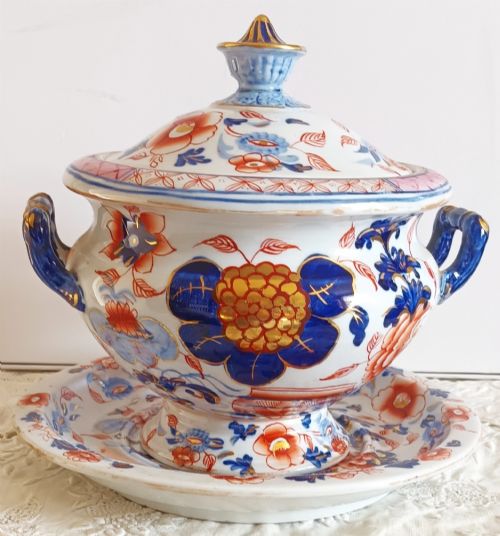
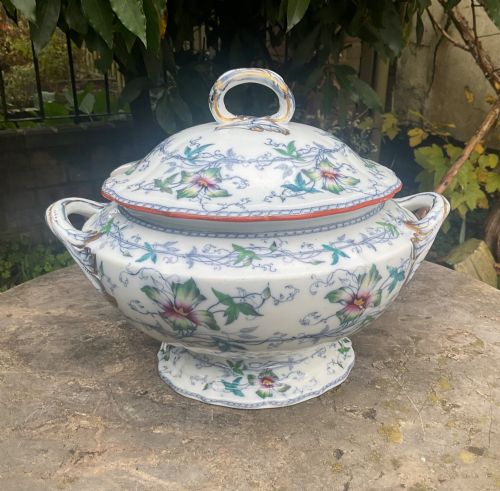
An antique ironstone soup tureen is a heavy ceramic serving vessel designed to hold and present soup at the dining table. Buyers searching for an antique ironstone soup tureen encounter large nineteenth-century examples often complete with matching covers and sometimes stands.
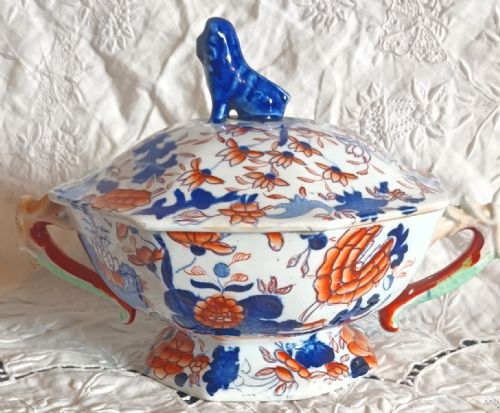
The pieces appearing on this page span the nineteenth century, including specific dates around eighteen-fifteen, eighteen-fifty, and eighteen-eighty. Forms range from large soup tureens to smaller sauce tureens with ladles and extensive dinner service sets.
English production dominates these listings, particularly wares featuring Georgian, Regency, and Victorian stylistic influences. Makers utilise decorative motifs such as English Chinoiserie, Japan patterns, Clematises, Mandarins, and Bamboos.
How they were made
Potters produced these objects using ironstone china and earthenware, a dense and durable ceramic body created to resist chipping. Artisans applied opaque glazes over the hardened clay to provide a smooth, wipeable surface suitable for domestic dining use.
Decoration on these tureens involves hand-applied enamel colours and details in gilt or gold leaf. Potters painted intricate patterns directly onto the ceramic body before firing the glaze to seal the vibrant design.
Antique Ironstone Soup Tureen Retail Price Guide 2026
Typical asking prices for ironstone soup tureen among the pieces listed under this phrase on Sellingantiques today, from the lower quarter to the upper quarter. They describe what is for sale here now, not the wider market.
Some nineteenth-century tureens feature bamboo-shaped handles that turn ordinary soup service into a botanical jungle adventure.
What varies in quality
Quality in an antique ironstone soup tureen rests primarily on the complexity and crispness of the painted pattern. Hand-painted Mandarin and Japan motifs show distinct artistic variation compared to simpler transfers.
The presence of matching covers, stands, and original ladles elevates the completeness and visual impact of the tureen. Robust potting and uniform glaze application also distinguish finer nineteenth-century examples from standard utility wares.
Mason's Ironstone
The Antique Ironstone Soup Tureen Glossary
- Ironstone China
- A heavy, durable type of earthenware patented in the nineteenth century. It provides a strong alternative to porcelain while maintaining a refined appearance.
- Chinoiserie
- A European artistic style reflecting Chinese decorative motifs. Potters rendered these designs with stylised landscapes, figures, and botanical elements.
- Gilt
- A thin layer of gold leaf applied to ceramic surfaces for decoration. It highlights handles, rims, and specific pattern details.
- Tureen
- A deep, large bowl with a cover used for serving soups and stews. These vessels frequently sit upon a dedicated ceramic stand.
Antique Ironstone Soup Tureen: Frequently Asked Questions
What is an antique ironstone soup tureen used for?
These large ceramic vessels served soups, stews, and broths at formal nineteenth-century dining tables. The thick ironstone body helped retain the heat of the liquid during meals.
Today, buyers frequently utilise them as striking decorative centrepieces on sideboards or dining tables. They also function well for storing table linens or displaying dried floral arrangements.
Did soup tureens always come with stands?
Many large soup tureens included matching ceramic stands or underplates to protect dining tables from heat and spills. These stands repeat the pattern found on the main vessel and cover.
Smaller sauce tureens sometimes accompanied ladles rather than large stands. Surviving sets containing the tureen, cover, and stand together are particularly complete examples of nineteenth-century tableware.
How do I care for antique ironstone?
Wash antique ironstone gently by hand using mild soap and warm water. Avoid abrasive sponges or harsh detergents that might scratch the glaze or wear away gilt details.
Refrain from placing these historic ceramic pieces in modern dishwashers or microwaves. Proper manual cleaning preserves the delicate enamel colours and structural integrity of the glaze.