

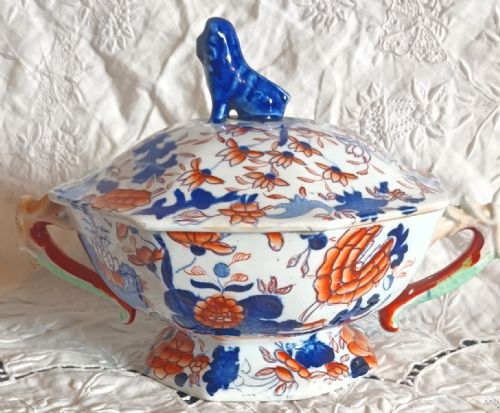


Georgian Covered Serving Bowl
A georgian covered serving bowl brings a heavy presence to the dining table, combining practical warmth with the solid craft of silver, ironstone and pottery.
Georgian Covered Serving Bowl
A georgian covered serving bowl encompasses substantial soup tureens, vegetable dishes, sauce tureens and complete supper sets designed for formal dining. These pieces arrive in earthenware, ironstone china, porcelain, sterling silver and Old Sheffield plate, often accompanied by matching covers and stands.
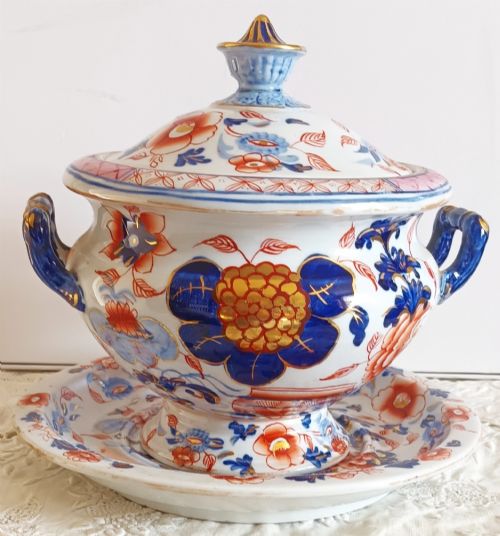
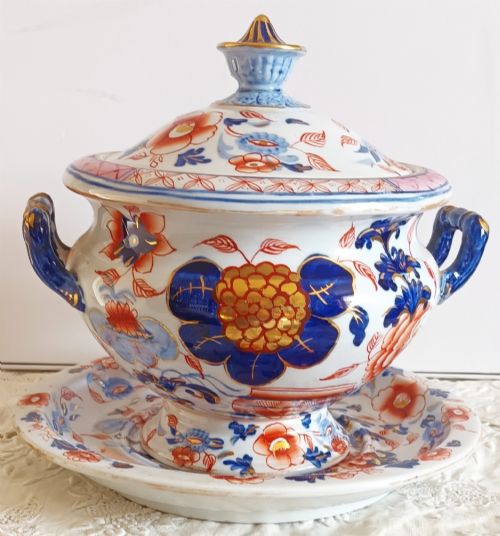
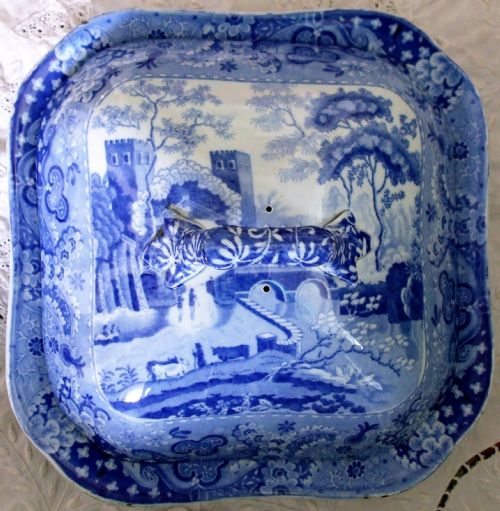
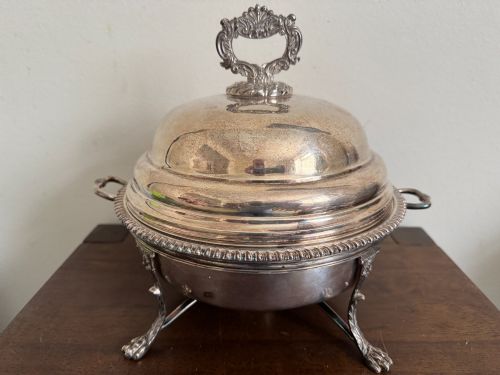
The material varieties range from transfer-printed pottery featuring castle, elephant and peacock patterns to vivid Chinoiserie mandarin designs in ironstone. Silver examples from London makers bring neoclassical lines and heavier metal weight to the table service.
Most items emerge from the nineteenth century, eighteenth century and the Regency period, carrying influences from English workshops and Indian Colonial silver production. Tureens span from large soup vessels down to smaller sauce containers, fulfilling various table service requirements.
Materials and Techniques
Ironstone china and earthenware provide the body for transfer-printed and enamelled vessels, utilising glaze and gilt to seal the surface and define patterns like Japan and Chinoiserie. Potters shaped these bodies to endure daily use while carrying complex blue and white or polychrome designs.
Sterling silver and Old Sheffield plate construction involves hammering, casting and soldering metal sheets or fused silver onto copper bases. Silversmiths formed lampstands, handles and finials to match the formal demands of soup and supper service.
Georgian Covered Serving Bowl Retail Price Guide 2026
Typical asking prices for georgian covered serving bowl among the pieces listed under this phrase on Sellingantiques today, from the lower quarter to the upper quarter. They describe what is for sale here now, not the wider market.
Elephants, castles and peacocks march across these ceramic bowls, proving that nineteenth-century dinner guests enjoyed a remarkably exotic tablescape.
Distinctions in Quality
Quality rests in the crispness of the transfer print, the depth of the ironstone body and the precision of the hand-applied enamel or gilt details. Superior ceramic pieces retain sharp pattern outlines without blurring in the glaze.
In silver and plated wares, the standard depends on the weight of the metal, the integrity of the fused silver layer over copper, and the sharpness of cast handles and heraldic chasing. Maker marks from recognised silversmiths or potteries anchor the standard of execution.
J. & R. Clews·John Rogers and Son·William Bennett·Birchall and Hayne
The Georgian Covered Serving Bowl Glossary
- Ironstone China
- A heavy, durable type of earthenware patented in the nineteenth century to imitate porcelain. It provides a sturdy body for colourful Chinoiserie and transfer-printed tablewares.
- Old Sheffield Plate
- A material created by fusing a thin sheet of silver to a thicker copper core under heat and pressure. It allows silver-plated items to display rich metallic lustre.
- Transfer Printing
- A technique of applying engraved designs to ceramics using paper pressed onto the biscuit or glazed surface. This method enabled consistent repeating patterns like castles and peacocks.
- Tureen
- A deep, covered bowl used for serving soups, vegetables or sauces at the dining table. They frequently include matching stands and decorative handles.
- Chinoiserie
- A European artistic style reflecting Chinese motifs and decorative themes. It appears frequently on ironstone tureens through mandarin figures and exotic garden scenes.
Georgian Covered Serving Bowl: Frequently Asked Questions
What was a georgian covered serving bowl used for?
These vessels held hot soups, boiled vegetables, sauces or complete supper dishes at the dining table, keeping food warm beneath fitted covers.
Larger soup tureens sat centrally, while smaller sauce tureens and vegetable dishes flanked the main courses during formal meals.
How do I clean an antique silver tureen?
Silver and Old Sheffield plated tureens require gentle washing with warm water and mild soap, followed by drying with a soft cloth.
Harsh abrasive dips should be avoided to protect the underlying copper base on plated items and preserve the original hand-chased details.
Can I use an ironstone tureen for serving food?
Ironstone china and pottery tureens are generally sturdy enough for serving warm food at the table.
Historic glazes and older materials require careful hand washing rather than dishwasher cycles to prevent crazing or fading of the enamel.
How do I tell Regency pieces from eighteenth century ones?
Eighteenth century ceramics and silver often display rococo curves or early neoclassical balance, while Regency items lean toward bolder classical revival forms.
Maker marks, registration dates and specific pattern names like the Japan or Castle designs help narrow down the period of manufacture.