
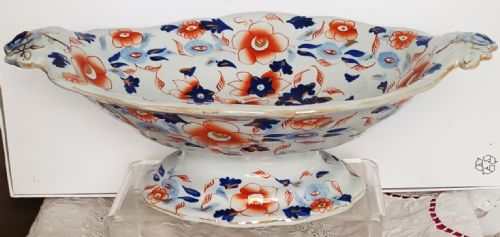


Ironstone Ceramic Bowl
These ironstone ceramic bowl pieces offer sturdy nineteenth century utility paired with bold transfer print or hand-painted patterns for any table.
Ironstone Ceramic Bowl
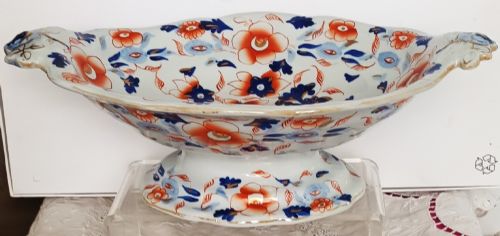
An ironstone ceramic bowl covers a broad range of nineteenth century earthenware forms, including soup bowls, footed comports, sugar bowls, and large decorative centerpieces. Georgian and Victorian examples dominate the selection, originating primarily from English potteries.
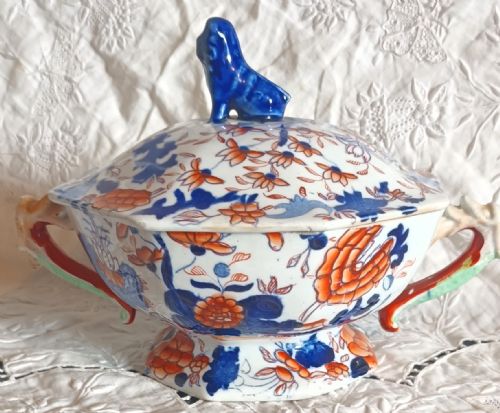
Buyers looking closely at this page will regularly encounter footed comports and covered tureens alongside deep kitchen and table vessels. The nineteenth century makers produced these heavy utilitarian pieces to withstand daily use while retaining decorative appeal through transfer printing and hand colouring.
Materials and Production Techniques
Potters built each ironstone ceramic bowl from durable vitrified earthenware, applying a thick glaze to seal the heavy body. This dense ceramic mixture offered greater strength than standard soft paste earthenware.
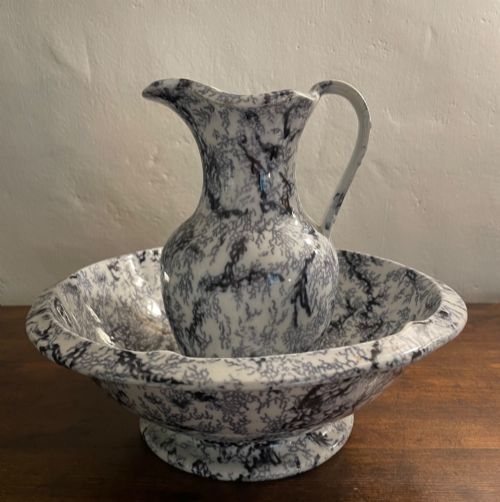
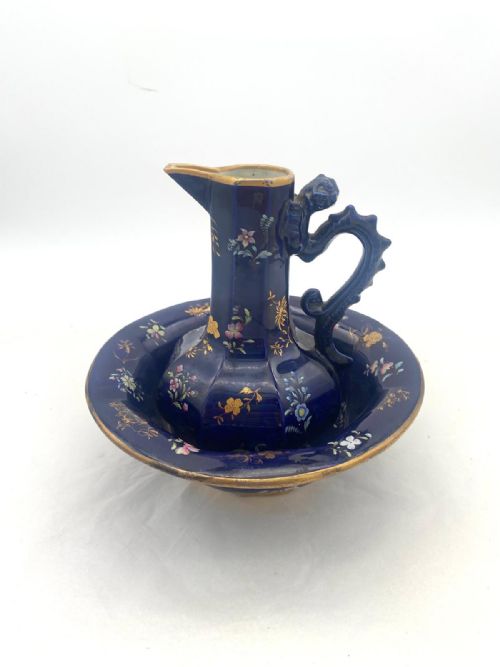
Makers enriched the surfaces using cobalt blue transfer printing, polychrome enamel painting, and touches of gold leaf or gilt. Specific patterns such as Chinoiserie, Japan, and flow blue required careful hand finishing over the printed outlines.
The inventory records nineteenth century earthenware forms including comports, tureens, basins, and soup bowls across multiple English workshops.
Judging Quality in Ironstone
The sophistication of the painted or transfer printed decoration dictates much of the distinction between standard vessels and finer examples. Pieces featuring intricate Chinoiserie Mandarin schemes or delicate gilt highlights show superior craftsmanship.
The crispness of the moulded details, such as lion mask handles or panelled octagonal rims, indicates the sharpness of the original ceramic moulds. Earlier nineteenth century pieces often display greater depth in both the body weight and the enamel application.
Mason's Ironstone·Copeland·Coalbrookdale·Staffordshire
The Ironstone Ceramic Bowl Glossary
- Ironstone
- A heavy, durable type of earthenware patented in the nineteenth century to imitate Chinese porcelain. It provides a robust body for heavy use.
- Comport
- A pedestal bowl or raised dish used historically for serving fruit or sweets at the table. These sit on a fixed foot.
- Chinoiserie
- A decorative style employing Western interpretations of Chinese artistic motifs. It frequently appears in bright enamels on nineteenth century earthenware.
- Flow Blue
- A cobalt transfer printing technique where the colour bleeds slightly into the surrounding glaze during firing. This creates a soft, hazy aesthetic.
- Porringer
- A small, deep bowl featuring one or two horizontal handles. Potters made these for porridges and broths.
Ironstone Ceramic Bowl: Frequently Asked Questions
How do I clean an ironstone bowl?
Wash these durable nineteenth century ceramic pieces by hand using warm water and mild dish soap. Avoid harsh scrubbers that can scratch the glaze or wear away delicate gilt highlights.
Dry the vessel thoroughly with a soft cloth to protect any crazing in the glaze from moisture retention over time.
Can I use these bowls for food?
Most nineteenth century vessels remain suitable for serving dry foods or fruit, though older glazes may contain trace impurities. Check the interior surface for heavy staining or deep crazing before direct food contact.
Displaying them as decorative centerpieces or storage vessels protects the historic enamel and transfer print work from daily wear.
What is the difference between ironstone and porcelain?
Ironstone is a dense, opaque vitrified earthenware developed in the nineteenth century for maximum strength. Porcelain is a finer, translucent ceramic fired at much higher temperatures.
An ironstone ceramic bowl feels considerably heavier and thicker in the hand than a true porcelain vessel of equivalent size.
How do I date an ironstone bowl?
Examine the maker marks stamped into the ceramic base alongside the style of decoration and glaze colour. Nineteenth century examples often display specific patent ironstone stamps or registry diamonds.
Hand-painted Chinoiserie motifs and transfer printed patterns like flow blue typically point to production periods between eighteen hundred and eighteen fifty.