



Iron Stretcher Table
An iron stretcher table brings together solid timber tops and robust metal bracing, offering enduring strength and undeniable architectural character to any room.
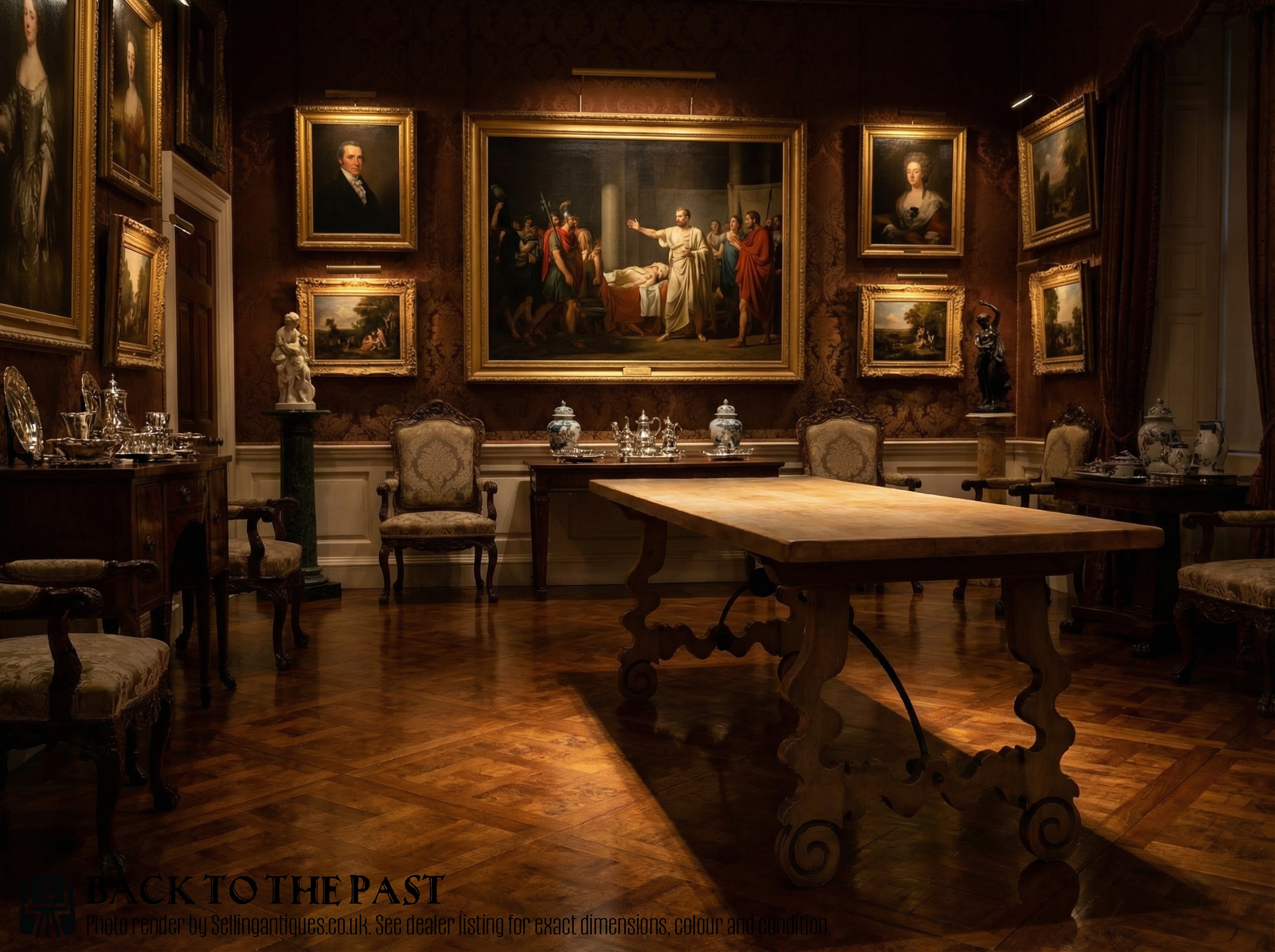
Iron Stretcher Table
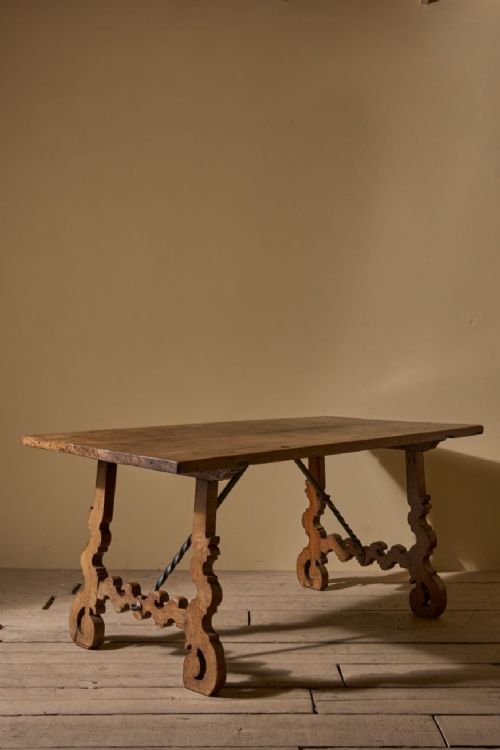
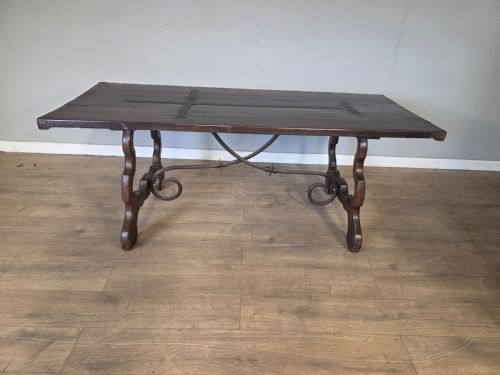
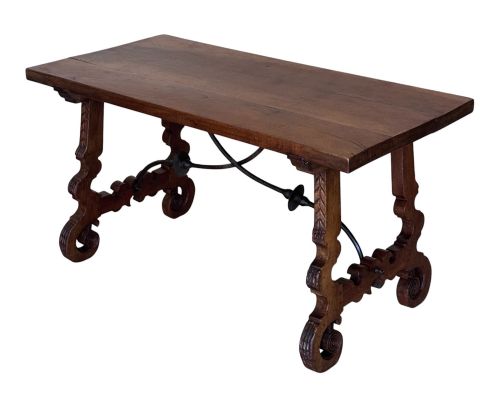
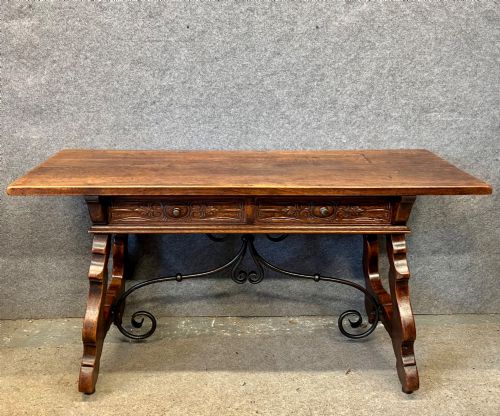
When you search for an iron stretcher table, you are looking at sturdy wooden surfaces united by metal support braces beneath. These pieces range from substantial dining tables to compact console and coffee tables, often bearing heavy timber tops made of walnut, oak, chestnut, or fruitwood.
You are most likely to meet Spanish and Continental forms on this page, particularly walnut dining tables and refectory styles rooted in Baroque and rustic traditions. Many examples incorporate wrought iron stretchers that link the legs for extra rigidity, reflecting centuries of utilitarian design.
The objects span multiple centuries, appearing in eighteenth and nineteenth-century iterations alongside early twentieth-century revivals. Whether configured as a long dining board or a smaller side table, each piece relies on the tension of its iron stretchers to maintain stability.
What varies in quality
The distinction between a standard piece and a superior one often lies in the depth of the timber's patina and the integrity of the original surfaces. Tables that retain their early finish and show honest signs of age possess a visual depth that newer surfaces simply lack.
Quality also rests in the hand-forged character of the ironwork and the joinery connecting the base to the top. Cleanly fitted joints and thoughtfully hammered metal stretchers demonstrate a higher level of craftsmanship than mass-produced alternatives.
Listings feature walnut, oak, and fruitwood paired with wrought iron across centuries of domestic and farmhouse forms.
Coalbrookdale
The Iron Stretcher Table Glossary
- Stretcher
- A horizontal support connecting the legs of a table to increase rigidity and strength. These metal or wooden bars are central to the stability of heavy refectory forms.
- Refectory table
- A long dining table traditionally used in communal dining halls and monasteries. They are typically characterised by long wooden boards and robust underframes.
- Patina
- The deep, lustrous surface sheen developed on wood and metal over decades or centuries of handling and use. It serves as a visual indicator of age and genuine wear.
- Wrought iron
- Iron that has been heated and hammered into shape by a blacksmith rather than cast in a mould. This material is prized for its fibrous texture and strength.
- Baroque style
- An ornate design movement from the seventeenth and eighteenth centuries characterised by drama, rich materials, and muscular proportions.
Iron Stretcher Table: Frequently Asked Questions
What is an iron stretcher table?
An iron stretcher table is a wooden furniture piece supported by metal bracing rods beneath. These stretchers tie the legs together to prevent wobble and add industrial strength.
They appear primarily as dining, refectory, and console tables, combining warm timber tops with dark forged metal.
How do I care for wooden tops?
Protect the timber surface by using coasters and mats, and avoid placing it near direct heat sources that can dry out the wood. Regular dusting with a soft cloth keeps the finish clean.
Apply a traditional wax polish occasionally to nourish the grain and maintain the natural lustre of walnut or oak.
Are these tables good for dining?
They are exceptionally well-suited for daily dining because the robust metal stretchers provide immense structural stability. This makes them capable of withstanding heavy use without loosening at the joints.
Their substantial proportions also anchor a dining room, offering ample legroom alongside a generous surface area.
How do I date an older table?
Dating relies on examining the tool marks on the underside of the timber, the method of joinery, and the style of the ironwork. Hand-forged stretchers and pegged joints often point towards earlier centuries of construction.
Changes in wood species and decorative motifs, such as Baroque carvings, also help place a piece within a specific historical period.