


Iron Red Kutani
Iron red kutani brings striking Japanese ceramics into your rooms, offering vibrant painted palettes and intricate historical forms.
Iron Red Kutani
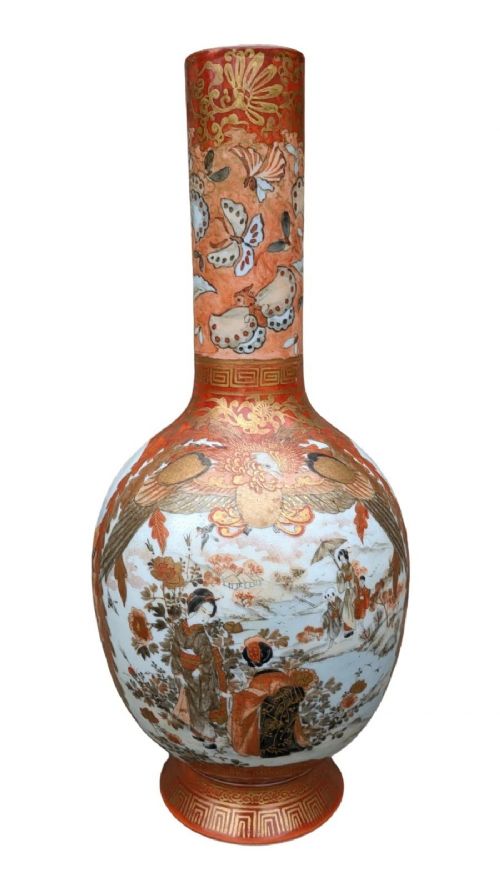
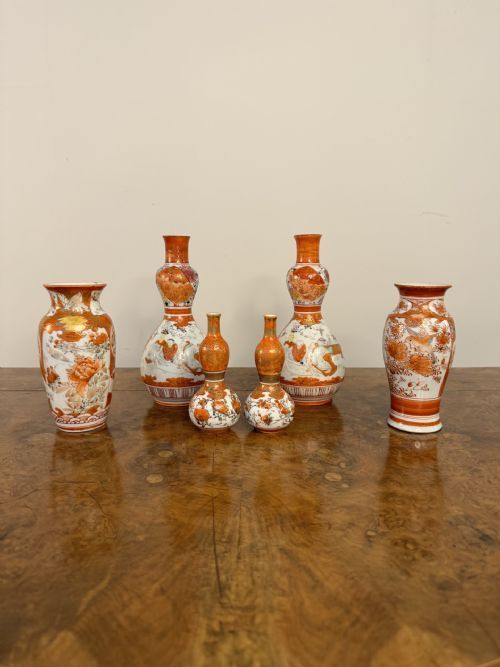
Iron red kutani encompasses Japanese porcelain created primarily during the nineteenth century, including the Meiji period. Vases form the largest share of available items, ranging from small hand-painted vessels to large pairs with flared necks.
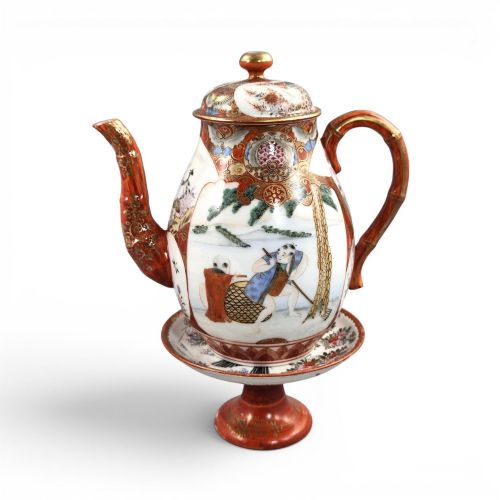
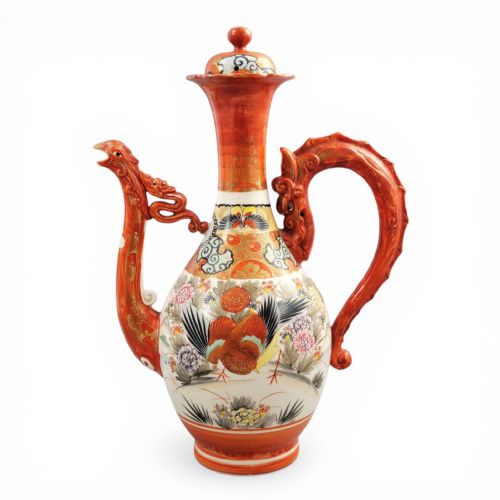
Beyond standard vases, listings feature ginger jars, teapots with stands, miniature bowls, shallow bowls, and decorative ewers featuring dragon and phoenix motifs. Table lamps and crane-shaped dishes also appear across the selection.
Earlier examples extend back to the late seventeenth and early eighteenth century, displaying moulded shallow relief work decorated in iron red alongside black and gold.
Materials and construction
Makers shaped these items from porcelain, applying overglaze enamel and iron red pigment across the ceramic body. Gold leaf and gilding frequently highlight the painted surface details.
Selected pieces incorporate brass elements or conversion fittings for table lamps, while textile components appear in silk elements where appropriate.
Materials recorded across the inventory include porcelain, overglaze enamel, gold leaf, gilt, brass, and silk.
Assessing the range
Differentiation across the range depends upon the fineness of the hand painting and the complexity of the moulded relief work. Pieces bearing signatures from known artists distinguish themselves from unsigned production wares.
Scale and proportion separate standard vessels from impressive large pairs of vases or ginger jars. Preservation of the original overglaze enamel, gold leaf, and gilding determines the integrity of each item.
Shozo
The Iron Red Kutani Glossary
- Kutani ware
- Japanese porcelain traditionally associated with specific kilns and distinct painted decoration. It is recognised by its heavy use of coloured enamels.
- Iron red
- A brick-red pigment utilised in overglaze ceramic decoration. It provides the dominant monochromatic tone in these particular designs.
- Meiji period
- A defining era in Japanese history spanning from 1868 to 1912. Much of the export porcelain available dates from this era of increased trade.
- Overglaze enamel
- Coloured glass decoration applied on top of a fired and glazed porcelain body. It receives a subsequent low-temperature firing to fuse it to the surface.
- Gilding
- The application of gold leaf or gold powder to ceramic surfaces. It enhances key details within the painted motifs.
Iron Red Kutani: Frequently Asked Questions
What is iron red kutani?
Iron red kutani refers to Japanese porcelain decorated predominantly with a distinct brick-red enamel pigment. Most pieces date from the nineteenth century and the Meiji period.
These ceramics encompass decorative vessels such as vases, ginger jars, teapots, and shallow bowls, often highlighted with gold leaf.
How do I date these ceramics?
Dating relies on stylistic markers, historical periods such as the Meiji era or earlier Edo period, and manufacturing characteristics. Nineteenth-century examples form the majority of available items.
Examining the overglaze enamel, gilding style, and any artist signatures provides further clues to the precise period of origin.
Were these made for export?
Many nineteenth-century items were produced specifically for Western export markets during a time of growing international interest in Japanese art. These pieces adapted traditional forms to suit foreign tastes.
Export items frequently include decorative vases and lamps designed to function in European and British interiors.
How should I display them?
Large vases and ginger jars work well as focal points on side tables or mantels. Smaller bowls and plates suit cabinet display where the intricate hand painting remains visible.
Converted table lamps integrate these historic ceramic bodies into functional modern lighting schemes.