



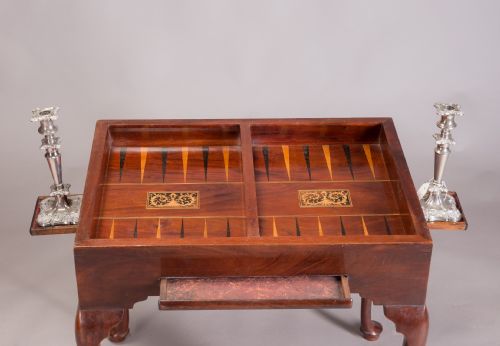


Irish Mahogany Card Table
An irish mahogany card table brings the rich grain and deep colour of Dublin craftsmanship straight into a drawing room.
Irish Mahogany Card Table
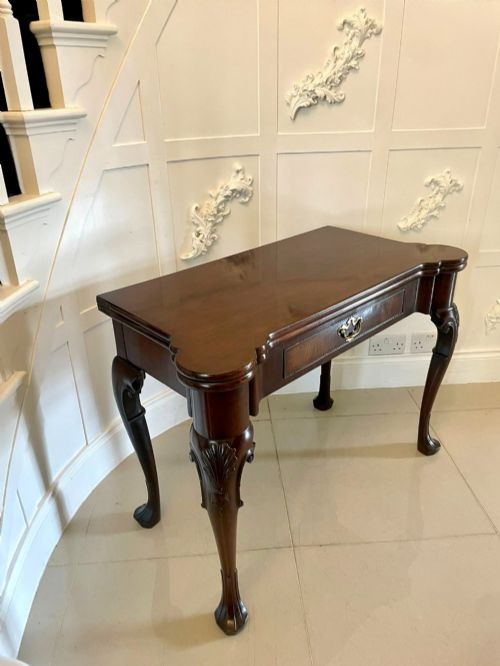
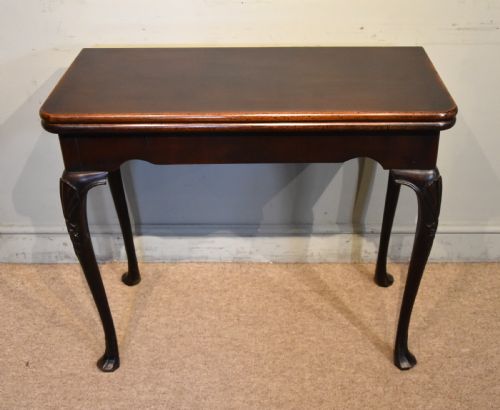
An irish mahogany card table is a foldable or turn-over surface designed for gaming and social evenings, appearing in forms such as card tables, games tables, and tea tables. These pieces date from the Georgian, George II, George III, Regency, and William IV periods, alongside mid-nineteenth-century examples from 1860.
The versions most commonly met on this page are Georgian and George III items, often featuring foldover tops, concertina actions, or triple top and demi-lune configurations. Originating from Irish workshops, they combine robust timbers with formal elegance suited for period interiors.
How they were made
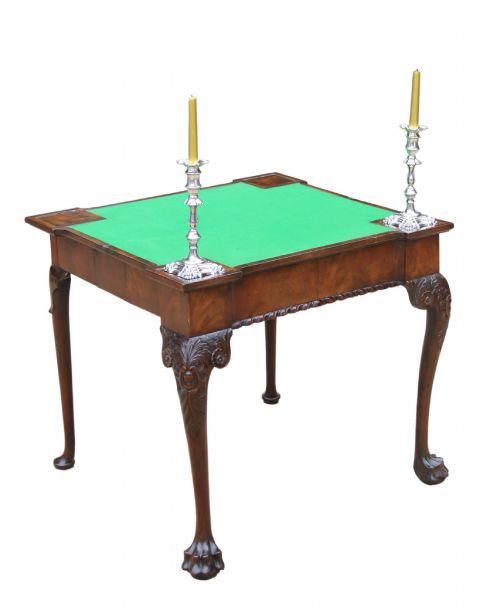
Cabinetmakers built these tables using solid and veneered mahogany, often incorporating secondary timbers and clever concertina actions that expand the frame evenly when opened. Interiors frequently retain baize surfaces for card playing, providing a durable playing field.
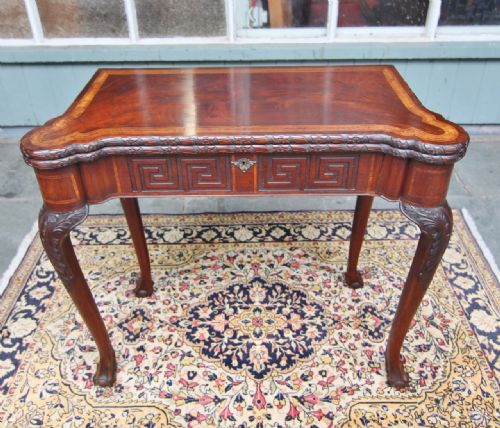
Decoration relied on fine woodworking techniques, including carved details on the legs and frame, complemented by satinwood inlay, boxwood, and ebony stringing. Brass mounts and hinges were integrated to secure the folding leaves and support the weight during use.
Irish Mahogany Card Table Retail Price Guide 2026
Typical asking prices for irish mahogany card table among the pieces listed under this phrase on Sellingantiques today, from the lower quarter to the upper quarter. They describe what is for sale here now, not the wider market.
Listings feature mahogany, brass, satinwood inlay, baize, boxwood, and ebony across Georgian, Regency, and William IV periods.
What varies in quality
The standard of an irish mahogany card table rests primarily on the depth and crispness of the carving, the choice of dense, richly figured timber, and the precision of the joinery. Superior examples demonstrate fluid lines and balanced proportions, particularly in the treatment of the knees and claw-and-ball or pad feet.
At the lower end, tables may display heavier, less refined timber selection and mechanical actions that have lost their smooth operation over centuries of use. The subtlety of the inlay work and the integrity of the original hinges also distinguish top-tier examples from more utilitarian workshop production.
Howard & Sons
The Irish Mahogany Card Table Glossary
- Concertina action
- An expanding frame mechanism that pulls outward when the table top is unfolded, allowing all four legs to move to the corners for balanced support. This engineering feat is prized by collectors for its clever design.
- Baize
- A coarse woollen felt material traditionally used to line the playing surface of games tables. It provides a soft, non-slip texture for cards.
- Demi-lune
- A half-moon shape used for table tops and frames that fit compactly against a wall when folded. These semicircular designs open into a full circle for play.
- Satinwood inlay
- A contrasting light-coloured wood inserted into recesses within the darker mahogany surface to create decorative geometric or floral patterns. This technique highlights the skill of the marquetry worker.
Irish Mahogany Card Table: Frequently Asked Questions
How were these tables used originally?
These tables served a dual purpose in period homes, functioning as console or side tables against a wall when folded closed. When guests arrived, the top unfolded to reveal a baize-lined surface for cards or board games.
In some instances, the same surface accommodated tea service, making the furniture adaptable to the shifting social demands of the household.
How do I care for a baize top?
The baize lining on the playing surface requires gentle maintenance, primarily through careful brushing or vacuuming with a soft attachment to remove dust. Keeping the table away from direct sunlight prevents the wool from fading over time.
Avoiding moisture on the fabric ensures the material remains supple and preserves the interior lining of the gaming well.
How can I tell a George II table from a Regency one?
George II tables typically display robust proportions, heavy cabriole legs, and detailed carved elements such as ball-and-claw feet in solid mahogany. They date from the mid-eighteenth century and carry a distinct sculptural weight.
Regency examples, made later, lean towards classical restraint with brass inlay, rosewood accents, and sleeker lines influenced by ancient Roman and Greek forms.