
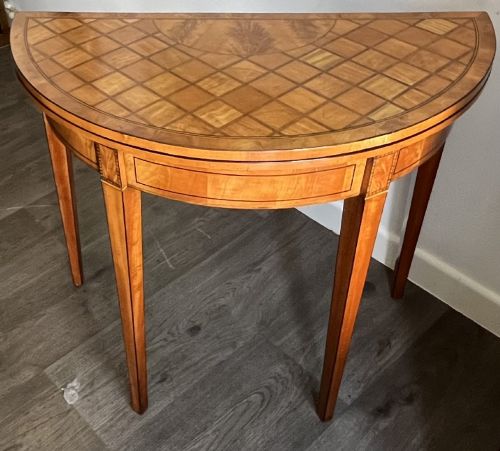


Antique Card and Games Table
An antique card and games table adapts to domestic use through folding tops and tailored compartments, offering versatile surfaces from the Georgian period onward.
Antique Card and Games Table
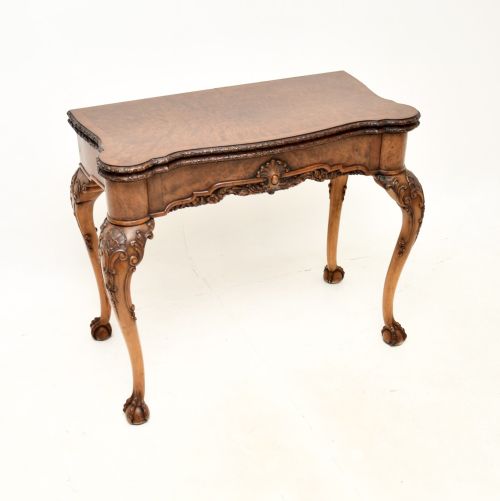
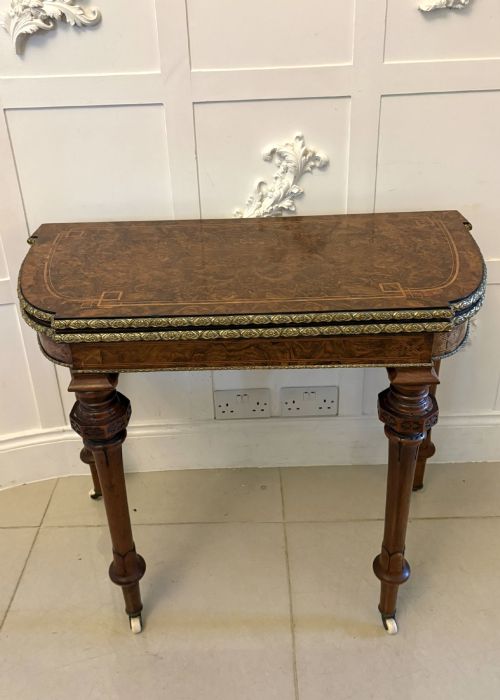
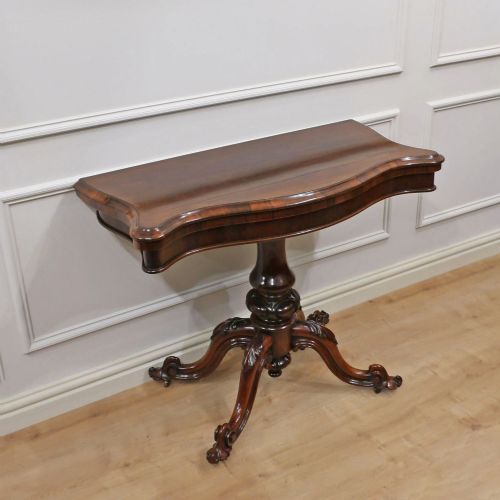
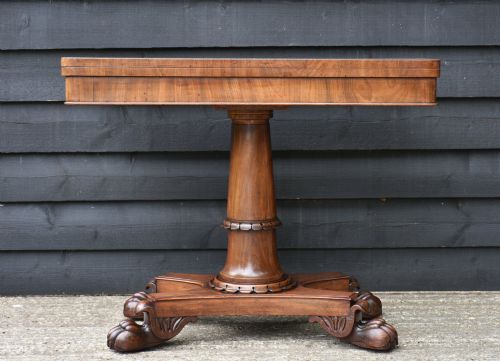
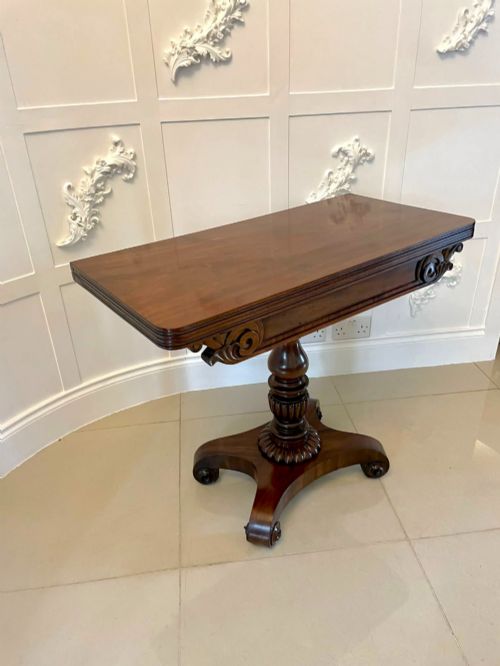
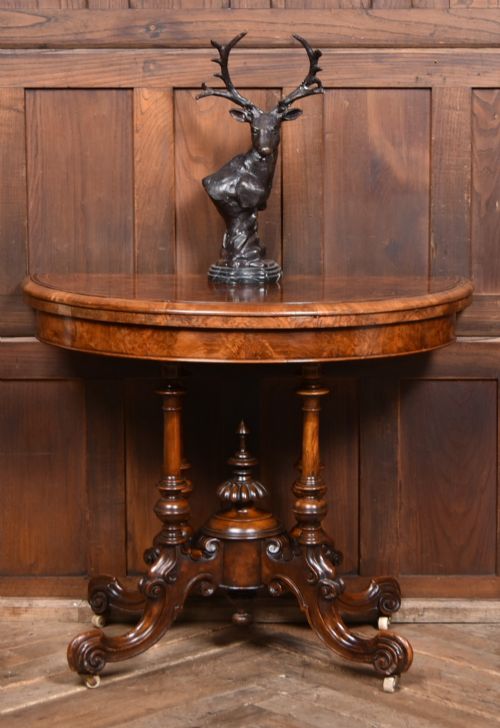
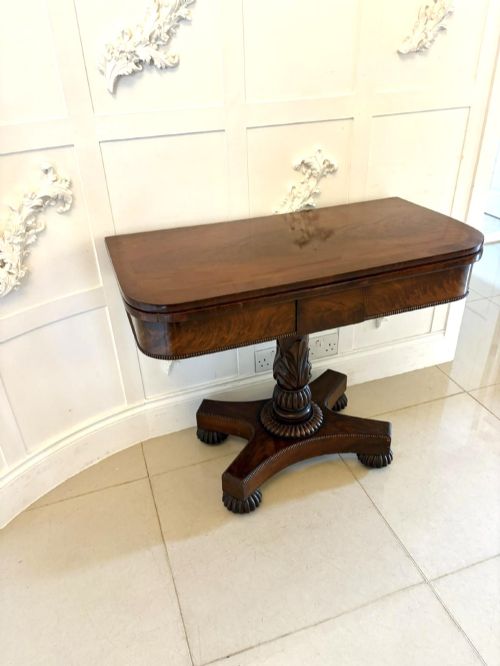
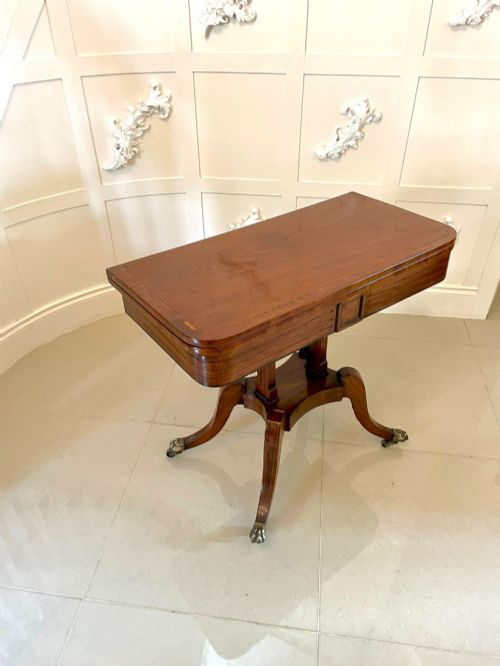
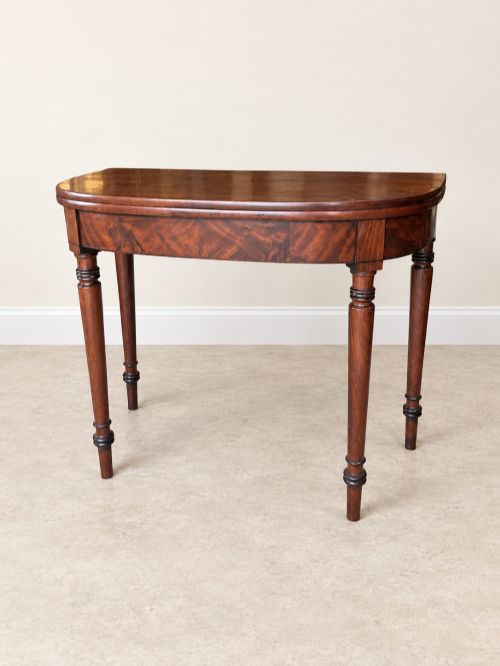
An antique card and games table appears most frequently in forms dating from the George III and Regency eras through to the Victorian and Edwardian periods. These pieces combine closed console or side table formats with hinged leaves that open to reveal baize-lined playing surfaces or chess boards.
The inventory demonstrates a strong representation of fold-over tops, envelope designs, and swivel mechanisms spanning the eighteenth and nineteenth centuries. Alongside dedicated card tables, the selection includes related multi-use formats such as tea tables, console tables, and sewing tables with integrated games compartments.
Materials and Construction
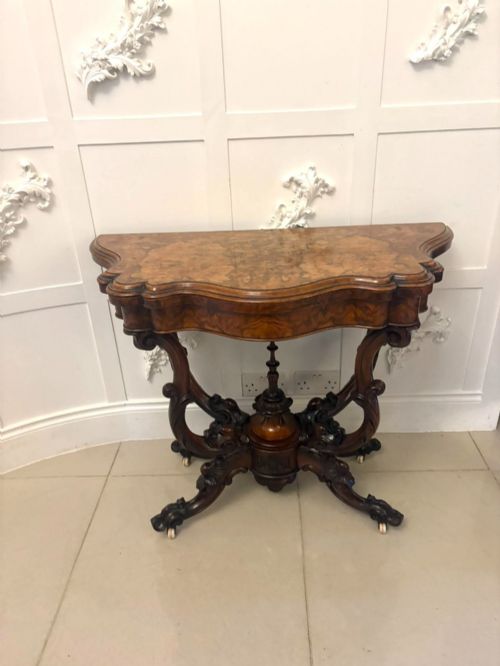
Cabinetmakers utilised dense timbers like mahogany, walnut, and rosewood as structural bases, often applying figured veneers such as burr walnut, flame mahogany, and satinwood to the primary surfaces. Crossbanding in contrasting woods like kingwood and boxwood defines the edges of top panels and friezes.
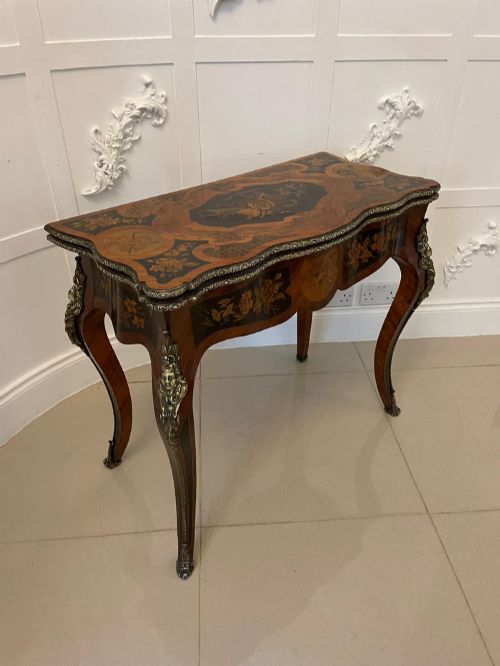
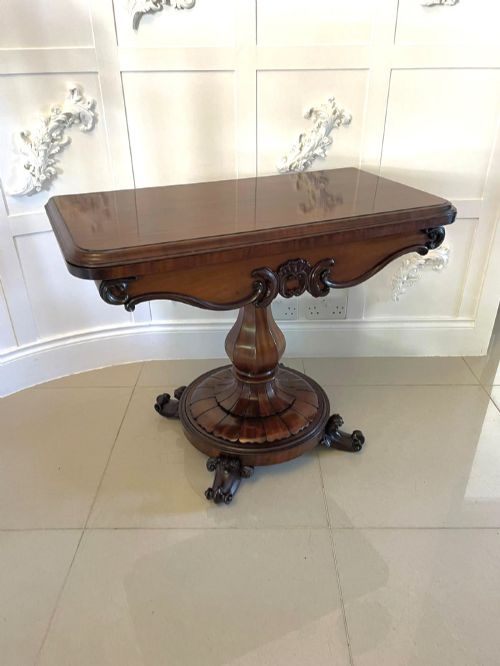
Decorative detailing relies on brass inlays, marquetry, and ormolu mounts, particularly on Regency and Victorian examples. Structural support ranges from pillar and carved basket bases to reeded sabre legs and Gillows style supports.
Listings feature mahogany, rosewood, walnut, and satinwood across periods spanning the eighteenth, nineteenth, and twentieth centuries.
Distinctions in Execution
Quality rests in the precision of the timber selection and the integrity of the hinge and swivel mechanisms that allow the leaves to open flat and stable. Superior examples display tightly figured veneers, such as matched flame mahogany or burr walnut, carried consistently across the fold-over top and frieze.
The refinement of carved elements, hand-inlaid brass work, and marquetry separates standard production items from master-level pieces. Original internal fittings, intact baize linings, and sturdy leg construction determine the overall standard of survival.
George Bullock·Epstein and Co
The Antique Card and Games Table Glossary
- Concertina action
- An expanding frame mechanism that pulls outward as the hinged top unfolds, providing four supporting legs beneath the open leaf instead of two.
- Crossbanding
- A narrow strip of veneer laid around the border of a table top with the grain running perpendicular to the main panel, common in Georgian and Regency pieces.
- Envelope table
- A square card table with four triangular flaps that rotate and fold open outward to reveal a felt-lined playing surface, popular during the Edwardian period.
- Demi-lune
- A half-moon shape characteristic of side and card tables designed to sit flat against a wall when closed.
- Marquetry
- Decorative patterns formed by fitting together contrasting pieces of wood veneer into a paper-thin sheet before applying it to the carcase.
Antique Card and Games Table: Frequently Asked Questions
How do these tables open?
Most pieces utilise a fold-over top that swings open on hinges, resting either on a pivoting leg, a concertina frame, or a rotating swivel mechanism.
Once opened, the upper leaf reveals a lined playing surface, occasionally with corner wells for counters or candlesticks.
Were they used only for cards?
While designed primarily for card games like whist or piquet, many variants served dual purposes as tea tables, console tables, or writing desks.
Some Edwardian and Victorian versions incorporated sewing drawers, chess boards, or multi-game surfaces beneath the folding lids.
How do I date a piece?
Stylistic markers such as reeded sabre legs point toward the Regency era, while cabriole legs and marquetry often indicate eighteenth-century or later revival periods.
Timber choice also aids dating, as satinwood and flame mahogany dominate Georgian examples, whereas burr walnut and kingwood are prevalent in Victorian iterations.
Where should I place one?
These tables fit easily against living room walls as side or console furniture when the top remains folded shut.
Opening the leaf requires clearance around the perimeter, making them suitable as occasional centre tables or functional games surfaces during gatherings.