







Inlaid Backgammon Games Table
An inlaid backgammon games table brings centuries of social play into your home through intricate marquetry and versatile folding surfaces.
Inlaid Backgammon Games Table
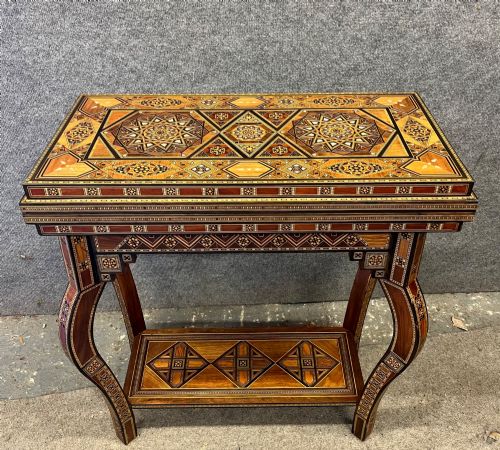
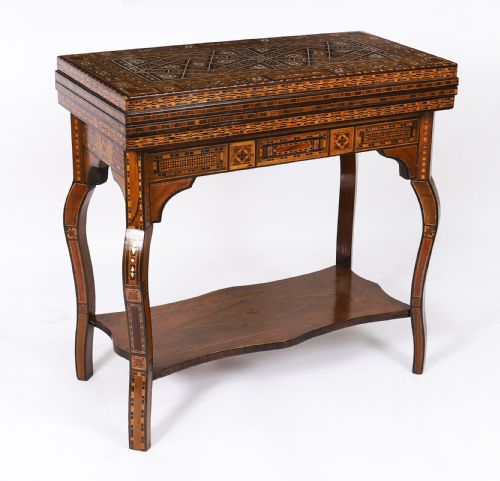
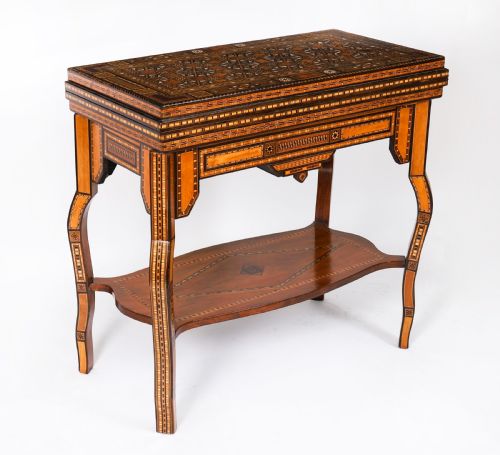
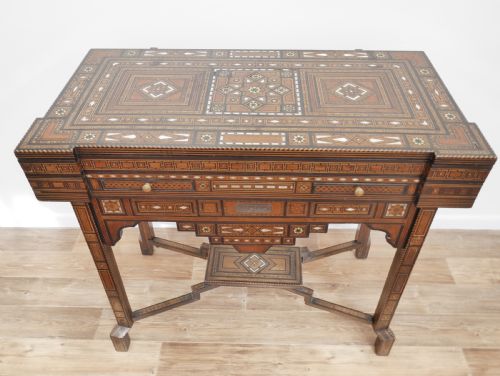
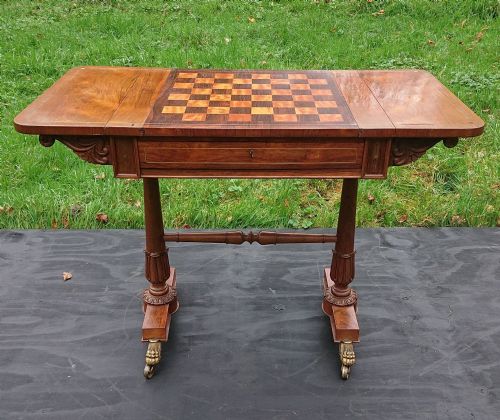
An inlaid backgammon games table provides a dedicated surface for board play while serving as a functional piece of furniture in a reception room. You will frequently encounter Victorian burr walnut examples alongside nineteenth-century Syrian and Levantine pieces featuring intricate geometric mosaic work.
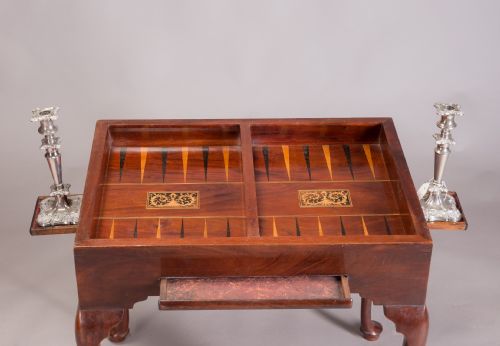
Many of these tables combine multiple functions, offering card and chess playing surfaces alongside backgammon, and occasionally incorporating sewing drawers or work bags. The form adapts from a compact console or foldover top into an expansive board ready for play.
Origins span diverse workshops, from English cabinet makers working in walnut and rosewood to Levantine and Damascus makers utilising complex wood inlay, bone, and mother-of-pearl. This variety ensures that each table reflects the specific social habits and decorative tastes of its period.
How they were made
Cabinet makers constructed the primary carcases of these tables using dense timbers such as walnut, burr walnut, and rosewood, often applying figured veneers to the foldover tops. These solid foundations ensured the structural stability required for opening lids and supporting internal play boards.
The decorative surfaces rely on precise wood inlay, marquetry, and mosaic techniques, frequently incorporating contrasting fruitwoods, bone, and mother-of-pearl. Artisans meticulously fitted individual geometric tiles or floral motifs into the timber surface to create the distinctive Damascus and Victorian patterns.
Inlaid Backgammon Games Table Retail Price Guide 2026
Typical asking prices for inlaid backgammon games table among the pieces listed under this phrase on Sellingantiques today, from the lower quarter to the upper quarter. They describe what is for sale here now, not the wider market.
Listings feature walnut, rosewood, burr walnut, and fruitwood, alongside bone and mother-of-pearl inlay across Victorian, Regency, and Syrian Ottoman styles.
What varies in quality
The standard of an inlaid backgammon games table depends largely on the precision of the marquetry and the richness of the timber figuring on the top. Tables displaying highly figured burr walnut or intricate, multi-material Levantine mosaic work demonstrate superior craftsmanship.
Construction details such as the smoothness of the foldover mechanism, the tightness of the joinery, and the inclusion of original internal game boards or matching counters elevate a piece. Greater attention paid to the hidden interior compartments and the quality of the wood inlay distinguishes finer workshop production.
Gillows
The Inlaid Backgammon Games Table Glossary
- Marquetry
- Decorative veneer work forming pictures or geometric patterns by assembling small pieces of wood, bone, or shell. This technique defines the ornate tops of Victorian and Levantine gaming furniture.
- Burr walnut
- A highly prized timber cut from the abnormal growth of a walnut tree, yielding swirling, knotty patterns. Cabinet makers selected it for its dramatic visual appeal on principal surfaces.
- Foldover top
- A hinged table surface that opens out to double its area, revealing a green baize card surface or a specialised gaming board underneath. It allows a compact console to transform into a play table.
- Levantine
- Pertaining to the eastern Mediterranean region, denoting furniture characterised by intricate geometric mosaic inlay of wood, bone, and mother-of-pearl. These pieces originate from workshops in Damascus and surrounding areas.
Inlaid Backgammon Games Table: Frequently Asked Questions
What games do these tables play?
These tables are built for multiple pastimes, frequently combining backgammon with chess, draughts, and card playing. Their reversible or folding tops allow users to switch between different boards easily.
Inside the compartments, you will often find inlaid wooden points for backgammon alongside dedicated spaces for games counters and cards.
How do I identify the period?
Dating relies on timber selection, decorative styles, and structural forms. Victorian pieces often use burr walnut with floral marquetry, while nineteenth-century Syrian examples feature geometric mosaic work.
Earlier Regency pieces tend to utilise rosewood with simpler classical lines, whereas pieces around nineteen hundred often show distinct Levantine influences.
Are the board components original?
Many tables retain their built-in or removable inlaid boards, though the condition of the playing surface can vary due to heavy use. Examining the joinery around the board reveals whether it belongs to the original carcase.
Some examples also retain matching games counters, adding to their completeness as social objects from the period.
Where should I place a games table?
These pieces function well as side tables or console tables when closed, occupying minimal space in a living room or study. Opening the top allows the table to serve its original purpose as a social gaming hub.
Positioning them away from direct sunlight and strong heat sources protects the delicate wood veneers and complex mosaic inlays.