
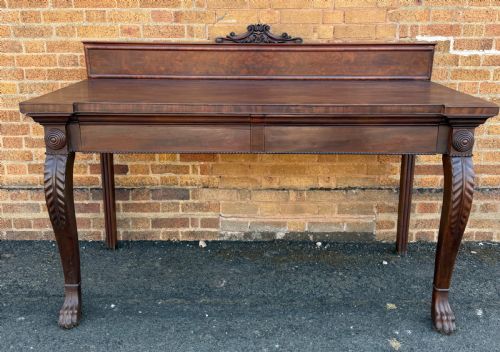


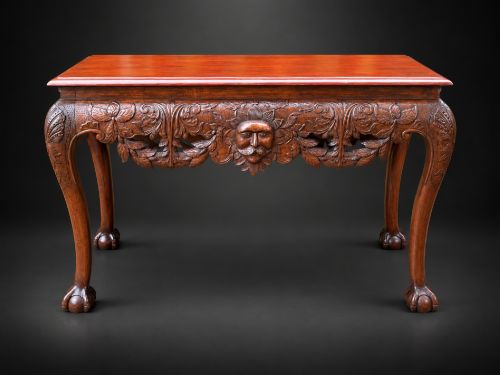


Irish Serving Table
An irish antique serving table is a grand formal dining room piece designed to hold heavy platters, carrying the rich timber and bold carving typical of Irish cabinet-making.
Irish Serving Table
When you search for an irish antique serving table, you encounter large timber furnishings originating from eighteenth and nineteenth-century dining rooms. These pieces served as sturdy sideboards for heavy dishes before food reached the main dining table.
The selections on this page span several distinct periods including George II style, George III, Regency, and William IV. Most examples appear in solid mahogany, frequently displaying the bold design and imposing scale characteristic of Irish workshops.
Alongside conventional console and serving tables, the broader category encompasses related dining room furniture like mahogany dumbwaiters and side tables. Makers such as Robert Strahan & Co. and Mack Williams and Gibton emerge in attribution, showing the high standard of regional craftsmanship.
Materials and construction
Makers relied heavily on rich mahogany timber, prized for its dense grain and capacity for deep carving. Structural integrity was achieved through traditional joinery, supporting substantial loads without modern metal fasteners.
Decorative elements involve intricate hand carving along the frieze and legs, sometimes paired with brass details or mahogany veneers. Artisans shaped sturdy cabriole or turned legs to bear the immense weight of silver and ceramic serving dishes.
Listings feature mahogany serving tables spanning the eighteenth century through the nineteenth century, including specific attribution to Dublin cabinet-makers.
Markers of distinction
Quality rests in the depth and sharpness of the hand carving across the mahogany frame and the choice of timber figurations. Bold design and imposing scale distinguish masterwork dining furniture from standard provincial carpentry.
Attribution to documented makers like Robert Strahan & Co. or Mack Williams and Gibton elevates an object. Original timber surfaces with honest patination contrast sharply against later alterations or stripped finishes.
Robert Strahan & Co.·Mack Williams and Gibton·John Locker
The Irish Serving Table Glossary
- Mahogany
- A durable tropical hardwood imported for high-end furniture production. Its rich reddish-brown tone darkens gracefully over centuries.
- Dumbwaiter
- A multi-tiered freestanding piece used for serving food without domestic staff present. These tiers rotate around a central wooden column.
- Breakfront
- A piece of furniture where the central section projects forward from the side wings. This architectural arrangement adds depth to large dining room tables.
Irish Serving Table: Frequently Asked Questions
What is an irish antique serving table?
An irish antique serving table is a large timber piece built for eighteenth and nineteenth-century dining rooms to hold heavy platters and dishes.
These furnishings stand apart through their bold proportions, heavy mahogany construction, and distinct regional carving styles.
How were these tables used originally?
Staff placed heavy serving dishes, silver platters, and utensils on these surfaces before transferring food to the main dining table.
They acted as auxiliary furniture in grand homes, keeping heavy items accessible yet out of the way of guests.
How do I date an irish serving table?
Dating relies on examining the timber species, joinery methods, and stylistic cues from periods like George III, Regency, or William IV.
Cabinet-making conventions shifted from restrained Georgian lines to bolder Regency and Victorian interpretations over the decades.
Where should I place one at home?
These large tables suit spacious dining rooms, grand hallways, or wide living areas where their imposing scale can be appreciated.
Ensure the room has adequate floor space to accommodate their deep footprints and heavy timber presence.