
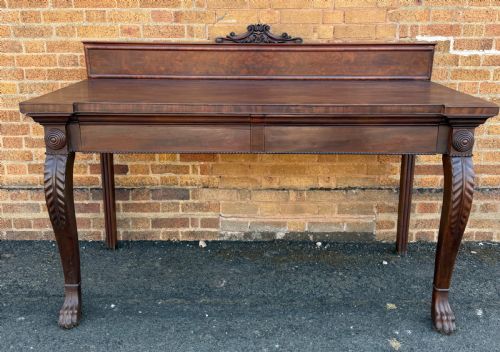


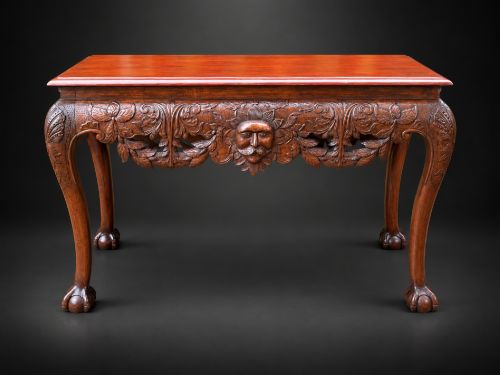


Antique Irish Sideboard Table
An antique irish sideboard table brings noble timber and grand proportion to a dining room, offering both display surface and structural presence.
Antique Irish Sideboard Table
An antique irish sideboard table represents a formal dining room form built to serve food, display silver and anchor large spaces. The pieces gathered here span the Georgian, Regency, William IV and nineteenth-century periods, alongside George II style interpretations from around nineteen ten.
Buyers frequently meet serving tables and console tables constructed in Ireland during these eras. Mahogany forms the backbone of the selection, sometimes enhanced by burr elm and brass details.
Design vocabulary leans heavily into Irish Regency, Grand Regency and George III traditions. Bold carved details and imposing scale distinguish these regional iterations from standard English equivalents.
How they were made
Cabinetmakers utilised dense solid timber and carefully chosen veneers, selecting mahogany as the primary medium for its deep grain and resilience. Burr elm occasionally appears to introduce rich figuring across prominent surfaces.
Construction relied upon traditional joinery techniques combined with deep relief carving. Metalwork elements in brass occasionally provide functional or decorative accents.
The listings span the eighteenth century through to nineteen ten, featuring mahogany as the dominant material alongside brass and burr elm.
What varies in quality
The distinction between ordinary and exceptional examples rests upon the vigour of the carving and the selection of the timber. Boldly carved architectural elements and richly figured mahogany distinguish the finer outputs from simpler workshop pieces.
Proportion and scale dictate the visual success of each table. Pieces retaining crisp edge mouldings and well-balanced proportions command greater attention than those with softened details or heavy restorations.
Robert Strahan And Co·Mack Williams And Gibton·The Woodworkers Ltd Kilkenny
The Antique Irish Sideboard Table Glossary
- Serving Table
- A large open table designed for dining rooms to hold platters and silver before service. It sits against the wall without cupboards underneath.
- Console Table
- A table fixed or placed against a wall, frequently supported by ornamental brackets or legs at the front. These pieces serve decorative display functions in reception rooms.
- Mahogany
- A durable tropical hardwood imported for high-end furniture manufacture. Its stability makes it ideal for carving and polished surfaces.
- Burr Elm
- A knotted growth timber showing swirling grain patterns. Cabinetmakers used it for decorative veneer panels.
- Breakfront
- A piece of furniture where the central section projects forward from the flanking wings. This architectural layout creates depth and shadow.
Antique Irish Sideboard Table: Frequently Asked Questions
Where did these tables stand?
These tables stood primarily against the dining room wall to hold heavy serving dishes and silver utensils during large meals.
In grand houses, they also occupied entrance halls and reception rooms as architectural console surfaces.
How do I spot Irish pieces?
Irish furniture makers of the period often favoured heavier proportions and deeply undercut carving compared to English contemporaries. Native timbers and distinct regional design motifs further identify these pieces.
Makers such as Robert Strahan and Mack Williams and Gibton left documented markers of their Dublin workshops.
How do I care for mahogany?
Maintain mahogany surfaces by dusting with a dry lint-free cloth and avoiding silicone polishes. Keep the wood away from direct heat sources and strong sunlight to prevent timber shrinkage and fading.
Periodic application of traditional wax feeds the grain and preserves the depth of the finish.
What is the difference between George III and Regency?
George III pieces generally display classical eighteenth-century restraint with balanced proportions and carved restrained ornament. Regency furniture moves towards bolder archaeological influences inspired by classical antiquity.
Irish Regency examples often amplify these traits with heavier mouldings and dramatic scale.