



Inset Marble Plant Display
An inset marble plant display is a sturdy decorative surface designed to elevate jardinieres and urns, bringing botanical specimens into proper view.
Inset Marble Plant Display
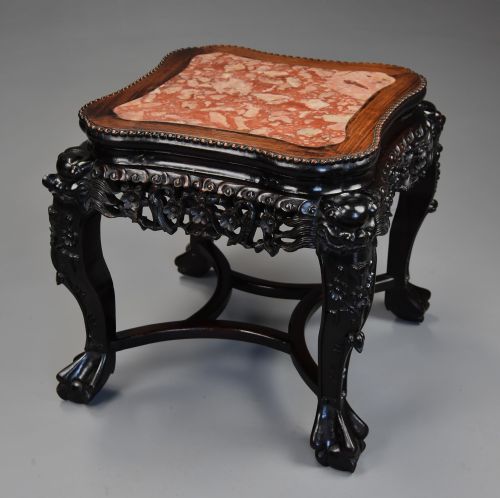
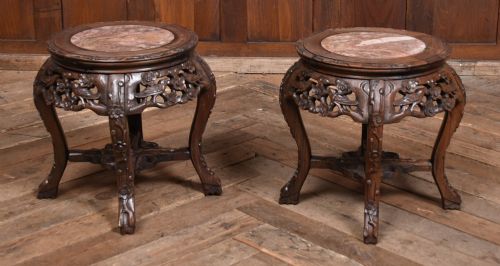
An inset marble plant display provides a stable, cool surface suited for heavy jardinieres, urns, and large botanical specimens. These furnishings arrive primarily from the nineteenth century, encompassing Victorian and Meiji periods alongside extensive Qing Dynasty examples.
Buyers encounter forms ranging from low pot stands to tall vase pedestals and compact side tables. The majority originate from Chinese export workshops or French makers, combining dense exotic timbers with fitted stone panels.
The integration of a smooth marble insert prevents water damage from damp pots while adding weight to the base. Such pieces function equally well today as lamp tables or occasional display surfaces in traditional and eclectic interiors.
Materials and construction methods
Cabinetmakers utilised heavy tropical hardwoods including padouk, hongmu, rosewood, mahogany, and ebonised timber to bear the substantial weight of stone and ceramic. These timbers were often intricately carved with traditional foliage, framing, or geometric apron details.
Inset Marble Plant Display Retail Price Guide 2026
Typical asking prices for inset marble plant display among the pieces listed under this phrase on Sellingantiques today, from the lower quarter to the upper quarter. They describe what is for sale here now, not the wider market.
Many of these stands spent their early lives holding damp ferns in gloomy Victorian parlours before retiring to corner tables.
Judging the quality of stands
Quality rests upon the crispness of the timber carving and the density of the chosen hardwood, where deeper relief and heavier woods indicate superior workshops. The grain and figure of the inset marble panel, along with how tightly it fits the surrounding wooden rebate, mark the standard of execution.
Structural integrity also separates standard examples from finer ones, visible in the tightness of the leg joints and the absence of warping in the aprons. Pierced aprons and well-matched timber pairs demonstrate greater workshop skill than simpler, utilitarian forms.
The Inset Marble Plant Display Glossary
- Jardiniere
- An ornamental pot or stand for holding plants or flowers. These items often required robust supporting furniture to prevent tipping.
- Padouk
- A heavy, durable tropical timber valued for its rich reddish-brown colour and stability. It was frequently utilised in high-end Chinese export carving.
- Hongmu
- A translation meaning red wood, applied by Chinese makers to dense, dark hardwoods used for fine furniture. This material takes a high natural polish.
- Rouge marble
- A variegated red limestone featuring white and grey veining, often imported for furniture inserts. Its smooth surface resists moisture from flower pots.
- Meiji Period
- A Japanese historical era spanning from eighteen sixty-eight to nineteen twelve, noted for skilled craft production. Pieces from this time show distinct decorative motifs.
Inset Marble Plant Display: Frequently Asked Questions
What can I put on these stands?
These pieces accommodate potted plants, ceramic urns, bronze vases, and table lamps with ease. The stone insert safely handles minor spills and damp bases without staining the surrounding timber.
Beyond botanical use, they serve well as bedside surfaces or small lamp tables in sitting rooms. Their compact footprints allow them to fit into tight corners and narrow hallways.
How do I care for the marble top?
Wipe the stone regularly with a damp cloth and mild soap, avoiding acidic cleaners that can etch the polished surface. Using felt pads under heavy ceramic pots prevents scratching.
Keep the timber frame nourished with appropriate furniture wax applied sparingly. Avoid placing the furniture near direct heat sources to prevent wood splitting.
Are these stands genuinely old?
The pieces available date predominantly from the nineteenth century and early twentieth century. Construction details such as hand-cut joinery and aged patination help confirm their age.
Inspect the underside of the top and the wear on the feet for signs of genuine handling and oxidation. Different regional traditions from this era exhibit characteristic tool marks and joinery methods.
Can I use them outdoors?
These furnishings are designed strictly for interior environments and should not be left outside. Exposure to rain and fluctuating temperatures will damage the timber and loosen the marble inserts.
Keep them away from damp conservatories where extreme humidity might affect the wood glue and joints. Indoor placement ensures the polish and joinery remain stable.