

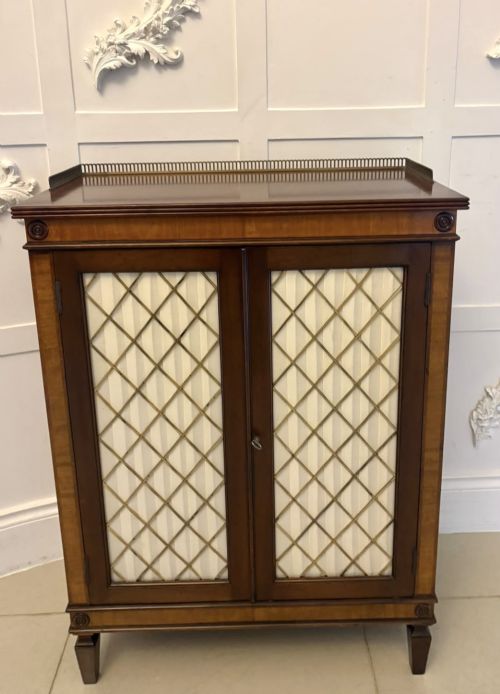
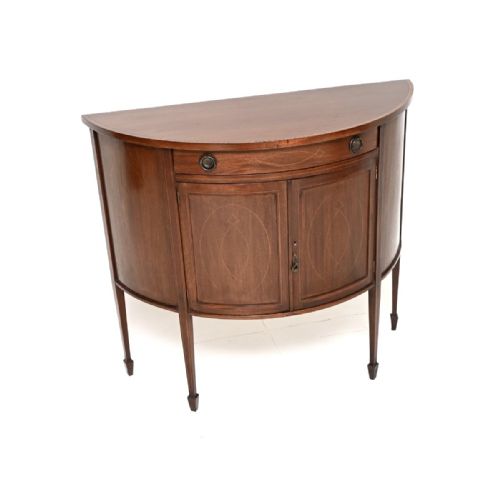
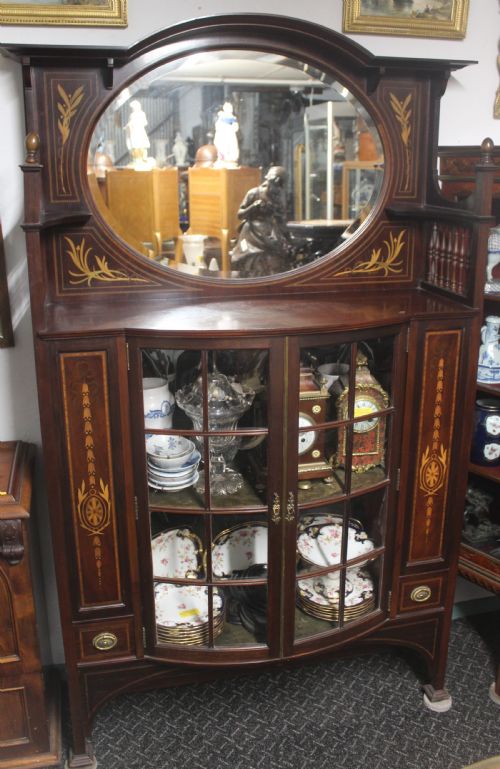
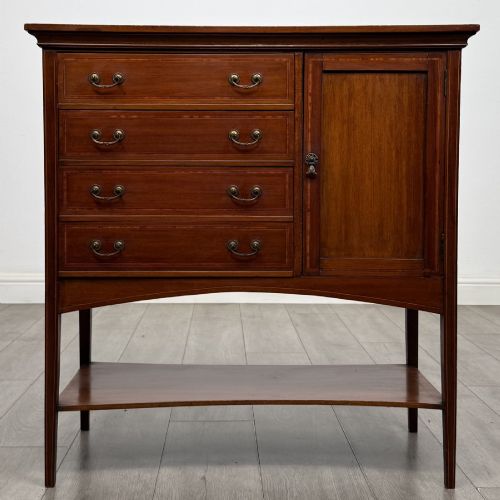
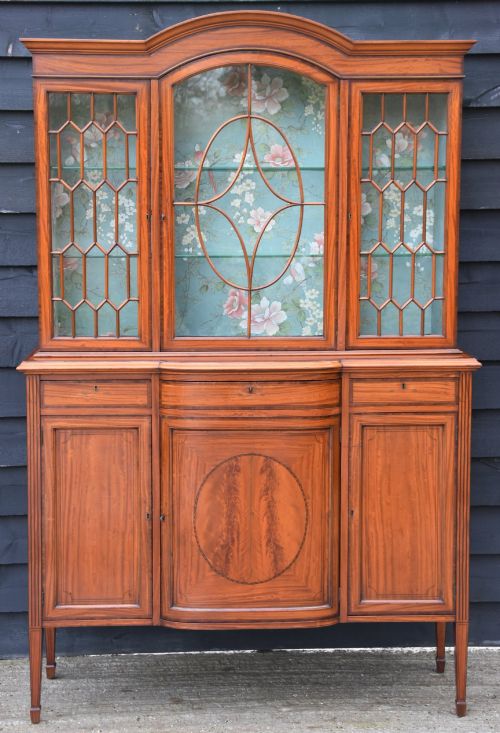
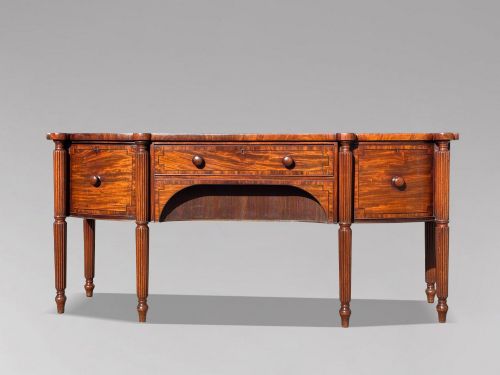
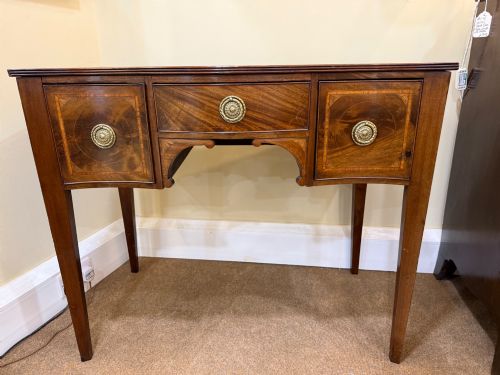
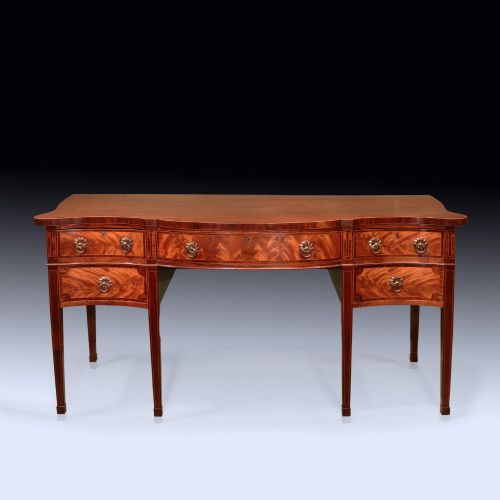
Inlay Mahogany Sideboard
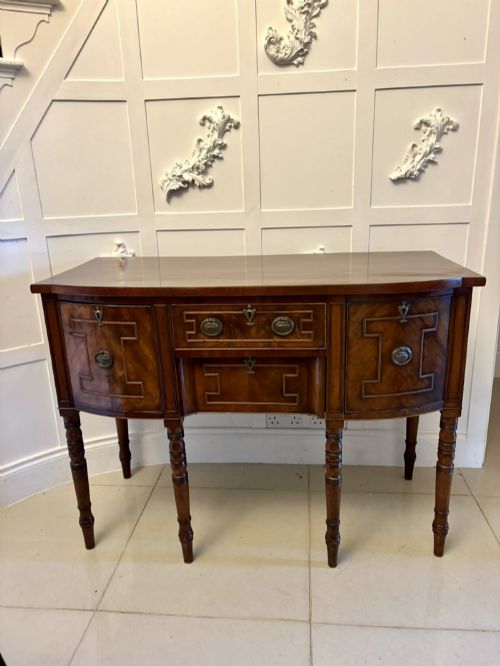
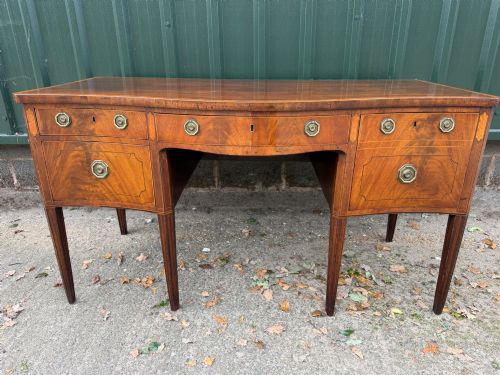
An inlay mahogany sideboard brings a disciplined warmth to a room, offering both substantial timber surfaces and refined decorative banding.
Inlay Mahogany Sideboard
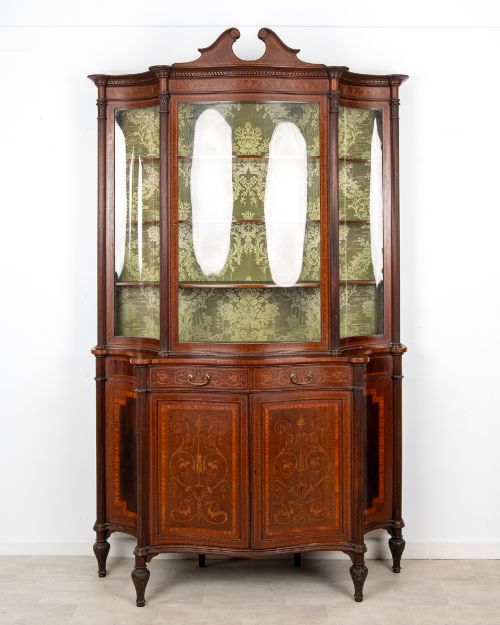
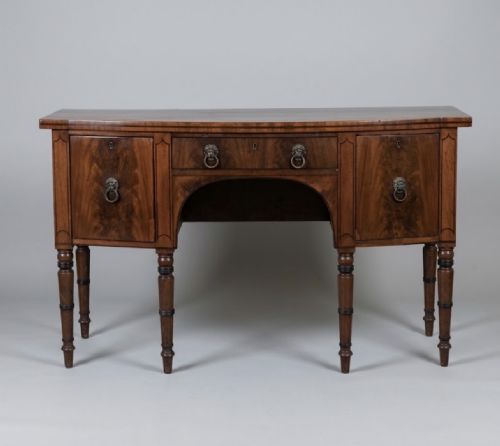
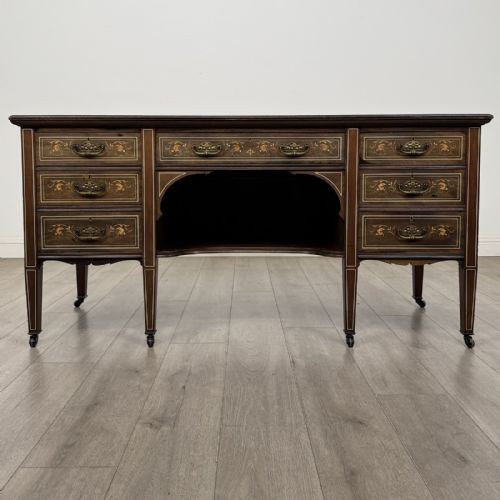
When you search for an inlay mahogany sideboard, you encounter case furniture designed for dining rooms and grand halls across multiple eras. The pieces span the Georgian, Regency, Victorian, and Edwardian periods, alongside later twentieth-century interpretations in the Sheraton Revival style.
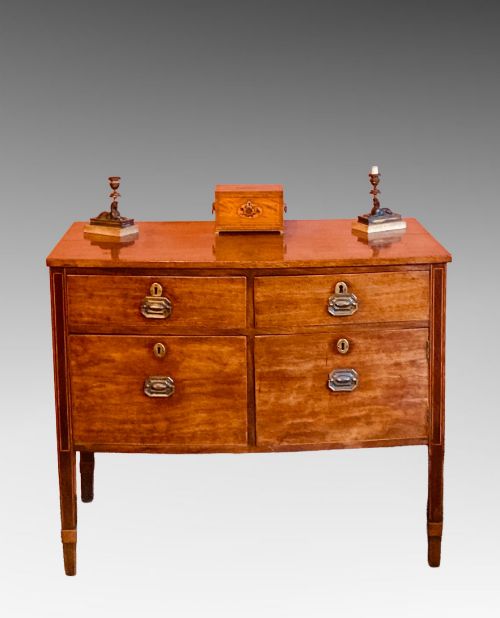
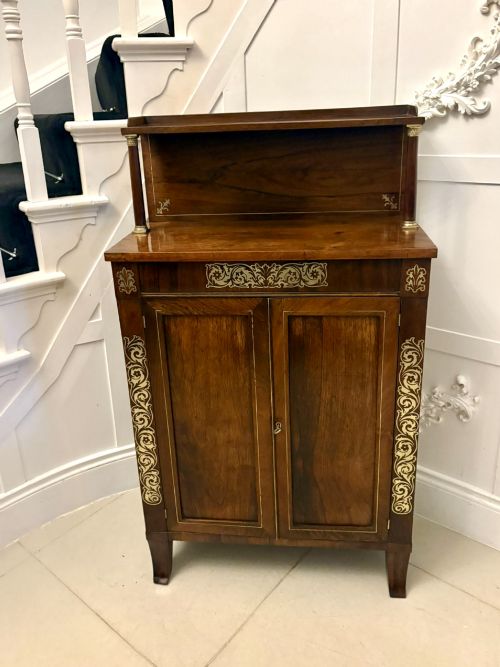
The most common form on this page is the bowfront or serpentine sideboard, constructed to curve outward or inward in the manner established in the eighteenth century. Alongside traditional sideboards, you will find related side cabinets, chiffoniers, and server buffets that share the same timber vocabulary.
Origins range from English country workshops to metropolitan London cabinet makers, with occasional continental examples in Dutch marquetry. These items served a practical domestic function for storing silver and serving food, while displaying the status of the household through figured grain and contrasting stringing.
Timber and technique
Makers utilised solid mahogany and flame mahogany veneers, selected for deep reddish-brown tones and swirling grain patterns. Structural carcases relied on sturdy secondary timbers, while the outer surfaces received carefully matched veneers to create symmetrical visual weight.
Decoration depended on intricate stringing and crossbanding executed in lighter woods. Satinwood, boxwood, and ebony were cut into thin strips and inlaid into channels carved directly into the primary mahogany ground, often forming geometric borders, fan motifs, or urns.
Metal mounts and brass handles provided functional accents, frequently taking the form of lion paw feet or ring pulls. In Regency and later examples, brass inlay was sometimes set flush into the timber to complement the darker mahogany body.
Inlay Mahogany Sideboard Retail Price Guide 2026
Typical asking prices for inlay mahogany sideboard among the pieces listed under this phrase on Sellingantiques today, from the lower quarter to the upper quarter. They describe what is for sale here now, not the wider market.
Listings feature mahogany sideboards spanning the eighteenth, nineteenth, and early twentieth centuries, incorporating satinwood, boxwood, and brass inlay across diverse regional workshops.
Gradations of craftsmanship
The distinction between ordinary and exceptional pieces rests upon the selection of timber and the precision of the cabinet work. Superior examples display carefully chosen flame or figured mahogany across the entire front, rather than relying on plain boards for the less visible drawers.
Inlaid decoration reveals the skill of the artisan through tight joints and clean lines. High-quality stringing remains flush with the surrounding mahogany and follows curves without splintering, whereas lesser work shows visible gaps or uneven filler around the contrasting woods.
Structural integrity and original proportions define the upper tier of these items. Pieces retaining their original brass hardware, well-fitted drawer linings, and tapered or carved legs without heavy restoration command greater appreciation from collectors.
Hewetsons London·Maple and Co
The Inlay Mahogany Sideboard Glossary
- Bowfront
- A convex curved cabinet front that swells outward in the centre. This shape was particularly popular during the Georgian and Regency periods to soften the appearance of long dining room furniture.
- Serpentine
- A front contour characterised by a convex curve flanked by two concave curves, or vice versa. It requires advanced woodworking skill to veneer and inlay accurately along these opposing angles.
- Satinwood
- A pale, golden-yellow exotic timber used extensively for contrasting inlay and stringing. Its lustrous grain provides a sharp visual boundary against dark mahogany.
- Crossbanding
- A strip of veneer laid perpendicularly to the surrounding grain, usually along the outer edges of a drawer front or top. This technique frames the primary wood panel.
- Chiffonier
- A low cabinet featuring shelving or a small superstructure on top, evolving from earlier sideboard designs. They became common in nineteenth-century parlours for storing books and glassware.
Inlay Mahogany Sideboard: Frequently Asked Questions
How do I distinguish George III from Edwardian pieces?
George III pieces date from the late eighteenth or early nineteenth century and typically display hand-cut dovetails, heavy timber framing, and subtle, elegant proportions. The patination on the mahogany is deep and developed through generations of polishing.
Edwardian pieces, often built in the Sheraton Revival style around nineteen-hundred, tend to use brighter satinwood inlay, lighter internal construction, and machine-assisted precision. They emulate earlier Georgian designs but often incorporate softer secondary woods.
Were these sideboards used for dining?
Yes, these items were built specifically for the dining room to assist with the service of meals. They provided surface space for dishes and deep drawers for storing cutlery, table linen, and serving platters.
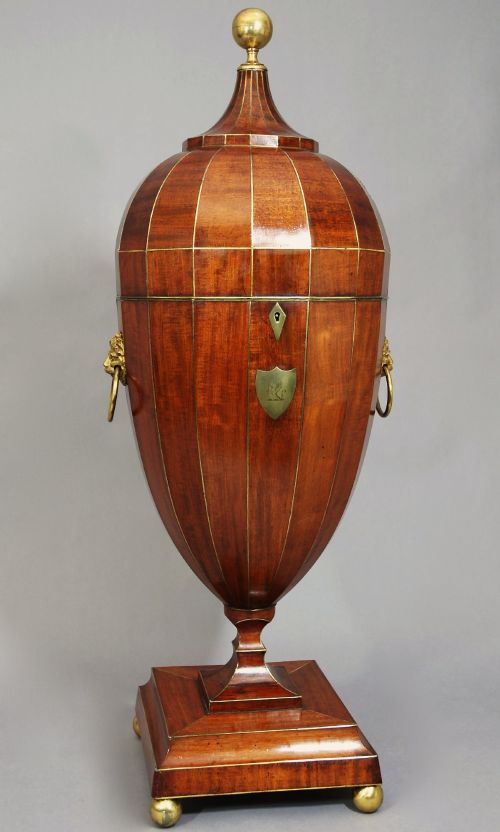
In grand houses, they worked alongside knife boxes and cellarets to organise the dining service. Today, their generous proportions make them practical storage consoles for modern living spaces.
What does flame mahogany mean?
Flame mahogany refers to veneer taken from the fork where a branch meets the main trunk of the tree. This specific cut produces a distinctive, feather-like flame pattern with rich optical depth.
Makers prized this figure for drawer fronts and central cabinet doors, arranging symmetrical pairs to create striking visual effects. It represents the height of decorative timber selection in antique case pieces.