
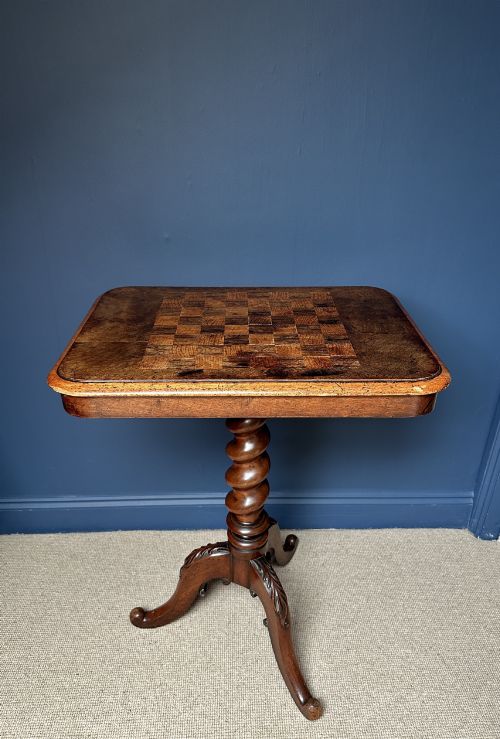
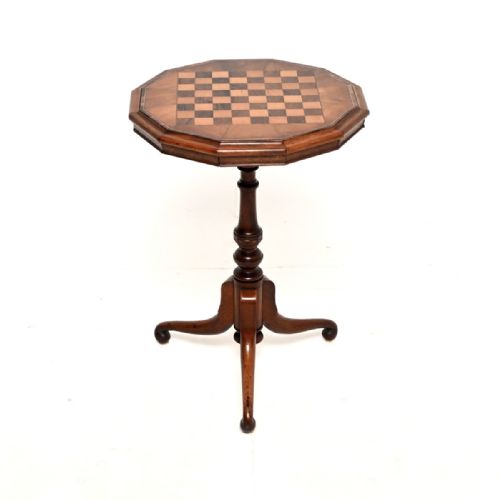


Inlay Chessboard Table
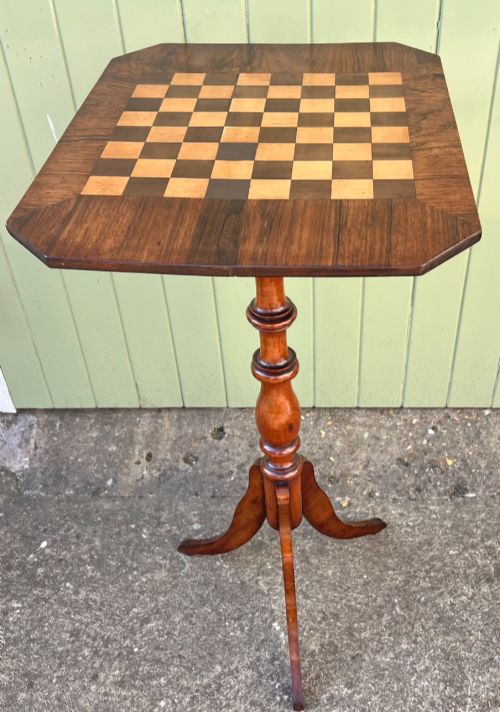
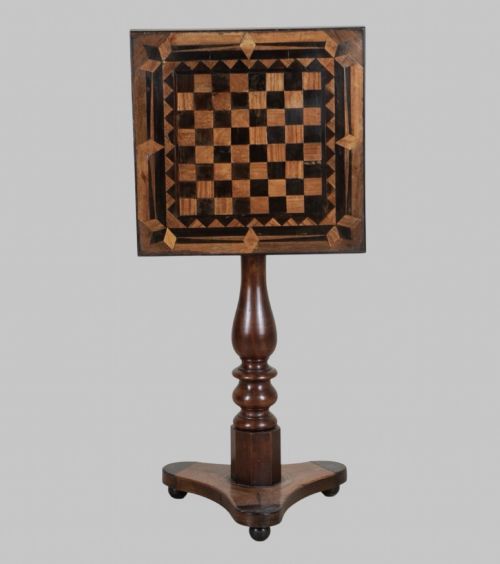
An inlay chessboard table brings both a functional playing surface and a refined centrepiece to a room, uniting timber craftsmanship with traditional board games.
Inlay Chessboard Table
An inlay chessboard table combines a dedicated gaming top with fine cabinetmaking, serving as both a functional board and a domestic furniture piece. When exploring an inlay chessboard table, buyers encounter examples spanning the Georgian, Regency, and Victorian eras, alongside Edwardian and later twentieth-century iterations.
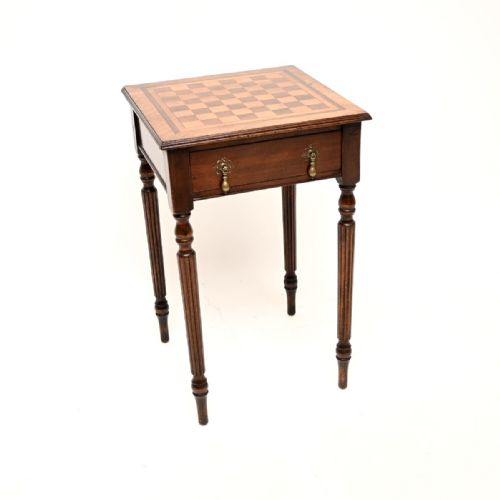
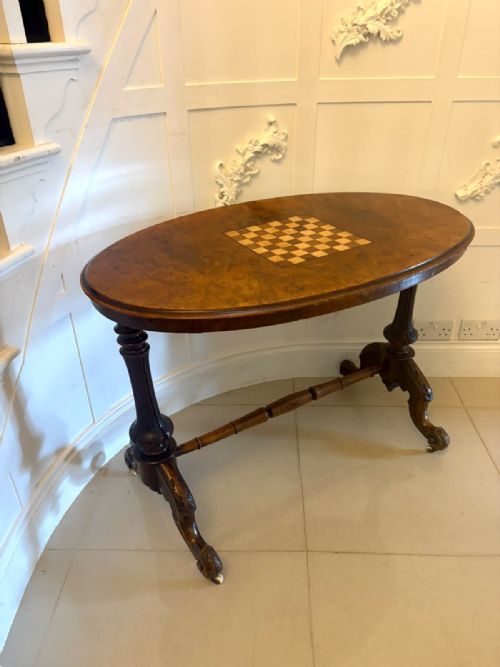
The pieces on this page appear in various forms, from dedicated games boards and compendiums to combination tables that double as sewing or centre tables. Walnut and rosewood dominate the selections, frequently paired with lighter woods like boxwood and satinwood to delineate the playing squares.
Origins vary across the inventory, encompassing English workshops, Swedish Biedermeier designs, Anglo-Indian pieces, and Kashmiri marble works. Buyers are most likely to meet walnut or mahogany specimens featuring fitted drawers, turned pedestals, or carved tripod bases alongside the integrated board.
Materials and construction methods
Cabinetmakers constructed these tables using dense hardwoods such as mahogany, walnut, and rosewood for the structural frames, legs, and veneers. Burr walnut and birch provide rich grain patterns across the tabletops, while satinwood brings a pale contrast.
The contrasting squares of the chessboard rely on precise marquetry and inlay techniques, alternating light and dark timbers like boxwood and ebony. In some instances, specialised regional materials such as inlaid marble feature on the playing surface.
Joinery techniques include turned pedestals, carved centre columns, and stable tripod or four-pillar supports, frequently incorporating small drawers to house playing pieces and sewing accessories.
The listings span the Georgian, Regency, Victorian, and Edwardian periods, utilising walnut, mahogany, rosewood, boxwood, ebony, and satinwood.
Factors determining quality
The precision of the wood inlay work marks the primary distinction between standard and superior pieces, with tightly fitted contrasting squares requiring immense skill from the maker. Gaps, uneven joins, or crude alignment betray lesser craftsmanship.
Timber selection dictates the visual depth of the furniture, where figured burr walnut, rich rosewood, and clean satinwood elevate the overall presence of the table. Plain or poorly matched secondary timbers reduce the visual harmony.
Structural integrity and the retention of original mechanisms, such as smooth-running drawers or solid pillar supports, separate well-preserved examples from those compromised by heavy restoration or wear.
The Inlay Chessboard Table Glossary
- Inlay
- The technique of inserting pieces of contrasting material into a recessed base to form a decorative design. On these tables, inlay defines the light and dark squares of the chessboard.
- Marquetry
- Form of inlay that applies decorative veneer pieces to a structural surface to create pictorial or geometric patterns. This method frequently decorates the borders surrounding the playing board.
- Compendium
- A boxed or table-form collection containing multiple games and gaming equipment. These sets often include chess, checkers, and backgammon components within a single cabinet.
- Biedermeier
- A Central European style dating from the nineteenth century emphasising clean lines, utilitarian comfort, and minimal ornamentation. Swedish examples in this tradition utilise pale birch timbers.
- Scumbled
- A decorative paint technique designed to simulate the grain of more expensive wood. This finish appears on specific Regency games tables in the selection.
Inlay Chessboard Table: Frequently Asked Questions
What is an inlay chessboard table?
An inlay chessboard table is a piece of furniture featuring a permanently integrated board constructed from contrasting wood veneers or stone. It serves as both a table for daily use and a dedicated surface for chess and related games.
Such tables often incorporate multi-functional designs, functioning as sewing tables, centre tables, or general games compendiums with storage drawers for pieces.
How do I date a games table?
Dating relies on observing structural characteristics, timber choices, and stylistic traits associated with specific historical periods. Georgian and Regency pieces often feature tapered legs or classical pillar supports, while Victorian examples frequently showcase heavier carved walnut frames.
Construction methods, such as dovetailing in the drawers and the type of veneer applied, also provide clear indicators of the period in which the table was manufactured.
Where were these tables made?
The listings include pieces originating from English workshops, Swedish makers, and international centres like Kashmir, India. British and European cabinetmakers produced the majority of the wooden walnut and rosewood variations.
Regional preferences influenced the choice of materials, such as birch in Sweden or marble imported from international trade routes for specific stone-topped chess tables.
How do I care for antique wood?
Preserving antique wood tables requires maintaining stable indoor humidity levels and keeping them away from direct heat sources and strong sunlight. Regular dusting with a soft, dry cloth prevents particulate accumulation on the polished surfaces.
Applications of appropriate wax polish help nourish the timber and maintain the lustre of veneers without building up heavy chemical residue over time.