


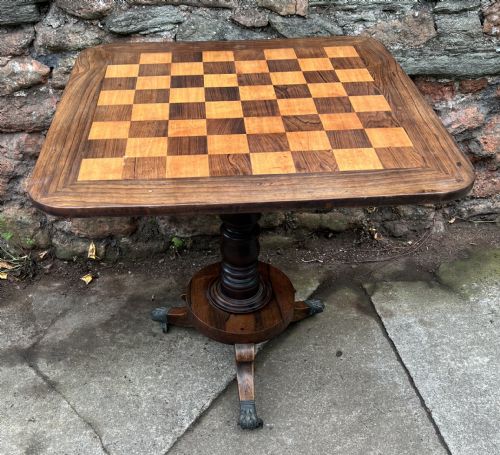
Wooden Chess Board Table
A wooden chess board table combines a functional playing surface with domestic furniture, bringing traditional strategy into the parlour.
Wooden Chess Board Table
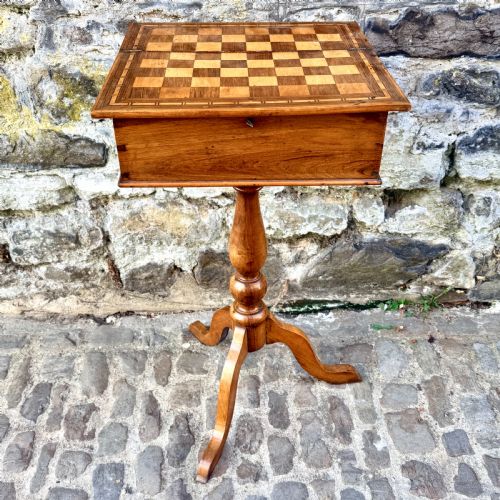
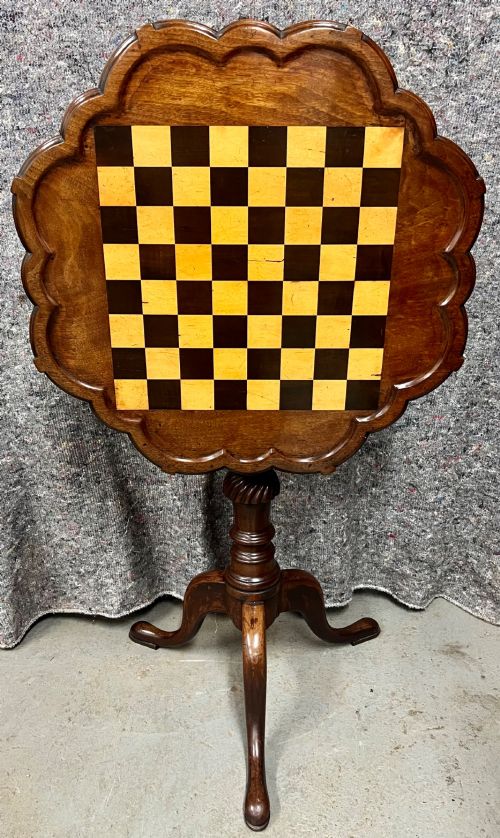
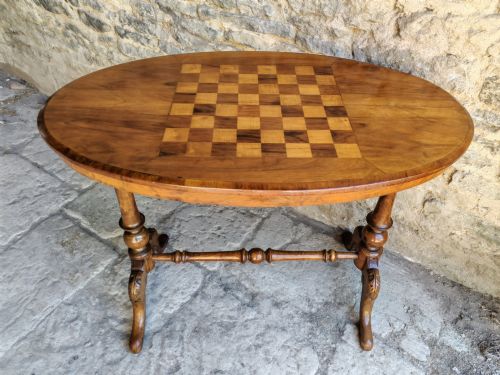
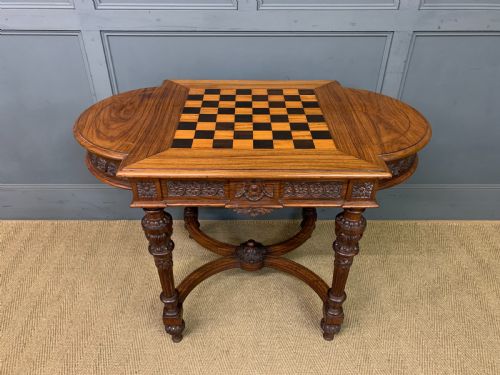
A wooden chess board table serves the dual purpose of an occasional table and a dedicated surface for board games. When you search for a wooden chess board table, you encounter items ranging from George III tripod tables to late Victorian walnut designs and French Provincial examples.
The pieces listed here appear in various forms, including tripod tables with inlaid boards, occasional tables with chequered tops, and comprehensive games compendiums. Origins span English, French Provincial, Anglo-Indian, and Swedish Biedermeier traditions.
You are most likely to meet 19th-century and Victorian walnut, mahogany, or rosewood iterations on this page. These tables integrate board games directly into the sitting room furniture of their respective eras.
How they were made
Cabinetmakers constructed these tables using dense timbers such as mahogany, walnut, and rosewood for the primary structure and tripod bases. Inlays of boxwood, ebony, satinwood, and birch formed the contrasting light and dark squares of the integrated chess boards.
Surface decoration relies heavily on wood inlay and precise marquetry techniques to create crisp, alternating squares. Carpenters balanced structural stability in pedestal and tripod formats with delicate geometric precision on the table tops.
Listings span the Georgian, Regency, and Victorian eras, showcasing walnut, mahogany, rosewood, and inlaid birch.
What varies in quality
The standard of a wooden chess board table rests on the precision of the wood inlay and the selection of cabinet timbers. Finely figured walnut, rosewood, and mahogany distinguish superior examples from simpler utilitarian pieces.
Proportion and execution of the supporting base, whether a tripod pillar or a four-legged occasional frame, dictate the overall elegance. The crispness of the contrast between light and dark woods on the playing surface marks the maker's skill.
The Wooden Chess Board Table Glossary
- Tripod table
- A small occasional table supported by a pillar above three spreading feet. This format allows the table to sit compactly beside a chair or in a corner.
- Inlay
- A technique where pieces of contrasting material are inserted into a recessed surface to form a pattern. In these tables, boxwood and ebony form the chequered grid.
- Games compendium
- A boxed or table-form collection containing equipment for multiple pastimes. These sets often unite chess, draughts, and other traditional parlour games.
- Chequered top
- A surface marked with alternating dark and light squares designed for board games. On these tables, this pattern forms an integral part of the furniture.
- Occasional table
- A small, light table intended for miscellaneous daily use rather than a single fixed purpose. These pieces move easily around the reception room as needed.
Wooden Chess Board Table: Frequently Asked Questions
What is a wooden chess board table?
A wooden chess board table is a piece of furniture featuring a permanent playing surface integrated into the top. It serves as both a functional table for the room and a ready surface for a game.
These pieces emerged in various periods, offering a dedicated space for play without requiring a separate board to be set up.
How were these tables used?
Households utilised these tables in drawing rooms and parlours for evening entertainment and social games. They functioned as everyday occasional furniture when no game was in progress.
The stable tripod or four-legged designs provided a convenient height for seated players to study their moves.
How do I live with a wooden chess board table?
Place the table where natural light illuminates the surface without exposing the timber to direct sunlight. This placement preserves the polished wood and the contrasting inlay.
Treat the surface with care, using coasters or mats if placing objects on the board when not in use for games.
How do I tell periods apart?
Georgian and Regency examples often feature mahogany or rosewood with refined tripod bases and subtle inlay. Victorian and later 19th-century pieces tend to utilise walnut and incorporate varied turned supports.
Regional styles like French Provincial or Swedish Biedermeier display distinct local timber choices such as birch alongside characteristic cabinet proportions.