





Inlaid Wooden Wall Cabinet
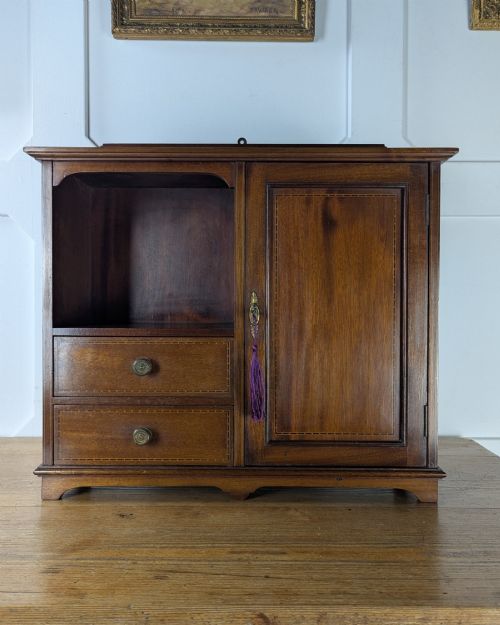
These inlaid wooden wall cabinet pieces are compact display vessels designed for domestic storage, offering both timber warmth and period character to narrow wall spaces.
Inlaid Wooden Wall Cabinet
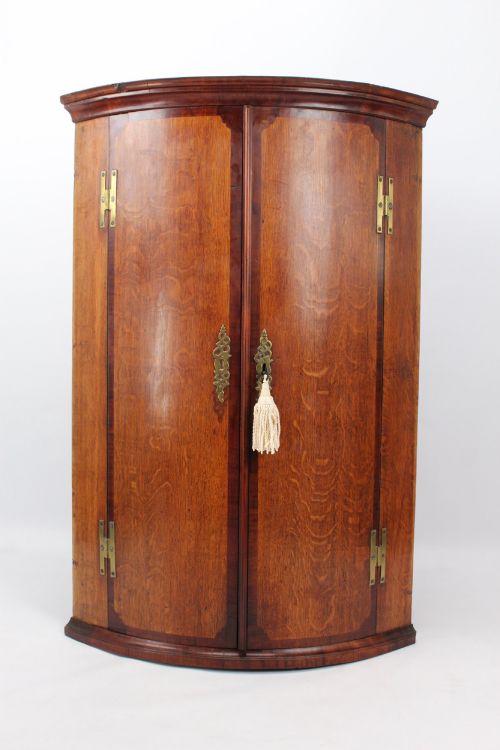
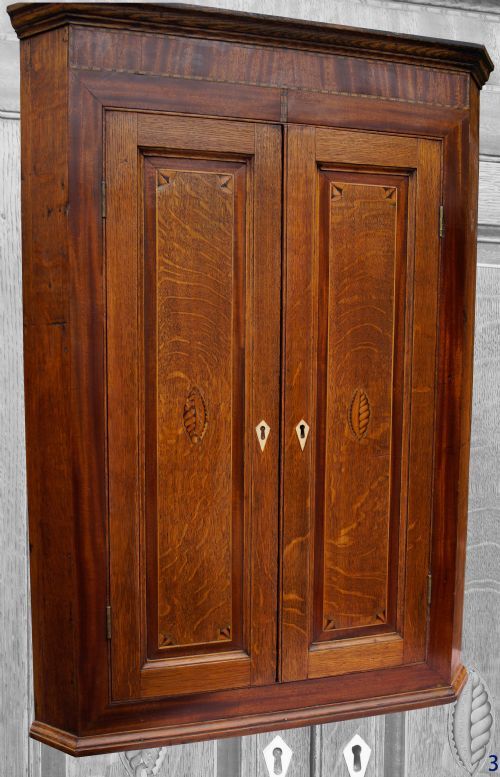
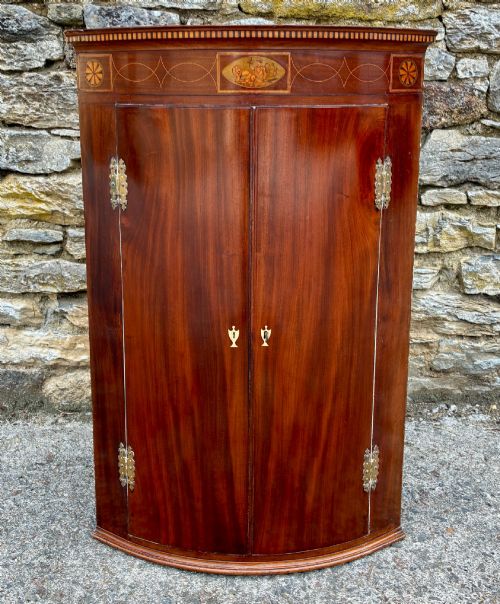
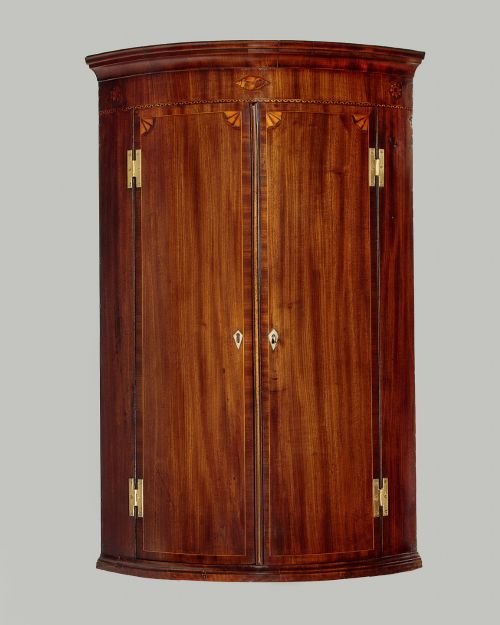
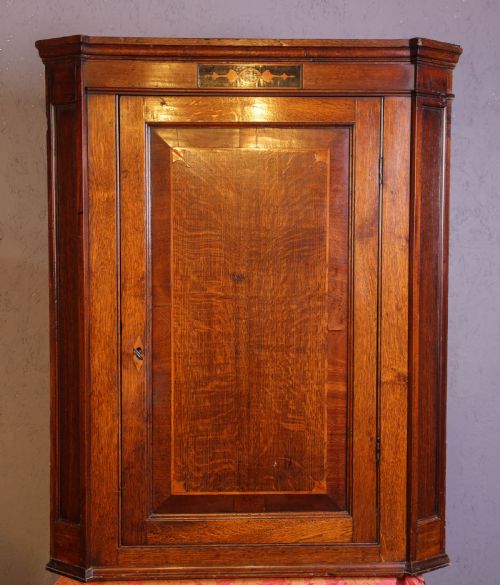
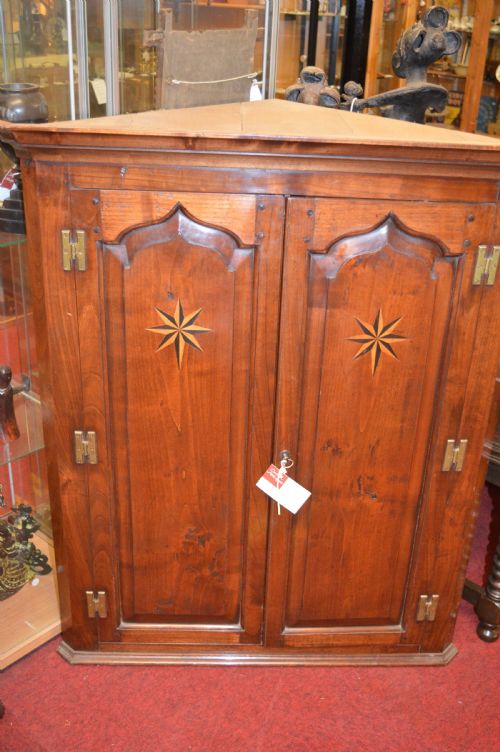
An inlaid wooden wall cabinet typically takes the form of a hanging corner cupboard or bow front wall cabinet, designed to utilise domestic wall space efficiently. The examples found here span from the 18th century through the Georgian and Regency periods, continuing into Victorian, Edwardian, and later 20th century interpretations.
Corner cupboards and hanging cabinets dominate the selection, executed in regional oak, rich mahogany, and occasional satinwood or walnut. Many pieces reflect formal Sheraton or George III styling alongside simpler 19th century country interpretations and Arts and Crafts designs.
Buyers will encounter various configurations including glazed doors, bowed fronts, and hanging shelves, alongside specialised forms like smokers' cupboards and kitchen knife hanging boxes.
Materials and Technique
Cabinet makers utilised solid hardwoods like oak, mahogany, elm, and walnut for the primary carcase and doors, ensuring structural stability for pieces hung upon walls. Timber selection dictated whether a piece received a polished mahogany finish or a simpler waxed oak surface.
Decorative surface enrichment relied upon contrasting veneers and stringing executed in boxwood, satinwood, and bone, alongside intricate wood inlay and occasional abalone details. Brass hinges, escutcheons, and glass panes completed the construction of glazed and panelled doors.
The listings here feature oak, mahogany, satinwood, and walnut timbers, spanning the 18th century through to the Edwardian period and 1930s.
Assessment of Quality
Quality rests upon the crispness of the timber inlay and the proportional harmony of the cabinet, particularly in bow front and corner variations. Finer pieces demonstrate careful timber selection, matching grain patterns across the doors and integrating subtle stringing.
The integrity of the structural joints, the originality of the brass hardware, and the preservation of the original polished or waxed surface finish distinguish finer examples from standard utility pieces.
The Inlaid Wooden Wall Cabinet Glossary
- Bow Front
- A convex curved cabinet front that projects outward from the corners. This shape required skilled joinery to bend or shape the timber and doors accurately.
- Corner Cupboard
- A specialised cabinet built with a triangular plan to fit neatly into the corner of a room. These saved valuable floor space in period interiors.
- Stringing
- A narrow strip of contrasting wood inlaid into the surface of a cabinet to form decorative borders and geometric outlines. It is typical of Sheraton and Regency furniture.
- Escutcheon
- A protective plate surrounding a keyhole, usually fashioned from brass. It prevents the timber surrounding the lock from wearing away through repeated use.
Inlaid Wooden Wall Cabinet: Frequently Asked Questions
How do I hang a heavy wooden cabinet safely?
These wall cabinets require secure fixing directly into wall studs or masonry using appropriate brackets suited to the weight of the timber carcase. Professional installation ensures the piece remains stable and secure over time.
Older cabinets often feature original hanging brackets or reinforced internal corners designed for wall mounting. Check these internal fixing points carefully before hanging any heavy hardwood cupboard.
Were corner cupboards meant for kitchens or parlours?
Period corner cupboards served various domestic functions depending on their size and room placement. Finer mahogany and inlaid examples were typically displayed in parlours or dining rooms for glassware and china.
Simpler oak and country pieces often served utilitarian roles in kitchens or pantries for food storage and household implements. Kitchen knife boxes and smokers' cupboards fulfilled more specialised daily domestic tasks.
How do I care for satinwood and mahogany surfaces?
Maintain timber surfaces by applying a traditional beeswax polish sparingly and buffing gently with a soft cloth. Avoid placing cabinets in direct sunlight or near heat sources to prevent the wood from drying out or warping.
Protect delicate boxwood stringing and wood inlay by keeping humidity levels stable within the room. Gentle dusting with a dry lint-free cloth preserves the natural patina over decades.
How do I distinguish Georgian from Victorian pieces?
Georgian and George III pieces generally exhibit restrained classical proportions, premium mahogany or oak timber, and precise craftsmanship. Their inlay work tends to be delicate and structural rather than purely decorative.
Victorian and later 19th century interpretations often feature denser timbers, heavier brass hardware, and more eclectic stylistic influences including Arts and Crafts or Revival designs.