
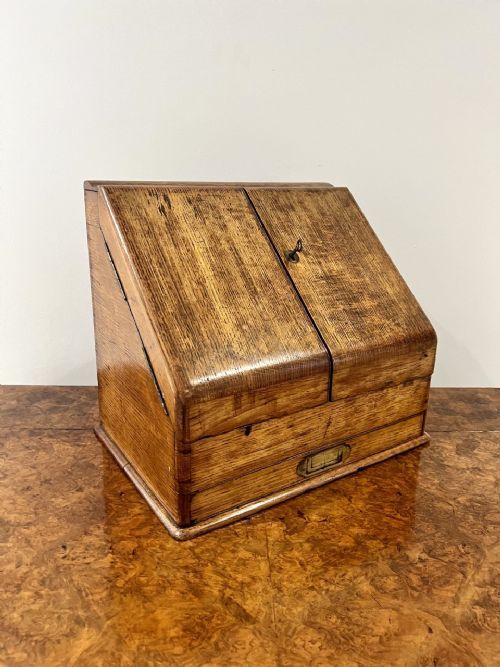


Wooden Key Cabinet
A wooden key cabinet keeps your entrance orderly while bringing the solid character of late nineteenth and early twentieth century joinery into the hall.
Wooden Key Cabinet
When you search for a wooden key cabinet, you are looking for a wall-hanging or surface-mounted box designed to secure and organise household keys. The pieces available here span the Victorian, Edwardian, and Arts and Crafts periods, reflecting the domestic habits of the late nineteenth and early twentieth centuries.
The version you are most likely to meet on this page is a wall-hanging oak cupboard, occasionally incorporating brass mounts or glazed doors. These small cabinets often share design traits with contemporaneous stationery boxes, collectors' cabinets, and shaving mirrors.
Beyond straightforward key cupboards, the selection includes related wall-hanging cabinets and night porters' key cupboards dating from the nineteenth century onward. Each piece demonstrates the practical utility required by period households, combined with the traditional timber construction of the era.
How they were made
Makers built these cabinets using solid regional hardwoods, predominantly oak and elm, chosen for durability and strong grain patterns. Joinery relied on traditional methods suited to small enclosures that endured frequent daily handling.
Hardware played both a functional and decorative role, featuring brass hinges, escutcheons, and mounts that contrasted with the dark timber. Glass panels, mirror glass, and boxwood inlay occasionally appeared on more elaborate Edwardian and Arts and Crafts examples.
Night porters once kept watch over establishments using specialised key cupboards, ensuring late-night arrivals found their rooms ready and secure.
What varies in quality
The standard of a wooden key cabinet rests on the quality of its timber selection and the execution of its joinery. Superior examples display carefully fitted doors, robust interior hooks, and clean framing that remains square over time.
Original hardware, including working locks with matching keys and substantial brass mounts, elevates a piece above simpler utilitarian boxes. Finer execution is also visible in thoughtful surface details such as subtle boxwood inlay or well-balanced proportions.
The Wooden Key Cabinet Glossary
- Oak
- A durable, heavy hardwood with a pronounced grain, frequently utilised in Victorian and Edwardian cabinet making. It forms the primary structural material for the majority of these wall cupboards.
- Escutcheon
- A protective plate surrounding a keyhole, usually fashioned from brass on period cabinets. It serves to reinforce the surrounding timber against wear from the key.
- Arts and Crafts
- A design movement valuing handcraftsmanship and simple forms over mass production, emerging in the late nineteenth century. Cabinets in this style often emphasise the natural qualities of the wood.
- Edwardian
- Pertaining to the reign of King Edward VII, spanning the early twentieth century until nineteen hundred and ten. Pieces from this era often feature lighter proportions and refined decorative details.
- Tantalus
- A locking drink cabinet holding decanters visible through a wooden and metal frame. While functionally distinct, these share the secure locking mechanisms and timber construction typical of period key boxes.
Wooden Key Cabinet: Frequently Asked Questions
How were wooden key cabinets used?
These cabinets were mounted near entrances or in hallways to keep household and estate keys secure and organised. Households relied on them to restrict access to rooms and outbuildings.
They also served as functional furniture that kept everyday clutter out of sight. Their presence near the front door made them a central hub for household management.
Where should I hang a wall cabinet?
A hallway or entryway provides the most authentic placement, mirroring their original domestic context. Ensure the wall structure can support the weight of the solid timber.
Keep them away from direct heat sources and strong sunlight to protect the finish of the wood. Height placement depends on ease of daily reach and existing wall proportions.
How do I tell Victorian from Edwardian pieces?
Victorian cabinets generally display heavier proportions, darker finishes, and more robust brass mounts. The timber grain is often prominent, reflecting mid to late nineteenth-century tastes.
Edwardian pieces tend toward lighter framing and occasionally incorporate subtle inlay or brighter hardware. The overall aesthetic shifts from heavy solidity to a cleaner, more streamlined appearance.
Do these cabinets come with working keys?
Many period cabinets retain their original locks and matching keys, though this varies by individual piece. Working locks are common on survivors intended to secure contents.
Descriptions note the presence of keys where applicable. Replacement keys can sometimes be fitted by specialists if the original is missing.