


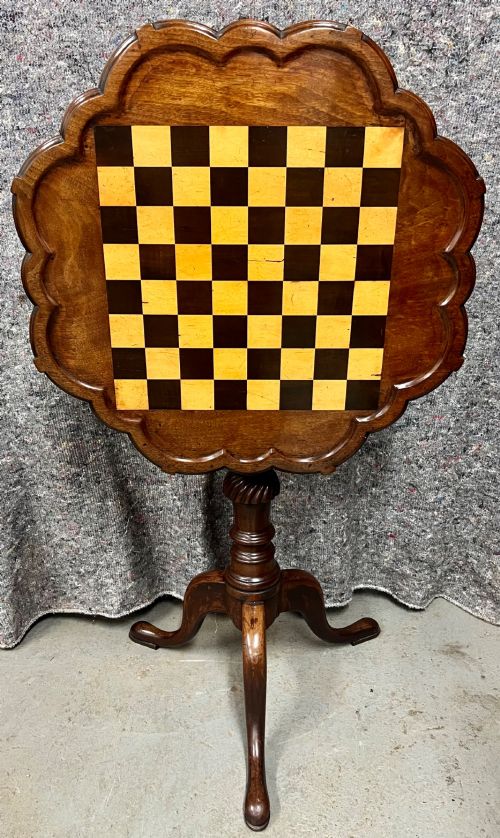

Inlaid Wooden Tea Table
An inlaid wooden tea table brings refined craftsmanship and utility to a room, offering a decorative surface rooted in centuries of cabinet-making.
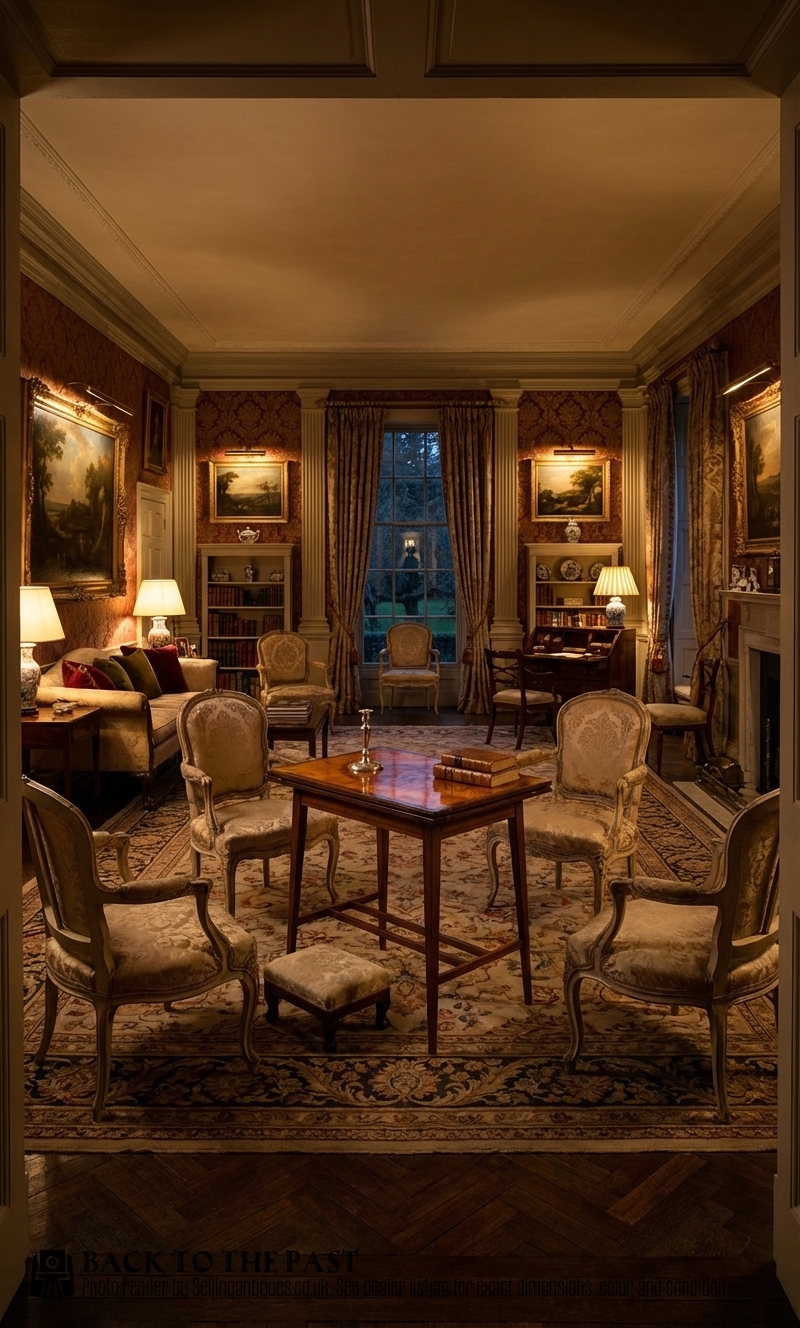
Inlaid Wooden Tea Table
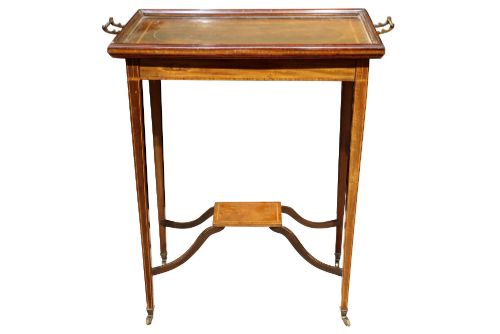
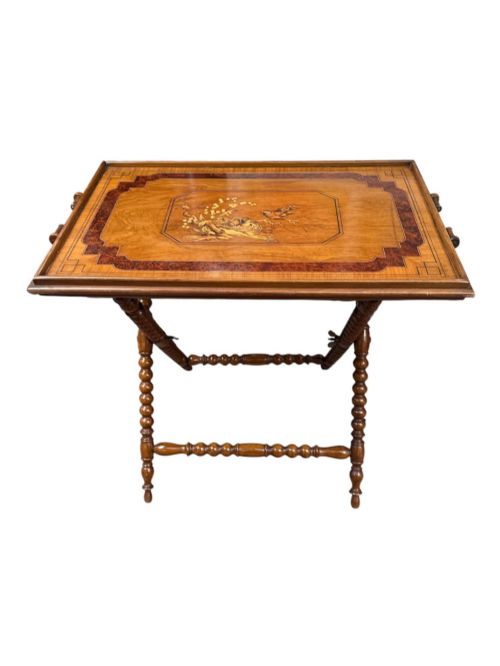
An inlaid wooden tea table serves as a functional and decorative item, originating across periods from the 18th century through to the 1930s. These pieces include specific forms such as Pembroke tables, card tables, and occasional tables designed for domestic use.
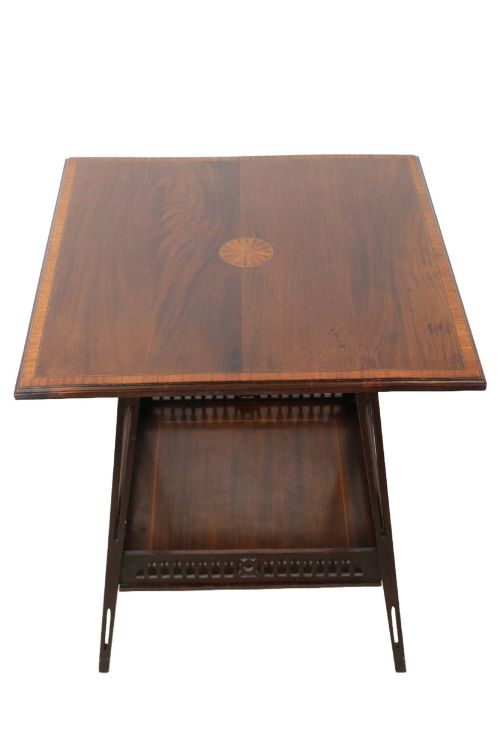
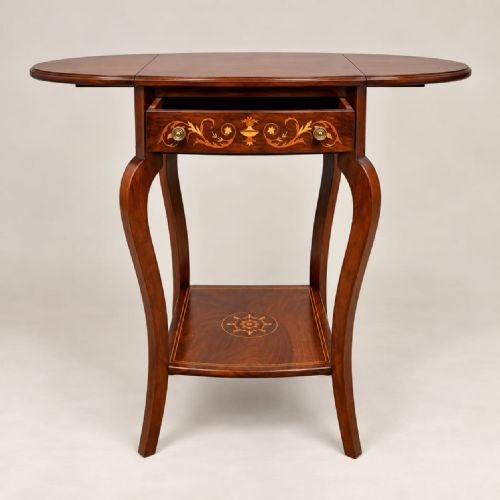
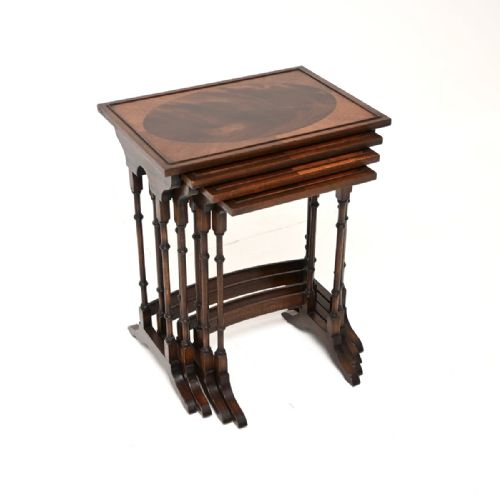
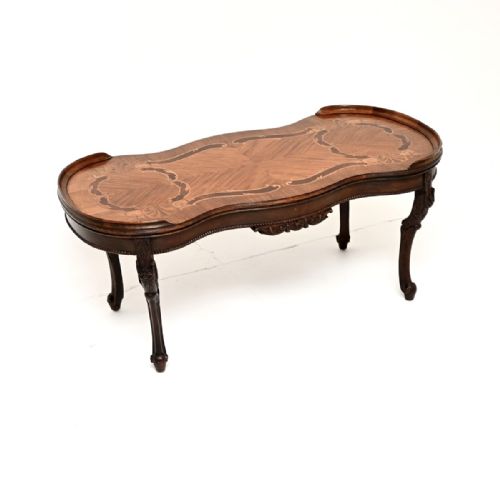
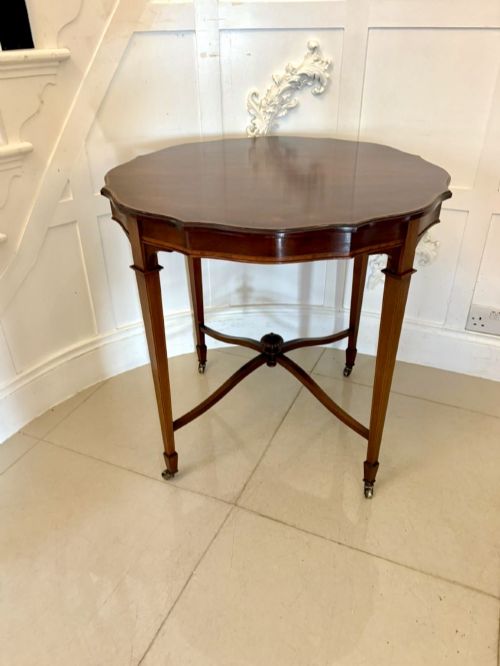
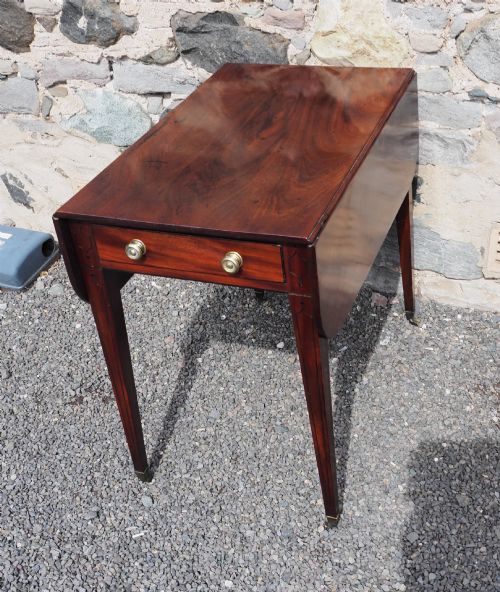
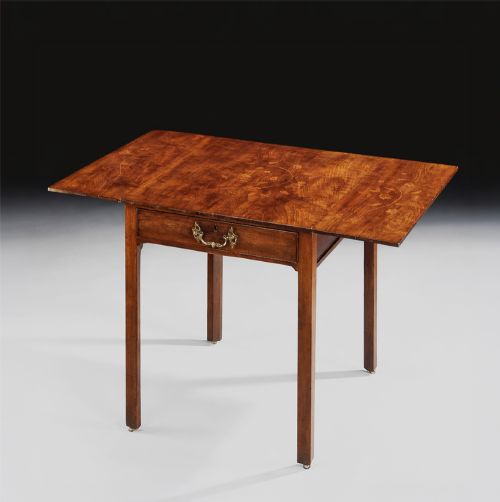
The Edwardian and Georgian eras dominate the selection, bringing mahogany, satinwood, and walnut frames together with delicate wood inlay or marquetry. Tables range from drop-leaf Pembroke designs to folding card tables and nests of four tables.
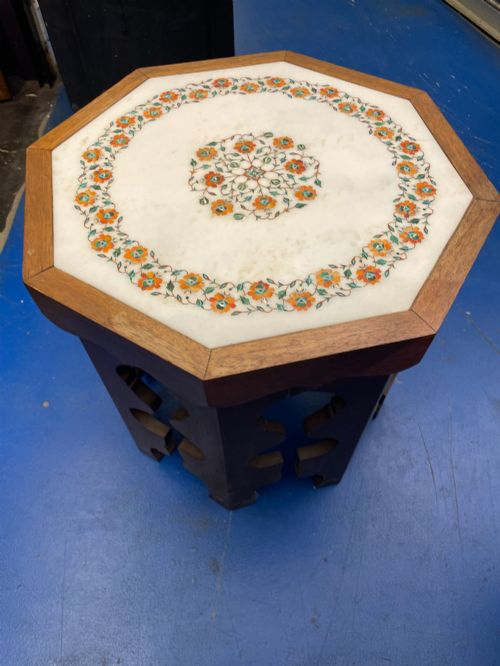
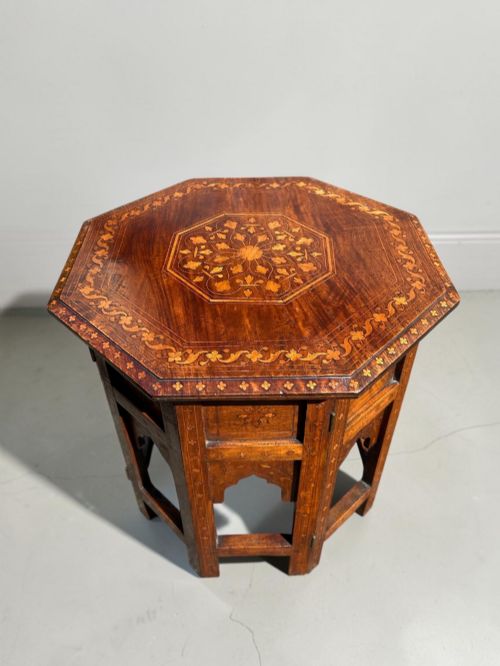
Buyers will also encounter regional variations such as Anglo-Indian Hoshiarpur octagonal tables and Damascus tables featuring mother-of-pearl or brass inlay. These diverse styles reflect global trade and shifting British interior tastes over two centuries.
Materials and construction methods
Cabinet-makers relied primarily on solid mahogany, walnut, and satinwood for the structural frames, often utilising figured veneers on the tops to create visual depth. Boxwood and contrasting timber strips form intricate lines of stringing and geometric banding.
Marquetry and wood inlay techniques involve fitting thin slices of various timbers into carved recesses to form floral, pictorial, or classical motifs. Regional workshops also incorporated brass wire, mother-of-pearl, and carved teak elements into the wood structures.
Object forms span nests of four tables, Pembroke tables, card tables, and multi-sided Hoshiarpur and Damascus occasional tables.
Assessing craftsmanship and condition
Quality rests upon the precision of the inlay work and the choice of primary timbers, where tightly figured mahogany or satinwood indicates a superior piece. Sharpness in the execution of floral marquetry and fine stringing separates standard production from exceptional cabinet-making.
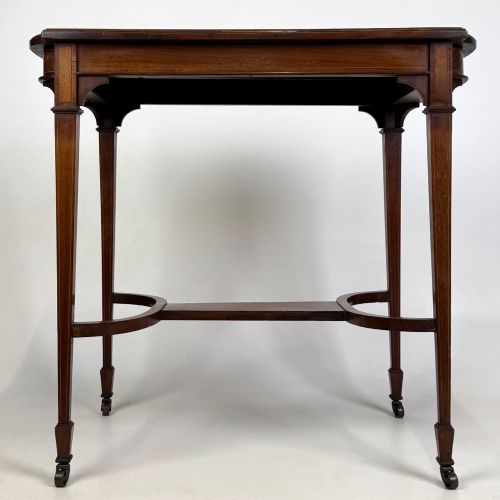
The integrity of the timber movement, stable joints, and the preservation of original surface finishes dictate the overall standard of a table. Subtle details in edge banding and the crispness of turned or tapered legs reveal the maker's underlying skill.
Trevor Page & Co
The Inlaid Wooden Tea Table Glossary
- Marquetry
- The art of creating decorative patterns on wood surfaces using fitted pieces of various coloured veneers. This technique defines the ornate tops of many Edwardian and 19th-century pieces.
- Pembroke table
- A small rectangular table featuring two hinged drop leaves on opposing sides. Georgian makers frequently incorporated stringing and inlay into these versatile breakfast and tea tables.
- Stringing
- A narrow strip of contrasting wood inlaid into the surface of a table to form a border. It highlights the geometric lines of Georgian and Edwardian furniture.
- Satinwood
- A hard, yellowish timber prized for its lustrous grain and smooth texture. Cabinet-makers used it extensively for contrasting panels and primary surfaces.
- Hoshiarpur table
- An octagonal or folding table originating from India, typically carved from teak and inlaid with intricate patterns of brass or resin. These items became popular in British interiors during the late 19th century.
Inlaid Wooden Tea Table: Frequently Asked Questions
What is a Pembroke table?
A Pembroke table is a compact design featuring hinged drop leaves supported by pivoting brackets. These tables served multiple purposes in historic homes, moving easily from parlor to tea room.
Cabinet-makers often enriched the tops with satinwood or mahogany inlay, making them both practical and visually striking.
How do I date an inlaid table?
Dating relies on identifying the primary wood, construction techniques, and stylistic motifs associated with specific eras like the Georgian or Edwardian periods. For instance, satinwood use and floral marquetry frequently point toward late 19th or early 20th-century production.
Examining the underside and drawer construction, where present, reveals further clues regarding the period of manufacture.
How should I care for an antique inlaid table?
Maintaining these tables requires keeping them away from direct sunlight and steady heat sources to protect delicate veneers and wood inlay. Gentle dusting with a dry, soft cloth preserves the polished surface.
Avoid using harsh chemical polishes that can seep into the fine gaps between the inlaid elements.