

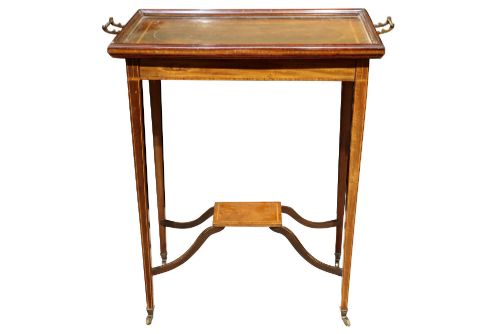


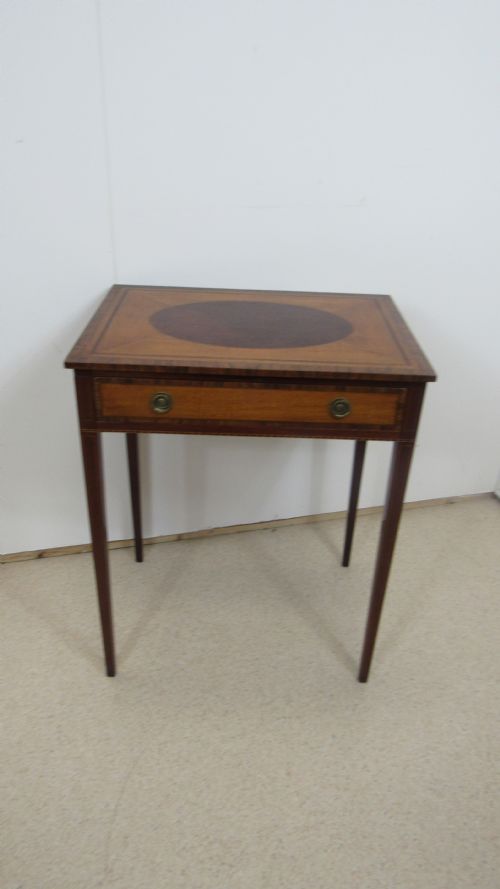


Rectangular Inlaid Side Table
A rectangular inlaid side table brings geometric precision and contrasting timbers together, offering a surface for lamps and drinks that anchors a room.
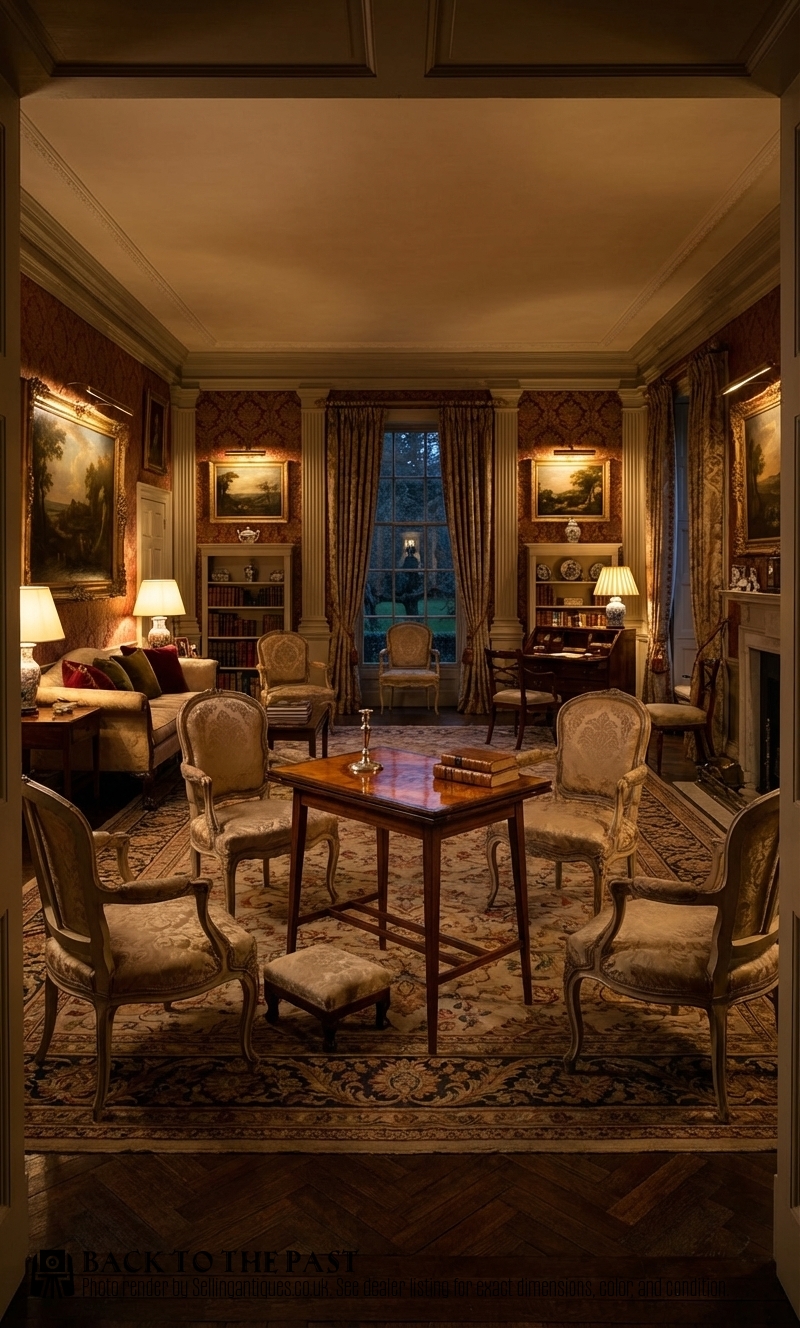
Rectangular Inlaid Side Table
A rectangular inlaid side table appears across the nineteenth and twentieth centuries in forms ranging from simple occasional tables to folding card and games tables. Most examples on this page date from the Edwardian and Victorian periods, alongside Regency and twentieth-century pieces.
Makers utilised various timber foundations including mahogany, rosewood, satinwood, and walnut, enriched with decorative inlay in boxwood and specimen woods. These tables function as lamp tables, hall tables, and wine tables while displaying geometric or floral marquetry.
How they were made
Carpenters constructed these tables using solid timbers and veneers of mahogany, rosewood, satinwood, and walnut. Frames were joined securely before surfaces received decorative treatments.
Inlay work involved meticulous hand-cutting of contrasting woods such as boxwood and various specimen woods, set flush into recesses within the primary timber. Brass fittings and painted decoration occasionally completed the ornamentation.
Rectangular Inlaid Side Table Retail Price Guide 2026
Typical asking prices for rectangular inlaid side table among the pieces listed under this phrase on Sellingantiques today, from the lower quarter to the upper quarter. They describe what is for sale here now, not the wider market.
What varies in quality
The refinement of the inlay work separates standard production from superior pieces, distinguishing crisp, tightly fitted marquetry from simpler designs. The choice of primary timber and secondary cross-banding also defines the ambition of the piece.
Structural integrity and the retention of original surface patination determine the overall merit of a table. Subtle details in leg turning and edge moulding indicate the workshop standard.
The Rectangular Inlaid Side Table Glossary
- Inlay
- A technique where pieces of contrasting material are inserted into a recessed wooden surface to form a decorative pattern. This defines the primary visual characteristic of these tables.
- Marquetry
- Elaborate veneer work forming pictorial or geometric designs using various coloured woods. It requires precise cutting and fitting by skilled artisans.
- Cross-banding
- A border veneer applied around the edge of a tabletop where the grain runs at right angles to the central panel. This frames the main decorative surface.
- Occasional table
- A small, movable table designed for specific, intermittent use within a room. Examples include lamp, wine, and hall tables.
- Specimen wood
- Various decorative timbers selected for their distinct colours and grain patterns. They appear in intricate geometric or floral tabletop compositions.
Rectangular Inlaid Side Table: Frequently Asked Questions
What is a rectangular inlaid side table used for?
These tables provide a compact surface for lamps, drinks, and decorative objects in living spaces and hallways.
Certain specialised variants incorporate folding tops designed for cards and games.
How do I identify the period of a table?
Dating relies on stylistic markers, timber choices, and construction methods associated with eras like Regency, Victorian, and Edwardian.
Edwardian pieces often feature lighter satinwood and mahogany with delicate boxwood lines, while Victorian examples favor heavier walnut and rosewood.
What woods were used in these tables?
Primary cabinet woods include mahogany, rosewood, satinwood, and walnut.
Contrasting timbers such as boxwood and various specimen woods provide the material for linear and figurative inlay.
Are all these tables strictly side tables?
The category encompasses several related forms including lamp tables, occasional tables, console tables, and card tables.
Many share the same rectangular proportions and inlaid top decoration regardless of their specific historical designation.
How should I live with an inlaid table?
Position the table away from direct sunlight and excessive heat sources to protect antique wood veneers and delicate natural glues.
Use coasters under glasses and clean surfaces simply with a dry or barely damp soft cloth.