
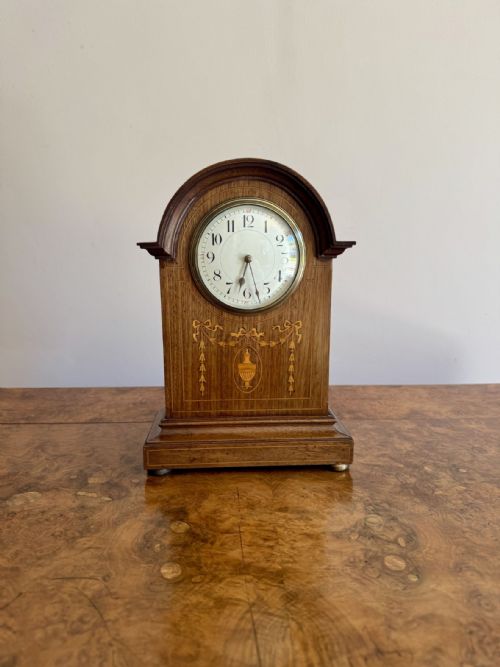


Inlaid Wooden Table Clock
An inlaid wooden table clock brings warmth and mechanical precision to a room, ranging from Edwardian mahogany to Georgian bracket designs.
Inlaid Wooden Table Clock
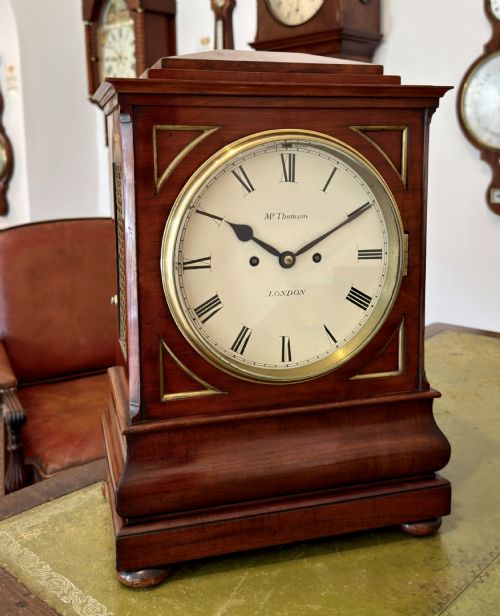
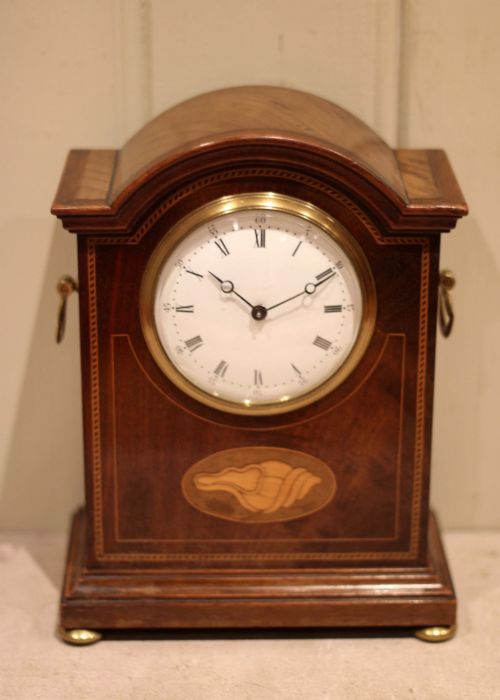
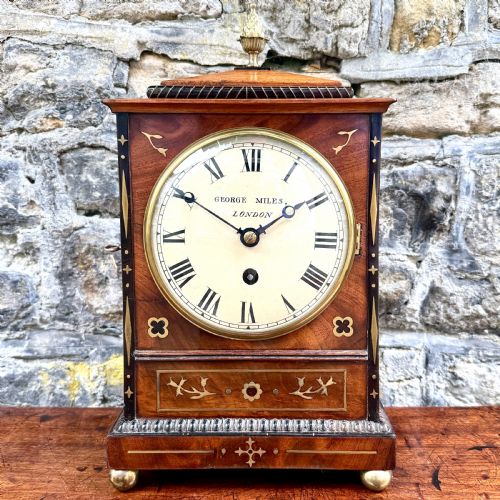
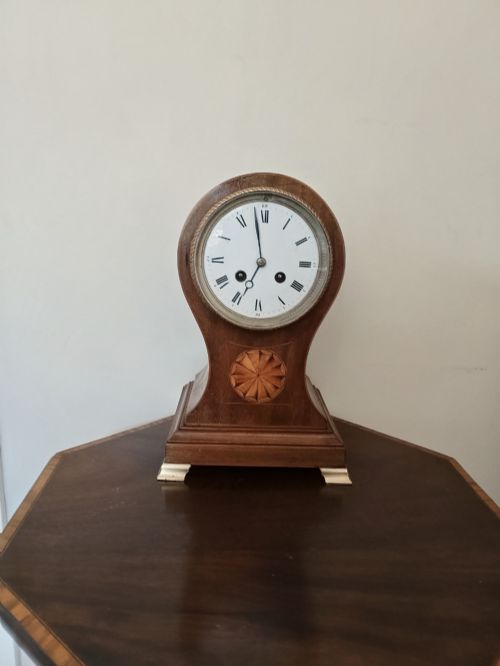
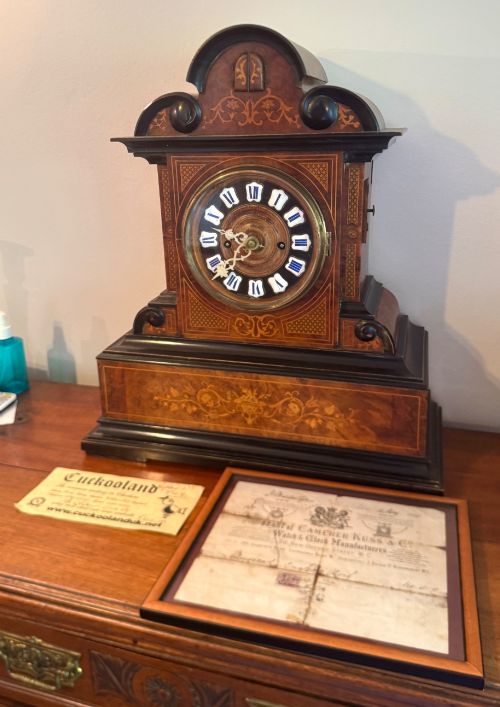
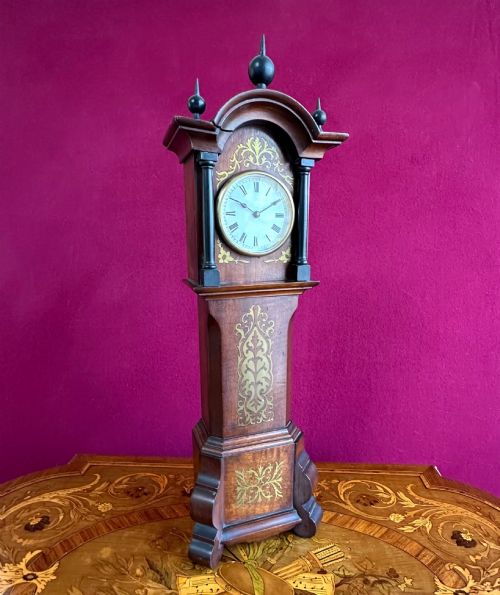
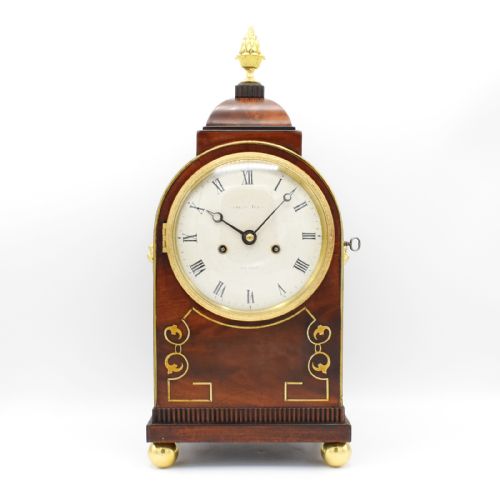
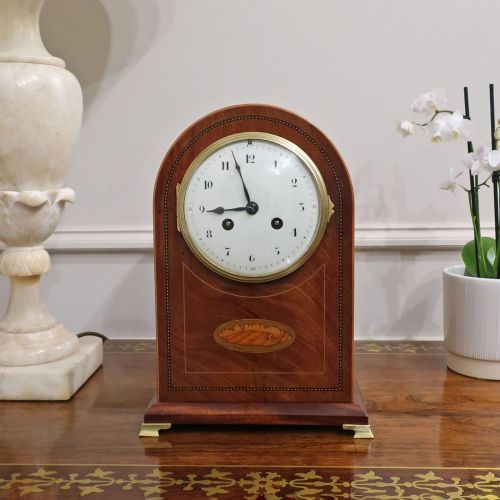
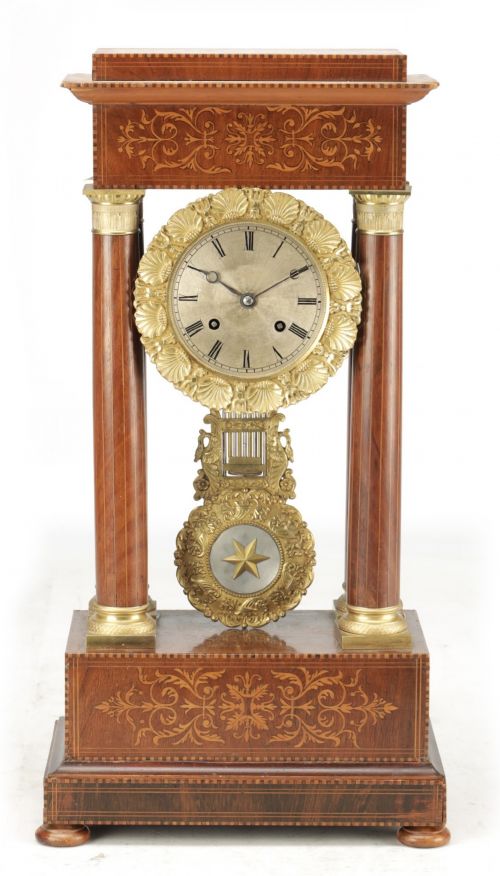
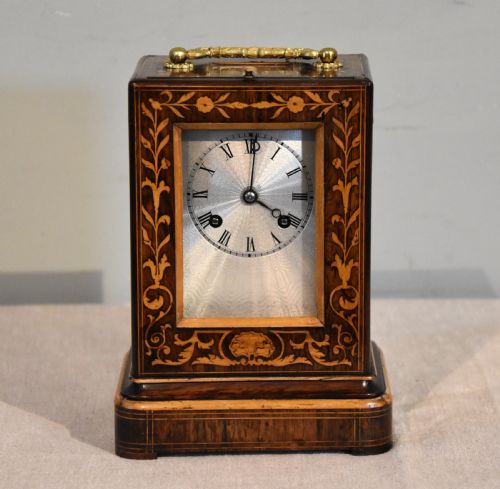
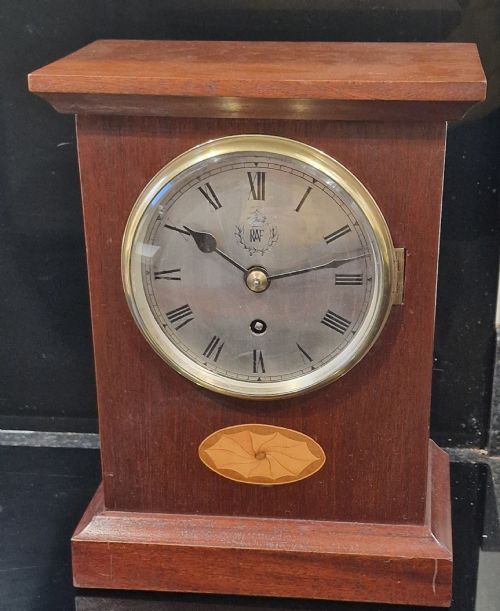
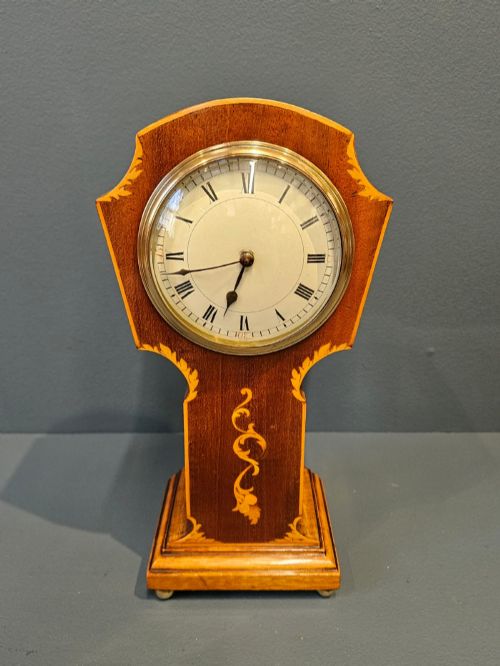
An inlaid wooden table clock is a domestic timekeeper designed to sit on a mantelpiece, shelf or bracket, combining fine cabinetry with horological movement. When exploring an inlaid wooden table clock, buyers encounter formats spanning compact Edwardian timepieces, architectural Regency library clocks and substantial Victorian bracket clocks.
The materials recorded in these pieces rely heavily on rich timbers such as mahogany, rosewood, walnut and oak, enhanced by contrasting veneers. Dial configurations vary from simple painted faces to silvered chapter rings framed by bevelled glass and brass bezels.
Origin and period markers dictate the character of each piece, drawing from Georgian precision, Victorian robustness and Edwardian refinement. The prevalent styles on this page lean towards British domestic design alongside French mantel and portico executions.
Materials and Construction
Cabinet makers constructed the foundational cases using solid timbers and stable veneers, selecting mahogany, rosewood and oak for their grain and durability. Satinwood, boxwood and ebony feature as contrasting inlay elements, creating geometric stringing or floral marquetry across the timber surfaces.
The mechanical elements integrate brass movements, often driven by fusee or spring mechanisms, housed behind glass panels and brass doors. Dials utilise enamel, brass or silvered metals, complemented by cast brass bezel surrounds and decorative feet.
Periods represented span from Georgian and Regency eras through Victorian, Edwardian and Art Nouveau designs.
Distinctions in Execution
Quality in these pieces rests upon the crispness of the cabinet work and the precision of the timber inlay. Finely executed stringing, balanced marquetry proportions and the selection of richly figured mahogany or rosewood separate standard production from superior workshops.
The integration of the movement within the wooden case further defines the standard of the piece. Cleanly cast brass bezels, well-fitted glass doors and signed movements by recorded makers elevate the horological and decorative value together.
Thomson of London·Charles Pratt London·Bush of London·L. Vick of Stroud·Thomas Moss·S Simpson Southampton·Cording of London·Bryson Edinburgh·W. Burton·henry Marc·Wilkinson Leicester·Hyde of Salisbury
The Inlaid Wooden Table Clock Glossary
- Bracket clock
- A portable domestic clock originally designed to sit upon a wall bracket to aid projection of sound. These wooden examples evolved into freestanding table and mantel clocks.
- Fusee
- A conical pulley connected to the mainspring by a chain or cord, designed to equalise the driving force of the spring as it runs down. This mechanism is central to better quality British table clocks.
- Marquetry
- Decorative veneer work formed by fitting pieces of various coloured woods into a designed pattern. It adorns the cases of walnut and mahogany clocks.
- Portico clock
- A distinct architectural clock style featuring supporting pillars reminiscent of classical building design. These French pieces often utilise rich wood cases.
- Silvered dial
- A metal clock face treated to achieve a silvery finish, usually engraved with numerals and chapter rings. It provides high legibility behind glass bezels.
Inlaid Wooden Table Clock: Frequently Asked Questions
What is a fusee movement?
A fusee movement uses a conical pulley and chain system to maintain even tension on the gears as the mainspring unwinds. This mechanical addition helps the clock maintain accurate time throughout its running cycle.
Such movements are frequently found in better quality British bracket and table clocks from the Georgian and Victorian eras.
How do I wind my table clock?
Winding requires a matching key inserted into the winding holes on the dial face, turning gently until resistance is felt. Care must be taken not to overwind the mainspring, which can cause internal strain.
Most traditional eight-day clocks require winding once a week, while timepieces without striking trains follow a similar routine.
Where should I place a wooden clock?
Wooden table clocks perform best on stable, level surfaces away from direct sunlight and damp environments. Mantelpieces and sturdy side tables provide suitable display locations that minimise vibration.
Keeping the clock away from extreme temperature fluctuations protects both the wooden veneer and the internal brass mechanics.
How do I distinguish Edwardian from Georgian clocks?
Georgian clocks tend to feature heavy mahogany cases with architectural proportions and brass bracket feet, often housing precision fusee movements. Edwardian examples frequently showcase lighter satinwood inlay, marquetry flowers and more delicate proportions.
Cabinet style and inlay patterns offer the clearest visual clues to the period of manufacture.