

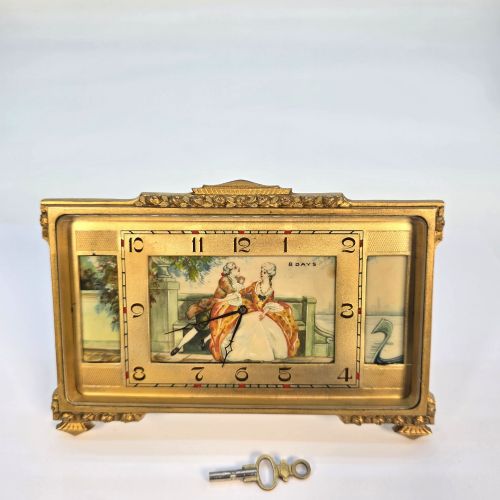


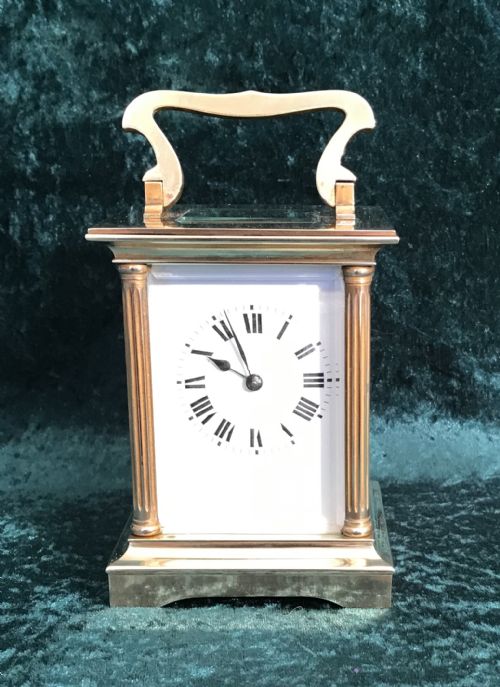


Edwardian Eight Day Clock
An Edwardian eight day clock is a dependable domestic timekeeper that winds once a week and sits proudly on a mantelpiece, wall, or floor.
Edwardian Eight Day Clock
When you search for an edwardian eight day clock, you find a range of timepieces spanning mantel clocks, wall clocks, and tall floor-standing longcase and grandmother clocks. The Edwardian examples appear frequently alongside pieces from the Victorian era and the early twentieth century.
Tall variations include grandfather and longcase clocks in mahogany and oak, often incorporating quarter-chiming movements or moon dials. Smaller formats include bracket clocks, carriage clocks, and inlaid mantel clocks suited for domestic rooms.
The styles cover traditional Edwardian designs alongside Arts and Crafts models, Chinoiserie lacquer work, and revival styles referencing the Georgian and Regency periods. Most pieces originate from English workshops and retailers of the era.
How they were made
The casings utilise cabinet timbers such as mahogany and oak, occasionally finished with lacquer for Chinoiserie pieces or detailed with delicate inlay. Brass and silver components form the dials, bezels, and numerals, paired with glass viewing panels.
Movements rely on mechanical gear trains driven by springs or weights designed to run for eight days between windings. Dials feature enamel chapter rings, brass numerals, and sometimes auxiliary hands or moon phases.
Edwardian Eight Day Clock Retail Price Guide 2026
Typical asking prices for edwardian eight day clock among the pieces listed under this phrase on Sellingantiques today, from the lower quarter to the upper quarter. They describe what is for sale here now, not the wider market.
Listings feature movements ranging from simple timepieces to complex musical quarter-chiming mechanisms housed in oak, mahogany, and brass.
What varies in quality
Cabinetwork distinguishes the production standard, separating simple solid timber cases from those with sophisticated mahogany veneers, precise inlay, or specialist lacquer finishes. The complexity of the movement also dictates worth, ranging from simple timepieces to quarter-chiming mechanisms operating on bells or gongs.
Provenance and retail origin influence standing, with certain pieces bearing the names of established makers or high-end London retailers. The crispness of dial execution and the preservation of original brass work further separate standard examples from finer productions.
Edward Shepley·Camerer Cuss and Co·Harrods
The Edwardian Eight Day Clock Glossary
- Eight day clock
- A timepiece requiring winding once every week. This mechanism uses a weight or spring drive that sustains operation for slightly over a week.
- Longcase clock
- A tall pendulum clock enclosed in a wooden case standing upon the floor. Often referred to as a grandfather or grandmother clock depending on its height.
- Bracket clock
- A portable table or shelf clock originally designed to sit on a wall bracket. They often feature brass carrying handles and arched wooden cases.
- Carriage clock
- A small, spring-driven clock designed for travel by horse-drawn carriage. They typically feature glass panels and a swing handle on top.
- Moon dial
- A specialised clock face displaying the phases of the moon through a rotating disc. This complication appeared on finer longcase and bracket clocks.
Edwardian Eight Day Clock: Frequently Asked Questions
How often do I wind an eight day clock?
You wind the movement once every seven days to keep the clock running continuously. Letting the weights drop fully or the spring run down requires resetting the time.
Most mechanical movements benefit from a consistent winding routine performed on the same day each week to maintain steady tension.
What is the difference between a grandfather and a grandmother clock?
Grandfather clocks are tall floor-standing longcases typically exceeding six feet in height. Grandmother clocks are simply scaled-down versions built to a shorter stature.
Both utilise similar eight day weight-driven or spring-driven movements housed within narrow wooden cases.
Where should I place a bracket clock?
Bracket clocks sit securely upon sturdy mantelpieces, tabletops, or dedicated wall shelves. Their enclosed wooden cases protect the mechanical movement from drafts.
Ensure the surface is level so the pendulum or balance wheel maintains an even beat.
How do I identify an Edwardian period clock?
Edwardian timepieces date from the reign of King Edward VII between 1901 and 1910, though the broader stylistic period often stretches slightly either side. Look for characteristic mahogany cases with delicate inlay or solid oak Arts and Crafts designs.
Movements from this era frequently include chiming mechanisms on gongs or bells alongside white enamel dials.