


Georgian Fusee Table Clock
A georgian fusee table clock brings mechanical precision and rich cabinet-making into a room, offering the steady tick of an 18th- or 19th-century movement.
Georgian Fusee Table Clock
A georgian fusee table clock sits on a bracket, mantel, or library desk, designed to keep domestic time with a reliable fusee-driven movement. When searching this phrase, a buyer looks at compact mechanical timepieces spanning the Georgian, Regency, and early Victorian eras.
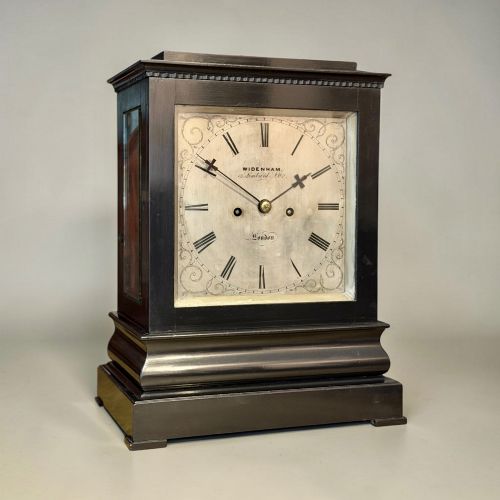
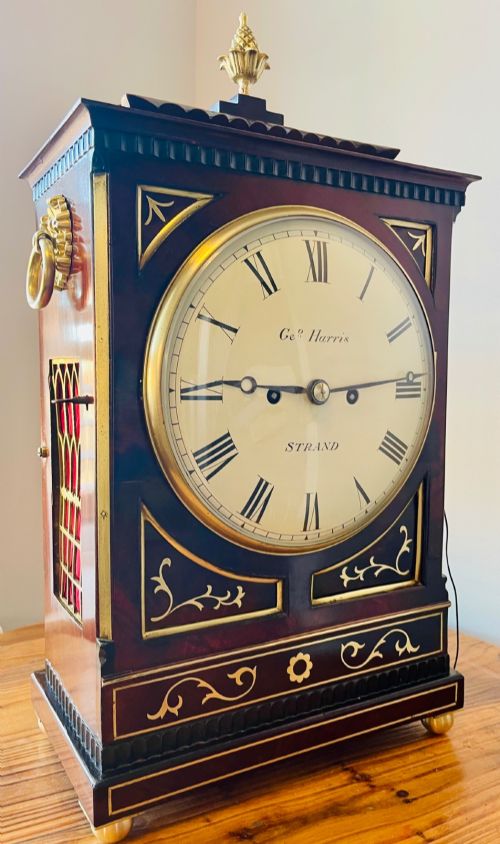
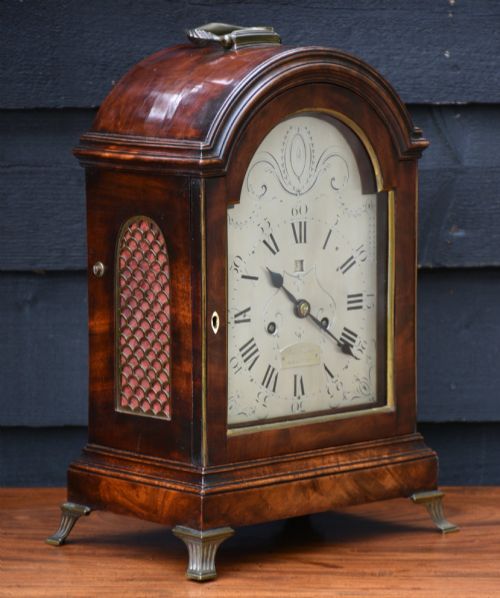
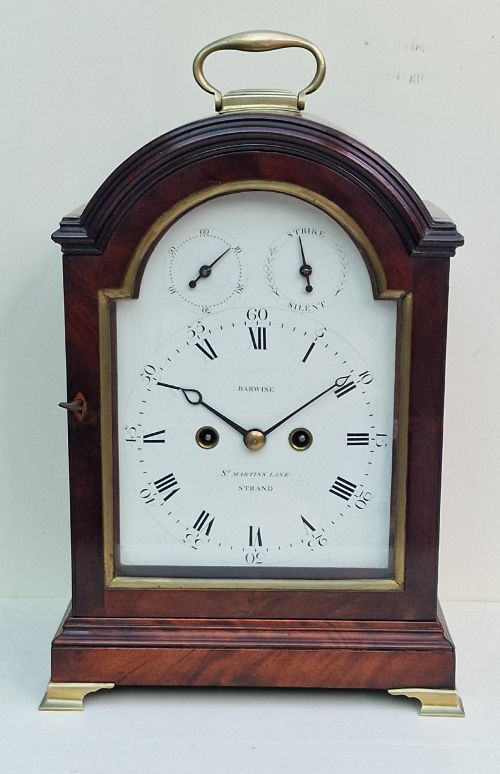
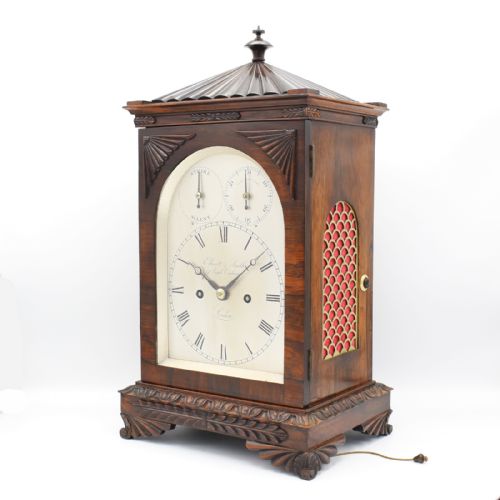
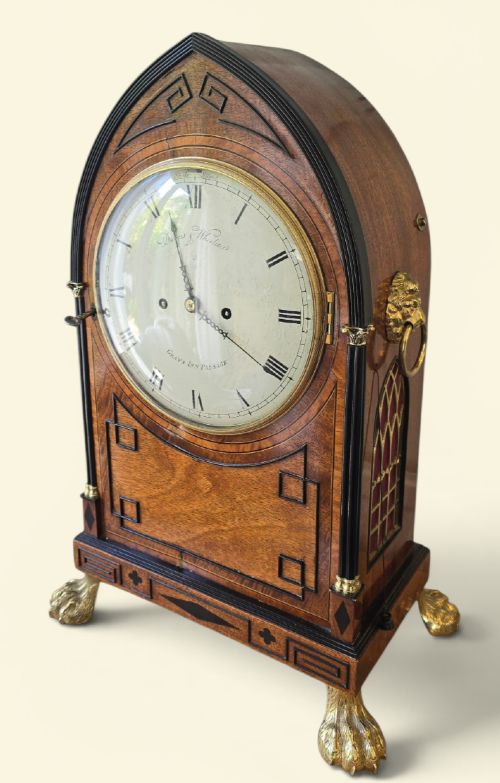
The most common version on this page is housed in a mahogany case, often featuring a bracket, pad, or lancet top. These pieces originated primarily in London workshops, alongside examples from regional English and Scottish makers.
Makers housed these movements in diverse forms, including balloon cases, break-arch ebonised boxes, and miniature library clocks. They vary from simple timepieces to complex striking and repeating models.
Materials and movement construction
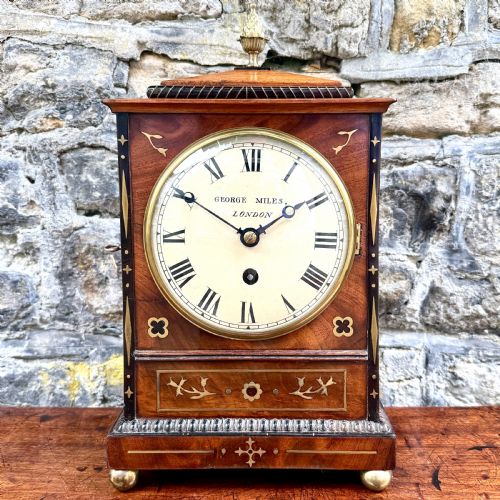
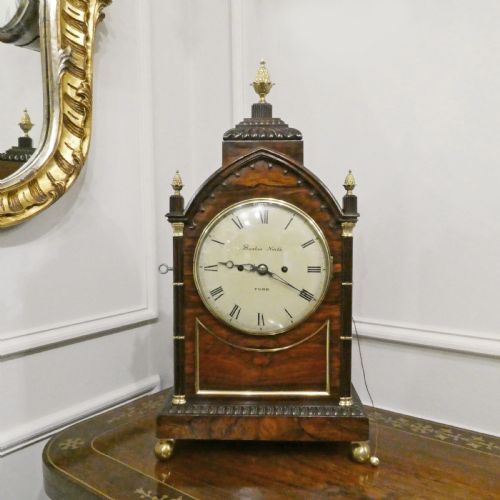
Cases rely on dense timbers such as mahogany, rosewood, ebonised wood, and pollard oak, chosen for structural stability and polished surfaces. Brass mounts, cast or gilt, frame the dials and protect the corners, while glass panels reveal the interior or dial face.
The mechanical heartbeat depends on a fusee movement, which uses a cone-shaped pulley and cord or chain to equalise the pull of the mainspring as it unwinds. Silvered metal and enamel provide legible dial faces, paired with steel hands and intricate gear trains.
Listings feature mahogany, rosewood, and pollard oak cases housing mechanical fusee movements from the eighteenth and nineteenth centuries.
Distinctions in craftsmanship
Quality rests in the precision of the fusee movement and the crispness of the cabinet-making. A superior piece displays finely engraved backplates, well-proportioned timber veneers, and uncompromised brass fittings.
The distinction between standard production and exceptional work lies in signature details such as repeating mechanisms, complex striking trains, and cases attributed to noted London makers.
Widenham of London·Barwise London·Ellicott Smith·Barber North of York·Desbois Wheeler·Webster Cornhill London·Cording of London·Wilkinson Leicester·Barrett London·Taylor of London·Richard Rooker·Somersall London·Pennington of Camberwell·William Hardy London·Berguer of the Strand·McCabe London·Chater Son London·John Leroux·John McGregor Wick·Jerimiah Lowman Ramsgate·Charles Bayles
The Georgian Fusee Table Clock Glossary
- Fusee
- A conical pulley used in clock movements to maintain even power from the mainspring as it unwinds. This device ensures more accurate timekeeping throughout the running period.
- Bracket clock
- A portable spring-driven clock originally designed to stand on a matching wall bracket. Over time, the term expanded to include similar mantel and table clocks.
- Lancet top
- A clock case shape featuring a pointed, arching top resembling a lancet window. This architectural silhouette became popular during the Regency period.
- Silvered dial
- A metal clock face treated with a silver solution to create a matte white finish. Graduations and maker signatures are typically engraved and darkened for legibility.
- Striking clock
- A timepiece that sounds the hours or quarters on a bell or gong. The mechanism uses an additional gear train separate from the timekeeping movement.
Georgian Fusee Table Clock: Frequently Asked Questions
What is a fusee movement?
A fusee movement uses a cone-shaped pulley connected to a cord or chain. This clever design equalises the declining power of the mainspring.
As the spring unwinds, the leverage shifts across the cone, keeping the force applied to the gear train constant.
Where were these clocks placed?
These clocks sat on designated wall brackets, library desks, or mantelpieces. Their portable nature allowed owners to move them between rooms as needed.
Because they relied on spring power rather than pendulums requiring a fixed wall drop, table placement was straightforward.
How do I wind the clock?
Winding requires a dedicated key inserted into the dial holes to tension the mainspring via the fusee. Care must be taken not to over-wind the mechanism.
Most surviving examples run for eight days on a single wind, requiring a weekly routine to maintain operation.
How do I identify the period?
Period identification relies on case architecture, dial design, and timber choice. Georgian examples often feature pad tops and mahogany cases, while Regency pieces introduce brass inlay and varied silhouettes.
Signatures on the dial or movement backplate often provide a direct link to the maker and operational era.