

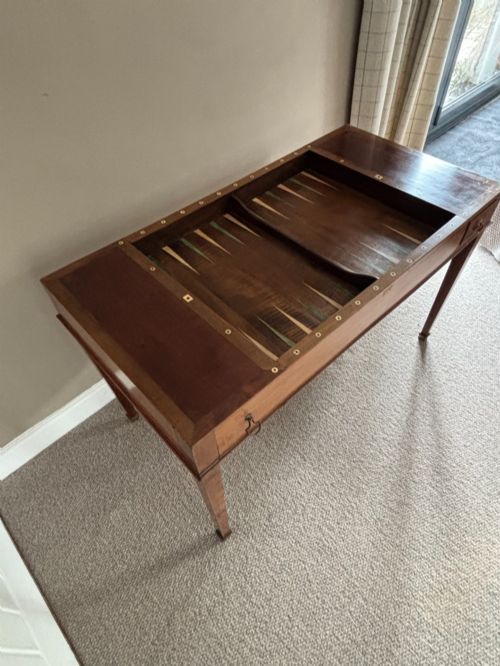
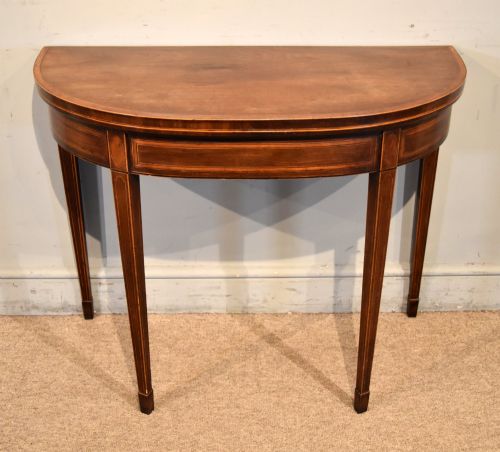
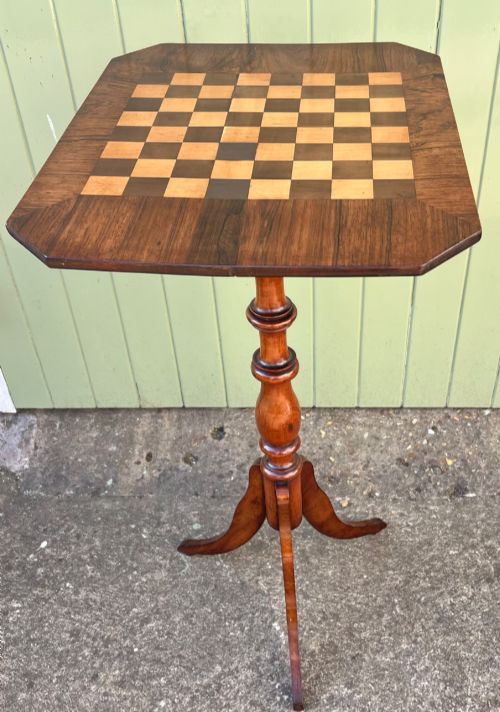
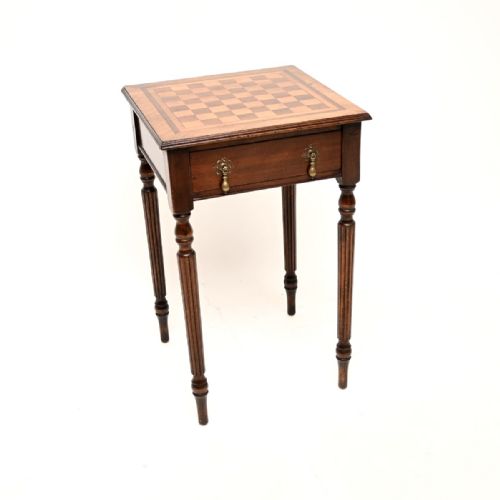

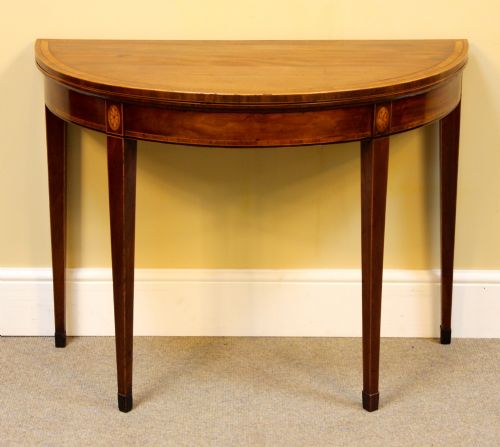
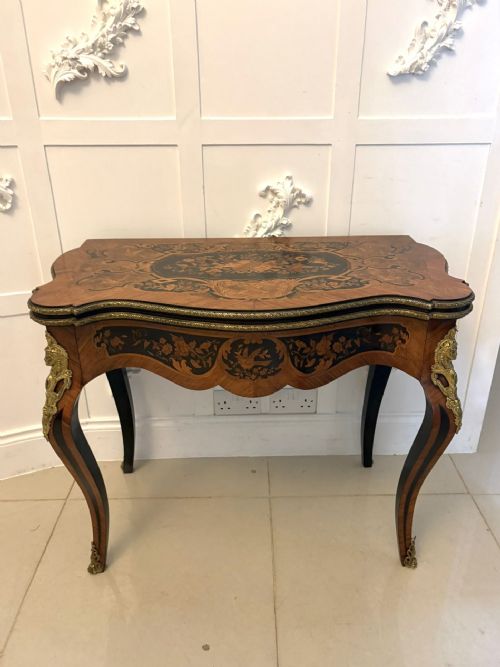
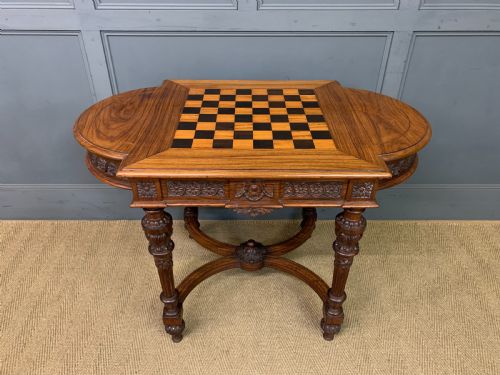


Inlaid Wooden Games Table
An inlaid wooden games table brings tactile cleverness to a room, turning surfaces into boards for play.
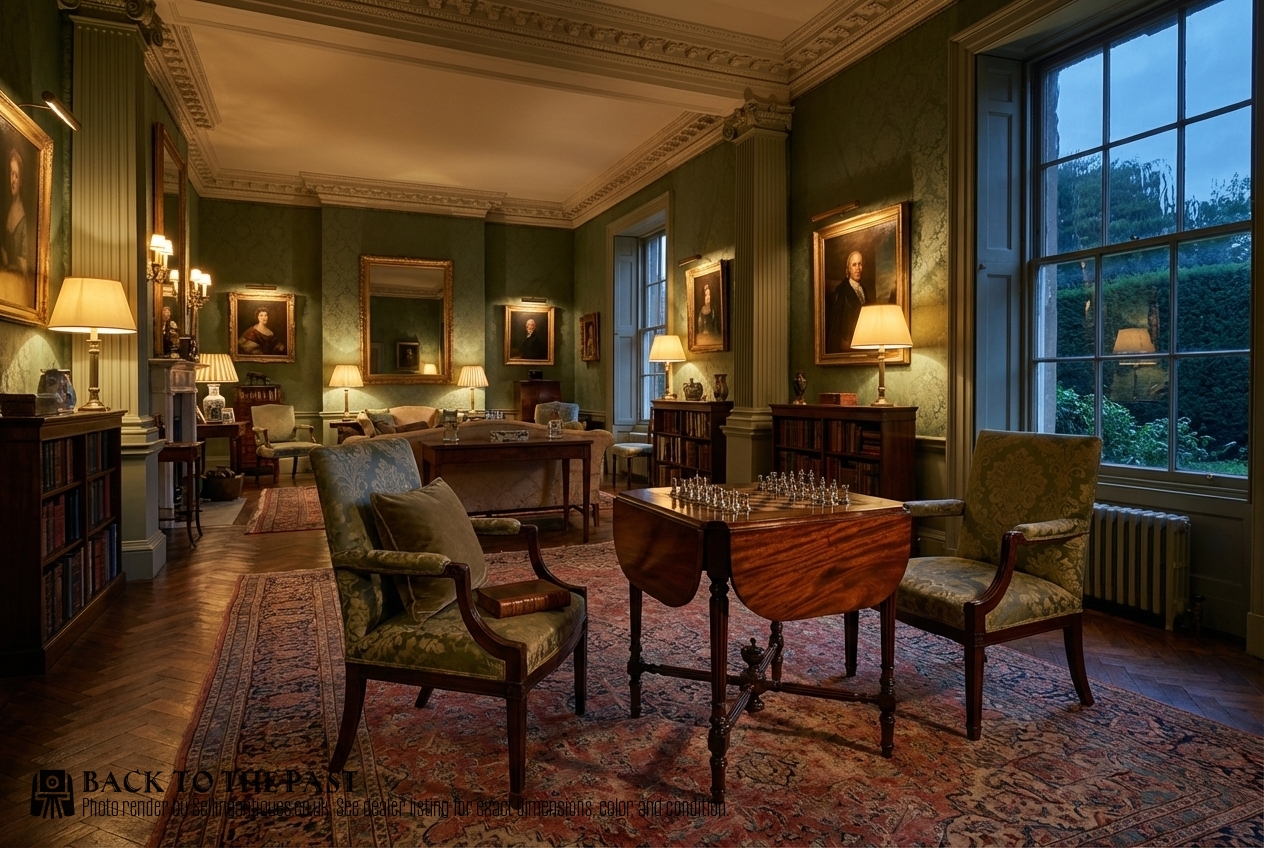
Inlaid Wooden Games Table
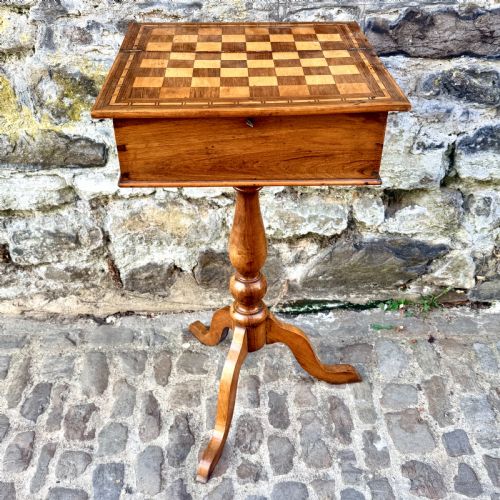
An inlaid wooden games table is a dedicated surface for card play and board games, appearing across the nineteenth century in various regional interpretations. Buyers exploring these pieces encounter forms designed for domestic entertainment, from French Provincial chess tables to Swedish Biedermeier birch examples.
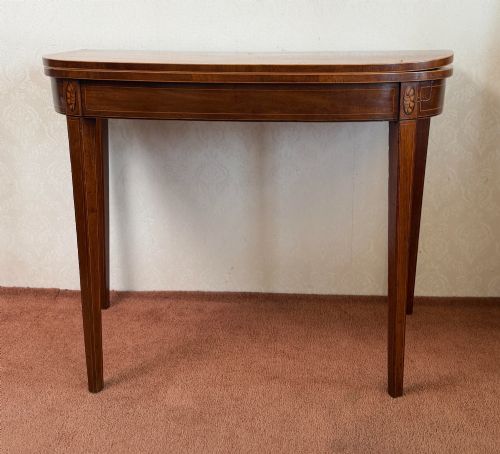
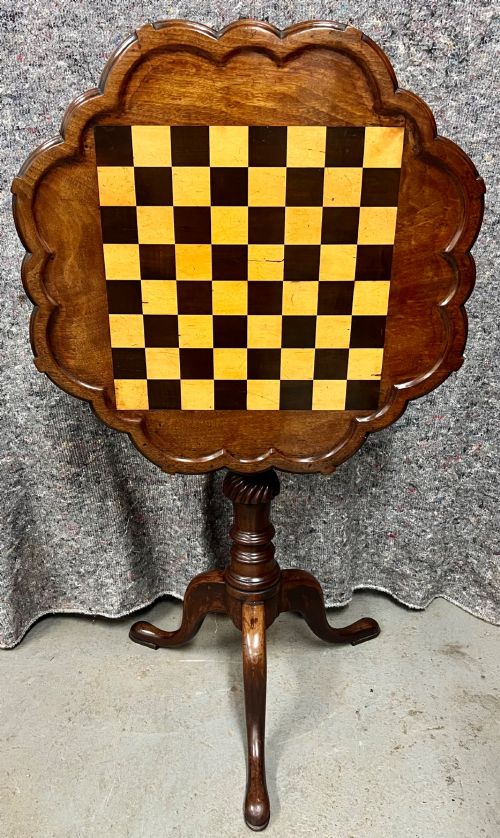
The selection on this page centres heavily on nineteenth-century examples, spanning the Regency period through to eighteen seventy. Surviving specimens take the form of games tables and card tables, often incorporating specialised tops like chequered patterns for chess.
Makers of the period utilised domestic and exotic timbers to construct these dual-purpose items, pairing structural woods with decorative veneers. These tables served both a social function during evening gatherings and a decorative role in period interiors.
How they were made
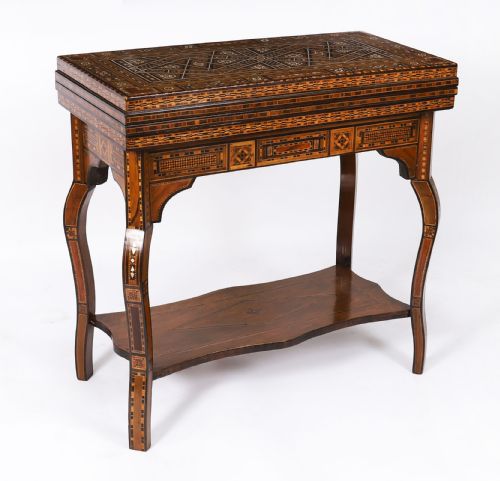
Craftsmen built these tables using a foundation of solid woods such as mahogany, walnut, and birch, overlaid with contrasting veneers and geometric wood inlay. Artisans cut delicate strips of fruitwood, satinwood, and rosewood to form intricate chequered boards and linear borders directly into the table surfaces.
Structural elements reflect nineteenth-century cabinet-making techniques, combining sturdy carcases with hinged leaves or pivoting tops that conceal storage compartments beneath. Surface finishes relied on traditional polish and oil applications to protect the timber while accentuating the natural grain and the precision of the inlay work.
Inlaid Wooden Games Table Retail Price Guide 2026
Typical asking prices for inlaid wooden games table among the pieces listed under this phrase on Sellingantiques today, from the lower quarter to the upper quarter. They describe what is for sale here now, not the wider market.
What varies in quality
Quality in an inlaid wooden games table lies in the precision of the marquetry and the choice of primary timbers, where crisp geometry distinguishes superior work. Tables featuring dense rosewood or figured satinwood demonstrate a higher grade of material selection than standard walnut or scumbled surfaces.
The sophistication of the mechanism also dictates value, with well-engineered pivoting tops and tightly fitted interior compartments showing superior workshop execution. Finer examples maintain crisp edges to the inlay work and harmonious grain matching across the entire playing surface.
The Inlaid Wooden Games Table Glossary
- Inlaid wood
- Timber decorated by embedding pieces of contrasting wood into a recess to form a decorative pattern. This technique creates flat, ornate surfaces without altering the structural profile of the table.
- Satinwood
- A durable, yellowish timber prized for its lustrous sheen and smooth texture. Cabinet-makers utilised it extensively for contrasting borders and light-coloured squares on gaming boards.
- Regency
- An English design period spanning the early nineteenth century characterised by classical restraint and refined proportions. Tables from this era often feature dark rosewood combined with lighter stringing.
- French Provincial
- A rustic yet elegant style originating from regional French makers outside Paris. These pieces prioritize functional utility while incorporating local timber traditions and subtle decorative carving.
- Scumbled
- A surface treatment where paint or glaze is manipulated to imitate the grain of more expensive wood. This technique allowed makers to achieve decorative finishes on simpler structural timbers.
Inlaid Wooden Games Table: Frequently Asked Questions
What is an inlaid wooden games table?
An inlaid wooden games table is a nineteenth-century furniture piece featuring a specialised top decorated with wood inlay for playing games like chess or cards. These items combine practical entertainment surfaces with decorative cabinet-making.
Craftsmen built them using various timbers including mahogany, walnut, and birch, often incorporating folding leaves or hidden compartments beneath the playing area.
How were these tables used?
These tables served as functional furniture for evening entertainment, hosting card games, chess, and social gatherings in nineteenth-century homes. Their dual-purpose designs allowed them to function as regular occasional tables when not in active use.
Many examples include compartments for storing playing pieces, counters, or cards close at hand during social events.
Are these tables sturdy enough for daily use?
Nineteenth-century tables were built to withstand active domestic use through solid joinery and durable timber framing. However, antique surfaces require sensible care to protect delicate wood inlay and polished finishes from moisture and heavy impact.
Placing them away from direct heat sources and using coasters preserves the structural integrity and the intricate decorative veneers over time.