



Inlaid Wooden Centre Table
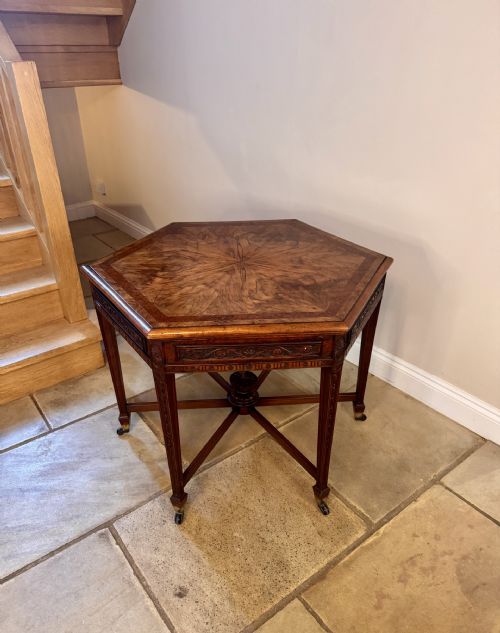
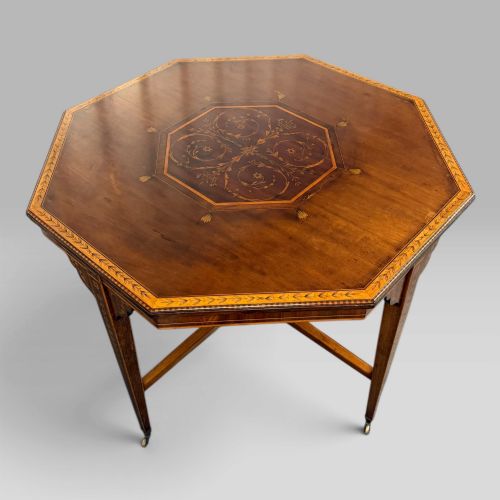
An inlaid wooden centre table anchors a room with patterned veneers and rich timbers, offering a striking focal point for any interior.
Inlaid Wooden Centre Table
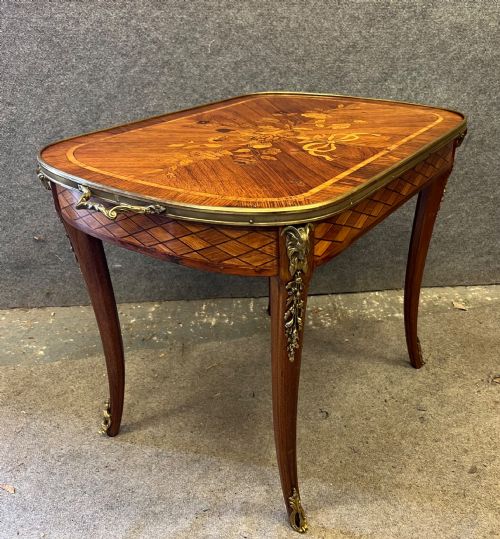
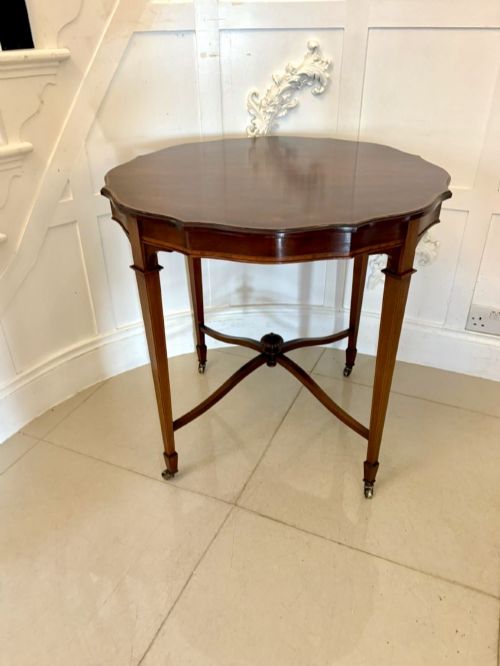
An inlaid wooden centre table stands freely in a room rather than against a wall, designed to be viewed from all sides. When searching this phrase, buyers encounter freestanding pieces originating predominantly from the nineteenth century and the Edwardian era, spanning styles from Regency restraint to Victorian and Louis XV revivalism.
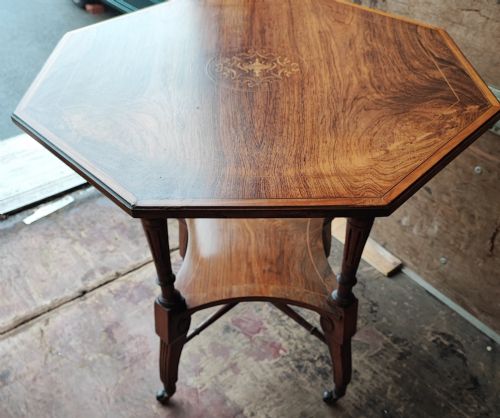
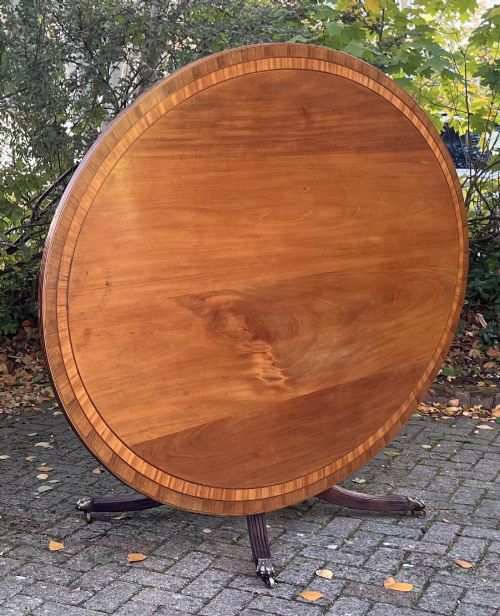
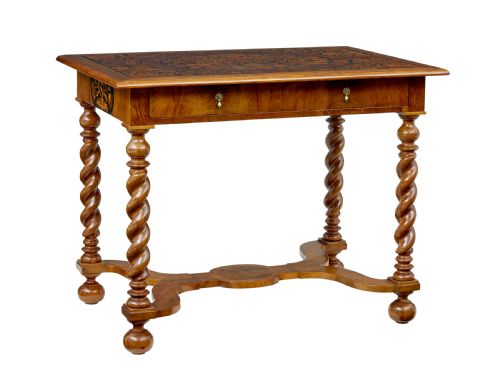
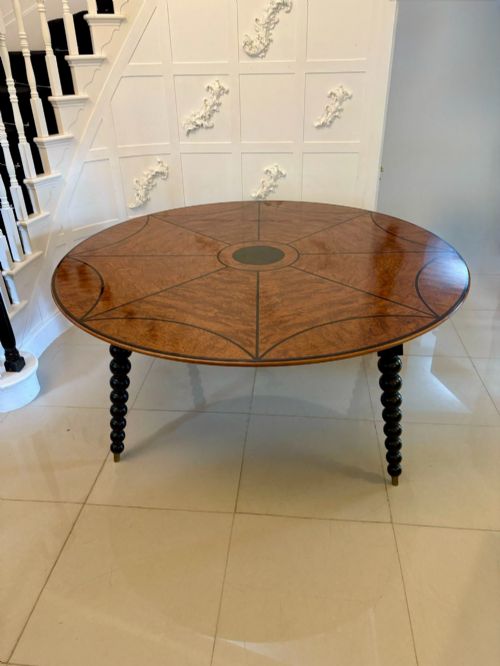
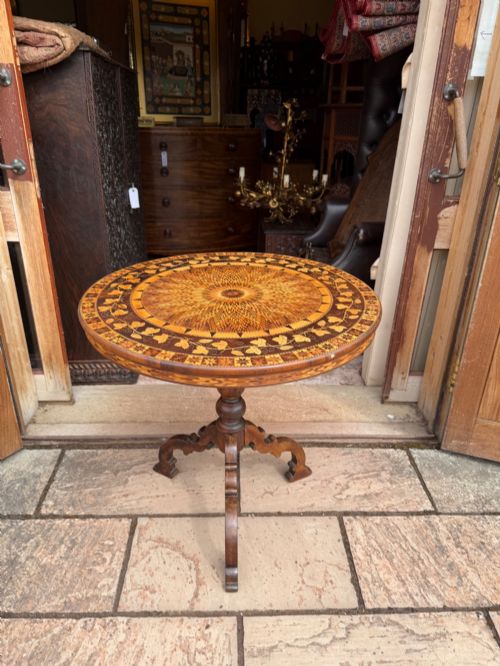
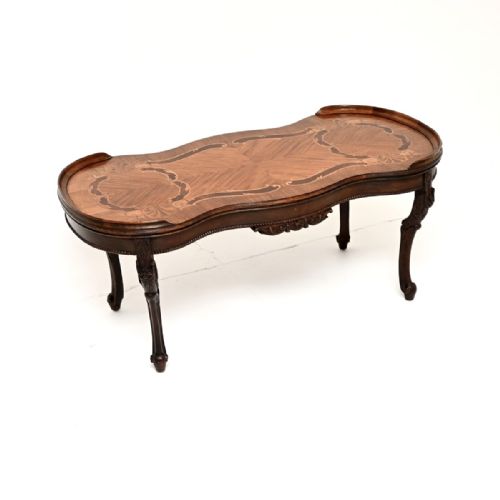
The selections on this page appear in various forms, including round breakfast tables, oval occasional tables, octagonal formats, and low coffee tables. Walnut, mahogany, and rosewood form the primary structural timbers, frequently embellished with contrasting marquetry and wood inlay.
Makers and workshops across Britain, France, Italy, and beyond produced these tables to serve multiple domestic functions. Whether utilised as a lamp table, a breakfast table, or an occasional stand, each piece demonstrates the versatility expected of fine period furniture.
Materials and construction
Cabinetmakers utilised dense hardwoods such as mahogany, walnut, burr walnut, and rosewood for the structural carcasses and tabletops. These foundational timbers provided stability and a deep natural colour that complemented intricate surface decoration.
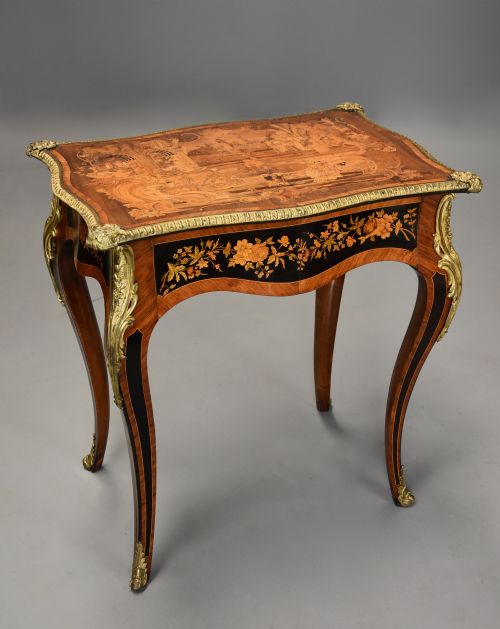
Craftsmen applied contrasting veneers like satinwood, kingwood, and amboyna alongside marquetry and parquetry inlays to create geometric patterns and floral motifs. Hand-carved wooden bases and brass mounts frequently completed the assembly of these decorative tables.
Inlaid Wooden Centre Table Retail Price Guide 2026
Typical asking prices for inlaid wooden centre table among the pieces listed under this phrase on Sellingantiques today, from the lower quarter to the upper quarter. They describe what is for sale here now, not the wider market.
Markers of distinction
The standard of an inlaid wooden centre table rests on the precision of the timber selection and the complexity of the veneer work. Fine examples display seamless integration of marquetry where individual wood types fit together without visible gaps.
Structural integrity and the crispness of hand-carved details further separate exceptional pieces from standard production. Superior tables maintain stable joints, balanced proportions, and well-figured burr veneers across the primary surface.
James Winter
The Inlaid Wooden Centre Table Glossary
- Marquetry inlay
- Decorative patterns formed by fitting together small pieces of various coloured veneers into a design.
- Burr walnut
- Timber taken from the abnormal growth of a walnut tree, prized for its swirling, highly figured grain patterns.
- Parquetry
- A geometric mosaic of wood pieces used for decorative floors and tabletops, creating precise repeating patterns.
- Occasional table
- A small, versatile table designed to be moved around a room and used as needed.
- Satinwood
- A durable, yellowish wood utilised extensively for fine cabinetmaking and contrasting inlay work during the eighteenth and nineteenth centuries.
Inlaid Wooden Centre Table: Frequently Asked Questions
How were centre tables used?
These tables stood in the middle of principal rooms to hold lamps, decorative objects, or books. They also served functional roles for breakfast, writing, or informal gatherings.
Their freestanding design allowed people to walk entirely around the furniture, making them both decorative centrepieces and practical surfaces.
What woods appear most often?
Walnut and mahogany form the foundation of the vast majority of these tables. Cabinetmakers frequently enhanced these primary timbers with burr walnut, rosewood, and satinwood veneers.
Contrasting wood inlays and marquetry panels brought lighter tones and intricate botanical or geometric patterns to the darker background timbers.
How do I identify the period?
Stylistic clues and construction methods indicate the likely era of manufacture. Regency pieces display classical restraint, whereas Victorian examples often feature elaborate carving and burr walnut.
Edwardian tables typically present lighter satinwood highlights and more slender proportions, reflecting the tastes of the early twentieth century.