


Louis XV Low Table
These louis xv low table pieces bring flowing curves and French revival elegance to modern rooms, offering practical surfaces with distinct period character.
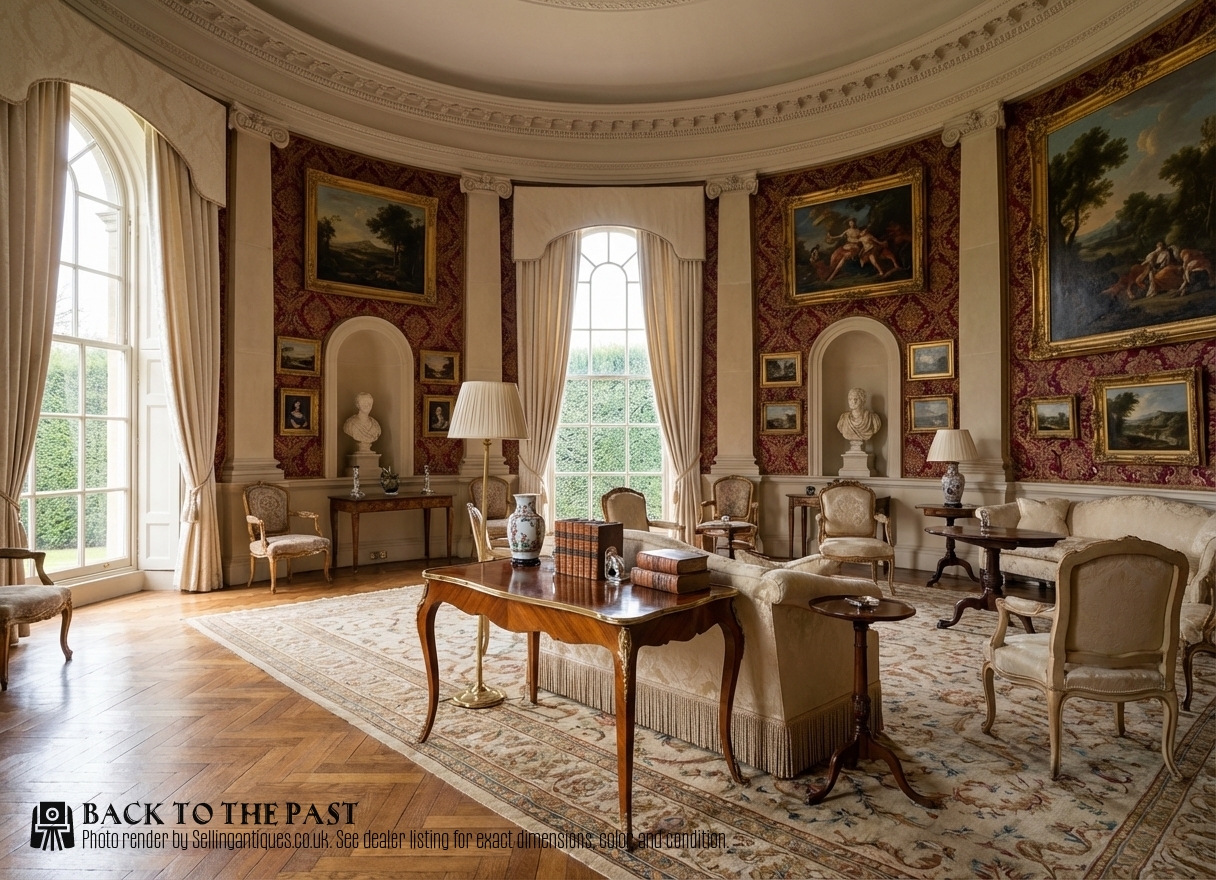
Louis XV Low Table
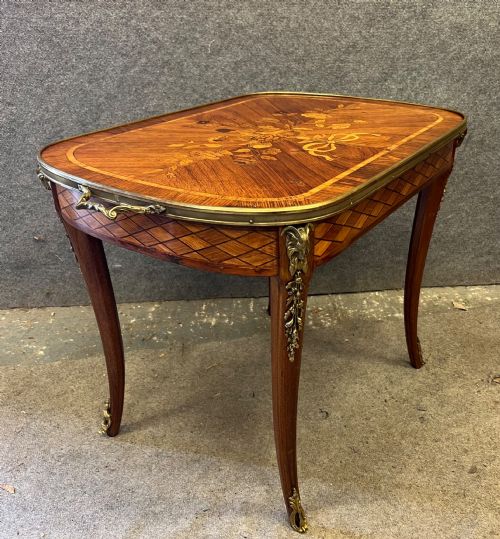
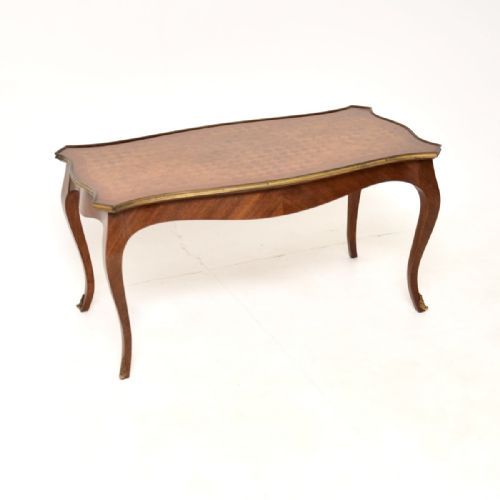
When you search for a louis xv low table, you enter a world of revived 18th-century French aesthetics adapted for later interiors. The selection spans the Edwardian era through the 1930s, alongside earlier Victorian examples and 19th-century foundations.
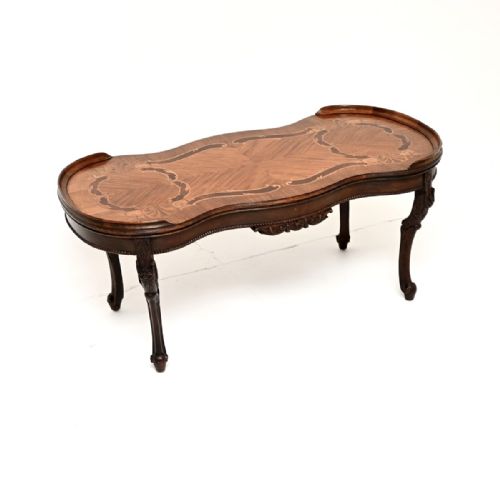
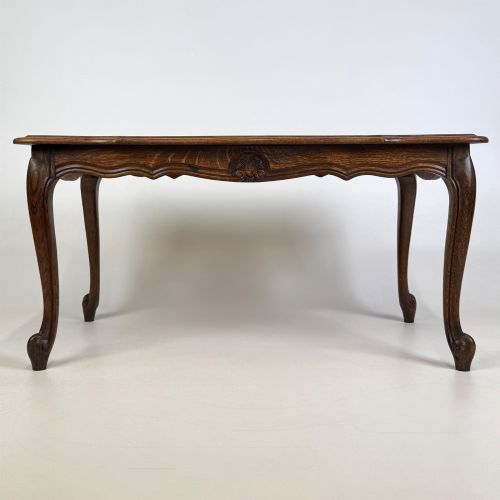
You will encounter coffee tables, side tables, centre tables, and occasional tables that share the characteristic serpentine lines of the style. Many pieces trace their lineage to French Rococo Revival and Louis XV Revival movements, while others lean towards French country or provincial interpretations.
The practical low format serves contemporary living rooms well, whether you select an oval inlaid centre table, a square marquetry coffee table, or a round marble top design. These pieces bridge historical decorative arts and everyday utility through adapted proportions.
Materials and construction methods
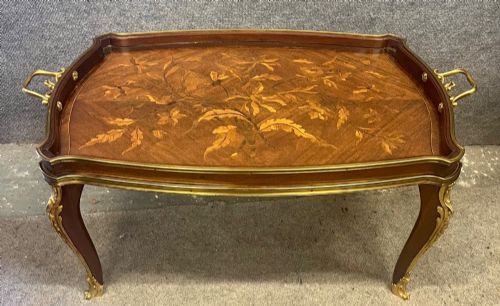
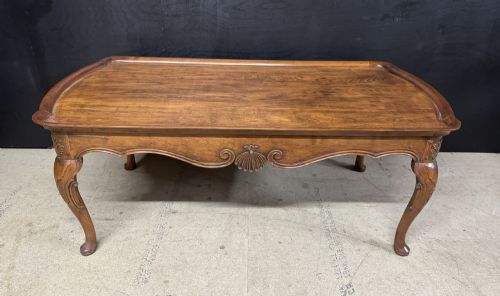
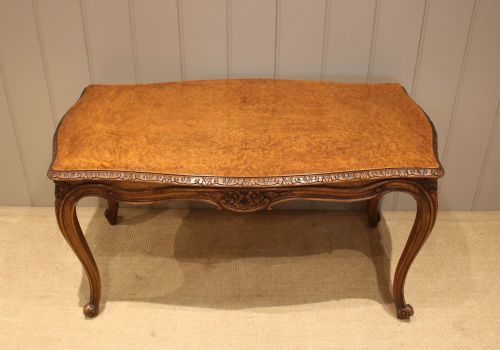
Makers utilised a rich palette of timbers including walnut, burr walnut, kingwood, oak, cherrywood, and mahogany, often enhanced by intricate parquetry and marquetry inlays. Satin wood and black lacquer also appear across the selection to create varied surface textures and tones.
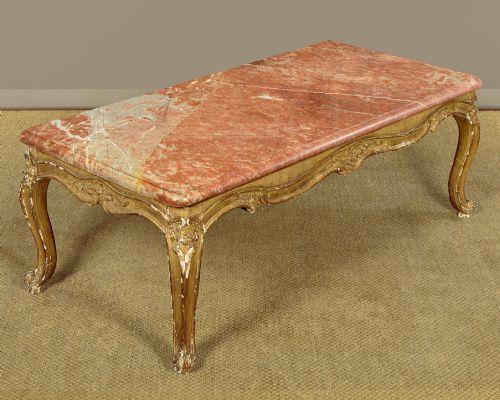
Metal mounts in ormolu and brass accent the wooden frames, framing curves and protecting corners in the traditional manner. Marble tops feature on several round and rectangular coffee tables, providing a cool stone surface above carved or gilded wooden bases.
Footstools and ottomans occasionally moonlight as low tables when topped with a steady tea tray.
Assessing craftsmanship and finish
Quality rests in the precision of the parquetry and marquetry patterns, where tightly fitted wood veneers create seamless geometric or floral designs. The crispness of carved giltwood details and the solid weight of bronze or ormolu mounts further separate standard production from finer examples.
Timber selection dictates visual depth, particularly in burr walnut and kingwood pieces where natural grain patterns command attention. Structural integrity in the cabriole legs and joining joints ensures the low table remains stable through decades of daily use.
Gillows
The Louis XV Low Table Glossary
- Marquetry
- Decorative veneer work arranged in pictorial or floral patterns across the surface of the table top. Skilled artisans cut contrasting woods to fit together within the primary timber background.
- Ormolu
- Gilded bronze mounts applied to furniture edges and legs for decorative contrast. This technique originated in France and defines the opulent hardware of revival pieces.
- Parquetry
- Geometric wood inlay patterns forming repeating designs such as cubes or chequers. It provides a structured visual contrast to flowing floral marquetry.
- Cabriole leg
- A furniture leg that curves out and then in, resembling an animal's leg in motion. This signature shape underpins the silhouette of Louis XV revival furniture.
- Giltwood
- Wood that has been coated with a thin layer of gold leaf or gilt paint. It highlights carved mouldings and decorative motifs on frames and table aprons.
Louis XV Low Table: Frequently Asked Questions
What defines a louis xv low table?
These pieces draw on 18th-century French design principles, characterised by serpentine lines, cabriole legs, and asymmetrical curves. Most examples found here date from the Edwardian period up to the 1930s, having been adapted from earlier full-height tables or stools into low formats suitable for modern seating arrangements.
Craftsmen utilised traditional timber veneers like kingwood and burr walnut, often embellishing the surfaces with intricate marquetry and ormolu mounts. The result is a compact focal point that brings historical French styling into a sitting room.
How do I care for a marble top table?
Marble surfaces require simple maintenance to prevent staining from acidic liquids like wine or citrus juice. Wipe the stone regularly with a damp cloth and mild, pH-neutral soap, avoiding abrasive scouring powders that can dull the polish.
Using coasters and mats protects the natural porous stone from daily wear. Occasional stone sealers help preserve the finish against moisture absorption.
How can I date a revival table?
Dating relies on examining construction techniques, secondary woods, and wear patterns beneath the surface. Tables from the 1920s and 1930s often combine machine-prepared veneers with hand-finished carving, whereas Edwardian and Victorian pieces may show heavier internal framing.
Stylistic cues also help narrow the period, as Art Deco influences occasionally blend with traditional curves in 1930s pieces. Archive records and maker signatures provide definitive chronological markers when present.