
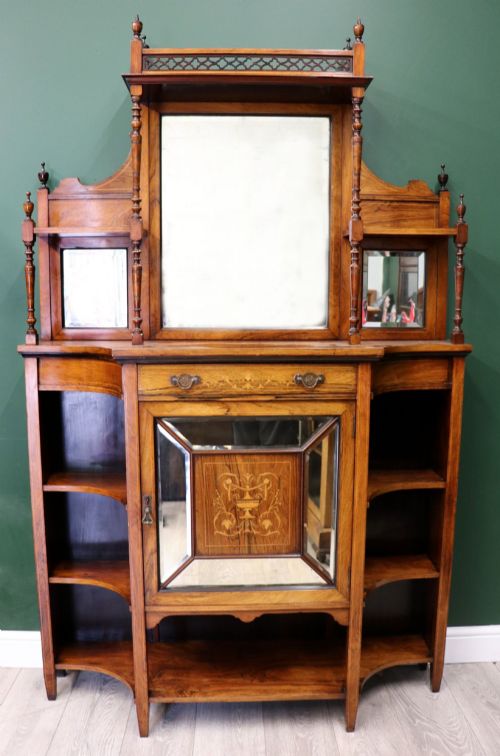
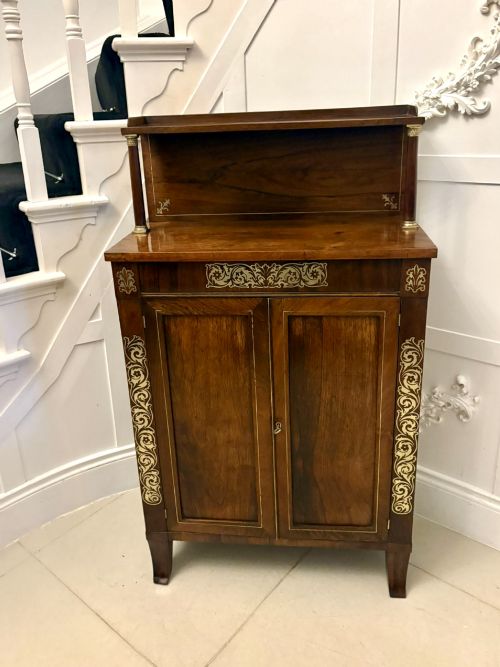
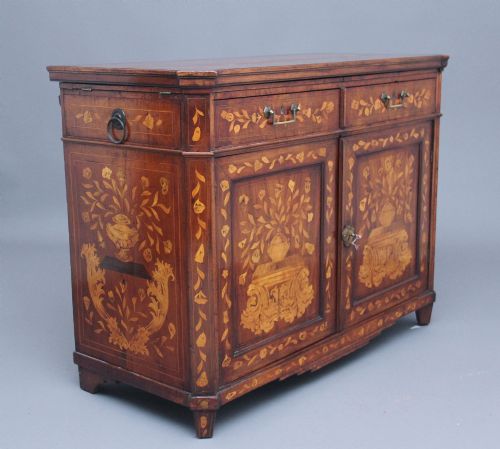
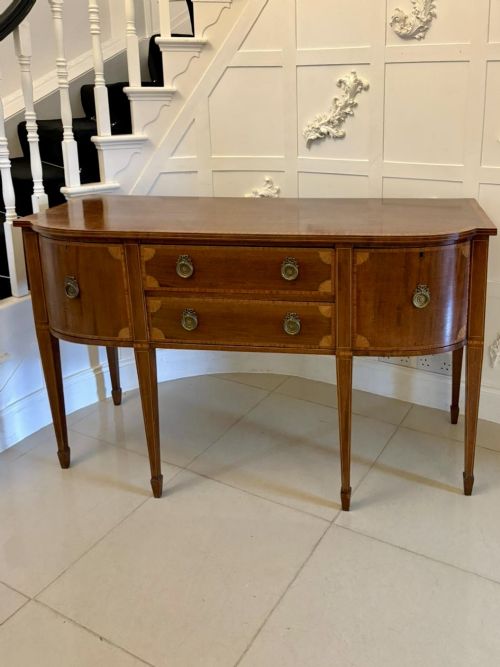
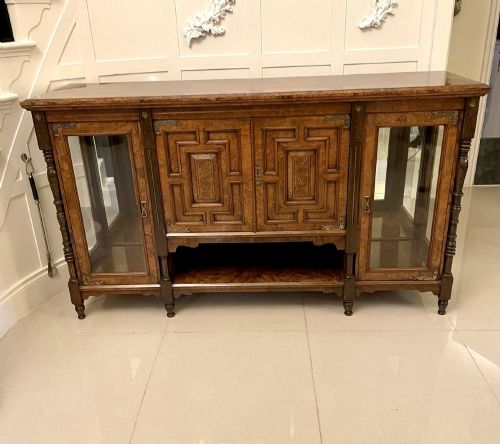
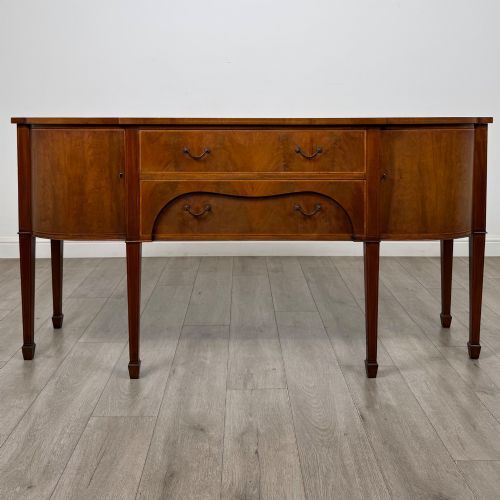
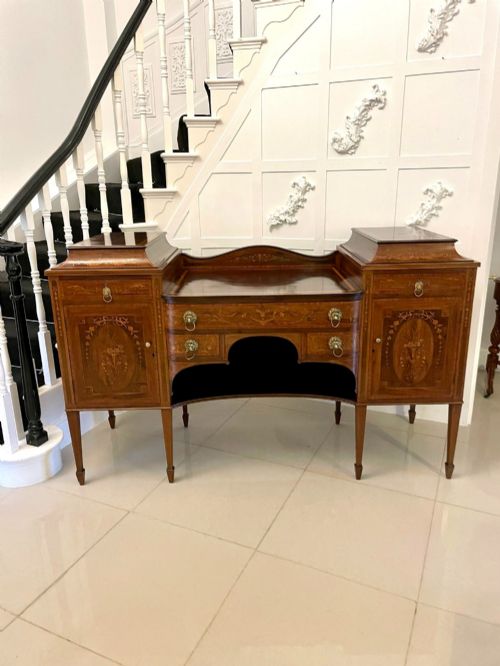
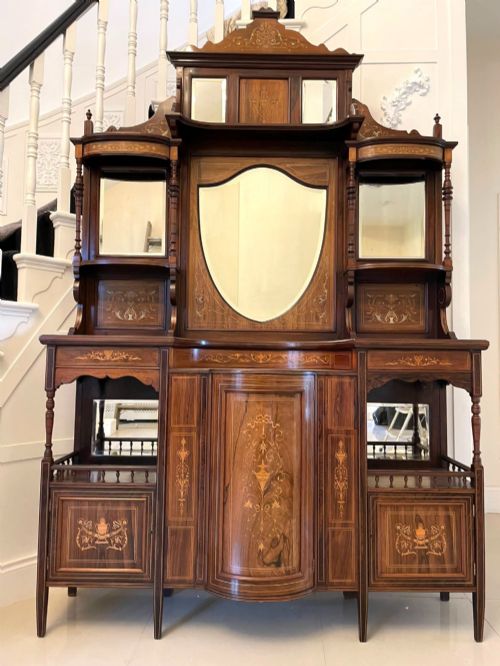
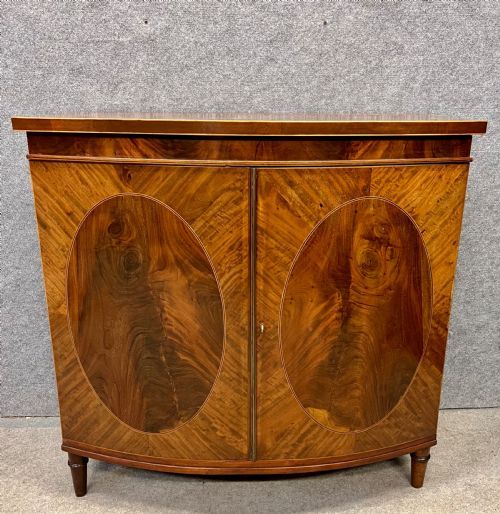
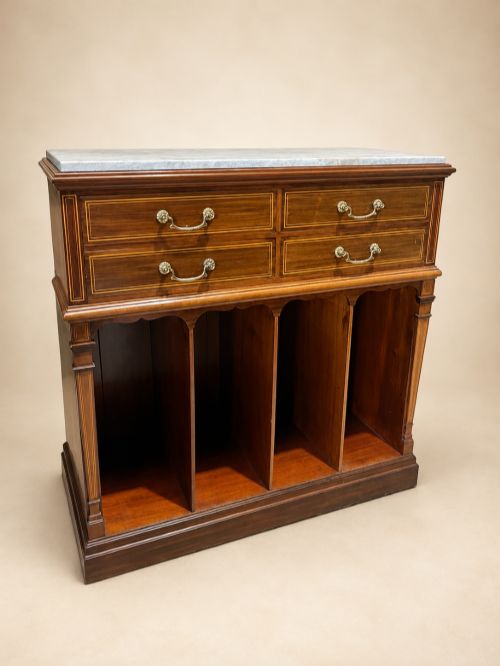
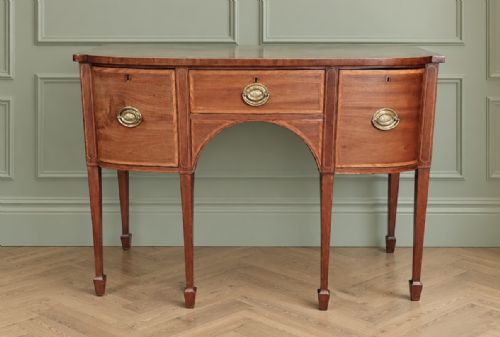
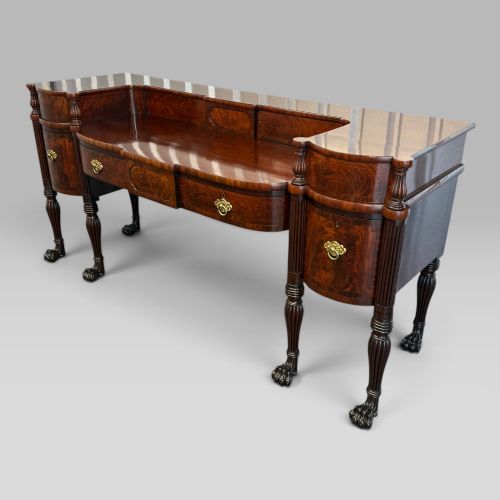
Inlaid Wood Sideboard Cabinet
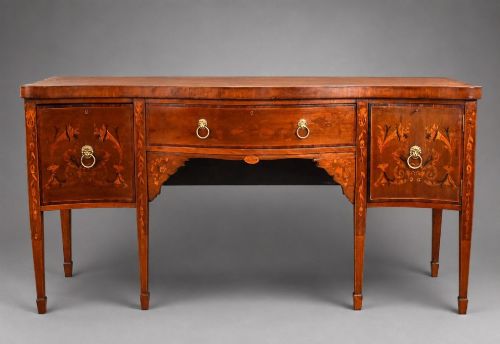
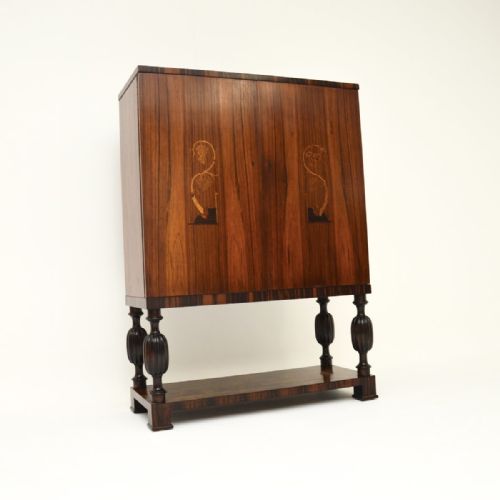
An inlaid wood sideboard cabinet combines generous storage with intricate marquetry, offering a focal point that anchors a dining room or drawing room.
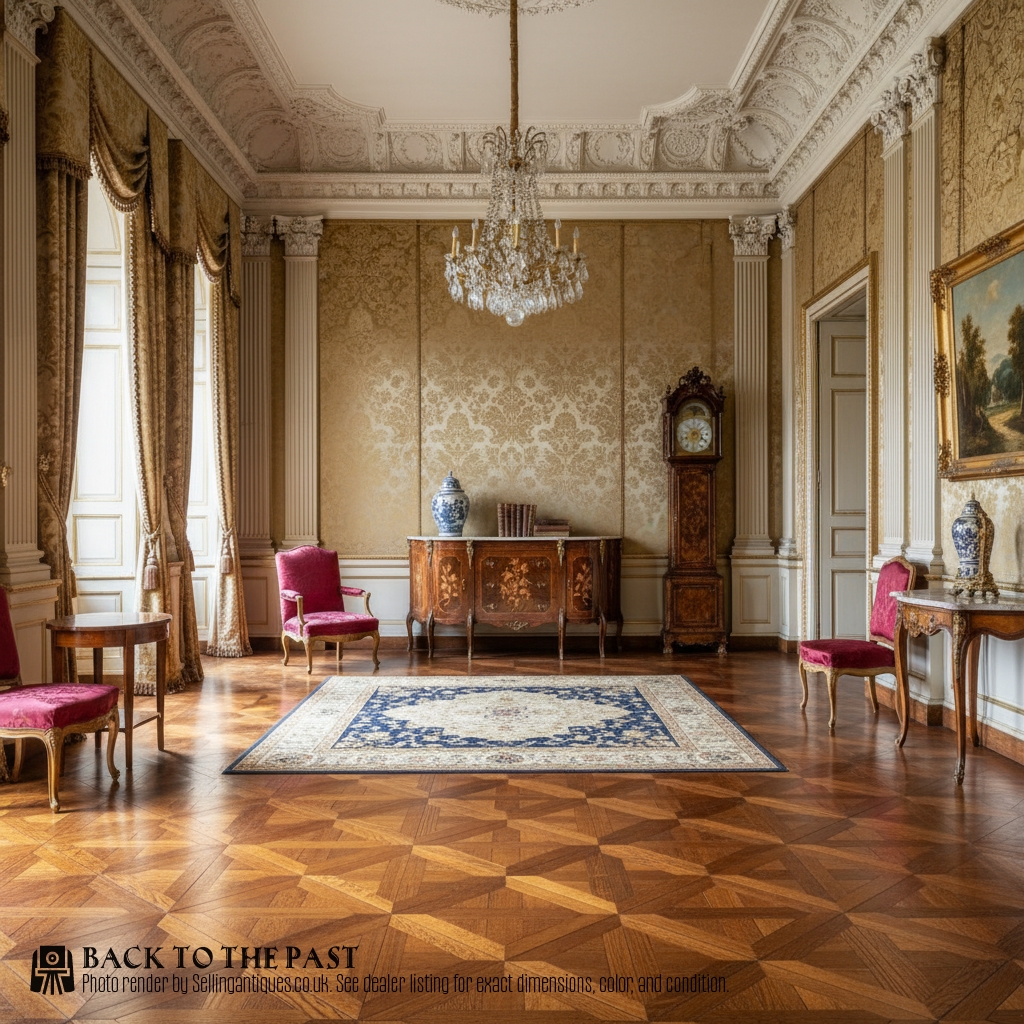
Inlaid Wood Sideboard Cabinet
An inlaid wood sideboard cabinet bridges several centuries of cabinetmaking, appearing across Georgian, Regency, and Victorian periods. These pieces serve primarily as dining room servers, credenzas, and display cabinets designed to hold tableware or exhibit prized objects.
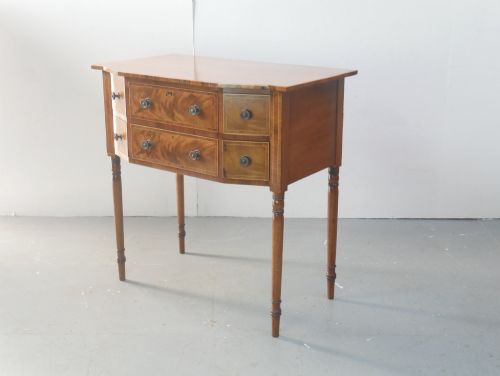
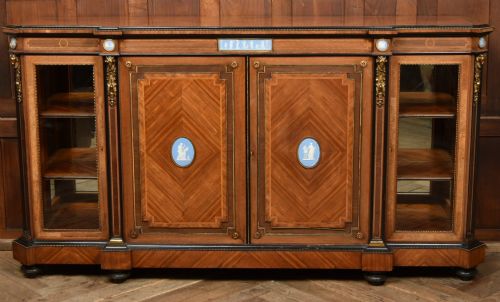
The selections available here range from formal George III mahogany servers to Edwardian Sheraton Revival satinwood pieces and later twentieth-century interpretations. Buyers frequently encounter serpentine fronted credenzas and bow-fronted sideboards bearing contrasting wood inlays.
Makers utilised various formats, including two-door side cabinets, breakfront configurations, and demi-lune commodes. Each variation reflects the prevailing domestic requirements of its era, moving from utilitarian storage towards decorative display.
Materials and Technique
Craftsmen built these cabinets using solid structural timbers such as mahogany, oak, and walnut, frequently applying fine veneers of rosewood, satinwood, and burr elm across the primary surfaces. Marquetry techniques involved cutting contrasting botanical and geometric motifs into the wooden ground.
Decorative detailing often incorporated cast brass mounts, ormolu accents, and marble tops, particularly on nineteenth-century continental and domestic pieces. The application of flame mahogany veneers provided striking natural grain patterns that complemented linear stringing and floral inlays.
Styles represented include George III, Regency, and Sheraton Revival, alongside continental pieces with marble tops.
Assessing Craftsmanship
The standard of an inlaid wood sideboard cabinet depends on the precision of the marquetry and the selection of the underlying veneers. Superior examples display seamless alignment where individual wood types meet, maintaining crisp definition without lifting or shrinkage.
Internal construction and timber selection reveal the underlying merit of a piece, distinguishing workshop production from standard commercial output. Cabinets featuring secondary woods like oak or mahogany throughout their drawer linings indicate higher production values.
Hewetsons London·Collinson and Lock
The Inlaid Wood Sideboard Cabinet Glossary
- Marquetry
- A decorative technique applying pieces of veneer to a structural structure to form decorative patterns and pictures. This method differs from inlay by assembling the pattern on a backing before fixing it to the surface.
- Credenza
- A sideboard or cabinet originally developed in Italy, typically featuring low doors and used for storing or displaying dining items. Victorian iterations often incorporated glass panels and intricate marquetry.
- Demi-lune
- Having a half-moon or semicircular shape, commonly applied to the footprint of commodes and side cabinets designed to sit flush against a wall.
- Serpentine
- A curved shape featuring a convex centre flanked by concave ends, creating a flowing movement across the front of a sideboard or cabinet.
Inlaid Wood Sideboard Cabinet: Frequently Asked Questions
How do I distinguish Georgian from Victorian pieces?
Georgian pieces generally rely on architectural proportions, understated stringing, and solid mahogany or flame mahogany veneers. Their design emphasises clean lines and structural restraint.
Victorian cabinets tend to introduce heavier timber choices such as burr walnut and rosewood, frequently combined with dense floral marquetry and ormolu mounts. The overall aesthetic leans towards decorative exuberance and elaborate display.
Where should I place a sideboard cabinet?
These cabinets suit dining rooms, grand hallways, and drawing rooms where their surface area and internal storage prove practical. Placing them against a primary wall allows the timber grain and marquetry to catch natural light without obstruction.
Avoid positioning antique wood furniture in direct sunlight or beside active heat sources to prevent timber shrinkage and veneer lifting. Maintaining a stable indoor climate preserves the finish.
How do I care for inlaid wood surfaces?
Dust surfaces regularly with a soft, dry cloth to prevent particulate accumulation from dulling the French polish or wax finish. Avoid using silicone-based commercial polishes that can penetrate old timber pores.
Apply a quality cabinet wax sparingly once or twice a year to nourish the wood and maintain its natural lustre. Lift objects rather than dragging them across the marquetry.