


Floral Inlay Marble Credenza
These floral inlay marble credenza pieces bring together fine cabinet-making and cool stone surfaces, offering both display space and refined storage.
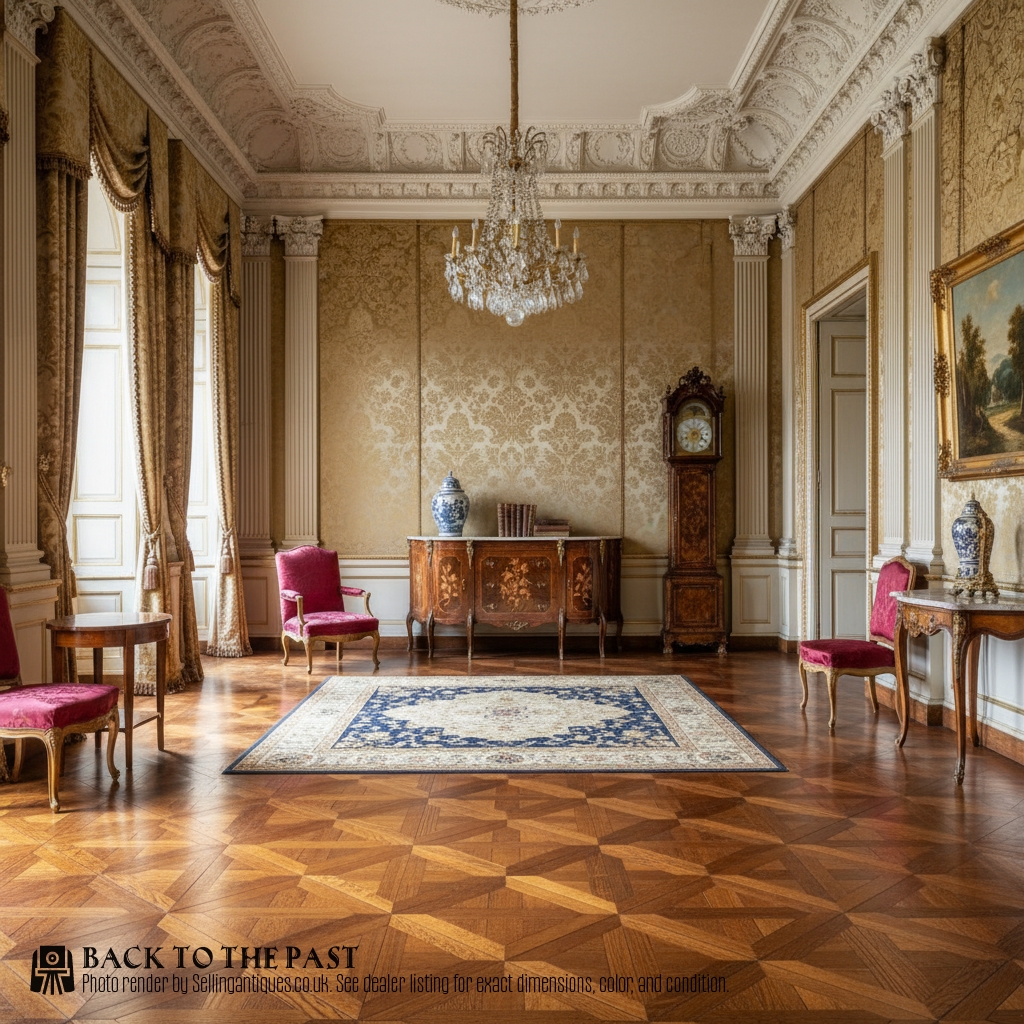
Floral Inlay Marble Credenza
A floral inlay marble credenza is a substantial storage piece, typically encountered here as a side cabinet or sideboard originating from French and Victorian traditions. These items span the eighteenth, nineteenth, and early twentieth centuries, encompassing styles such as Louis XVI, Louis XV Revival, and Napoleon III.
The primary forms include demi-lune cabinets, serpentine fronted cupboards, and rectangular side cabinets designed to anchor a principal room. Makers utilised diverse woods to achieve decorative surfaces, topped with heavy marble slabs including Carrara.
Buyers seeking this phrase find various iterations of French marquetry and pietra dura work. The scale and proportion of these cabinets reflect formal nineteenth-century drawing rooms and salons.
How they were made
Construction relies on timber carcases overlaid with fine veneers such as walnut, kingwood, and rosewood. Artisans formed intricate floral marquetry and pictorial inlay using contrasting woods and organic materials.
Metal ornamentation played a structural and decorative role, with ormolu, gilt bronze, and brass mounts framing the wood panels and protecting vulnerable corners. Heavy marble tops were cut, shaped, and polished to fit precisely over the timber bases.
Listings span periods from the 18th Century through to 1930, featuring woods like kingwood, walnut, and rosewood paired with marble.
What varies in quality
The standard of a floral inlay marble credenza rests on the precision of the marquetry cutting and the choice of timber grains. Finer examples display meticulous botanical detail in the wood inlay without gaps or excessive filler.
Mounting hardware distinguishes high-grade workshop production from standard commercial output. Crisp, hand-chased ormolu or gilt bronze mounts indicate superior craftsmanship compared to plain or cast-only brass alternatives.
The Floral Inlay Marble Credenza Glossary
- Marquetry
- Decorative veneer work arranged in pictorial patterns or floral motifs across a furniture surface. This technique requires cutting thin slices of diverse woods to fit together precisely like a puzzle.
- Ormolu
- Gilded bronze mounts applied to the angles, feet, and friezes of cabinet furniture. The term derives from the French for milled or ground gold.
- Pietra dura
- Inlay work using cut and fitted polished coloured stones to create designs. It appears on select nineteenth-century cabinet panels.
- Demi-lune
- A half-moon shape characteristic of certain side cabinets designed to sit flat against a wall. This profile softens room circulation while providing surface display space.
- Carrara marble
- A type of white or blue-grey marble quarried in Italy. It provides a durable, cool-touch top surface for formal cabinets and sideboards.
Floral Inlay Marble Credenza: Frequently Asked Questions
What is a floral inlay marble credenza?
It is a decorative storage cabinet featuring wood veneer floral patterns and a stone top. These pieces originated primarily in France and Britain during the eighteenth and nineteenth centuries.
They serve as focal points in dining rooms or hallways, providing enclosed shelving combined with a solid surface for displaying objects.
How do I care for the marble top?
Marble requires gentle cleaning with a damp cloth and neutral soap to preserve the polish. Avoid acidic liquids like citrus juice or vinegar, which etch the stone surface permanently.
Using coasters and mats prevents scratching and staining on antique marble slabs. Routine dusting keeps the polished finish intact over decades.
How are different periods identified?
Stylistic markers such as Louis XVI or Napoleon III details point towards specific decades of production. Wood types, construction methods, and mount designs also signal whether a piece dates to the eighteenth, nineteenth, or early twentieth century.
Examining the interior timbers and backboards reveals construction traits typical of particular eras. Comparing the hardware casting style helps confirm the historical context.