
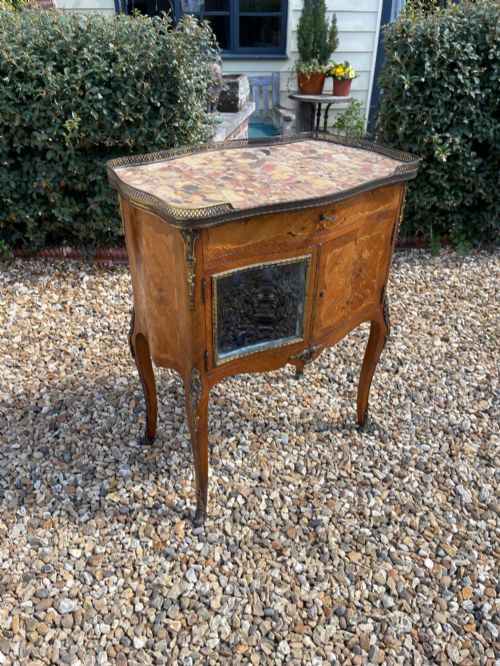


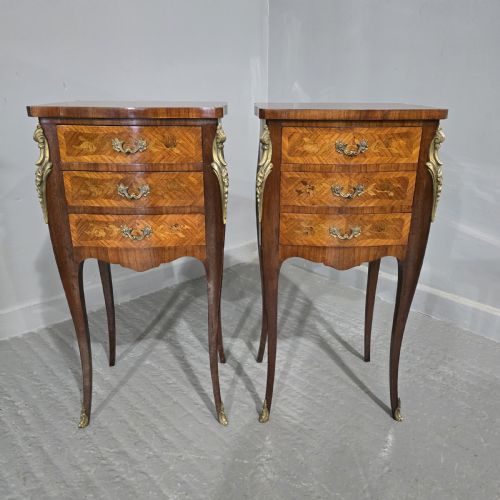


French Floral Inlay Commode
A french floral inlay commode brings opulent marquetry and classic marble tops into a room, offering both grand display surface and deep drawer storage.
French Floral Inlay Commode
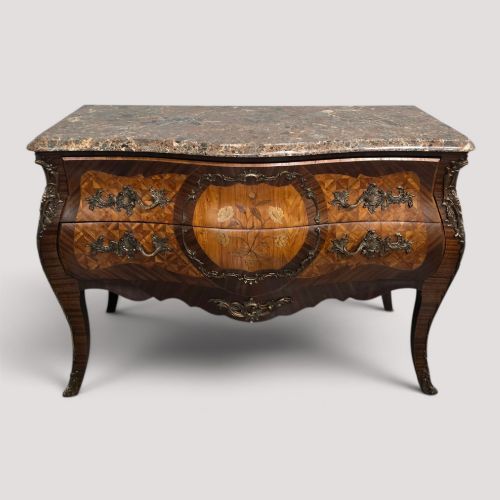
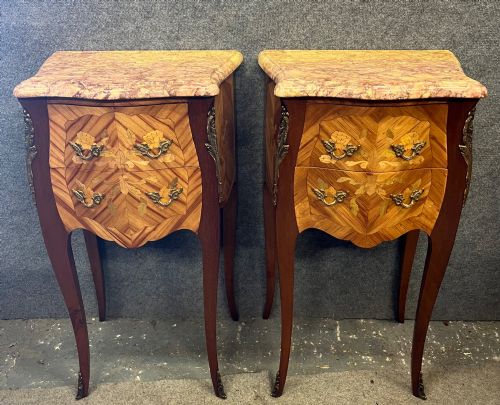
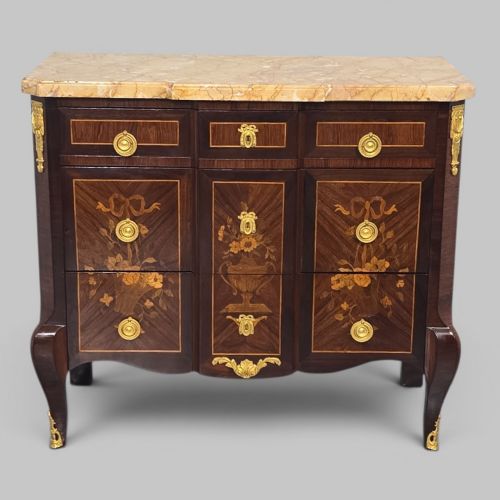
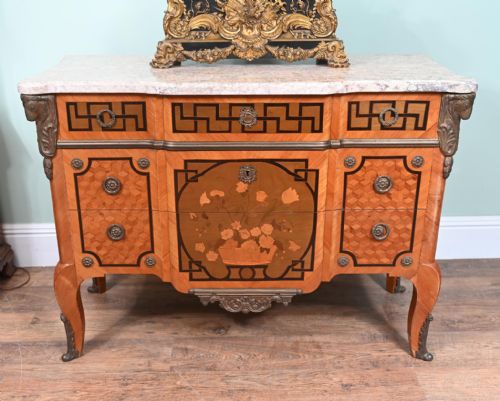
When you search for a french floral inlay commode, you encounter decorative storage furniture spanning the eighteenth, nineteenth, and early twentieth centuries. These pieces typically take the form of chests of drawers, commodes, demi-lune cabinets, and bedside chests.
The prevailing styles on this page lean heavily towards Louis XV and Louis XVI revivals, alongside French Rococo interpretations. Such pieces serve primarily as statement storage surfaces in reception rooms and bedrooms.
Forms range from serpentine and bombe fronted chests to sleek side cabinets and console tables. Most examples feature fitted marble tops sitting above intricate wood floral marquetry.
How they were made
Cabinet makers utilised a foundation of walnut, kingwood, and rosewood, applying complex marquetry veneers to form detailed floral patterns. These wooden structures are frequently accented with ormolu, gilt bronze, brass, and bronze mounts.
Heavy Carrara and other decorative marble slabs are fitted precisely to the upper surfaces of the cabinets. Cabinetry joinery relies on traditional framing techniques to support the substantial weight of both the stone tops and the timber carcasses.
Several diminutive bedside chests scale down grand palace proportions so that small floral bouquets can bloom right beside your mattress.
What varies in quality
The sophistication of the floral marquetry dictates much of the visual distinction across these pieces, with finer examples displaying nuanced shading in the cut veneers. Heavier, more deeply chased ormolu and bronze mounts also signal superior craftsmanship.
The selection and thickness of the marble top contribute significantly to the overall substance of the furniture. Structural integrity in the drawers and carcass assembly further separates standard production pieces from workshop masterworks.
The French Floral Inlay Commode Glossary
- Marquetry
- Decorative veneer work using various coloured woods arranged to form pictures or floral patterns. This technique covers the primary surfaces of the commode drawers and sides.
- Ormolu
- Gilded bronze mounts applied to the corners, feet, and aprons of the furniture. This material provides metallic contrast to the dark timber veneers.
- Bombe
- A swelling, outward-curved contour found on the front and sides of certain commodes. It requires advanced carpentry to shape the timber and fit the drawers.
- Demi-lune
- A half-moon shape characteristic of console tables and specific cabinets designed to sit flat against a wall. This profile softens the rectangular geometry of a room.
- Carrara
- A type of white or blue-grey marble quarried in Italy, frequently used for the tops of these cabinets. It provides a cool, durable working and display surface.
French Floral Inlay Commode: Frequently Asked Questions
What is a french floral inlay commode?
A french floral inlay commode is a decorative chest of drawers or storage cabinet featuring detailed wood marquetry flowers and a stone top.
These pieces originate predominantly from French revival periods and incorporate bronze or ormolu mounts.
How do I style a commode in a modern room?
Place the commode against a neutral wall to let the floral marquetry and marble top serve as a focal point.
Pair it with simple modern lighting or mirrors to balance the ornate eighteenth or nineteenth century details.
Are these commodes practical for daily storage?
Yes, the deep drawers provide substantial enclosed storage for linens, tableware, or personal items.
The stone top also acts as a durable surface for lamps and decorative objects.
How do I identify Louis XV style?
Louis XV style pieces typically feature asymmetrical curves, serpentine fronts, and naturalistic floral marquetry without rigid geometric lines.
Ormolu mounts often sweep organically around the corners and feet of the cabinet.
What maintenance do marble tops require?
Marble surfaces need simple cleaning with mild, non-acidic soap and water to preserve the polish.
Avoid placing acidic liquids directly on the stone to prevent etching.