
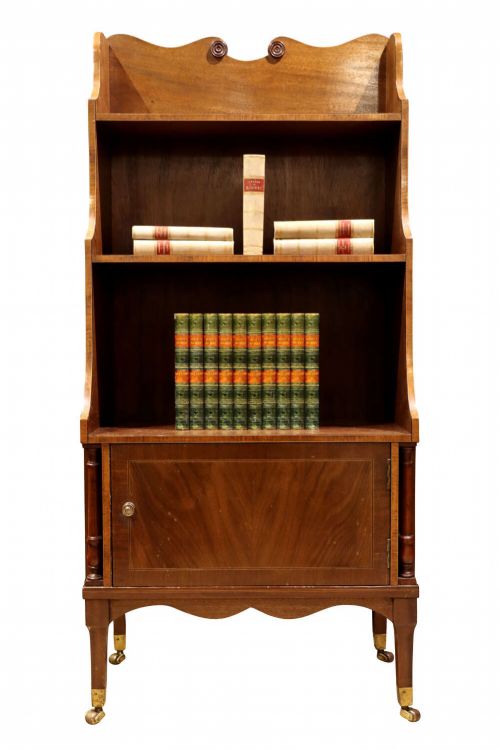


Inlaid Wood Library Cabinet
An inlaid wood library cabinet brings warmth and orderly storage to a room, uniting timber and fine detail.
Inlaid Wood Library Cabinet
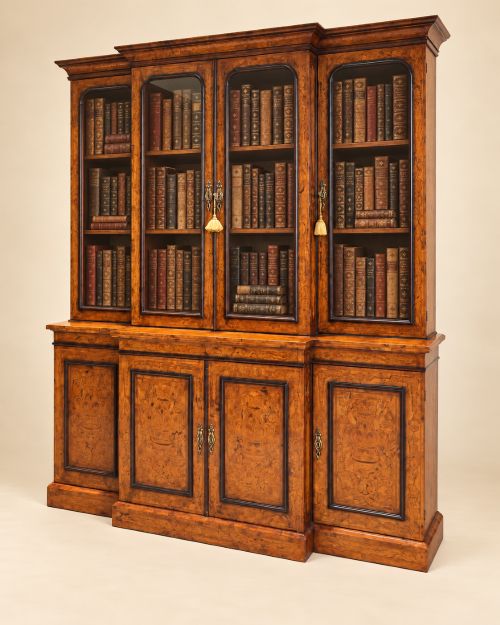
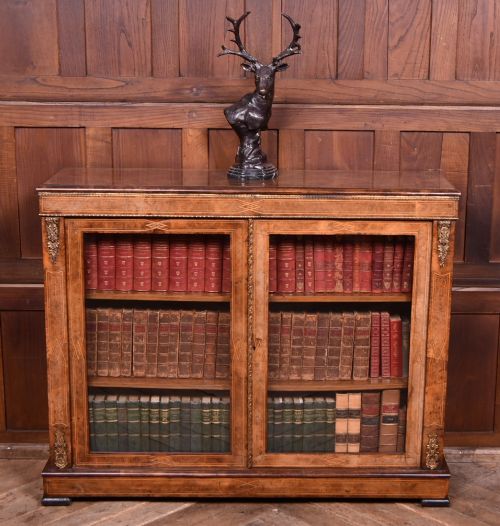
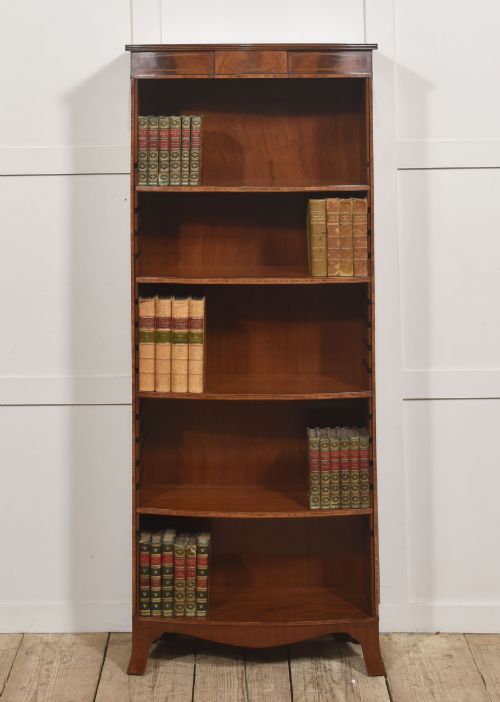
An inlaid wood library cabinet combines open or glazed shelving with enclosed cupboard space, designed for housing books and papers. The examples gathered under this search phrase span the nineteenth century and the Edwardian era, showing how cabinetmakers adapted traditional forms for domestic studies.
Makers drew on Victorian, Edwardian, Regency, Napoleon III, Art Nouveau and Sheraton Revival styles. This mix of periods and design influences means a buyer can find both robust breakfront furniture and lighter, more decorative display pieces.
How they were made
Cabinetmakers built these pieces using solid timbers and veneers of mahogany and walnut, chosen for their grain and stability. Structural carcases often housed adjustable shelving, while decorative surfaces received meticulous contrasting inlay in satinwood, boxwood and fruitwood.
Metal components played a practical role in daily use, with brass mounts securing corners and brass castors allowing heavy breakfront bookcases to move smoothly across carpets. Glazed doors protected leather-bound volumes from dust while keeping titles visible.
Surface finishing involved hand-polishing to bring out the natural depth of the mahogany or walnut. Artisans employed ebonisation techniques on specific frames and applied precise stringing and floral motifs in lighter woods.
Current listings feature nineteenth-century and Edwardian pieces constructed from mahogany, walnut, satinwood and fruitwood.
What varies in quality
Quality rests in the crispness of the inlay and the selection of timber veneers. Superior pieces display precisely cut botanical or geometric lines where lighter woods meet the darker mahogany or walnut ground without gaps.
Construction methods distinguish standard production from finer workshop output. Robust dovetailed drawer linings, substantial brass hardware and well-fitted doors that hang true indicate higher standards of period joinery.
Proportion and stylistic cohesion define the upper tier of these cabinets. Pieces executed in the Sheraton Revival style or designed as large breakfronts show a studied balance between architectural presence and delicate decorative detail.
The Inlaid Wood Library Cabinet Glossary
- Breakfront
- A cabinet design where the central section projects forward from the flanking wings. This architectural arrangement creates depth and visual interest in large bookcases.
- Inlay
- The technique of inserting contrasting strips or pieces of wood into a recessed surface to form patterns. Fruitwood, boxwood and satinwood provide pale tones against mahogany and walnut.
- Waterfall bookcase
- A tiered shelving unit where each successive shelf is wider than the one above it, creating a cascading silhouette. These are often fitted with enclosed cupboards at the base.
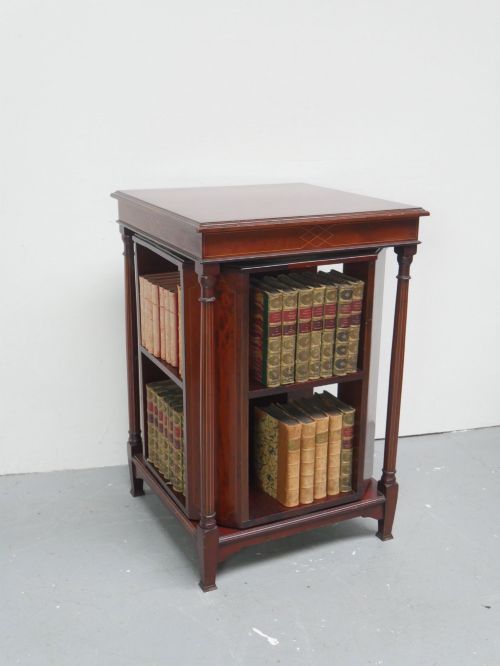
- Revolving bookcase
- A compact, rotating shelving unit designed to sit on a floor or tabletop for easy access to dictionaries or reference volumes. They turn smoothly on concealed internal mechanisms.
- Ebonisation
- A chemical or staining process used to turn light-coloured timber completely black, mimicking costly ebony. It appears on nineteenth-century frames and mounts.
Inlaid Wood Library Cabinet: Frequently Asked Questions
What fits inside an inlaid wood library cabinet?
These cabinets suit standard octavo volumes, larger folio books and general household paperwork behind glass doors or open shelves.
Lower cupboards often house heavier reference books, files or journals, keeping the main room tidy.
How do I care for nineteenth-century walnut furniture?
Keep timber pieces away from direct heat sources and strong sunlight to prevent the walnut veneers and inlay from drying out.
Apply a gentle beeswax polish occasionally to nourish the wood and maintain the soft sheen.
Where were these bookcases placed originally?
Victorian and Edwardian homes positioned large breakfront bookcases in studies, libraries or formal drawing rooms.
Smaller revolving bookcases and waterfall units sat beside armchairs or near desks for immediate access to daily reading.
How do I spot Sheraton Revival styling?
Sheraton Revival furniture borrows classical late eighteenth-century motifs like delicate stringing, symmetrical urns and tapered legs.
Late nineteenth-century makers reinterpreted these lighter neoclassical patterns in mahogany cabinets with refined satinwood inlay.