
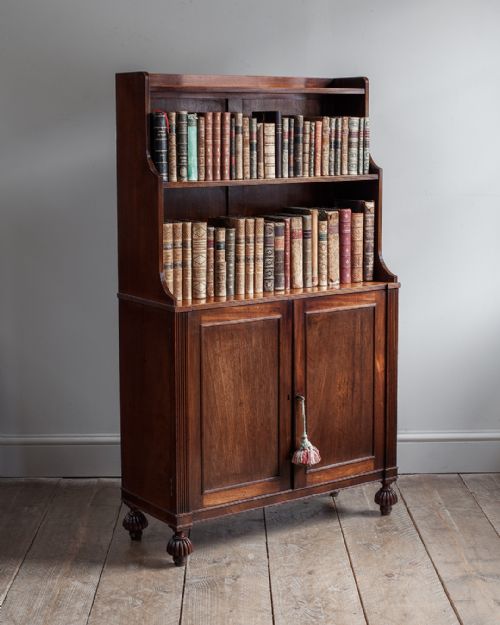
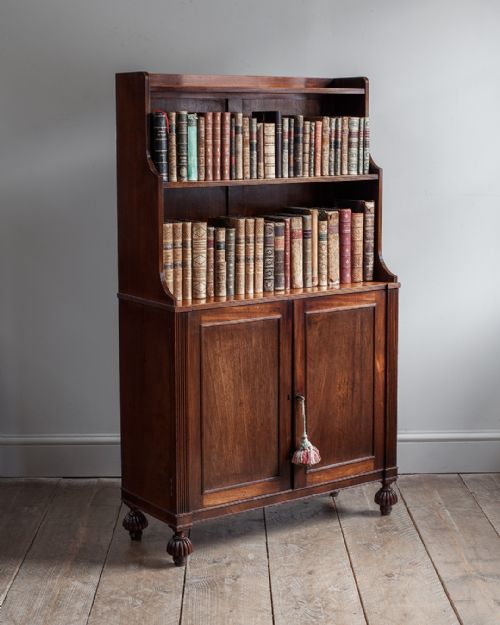
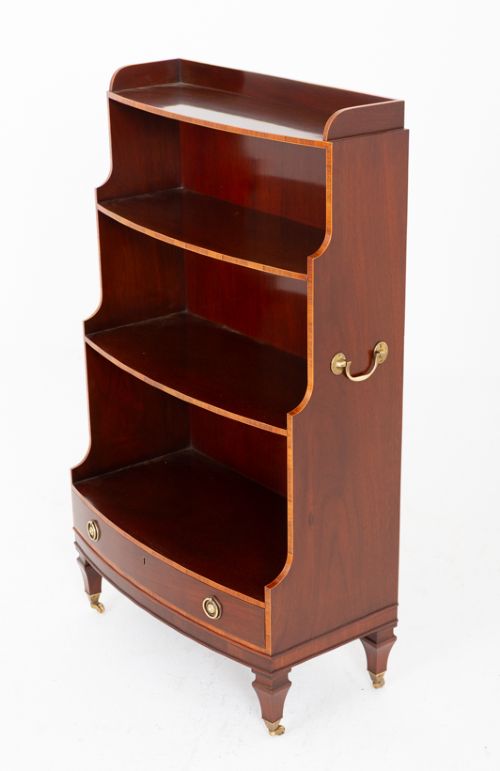
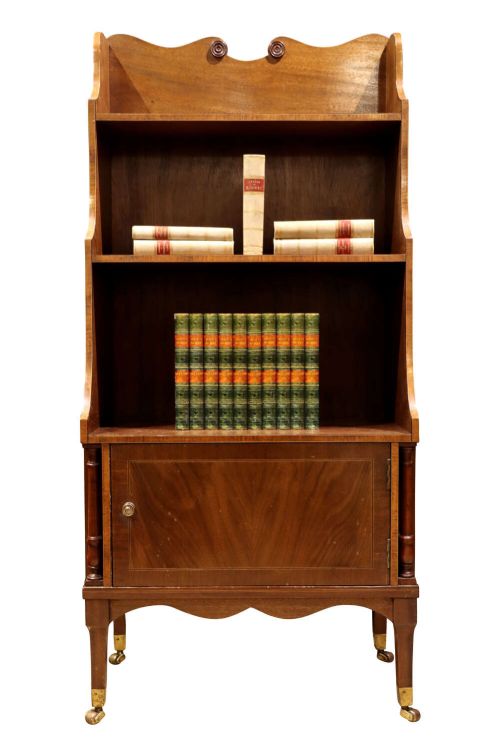



Waterfall Shelving Unit Mahogany
A waterfall shelving unit mahogany combines stepped tiers with rich timber, offering a practical yet elegant display for books and cherished items.
Waterfall Shelving Unit Mahogany
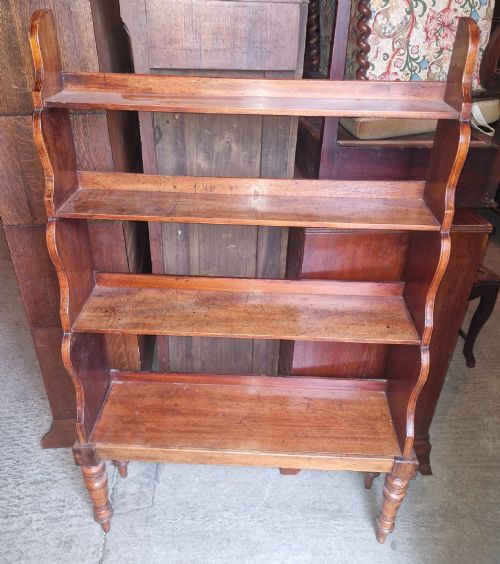
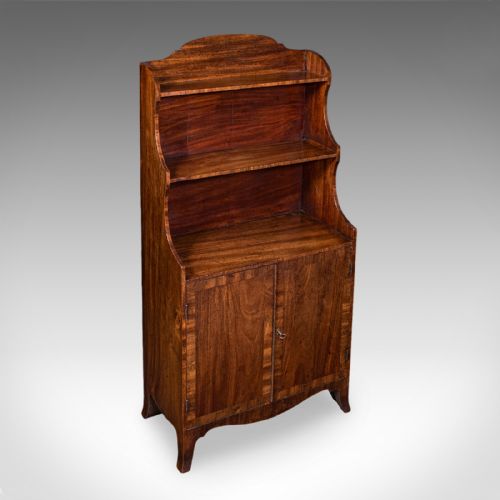
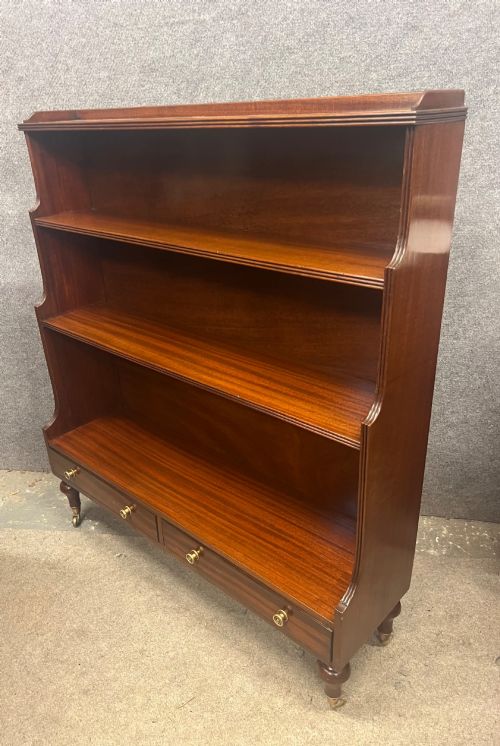
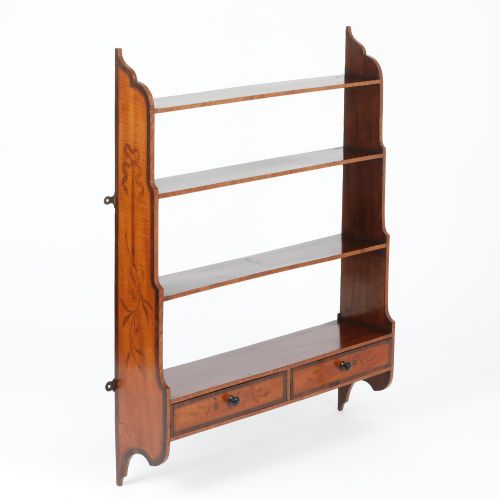
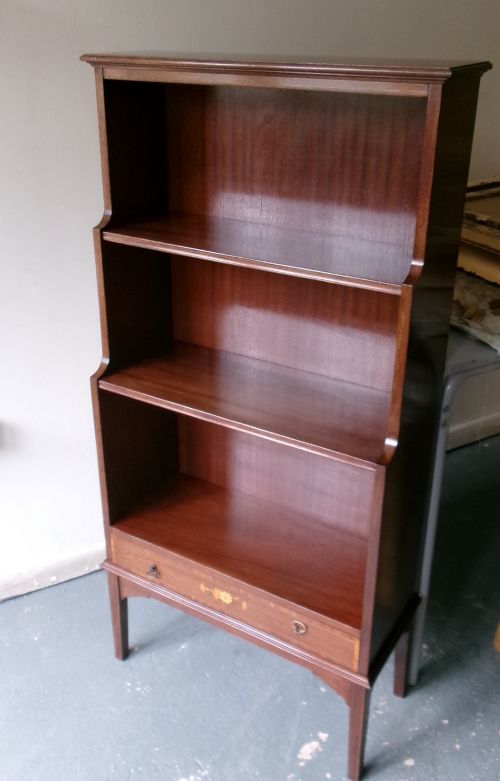
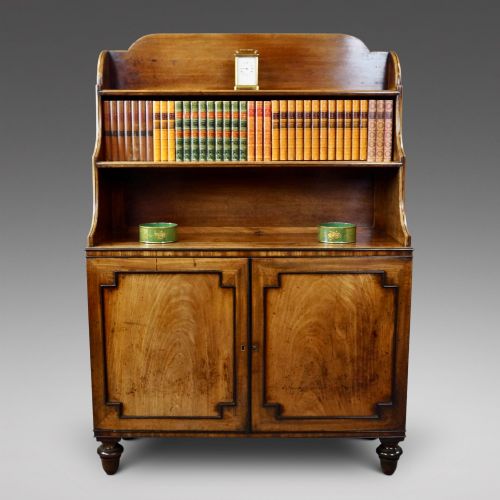
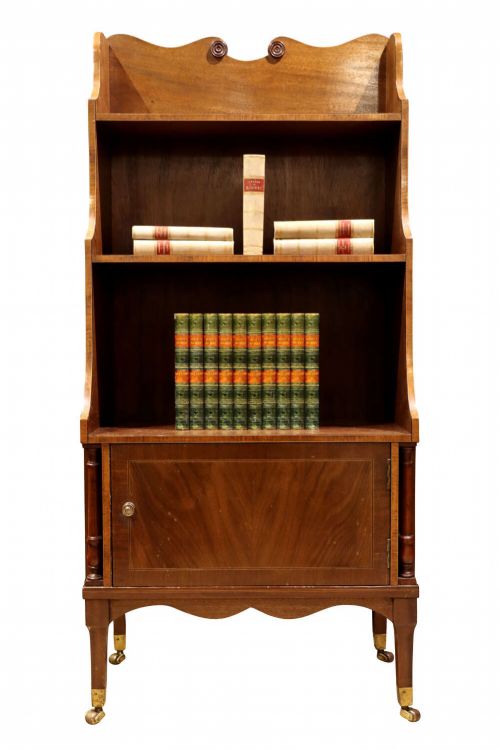
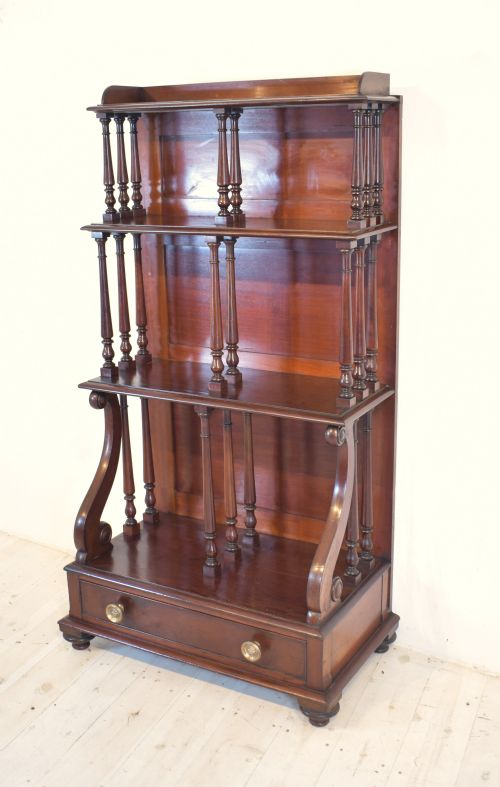
A waterfall shelving unit mahogany presents a series of graduated open shelves stepping back towards the top, creating a distinct cascading silhouette. These pieces appear across various eras, including Georgian, Regency, and Victorian periods, manifesting primarily as open bookcases, freestanding display shelves, and wall units.
The layout often incorporates lower cupboards, drawers, or brass castors for mobility, ranging from petite chiffoniers to taller six-tier open gallery designs. Buyers encounter both original period pieces and later Regency style interpretations, alongside occasional variations such as hanging bookshelves.
Originating to display books and decorative objects efficiently within domestic spaces, these items balance vertical storage with a minimal footprint. The tiered construction allows items of differing heights to sit comfortably while remaining fully visible.
Materials and Construction
Cabinet makers utilised solid mahogany alongside flame mahogany veneer to achieve rich grain patterns across the graduated tiers. Contrast cross banding and boxwood stringing frequently edge the shelves, adding linear definition to the dark timber.
Fine examples integrate supplementary decorative elements such as satinwood and brass castors, supporting both freestanding and cabinet-based formats. Structural joinery ensures the descending tiers remain stable under the weight of books and display items.
Some industrious Victorians clearly possessed towering book collections, necessitating robust six-tier open gallery constructions to keep the literary chaos beautifully cascaded.
Evaluating Craftsmanship
Superior examples display careful selection of flame mahogany veneers and precise execution of boxwood stringing, ensuring the timber grain complements the stepped silhouette. The integration of secondary woods and the sharpness of cross banding reveal the maker's attention to detail.
Structural integrity across the graduated tiers separates exceptional work from standard production, particularly in freestanding variants bearing heavier loads. Original brass castors and well-fitted drawers or cupboards enhance the desirability of a piece.
Shapland & Petter
The Waterfall Shelving Unit Mahogany Glossary
- Waterfall bookcase
- A set of open shelves that step back progressively from the bottom to the top. This form provides a cascading profile designed for displaying books.
- Flame mahogany
- A highly figured wood veneer featuring a distinct, flame-like pattern. Cabinet makers selected this material for prominent surfaces to create visual movement.
- Boxwood stringing
- A narrow strip of pale wood inlaid into darker timber to form decorative borders. This technique highlights the edges of shelves and tabletops.
- Cross banding
- A border of veneer laid with the grain running perpendicular to the central panel. It frames the primary wood surface with a contrasting directional grain.
- Chiffonier
- A low cabinet featuring shelving or a cupboard space beneath. These pieces often serve secondary storage and display functions in principal rooms.
Waterfall Shelving Unit Mahogany: Frequently Asked Questions
What is a waterfall shelving unit?
A waterfall shelving unit is a set of open shelves that step back progressively from the bottom to the top. This distinctive graduated profile creates a cascading effect well suited for displaying books and ornaments.
The design maximises visibility for items on every tier while maintaining a compact footprint against the wall. Such pieces function effectively in studies, libraries, and principal living spaces.
How do I date a mahogany piece?
Dating mahogany furniture involves examining the construction methods, secondary timbers, and decorative styles present. Pieces from the Georgian and Regency periods typically display hand-cut joinery and specific brass or stringing details.
Later Victorian and Edwardian interpretations often incorporate machine-cut elements or distinct stylistic revivals. Comparing the timber grain and overall proportions helps align a piece with its era of production.
Are these units suitable for books?
These units are built to hold books, particularly on the deeper lower tiers where larger volumes sit securely. The graduated depth accommodates octavos and quartos comfortably without tipping.
Freestanding and cabinet variants provide stable platforms for personal libraries. Ensuring the shelves remain level protects both the bindings and the structural integrity of the timber.
Where should I place this furniture?
Freestanding waterfall units suit living rooms, studies, and hallways where books or display items require an accessible surface. Wall-hung variations fit well in narrower spaces or above complementary sideboards.
Placing the timber away from direct sunlight and strong heat sources preserves the rich mahogany finish and veneer. Adequate clearance allows the stepped silhouette to remain a focal point.