

Victorian Standing Open Bookcase
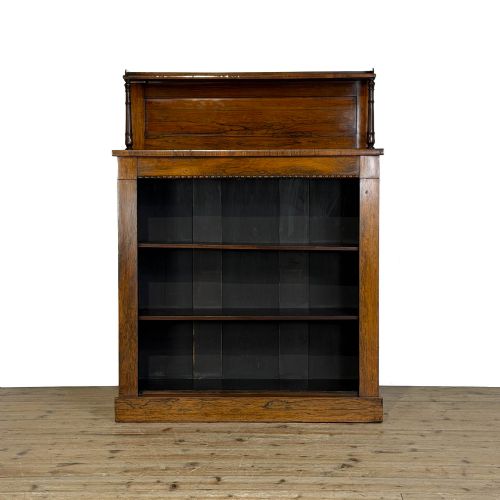
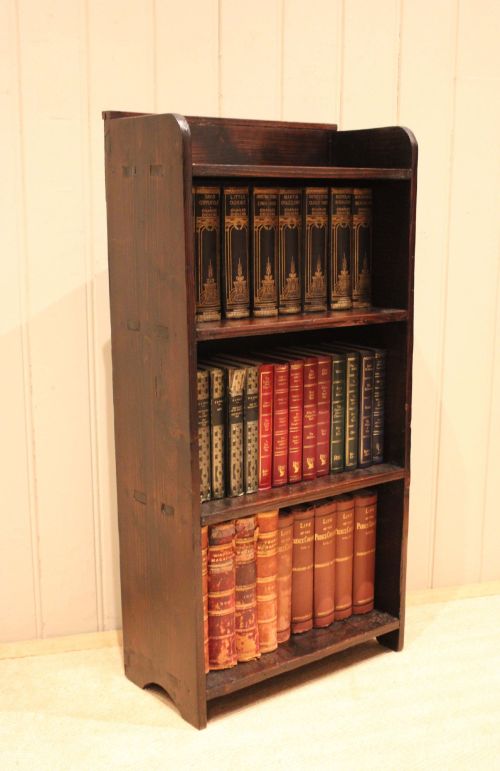
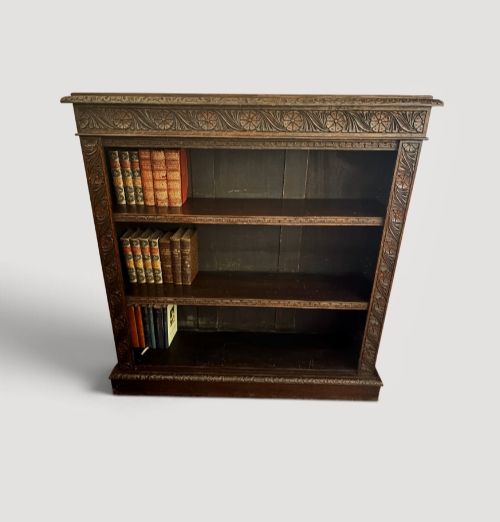
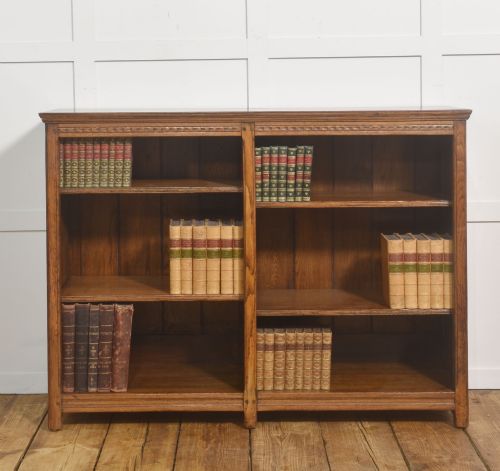
A victorian standing open bookcase holds books upright without doors, offering immediate access in mahogany, walnut or rosewood.
Victorian Standing Open Bookcase
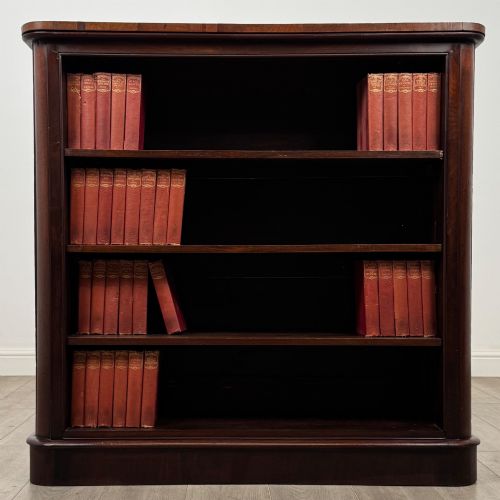
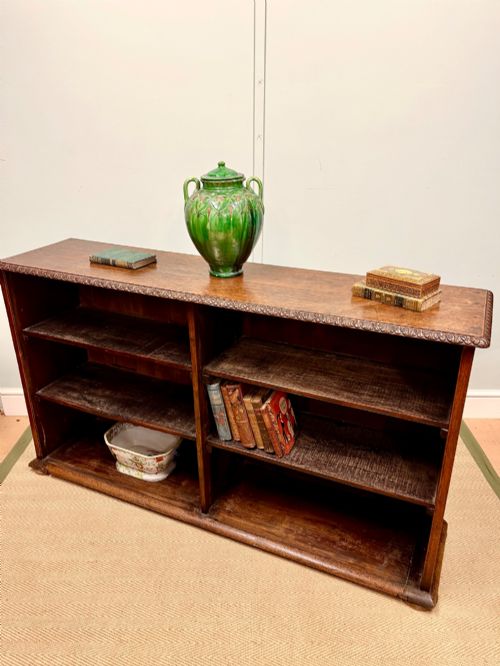
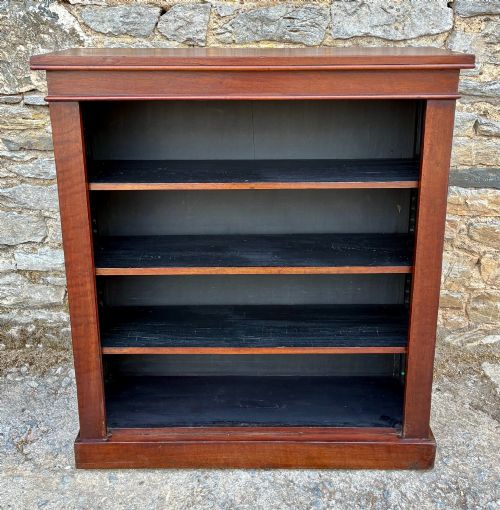
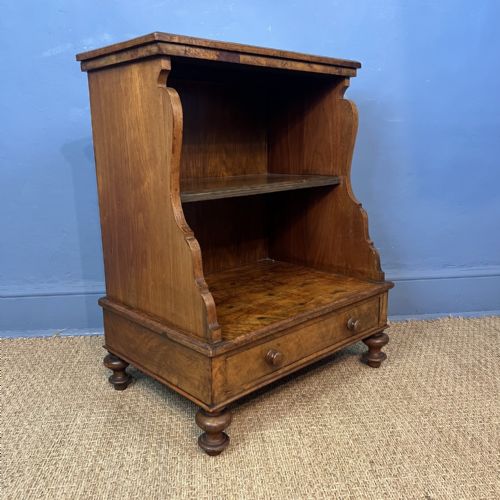
A victorian standing open bookcase is a tall or low floor-standing piece designed for everyday library use without glazed or wooden doors. These items appear in rich timbers such as mahogany and walnut, often standing on brass castors or simple plinths.
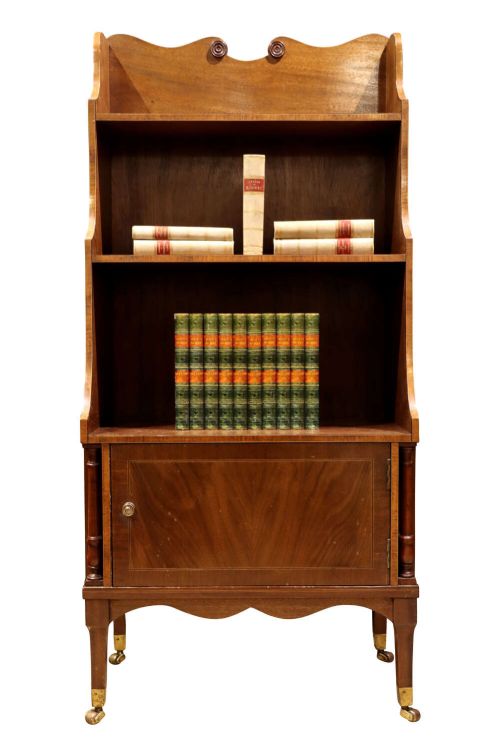
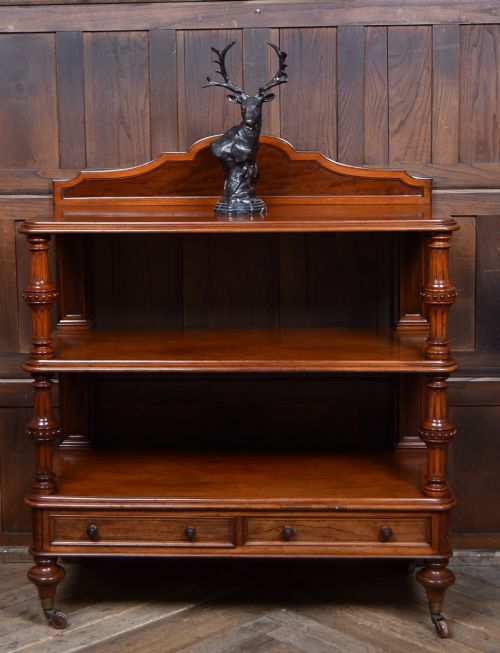
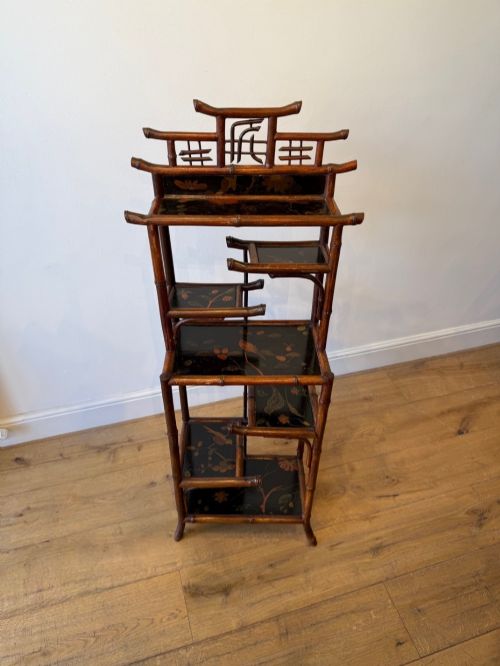
The form ranges from low dwarf shelves to tall standing units, occasionally featuring adjustable shelves or tiered sections. Makers adapted the traditional bookcase format into display furniture for parlours and studies during the nineteenth century.
Materials and construction
Cabinet makers built these pieces using solid timbers and decorative veneers like burr walnut and rosewood laid over supportive secondary woods. Joinery often involved sturdy tongue-and-groove backs and pegged joints to bear the weight of heavy volumes.
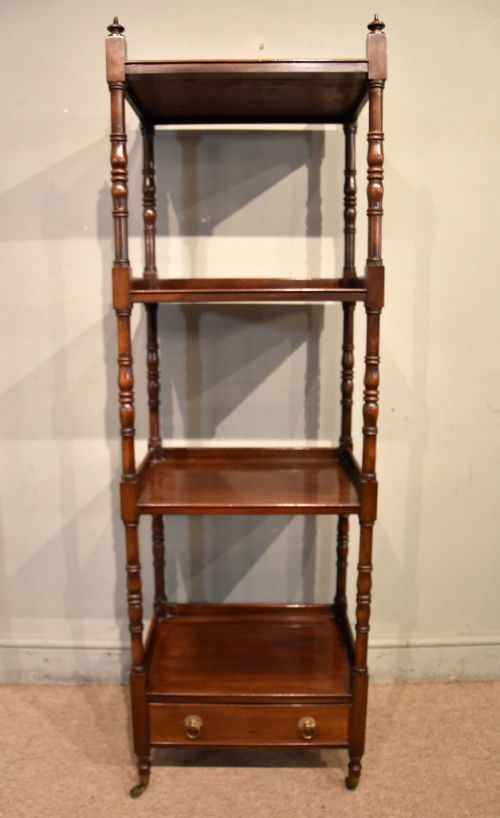
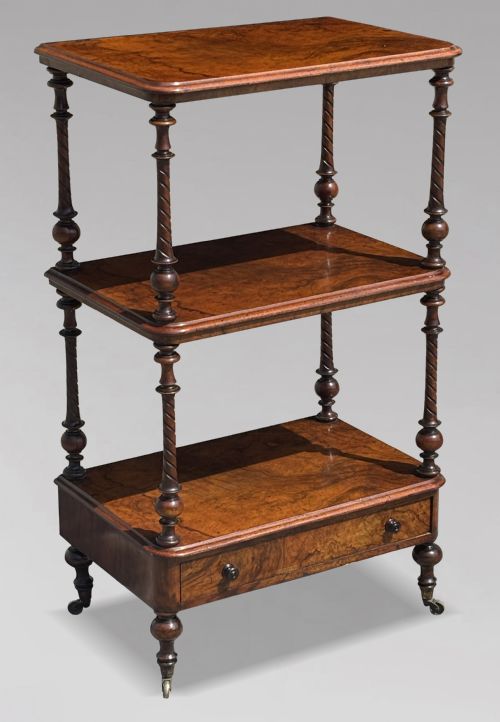
Fine examples incorporate brass castors for mobility, inlaid stringing in contrasting woods, and carved architectural details such as scrolling brackets or turned columns. Pine and oak appear in simpler country iterations or internal shelving frames.
Periods span the nineteenth century through the Edwardian era, incorporating styles from Regency to Arts and Crafts.
Judging the range
Quality rests on the selection of timber veneers, the crispness of hand-carved mouldings, and the integration of functional elements like adjustable shelf racks. Superior examples show careful grain matching across the front fascia and sound structural integrity in the uprights.
Simpler pine or stained softwood items reflect utilitarian domestic storage, whereas burr walnut or inlaid mahogany versions demonstrate high-status cabinet work intended for formal reception rooms.
Gabriel Viardot
The Victorian Standing Open Bookcase Glossary
- Waterfall bookcase
- A tiered shelving unit where each successive shelf steps back from the one below it. This style creates a cascading silhouette popular in late nineteenth-century interiors.
- Dwarf bookcase
- A low floor-standing bookcase designed to sit beneath window height. These compact units leave upper wall space free for paintings or mirrors.
- Inlaid
- The technique of embedding contrasting pieces of wood or metal into the primary surface to create decorative patterns. Stringing and floral motifs appear frequently on cabinet fronts.
- Castor
- A small wheel mounted on a swivel attached to the base of the furniture. Brass versions allow heavy timber bookcases to be moved easily across carpets.
Victorian Standing Open Bookcase: Frequently Asked Questions
Where should I place a standing open bookcase?
These pieces suit studies, libraries and living rooms where easy access to books matters most. Keep them away from direct sunlight and strong heat sources to protect the timber.
Ensure the floor is level so the upright frame remains stable without straining the joints.
Are the shelves adjustable?
Many nineteenth-century examples feature adjustable shelves supported by brass ratchets or wooden notches. This allows the internal height to adapt to varying book sizes.
Simpler pieces often have fixed shelves secured permanently into the frame.
How do I care for the wood?
Dust the surfaces regularly with a soft, dry cloth and apply occasional beeswax polish to nourish the grain. Avoid silicone sprays which can damage antique polish over time.
Maintain a stable room humidity to prevent the timber from warping or splitting.
What is the difference between a bookcase and a whatnot?
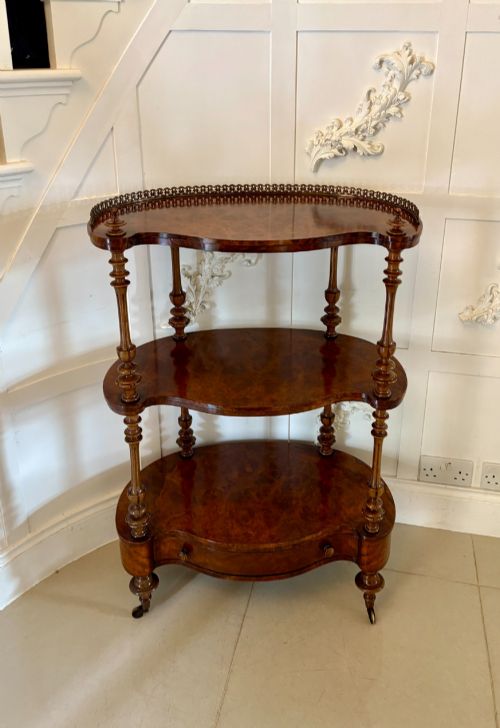
A bookcase is primarily built for storing and organising volumes in rows. A whatnot is a multi-tiered display stand intended for ornaments and occasional books.
Both forms share open access but serve different functional roles in period rooms.