
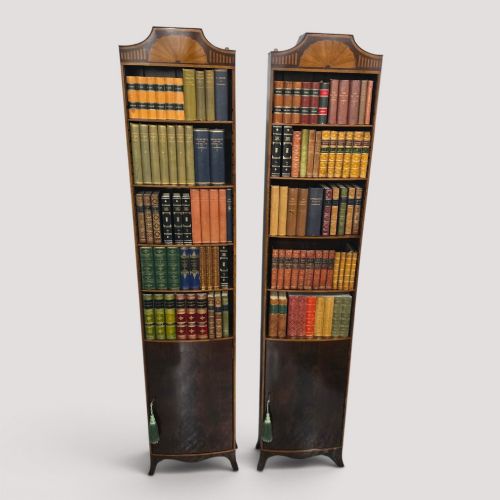
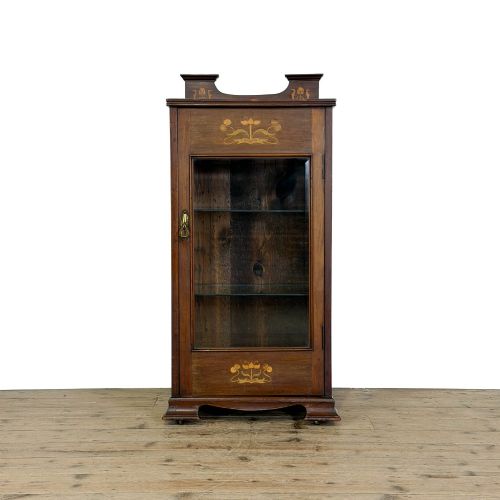
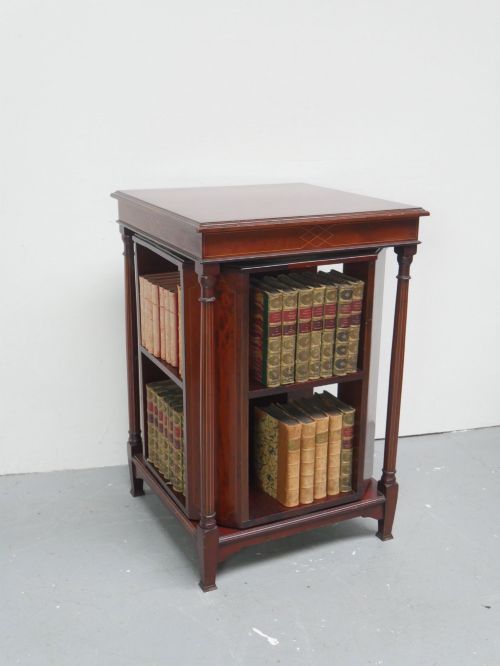
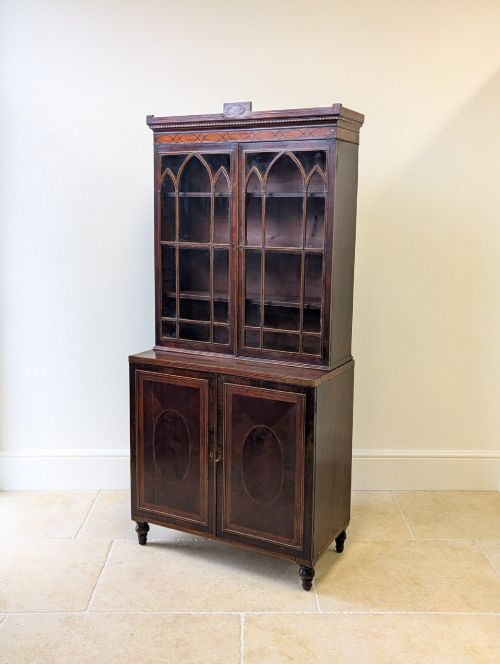


Inlaid Mahogany Book Cabinet
An inlaid mahogany book cabinet brings together warm timber, delicate woodwork and shelved storage for books and display.
Inlaid Mahogany Book Cabinet
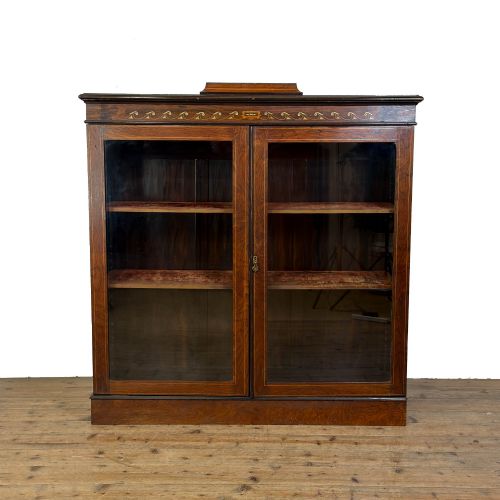
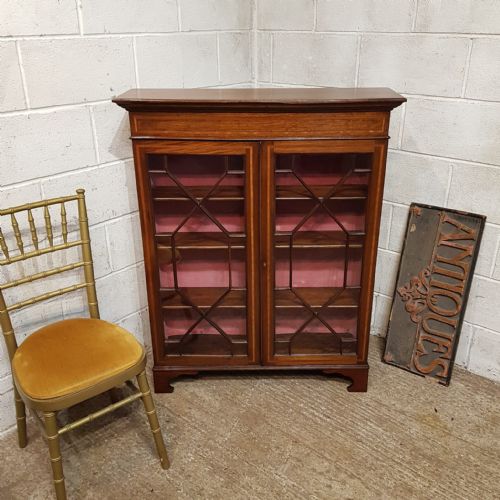
When you search for an inlaid mahogany book cabinet, you encounter pieces spanning the Georgian period, the nineteenth century and the Edwardian era. These pieces combine enclosed storage or display space with shelving for books, frequently standing on brass castors or bracket feet.
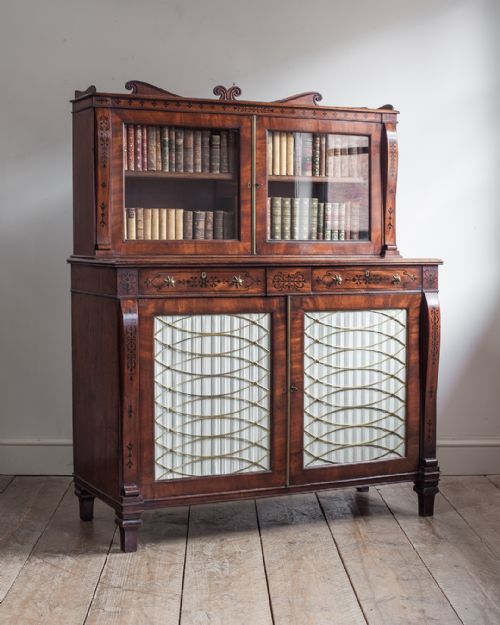
The Edwardian iterations dominate the selection, often taking the form of glazed display cabinets or compact bookcases with decorative satinwood inlay. Earlier Georgian and Regency examples also appear, offering deeper timbers and architectural proportions suited to traditional libraries.
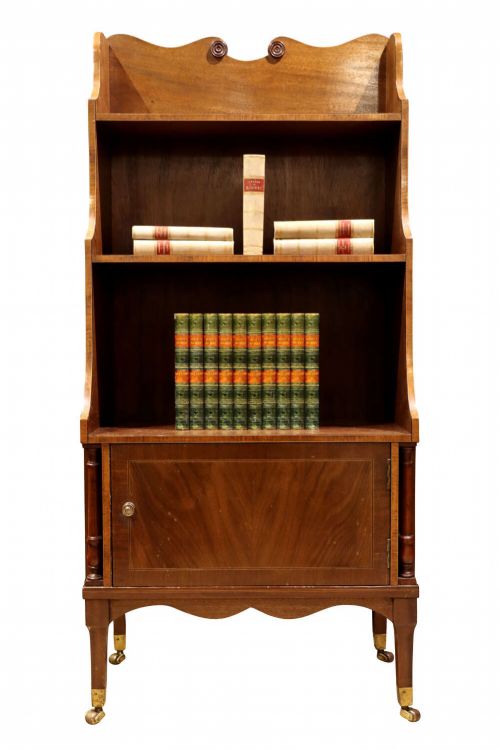
Forms range from breakfront designs and two-door cabinets to revolving bookcases and small waterfall versions. Buyers select them to house volumes while adding refined cabinetwork to a room.
How they were made
Carpenters built these cabinets primarily using mahogany, frequently enhanced with contrasting satinwood inlay and marquetry details to create linear banding or floral motifs. Glass panels, secured by astragal bars, protect the contents while allowing volumes or displayed items to remain visible.
Hardware such as brass castors or handles complements the timber, while internal configurations often include adjustable wooden shelving and occasional fabric linings. Workshops applied polished finishes that emphasise the natural grain and rich colour of the mahogany.
Several revolving bookcases among the selection allow readers to spin an entire miniature library with a single gentle push.
What varies in quality
Quality rests in the crispness of the cabinetmaker's joinery and the precision of the wood inlay, where tighter botanical patterns and even banding indicate superior workshop execution. The depth of the mahogany grain and the proportional balance of cornices and glazing bars separate standard production pieces from finer cabinet work.
Makers known for high standards, such as Edwards and Roberts or Jas Shoolbred, demonstrate exceptional attention to detail in their secondary timbers and finishing. Pieces of smaller proportions or those retaining original brass castors and glass panels generally command greater interest among collectors.
Shapland and Petter·Edwards and Roberts·Jas Shoolbred·Maple and Co
The Inlaid Mahogany Book Cabinet Glossary
- Astragal
- Glazing bars holding the individual panes of glass within a cabinet door. These slender wooden strips often form geometric or curved patterns.
- Marquetry
- Decorative veneer work arranged in pictorial or ornamental patterns using various tinted woods. It frequently appears on Edwardian panels and friezes.
- Breakfront
- A cabinet design where the central section projects forward from the flanking wings. This architectural layout creates visual depth.
- Satinwood
- A pale, lustrous timber utilised extensively for contrasting stringing and inlay on darker mahogany furniture. It creates sharp visual borders.
- Secretaire
- A cabinet incorporating a pull-down writing drawer fitted with small pigeonholes and compartments. It combines desk functionality with bookshelf storage.
Inlaid Mahogany Book Cabinet: Frequently Asked Questions
How do I date an inlaid mahogany book cabinet?
Dating relies on observing stylistic markers, construction methods and timber characteristics. Edwardian pieces often display lighter mahogany with delicate satinwood stringing and Sheraton revival motifs, whereas Georgian examples show heavier architectural proportions and deeper, untreated secondary woods.
Hardware such as brass castors, lock types and the style of the glazing bars also offer clues to the decade of manufacture. Comparing the piece against known cabinetmaker outputs helps narrow the production era.
Are the shelves adjustable on these cabinets?
Many surviving cabinets feature adjustable shelving supported by wooden rack strips or metal shelf clips. This allows owners to alter shelf heights to accommodate volumes of varying sizes.
Earlier Georgian pieces sometimes feature fixed shelving integrated directly into the carcass construction. Checking the interior walls reveals whether the original adjustment mechanism remains intact.
How should I care for the mahogany and inlay?
Maintaining the timber involves keeping the cabinet away from direct sunlight and heat sources to prevent the mahogany from fading and the veneer from lifting. Gentle dusting with a dry, soft cloth preserves the polished surface.
Applying occasional specialist wax feeds the timber without building up heavy residues. Avoid using modern silicone sprays, which can degrade antique finishes over time.
Can these cabinets support heavy book collections?
These cabinets suit general household libraries, though the weight capacity depends on the thickness of the shelves and the soundness of their supports. Solid mahogany boards bear substantial weight, while thinner veneered shelves benefit from lighter volumes.
Distributing heavier folios across the lower, fixed shelves prevents bowing. Inspecting the shelf supports ensures the internal structure remains secure under a full load of books.