


Edwardian Waterfall Bookcase
An Edwardian waterfall bookcase layers open shelves in a descending stepped cascade, offering practical storage with distinct architectural elegance.
Edwardian Waterfall Bookcase
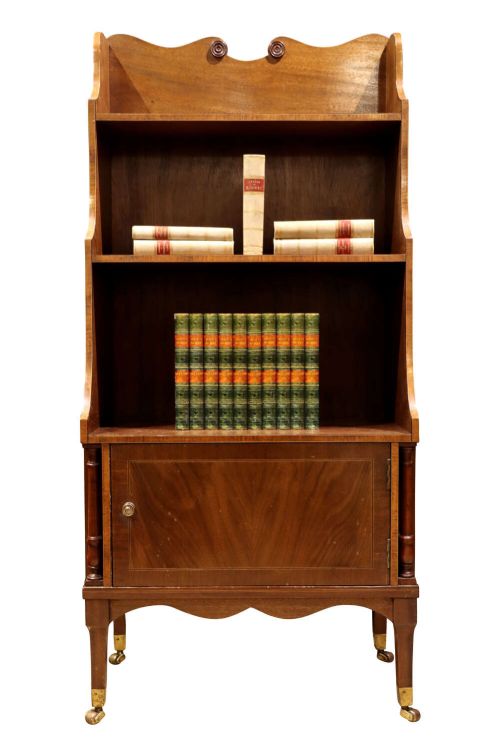
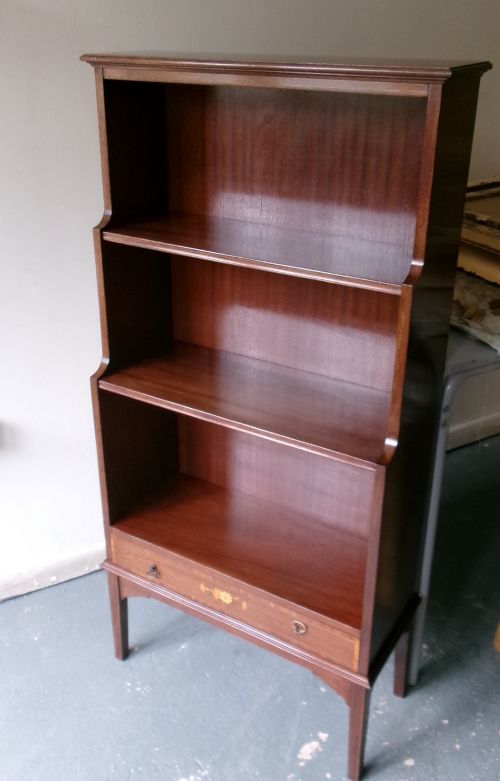
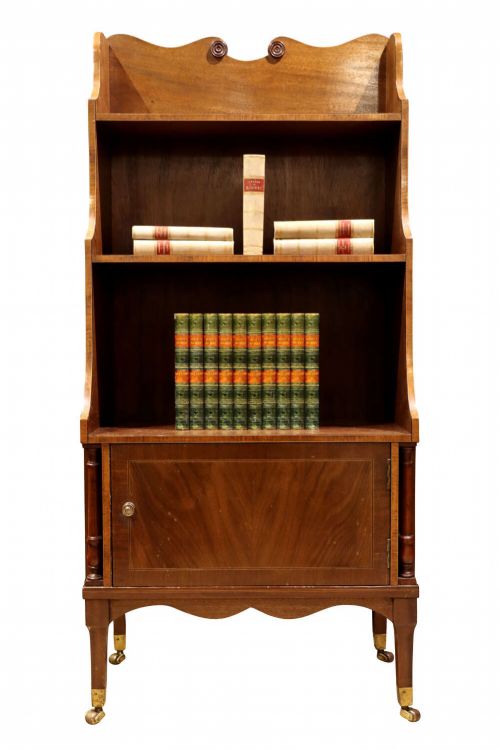
An Edwardian waterfall bookcase displays a series of graduated open shelves stacked vertically, where each lower tier extends wider and deeper than the shelf immediately above. These pieces emerge predominantly from the Edwardian period, accompanied by occasional earlier Regency examples, late Victorian interpretations, and later revivals.
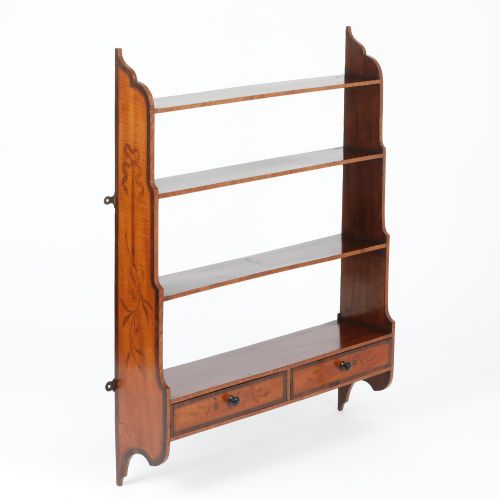
The form appears most frequently as a compact, freestanding mahogany open bookcase or cabinet, often incorporating a single drawer or lower cupboard doors. Buyers also encounter hanging wall shelves, satinwood variations, and oak iterations suited to domestic library spaces.
How they were made
Cabinet makers constructed these bookcases using solid timbers and decorative veneers, selecting mahogany, satinwood, oak, rosewood, and yew wood for the primary carcase. Flame mahogany veneer provides rich surface grain, while contrasting inlay wood and brass castors complete the structural assembly.
Joinery methods rely on traditional cabinet-making techniques to secure the stepped upright sides and graduated shelves. Fret-cut detailing and fine stringing appear on select stylistic variants, aligning with Edwardian and Arts and Crafts production standards.
Several diminutive specimens survive in satinwood, proving that Edwardian readers possessed a profound fondness for miniature cascading libraries.
What varies in quality
The standard of timber selection and veneer matching defines the visual weight of the piece, with figured mahogany and finely polished satinwood sitting at the upper end of the scale. Subtle details like refined fret-cutting and crisp inlay contrast with plain, utilitarian construction.
Proportion and scale dictate the success of the graduated stepped tiers, where balanced dimensions and sturdy upright supports separate standard utility items from finer cabinet work.
Shapland and Petter
The Edwardian Waterfall Bookcase Glossary
- Waterfall bookcase
- A set of open shelves stepped in a descending cascade, where each tier projects further than the one above. This form maximises display space while maintaining a compact footprint.
- Inlay wood
- Contrasting timber slivers embedded into the primary surface to create decorative geometric or floral borders. It demonstrates advanced cabinet-making skill.
- Flame mahogany veneer
- A thinly sliced wood layer displaying a distinctive flickering grain pattern derived from branch junctions. Makers applied this to prominent exterior surfaces for visual impact.
- Brass castors
- Small swivel wheels attached to the base of the bookcase legs to ease mobility. They appear frequently on late Victorian and Edwardian cabinet pieces.
- Fret-cut
- Wood pierced with decorative patterns using a fine scroll saw. This technique adds lightness and ornamentation to shelf galleries and side panels.
Edwardian Waterfall Bookcase: Frequently Asked Questions
What is a waterfall bookcase?
A waterfall bookcase is an upright storage unit featuring graduated shelves that step forward from top to bottom. The design creates a cascading profile reminiscent of a waterfall.
Cabinet makers adapted this stepped silhouette for books and decorative objects, producing both open shelf formats and versions equipped with lower cupboards or drawers.
How were these bookcases used?
These pieces served primarily for organising and displaying personal libraries in domestic sitting rooms, studies, and bedrooms. The open stepped shelves kept frequently read volumes within easy reach.
Compact variations functioned as desk accessories or wall-hung tidies, while larger cabinet combinations stored reference volumes alongside enclosed lower compartments.
How do I identify an Edwardian piece?
Edwardian examples typically display light mahogany or satinwood construction, frequently accented with delicate string inlay and brass castors. The proportions tend toward neat, domestic scales popular in the early twentieth century.
Comparing construction traits against Victorian precursors helps establish the period, noting the shift toward lighter woods and refined decorative detailing during the Edwardian era.
Are these bookcases freestanding?
Most examples function as freestanding floor units, though the evidence also includes hanging wall shelves and desk-top book stands. Freestanding variants often feature enclosed lower cupboards or drawers for added stability.
Placement depends on the specific form, with open floor models requiring flat wall space and smaller hanging versions needing secure wall fixings.