
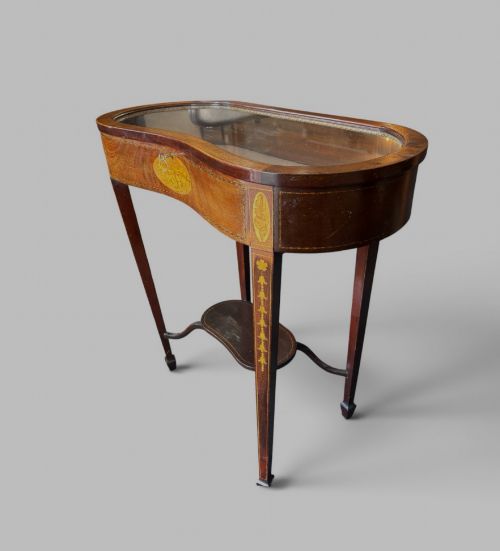
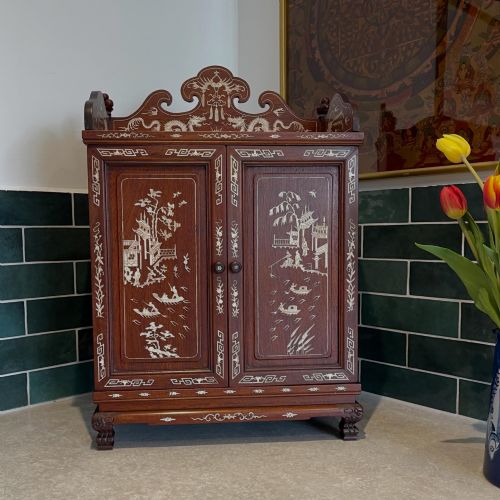
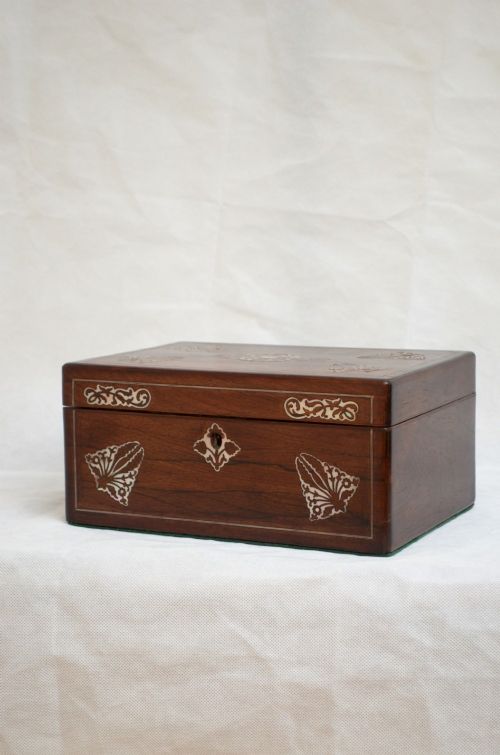

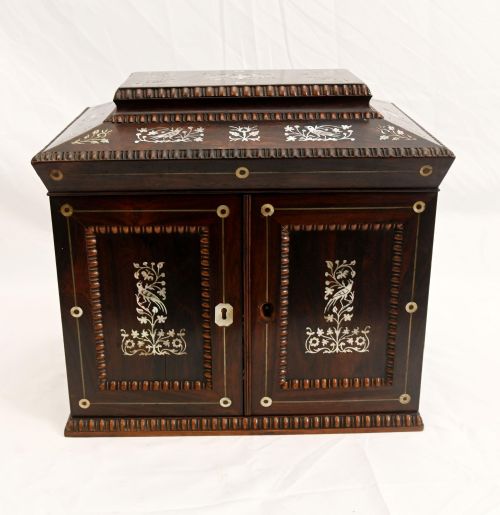


Inlaid Wood Jewellery Box
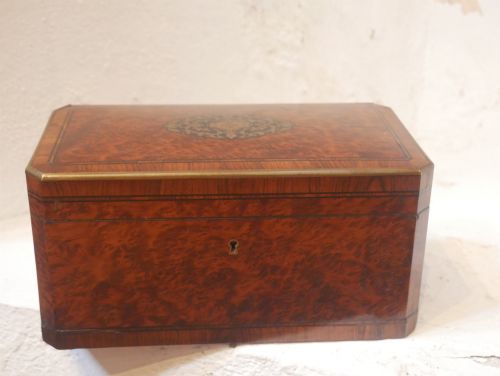
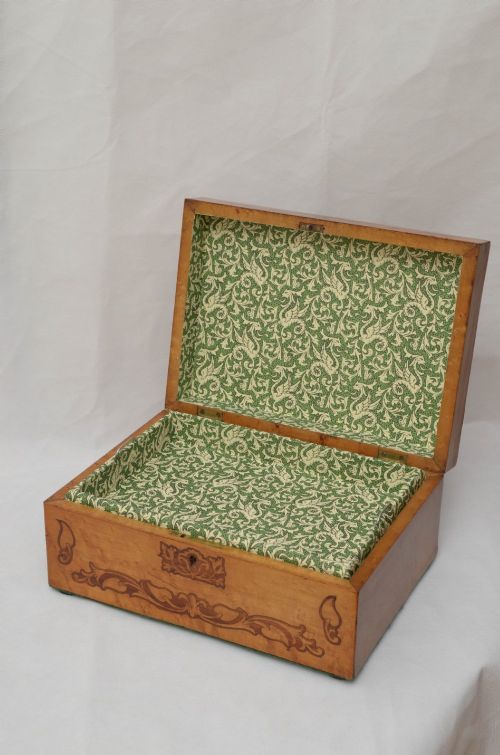
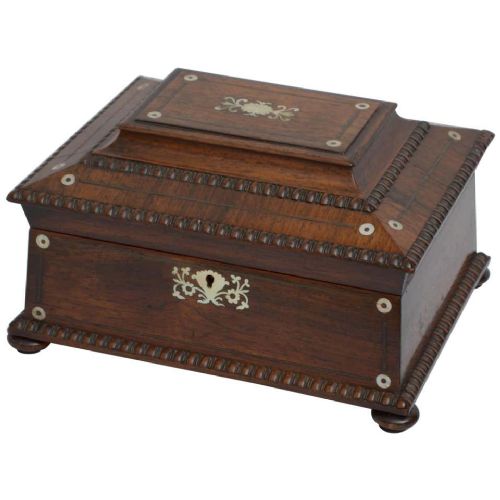
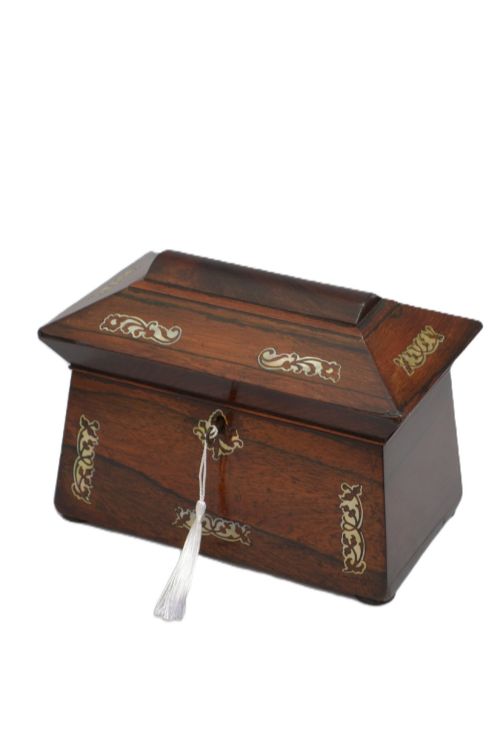
An inlaid wood jewellery box brings together period cabinet-making and intricate surface decoration to safely store personal treasures.
Inlaid Wood Jewellery Box
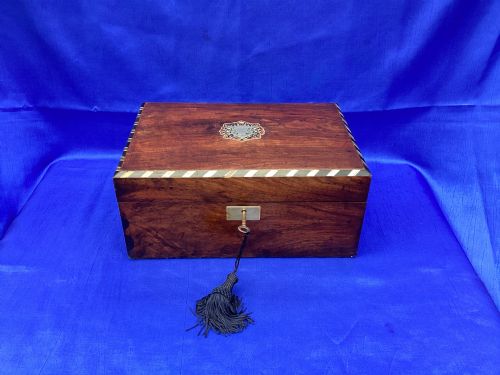
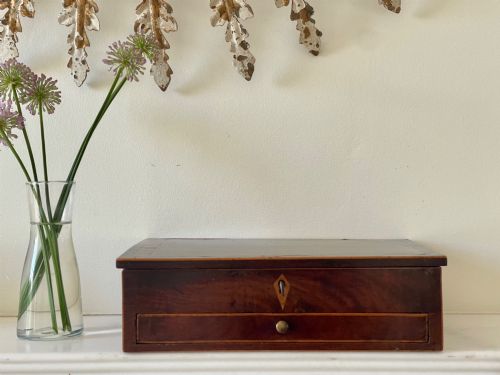
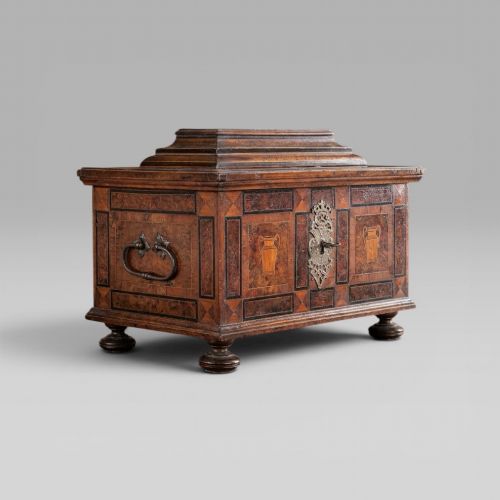
When you search for an inlaid wood jewellery box, you encounter items designed to store personal trinkets, rings, and keepsakes across the Georgian, Regency, and Victorian eras. These containers take the form of tabletop caskets, fitted dressing cases, and small chests featuring contrasting timber details.
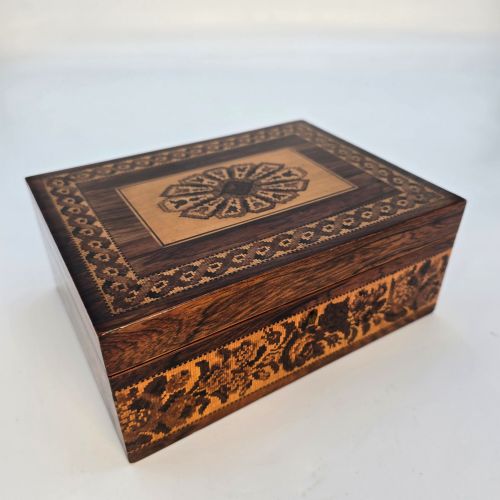
The selections span English workshops, continental European centres including Sorrento and Italy, and specialised regional traditions such as Tunbridge Ware. Pieces range from simple brass-banded rosewood boxes to elaborate multi-tiered compartments with lifting trays and secret drawers.
Materials and Techniques
Cabinet makers utilised dense exotic and native hardwoods like rosewood, coromandel, mahogany, and walnut as the primary foundation for these caskets. Surfaces were then enriched through contrasting veneers, employing boxwood, satinwood, maple, and fruitwoods to build pictorial or geometric motifs.
Surface ornamentation relied on specialised disciplines such as marquetry, parquetry, and meticulous micro-mosaic wood inlaying seen in Tunbridge and Sorrento wares. Inlays frequently incorporated mother-of-pearl, brass lines, and pewter stringing to accentuate the grain of the base timber.
Judging the Workmanship
The standard of a piece depends on the precision of the inlay work and the harmonious selection of contrasting timbers by the maker. Sharp junctions in geometric parquetry and firmly seated mother-of-pearl plaques indicate superior construction.
Internal fittings, including original silk or velvet linings, working brass locks with keys, and multi-layered lifting trays, distinguish standard utilitarian containers from high-end presentation pieces commissioned from notable makers.
Tahan Paris·Edmund Nye·H Mitchell
The Inlaid Wood Jewellery Box Glossary
- Marquetry
- The art of forming decorative patterns by fitting together small pieces of veneer into a wooden ground. This technique allows for complex pictorial or floral designs across the lid and sides.
- Parquetry
- Geometric mosaic woodwork arranged in repeating patterns such as cubes, chequers, or stripes. It relies on exact mathematical alignment of contrasting wood species.
- Tunbridge Ware
- English wood-mosaic ornamentation created by gluing thousands of tiny tinted wood polygons together to form a picture or mosaic band. Named after the town where the craft flourished.
- Sorrento Ware
- Italian wood inlay and marquetry developed in the nineteenth century, typically featuring rustic scenes or Mediterranean motifs. It frequently utilises olive wood and marquetry panels.
- Stringing
- Thin strips of contrasting wood or brass inlaid into channels cut into the surface of the primary timber. It creates crisp linear borders around panels and lids.
Inlaid Wood Jewellery Box: Frequently Asked Questions
How can I date an inlaid jewellery box?
Dating relies on identifying the primary timber, the style of the brass hardware, and the construction methods used inside the carcass. Georgian and Regency pieces often feature simple rosewood with brass stringing, while Victorian examples introduce more complex mother-of-pearl and varied exotic veneers.
Examining the interior paper linings, hinges, and lock mechanisms provides additional chronological clues. Makers' stamps or paper labels pasted inside the lid can also confirm the exact workshop and decade of production.
What is the difference between a work box and a jewellery box?
Work boxes were traditionally built to house sewing equipment, threads, and darning tools, featuring compartmentalised lift-out trays designed for needles and spools. Jewellery boxes generally focus on partitioned velvet-lined sections specifically sized for rings, necklaces, and pocket watches.
Many surviving examples served dual purposes, leading makers to equip them with removable trays that concealed deeper storage wells underneath. The presence of pin cushions or dedicated needle trays usually points to a primary sewing function.
Are keys usually included with antique boxes?
Original working keys are occasionally present with nineteenth-century caskets, though many survived the decades separated from their locks. Because these locks were individually fitted by hand, finding a replacement key requires patience and specialist locksmith assistance.
The presence of a functional lock and key adds notable convenience for daily use and secures the folding lid properly. Even without a key, the decorative escutcheon plate remains a key visual feature on the front fascia.
How do I care for antique wood surfaces?
Preserving these surfaces requires keeping them away from direct sunlight, excessive heat sources, and rapid humidity changes that cause wood to warp or veneers to lift. Regular dusting with a soft, dry cloth maintains the polish without building up modern chemical residues.
Occasional application of quality beeswax feeds antique timber and protects the aged grain. Avoid using liquid polishes or water on delicate inlays like mother-of-pearl or Tunbridge mosaic work.