



Inlaid Walnut Corner Cupboard
These inlaid walnut corner cupboard pieces bring rich timber figures and intricate marquetry into neglected angles of a room.
Inlaid Walnut Corner Cupboard
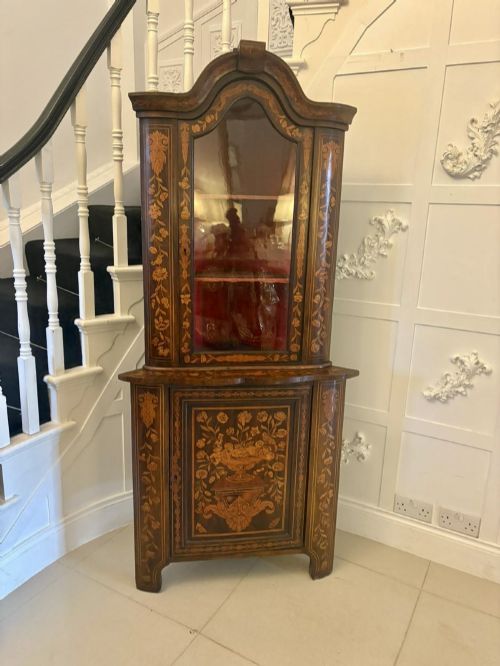
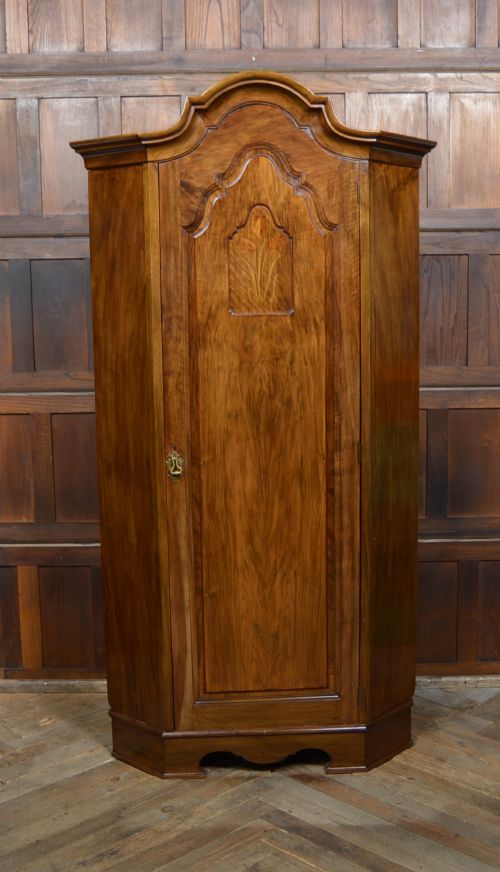
When you search for an inlaid walnut corner cupboard, you encounter timber furniture built to fit room angles, predominantly originating across the eighteenth and nineteenth centuries. These pieces appear in wall-hanging formats, floor-standing variations, and bow-front structures from periods spanning Georgian, Victorian, and Dutch Baroque eras.
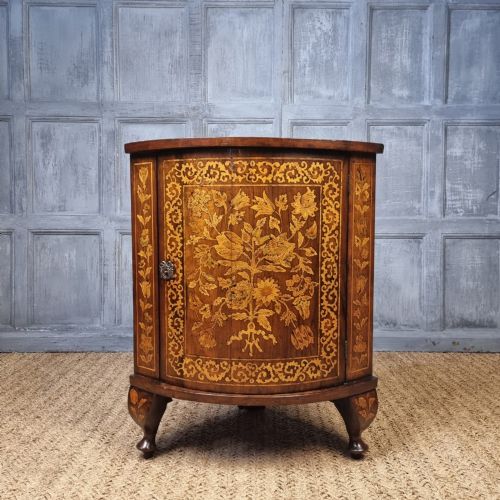
The versions met most frequently on this page combine walnut primary timbers with decorative marquetry, fruitwood, and boxwood inlays. Makers structured these cabinets to utilise awkward wall spaces efficiently while displaying fine timber grain and decorative botanical or geometric patterns.
How they were made
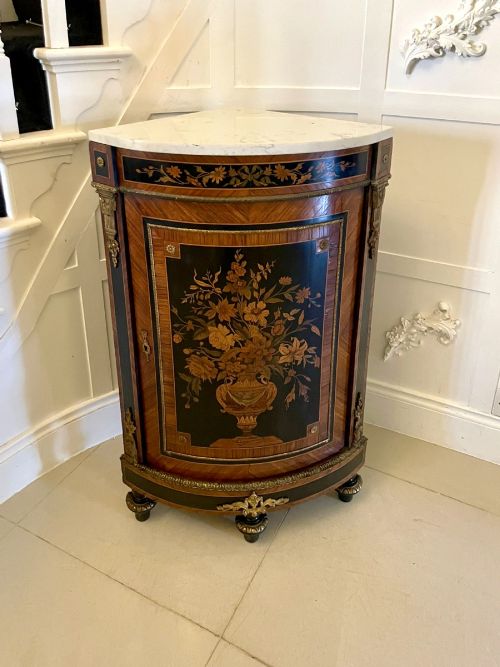
Structural elements frequently include brass hardware, glass panels for display doors, and occasionally marble tops on continental examples. Joinery methods of the period relied on solid carcase construction designed to withstand the dimensional shifts of walnut over centuries.
Current listings feature walnut combined with fruitwood, boxwood, brass, glass, and marble across Georgian, Victorian, and Dutch Baroque periods.
What varies in quality
The hierarchy of quality rests primarily on the crispness of the marquetry and the choice of walnut veneers, with burr figures commanding greater visual depth. Finer examples display meticulous alignment in their botanical inlays and seamless integration of fruitwood and boxwood details.
Proportion and structural integrity also separate standard regional pieces from superior works. Cabinets retaining original brasses, uncompromised timber patination, and well-balanced door panels represent the upper tier of surviving examples.
The Inlaid Walnut Corner Cupboard Glossary
- Marquetry
- Decorative veneer work forming pictures or patterns by assembling small pieces of various woods. In these pieces, craftspeople utilised fruitwood and boxwood to create floral motifs against a walnut background.
- Veneer
- A thin layer of superior wood applied to a base timber to provide a decorative surface. Walnut veneer forms the primary visual identity of these cabinets.
- Stringing
- Thin inlaid lines of contrasting wood used to outline panels and doors. This linear detail defines geometric boundaries on the cabinet facades.
- Serpentine
- A gently curved shape resembling a snake's path, featuring a convex centre flanked by concave sides. This contour appears on specific continental cabinet fronts.
- Bow front
- A convex, outwardly curved front facade. This shape softens the angular geometry typical of corner furniture.
Inlaid Walnut Corner Cupboard: Frequently Asked Questions
Where should I place a corner cupboard?
These cabinets suit awkward room angles where standard rectangular furniture cannot easily fit. They draw the eye into dead space while providing practical enclosed storage.
Position them at eye level if hanging, or choose floor-standing variants to anchor empty corners in dining rooms and hallways.
How do I care for walnut veneer?
Walnut benefits from stable room environments away from direct sunlight and sudden temperature shifts. Excessive heat can cause timber veneers to lift or crack over time.
Apply traditional wax sparingly to nourish the grain and maintain the natural lustre of the wood surface.
Are these cupboards suitable for daily use?
Sturdy eighteenth and nineteenth-century construction makes these cabinets practical for storing glassware, tableware, or everyday items. The internal shelving safely bears moderate loads.
Ensure doors with glass panels or delicate tambour mechanisms are handled with care during regular access.
How do I identify a Dutch style cabinet?
Dutch pieces frequently showcase elaborate marquetry depicting floral arrangements, urns, and birds across the entire surface. They often employ serpentine or bombé shapes that distinguish them from plainer English forms.
Look for contrasting fruitwood inlays set into dark walnut grounds to spot typical continental workshops.