
Inlaid Walnut Chest Drawers
When you encounter an inlaid walnut chest drawers, you are looking at centuries of cabinet-making skill designed to bring rich figure and decorative detail into a room.
Inlaid Walnut Chest Drawers
An inlaid walnut chest drawers brings together centuries of domestic storage forms, spanning seventeenth-century origins through Georgian periods and nineteenth-century revivals.
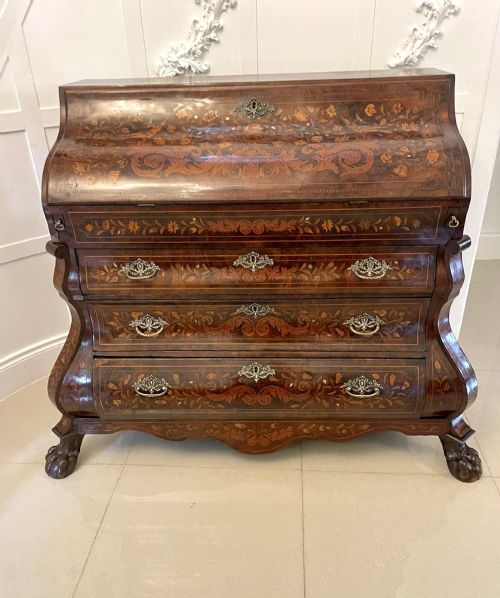
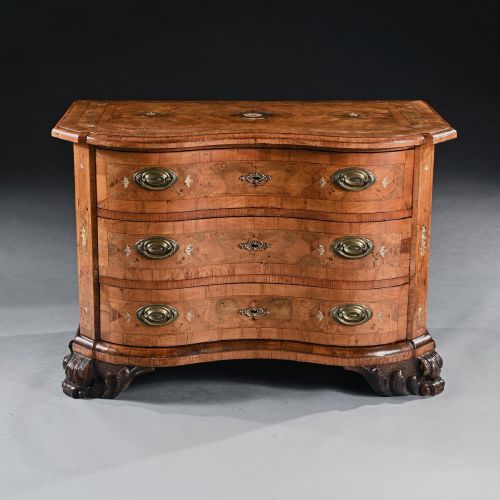
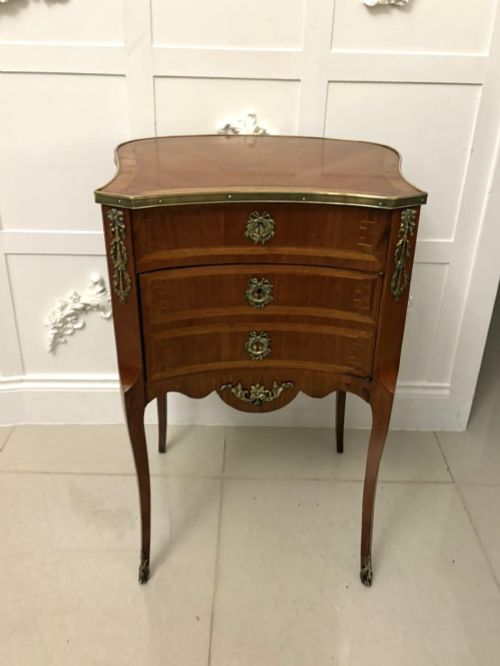
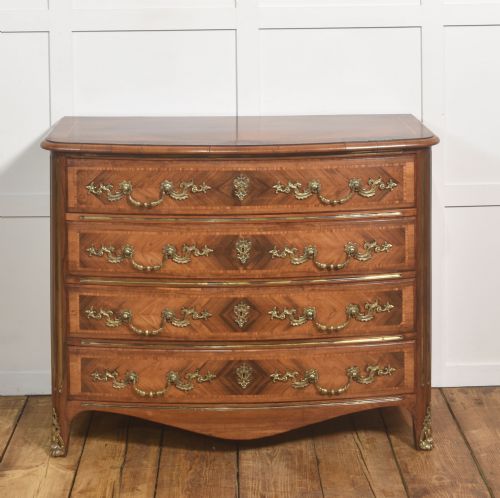
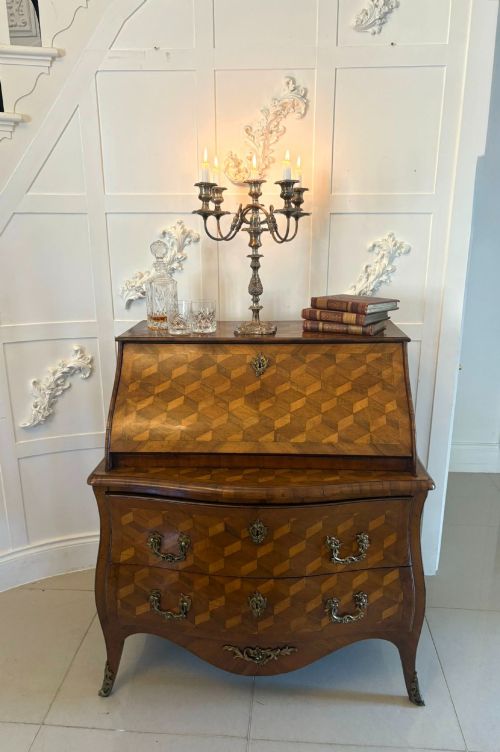
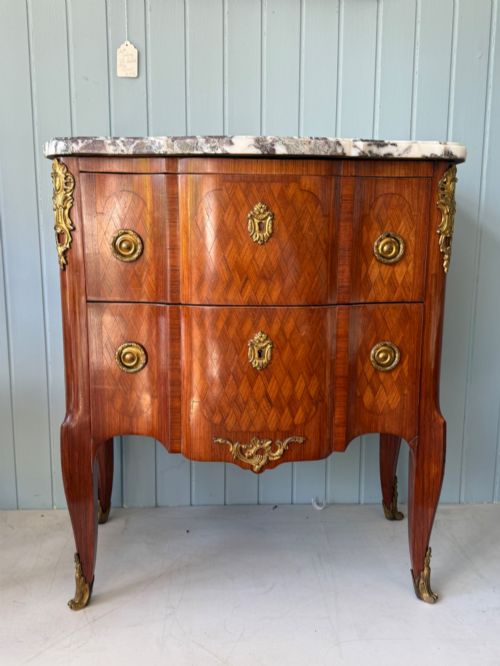
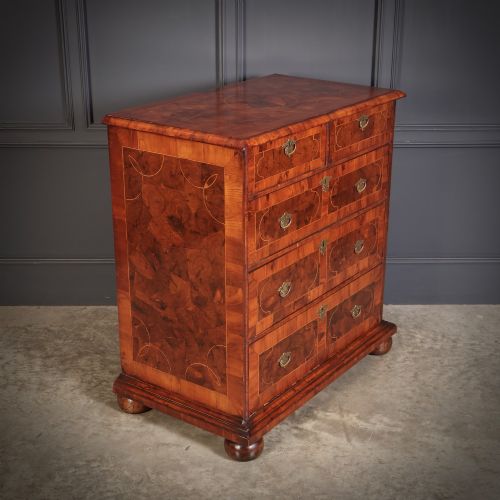
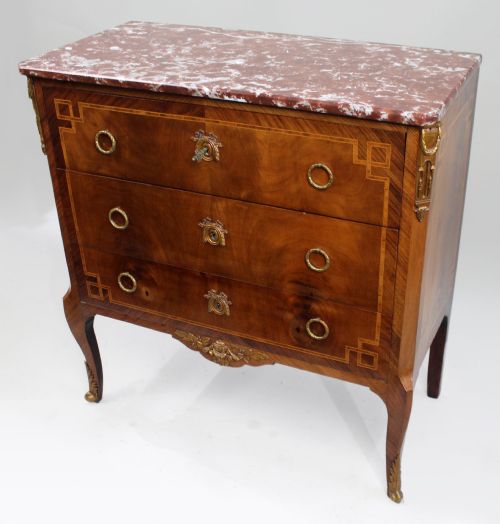
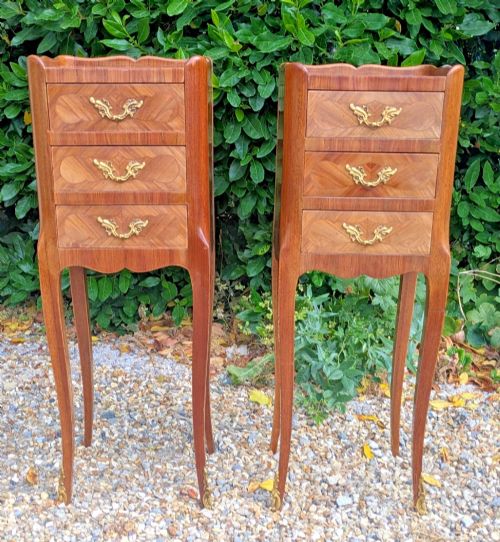
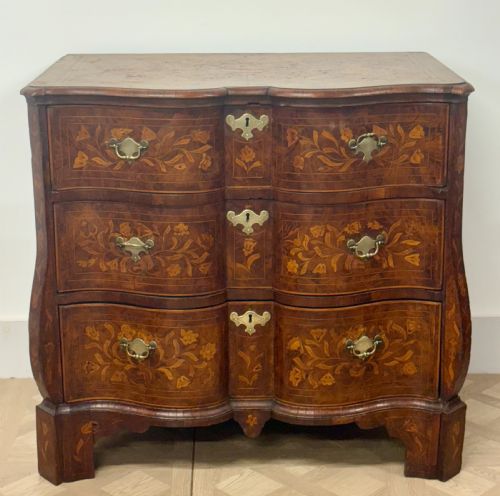
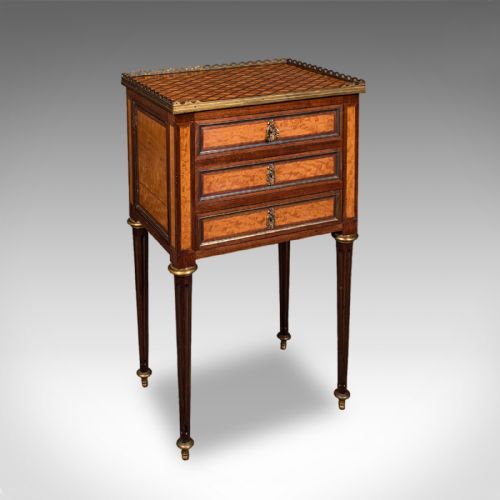
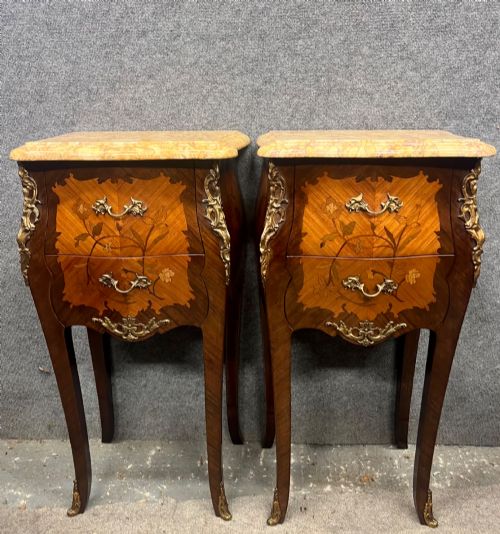
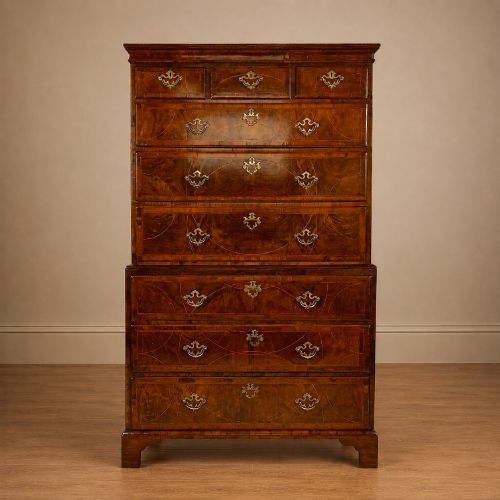
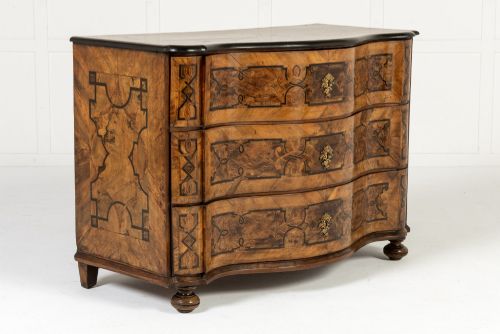
The selection here encompasses standard drawer chests, tallboys, bureau desks, and serpentine commodes ornamented with varied wood marquetry and parquetry.
Continental workshops and English cabinet-makers alike produced these pieces, utilising rich burr walnut and contrasting banding to elevate functional storage into decorative furniture.
How they were made
Craftsmen built these pieces using solid carcases of oak or secondary timbers, applied with figured walnut veneers, burr walnut sections, and delicate fruitwood or exotic wood inlays.
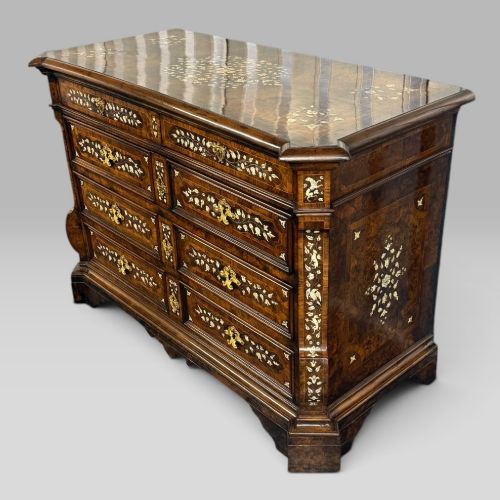
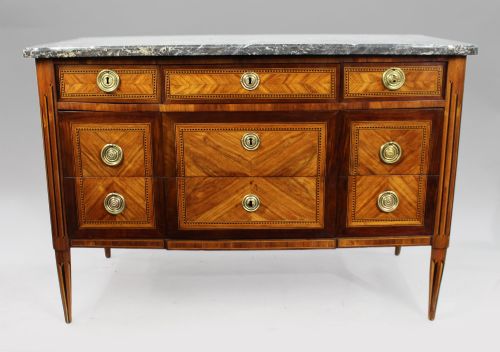
Marquetry and parquetry patterns were hand-cut and fitted into the surface, often enhanced by feather-banding, cross-banding, and line inlay to frame the drawer fronts.
Many commodes and cabinets feature cast brass drop handles, key escutcheons, and polished marble tops imported from quarries to finish the Continental and English designs.
Listings feature walnut, fruitwood, oak, kingwood, and brass alongside marble tops dating from the seventeenth century to the twentieth century.
What varies in quality
The depth and movement of the walnut figure largely dictate the visual impact, ranging from straight grain to highly figured burr timber carefully matched across drawer tiers.
Precision in the marquetry cutting and the integration of delicate pewter, ivory, or lighter wood inlays separate standard production from master workshop output.
Proportion, structural integrity of the serpentine or bombe shaping, and the retention of original brass hardware determine the standing of each piece.
Grand Ducal Workshops·Edwards & Roberts
The Inlaid Walnut Chest Drawers Glossary
- Marquetry
- Decorative veneer work forming pictorial or geometric patterns using various woods. Craftsmen cut multiple thin wood sheets simultaneously to fit designs precisely into the carcase surface.
- Parquetry
- Geometric mosaic woodwork arranged in repeating patterns such as cubes or triangles. It differs from marquetry by relying strictly on angular geometric tiling rather than floral scenes.
- Bombe
- An outward-swelling, bulging furniture contour typical of continental baroque and rococo pieces. This curved form requires advanced veneering skill to shape timber smoothly over undulating surfaces.
- Serpentine
- A furniture front characterised by a concave central section flanked by two convex curves. The undulating line demands careful edge-banding and precise drawer construction.
- Oyster veneering
- Cross-section slices of small branches laid edge to edge to create circular, repeating patterns resembling oyster shells. This technique appears widely on seventeenth-century geometric furniture.
Inlaid Walnut Chest Drawers: Frequently Asked Questions
How do I identify a 17th-century chest?
Seventeenth-century pieces typically display geometric moulding, oyster veneers, and oak framing with simple drawer construction.
They lack the elaborate floral marquetry or serpentine shaping that became popular during the later baroque and Georgian periods.
What is the difference between a commode and a chest of drawers?
A commode generally refers to Continental European low drawer chests, often featuring bombe curves and marble tops.
English chest of drawers designs tend toward rectangular or chest-on-chest configurations without stone surfaces.
How should I care for burr walnut veneer?
Burr walnut requires stable indoor humidity and protection from direct sunlight to prevent veneer lifting and timber drying.
Applying occasional appropriate wax polish maintains the lustre of the grain without damaging historical surfaces.
What periods do these chests cover?
The available pieces span from seventeenth-century William and Mary designs through eighteenth-century Georgian and continental styles.
Nineteenth-century revival pieces and later twentieth-century interpretations also appear across the selection.