


Inlaid Walnut Cabinet Chest
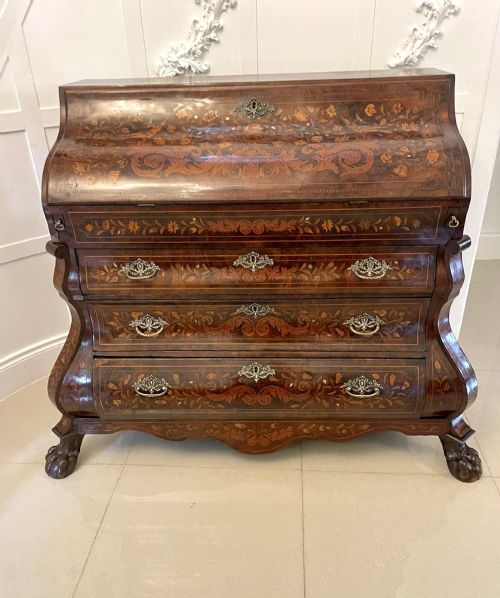
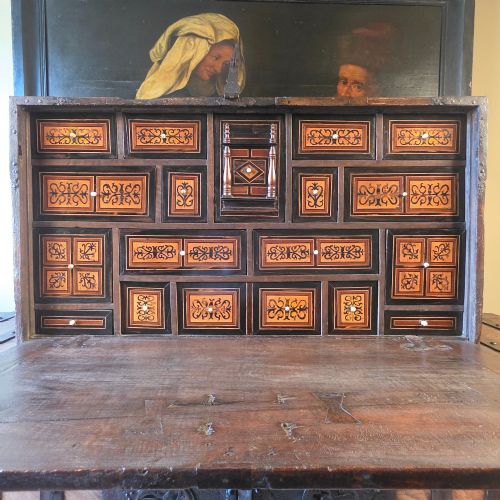
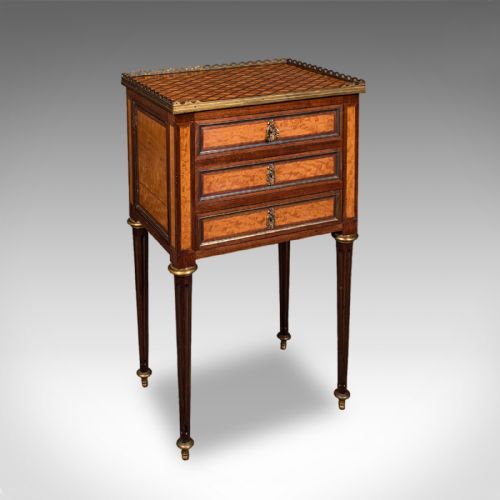
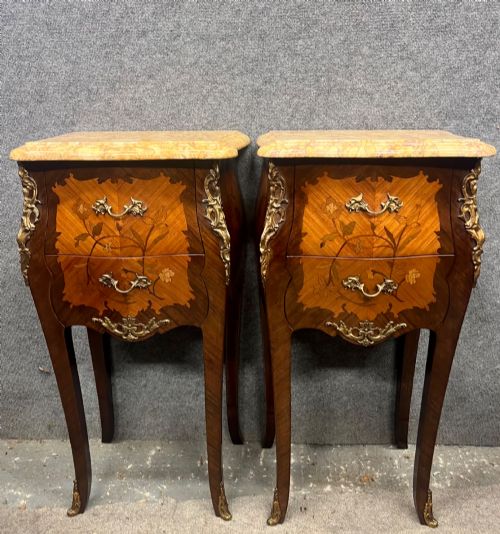
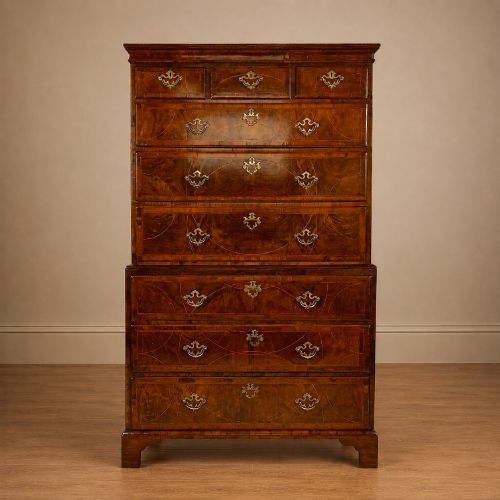
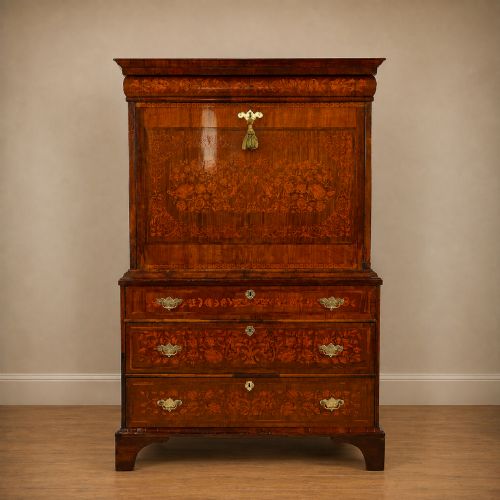
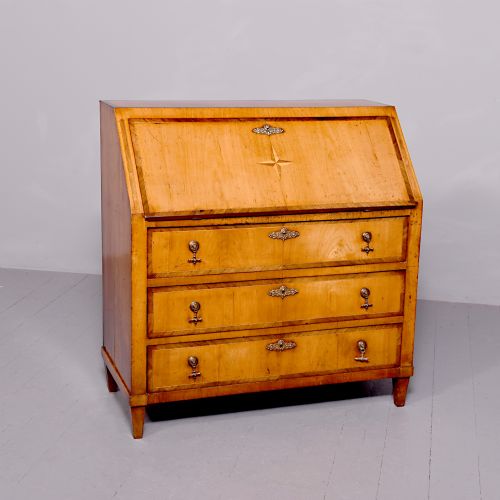
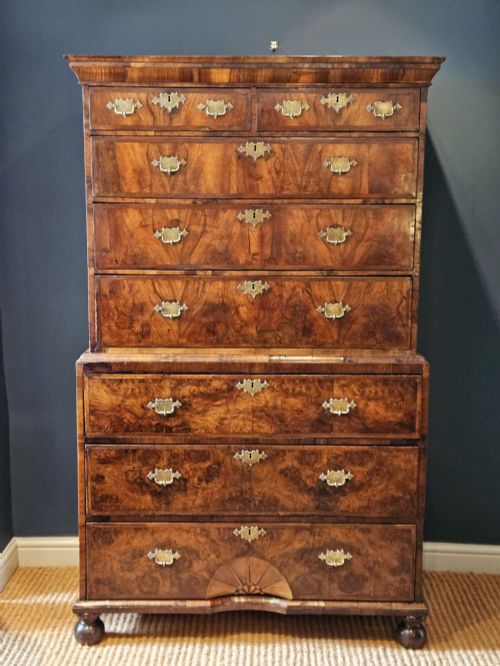
An inlaid walnut cabinet chest brings rich timber figure and intricate floral marquetry to a room.
Inlaid Walnut Cabinet Chest
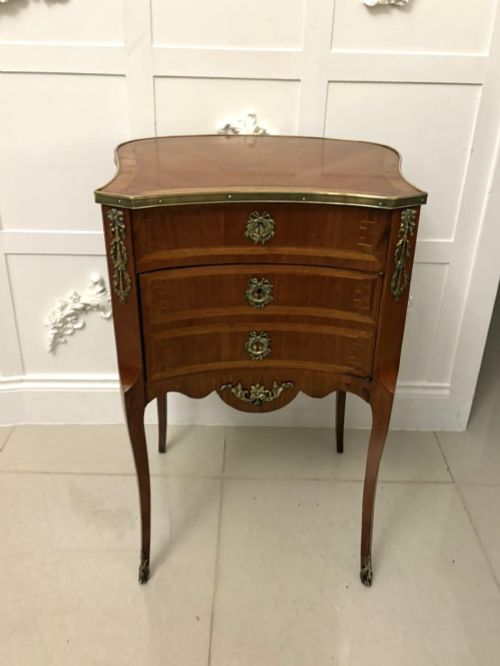
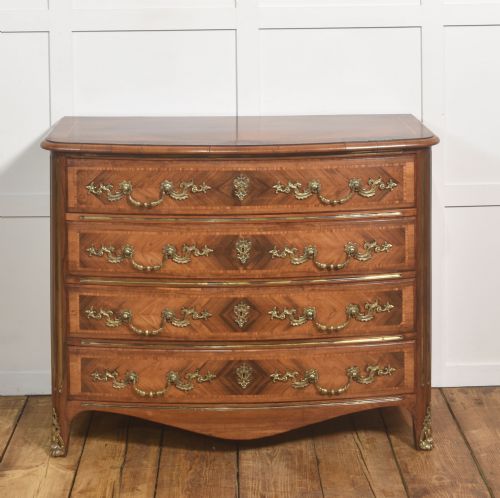
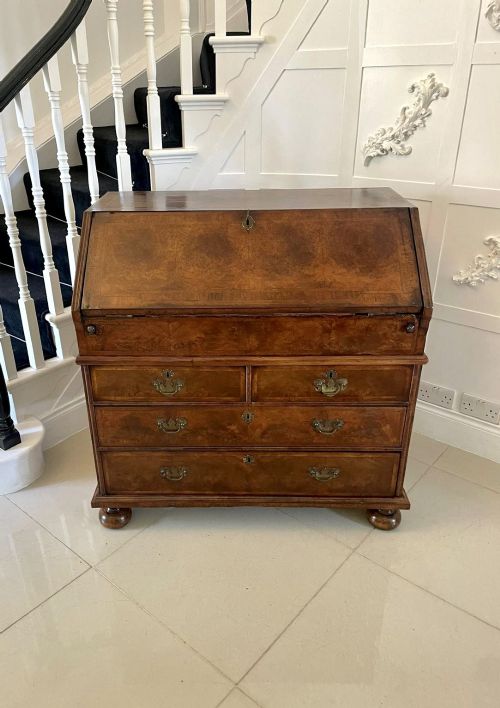
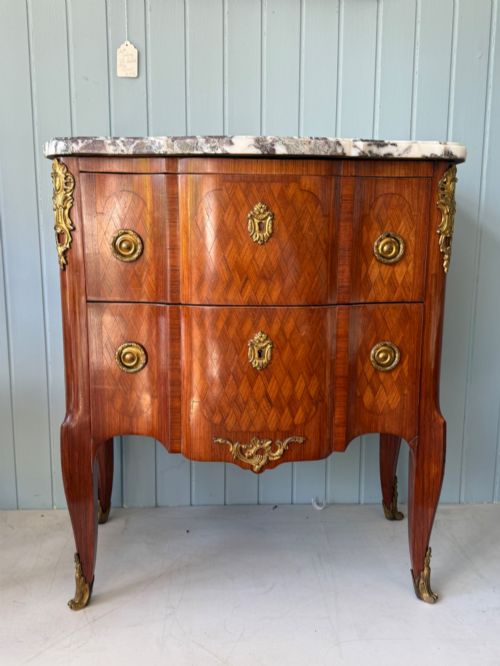
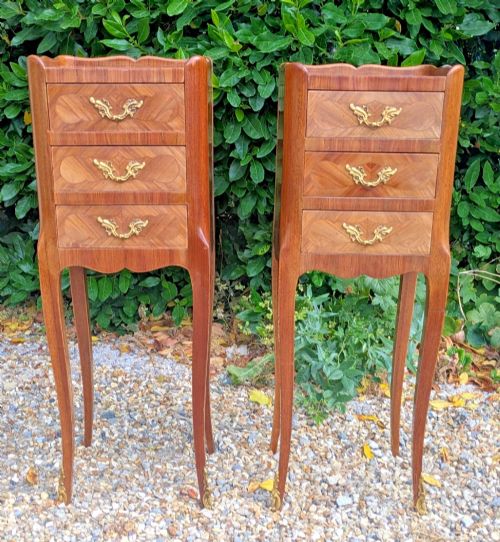
An inlaid walnut cabinet chest unites rich timber figure with detailed floral marquetry across multiple forms from the seventeenth century onward. Buyers discover everything from grand bureau bookcases and serpentine commodes to neat bedside tables.
Continental workshops, particularly Dutch and French makers, dominate the selection alongside Georgian English pieces. Bureau desks, display cabinets, and tallboys frequently appear with contrasting fruitwood and kingwood inlays.
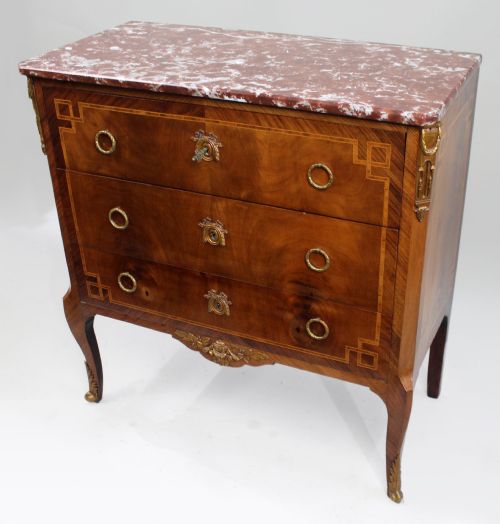
Earlier seventeenth and eighteenth-century examples present bold baroque motifs and architectural proportions. Later nineteenth and twentieth-century revivals offer curved fronts and marble tops designed for domestic utility.
Materials and construction methods
Cabinetmakers utilised figured walnut and burr walnut veneers laid over secondary timbers to create striking patterned surfaces. Selected areas receive precise floral marquetry cut from fruitwood, kingwood, and pewter.
Many examples incorporate brass hardware, ormolu mounts, and rouge marble tops to complement the rich brown tones of the walnut. Drawers utilise traditional dovetail joints, whilst cabinets employ sturdy two-part or stand configurations.
Secret compartments inside eighteenth-century bureau desks reward curious owners with hidden spaces for storing clandestine letters.
Assessing craftsmanship and execution
Execution of the floral marquetry and the choice of burr walnut veneer determine the visual impact of each piece. Superior items display crisp cutting, balanced composition, and harmonious timber selection across every surface.
Structural integrity, the retention of original brass fittings, and the smoothness of drawer operation distinguish finer examples. The crispness of carved details and the integration of marble tops separate standard production from masterwork.
Edwards & Roberts
The Inlaid Walnut Cabinet Chest Glossary
- Marquetry
- Decorative patterns formed by inserting pieces of wood, metal, or other materials into a veneered surface. This technique creates elaborate floral and pictorial designs across drawer fronts and cabinet doors.
- Burr walnut
- Timber taken from a walnut tree outgrowth, producing intricate swirling grain patterns. It provides highly decorative surfaces prized by cabinetmakers.
- Bombe
- A swollen or outward-curving contour found on the sides and fronts of certain commodes and bureaus. This curved form requires advanced woodworking skill to veneer successfully.
- Escritoire
- A writing cabinet featuring a fall-front desk flap concealing pigeonholes and small drawers. These pieces combine storage with a dedicated writing surface.
Inlaid Walnut Cabinet Chest: Frequently Asked Questions
How do I care for walnut veneer?
Keep walnut furniture away from direct sunlight and excessive heat sources to prevent the timber from drying out. Dust regularly with a soft, dry cloth and apply occasional wax polish to maintain the finish.
Avoid using liquid cleaners or silicone polishes that can penetrate old finishes and damage delicate marquetry inlays.
Where were these cabinets made?
These pieces originate from various European centres, with significant numbers coming from Dutch, French, and English workshops. Each region developed distinct stylistic preferences for floral marquetry and structural form.
Dutch makers often utilised elaborate floral marquetry on tall cabinets, whilst French cabinetmakers favoured serpentine commodes and bedside tables.
What is a bureau bookcase?
A bureau bookcase combines a sloping desk compartment with shelving enclosed by doors above. This dual-purpose form provided secure storage for correspondence alongside display space for books.
Many examples feature intricate inlaid walnut and fitted interior drawers suitable for an office or study.