
Inlaid Tripod Side Table
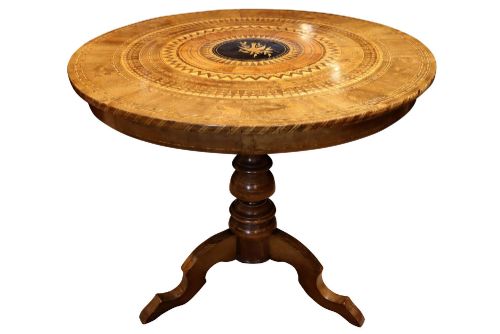
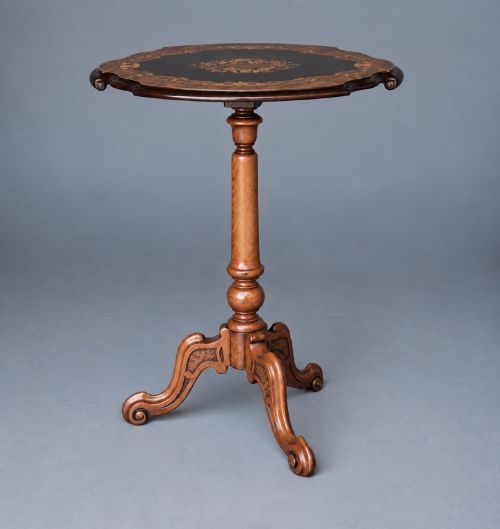
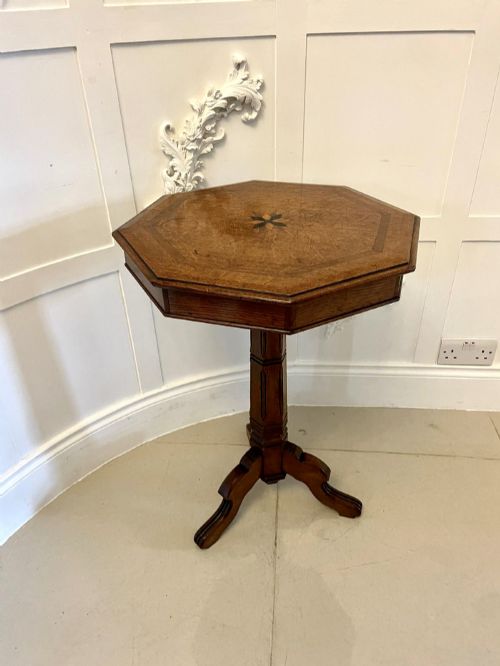
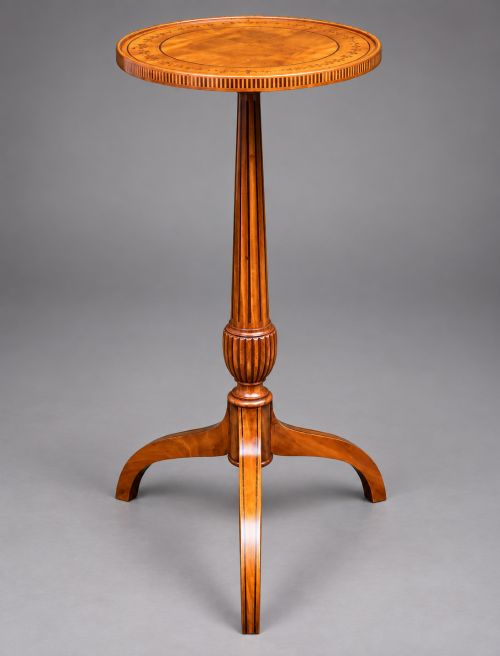
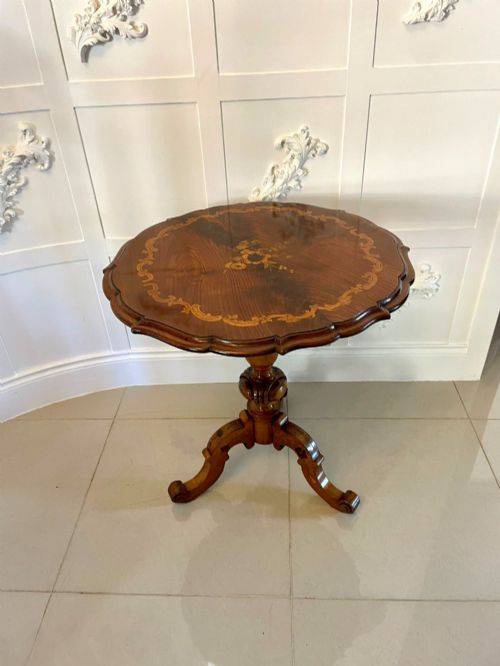
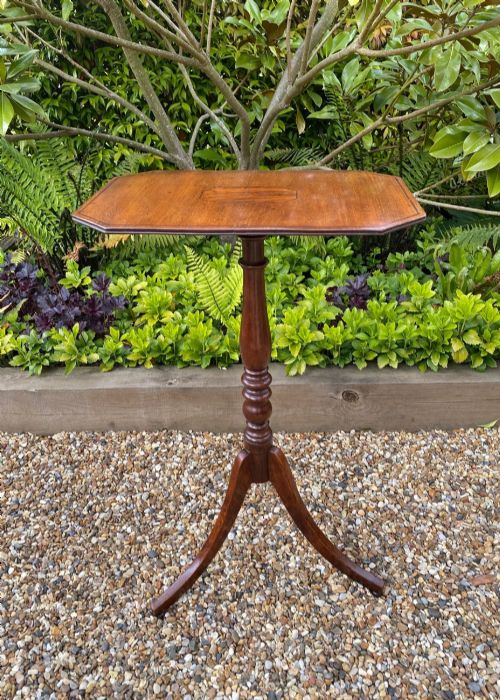
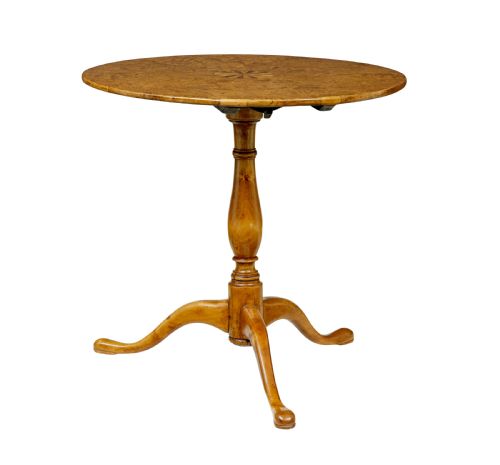
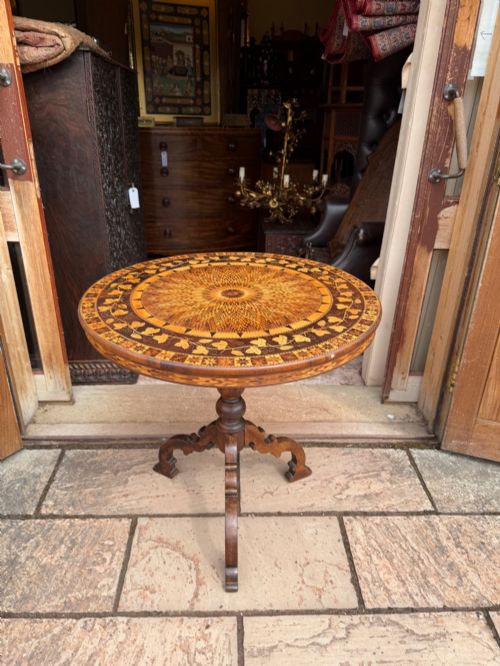
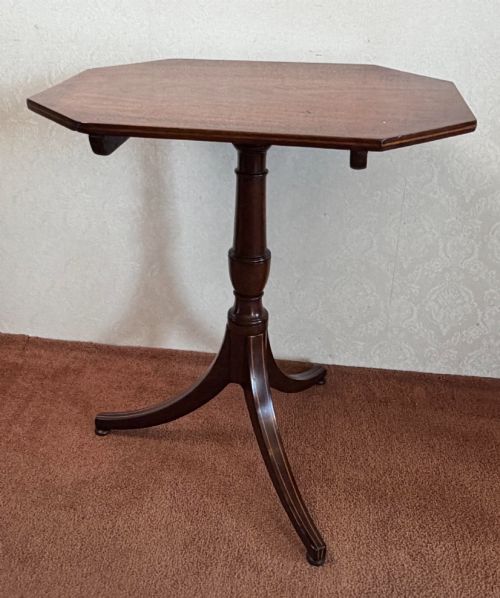
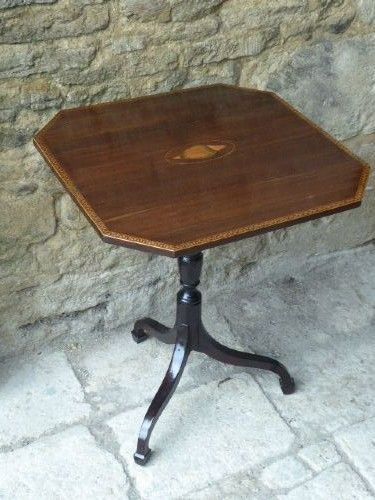
An inlaid tripod side table brings surface utility and meticulous marquetry to a corner, resting upon a central pillar supported by three distinct feet.
Inlaid Tripod Side Table
An inlaid tripod side table combines a compact top surface with a three-legged pedestal support, appearing across Georgian, Regency, and Victorian periods in walnut, mahogany, and rosewood. These pieces served diverse domestic functions, functioning variously as wine tables, candle stands, chess boards, and occasional lamp tables in period interiors.
The most common examples on this page date from the nineteenth century, utilising dense hardwoods inlaid with boxwood, ebony, and brass stringing. Makers across England, Scotland, Italy, and France adapted the classic pillar and tripod format to include tilt tops, drop leaves, and multi-tiered surfaces.
Materials and construction
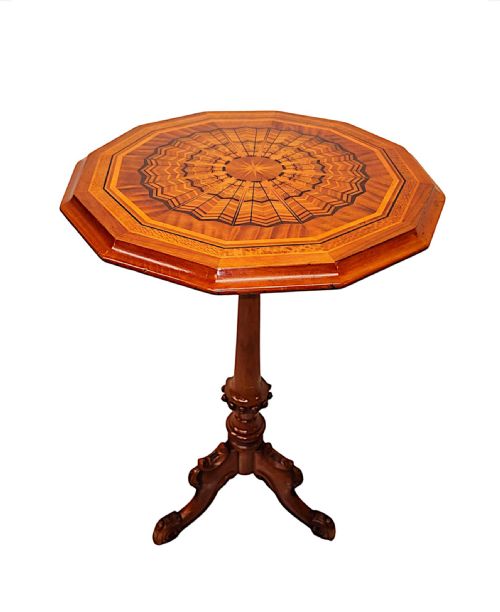
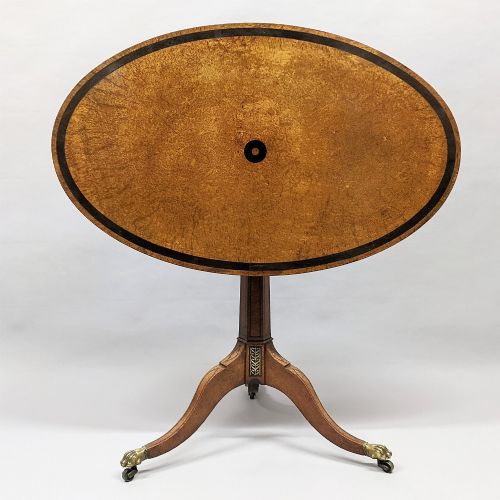
Cabinetmakers constructed the main body using solid native and imported timbers such as mahogany, walnut, and rosewood, often applying contrasting veneers like satinwood, amboyna, and kingwood to the top surface. The central column meets three spreading legs via a sturdy block or dovetail joint, providing stable balance to the elevated weight.
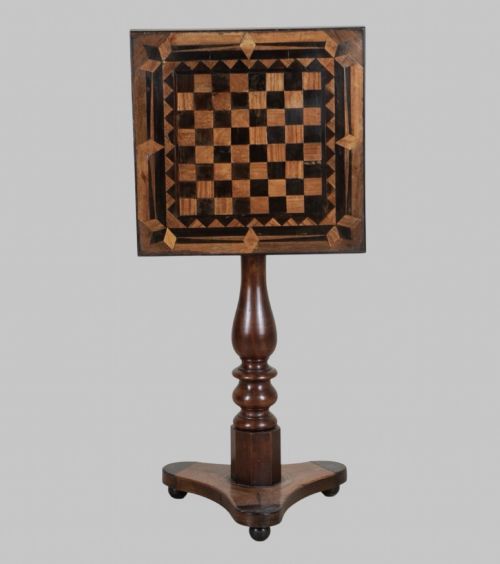
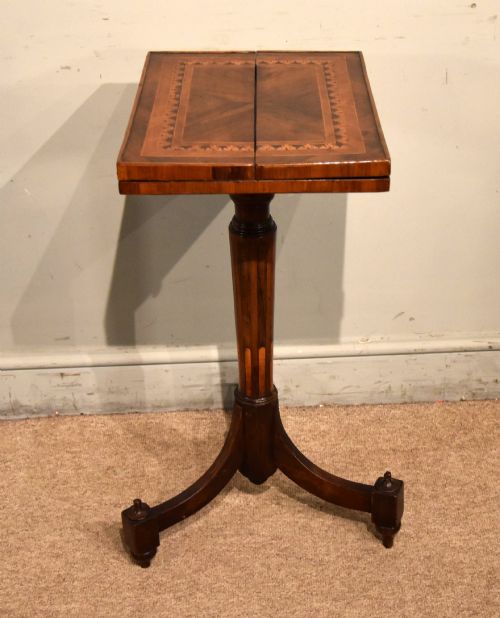
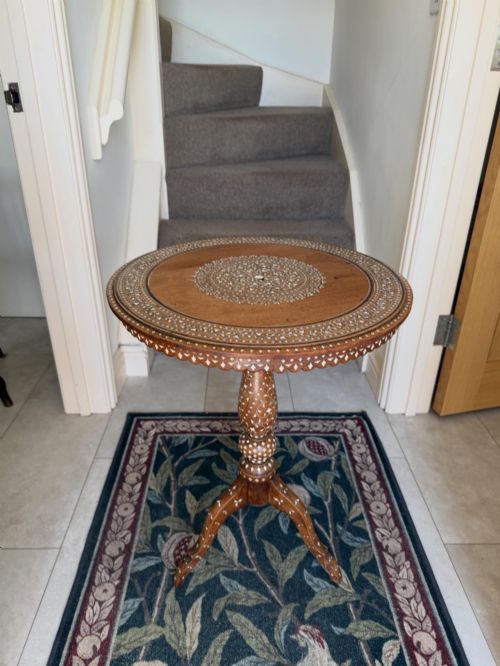
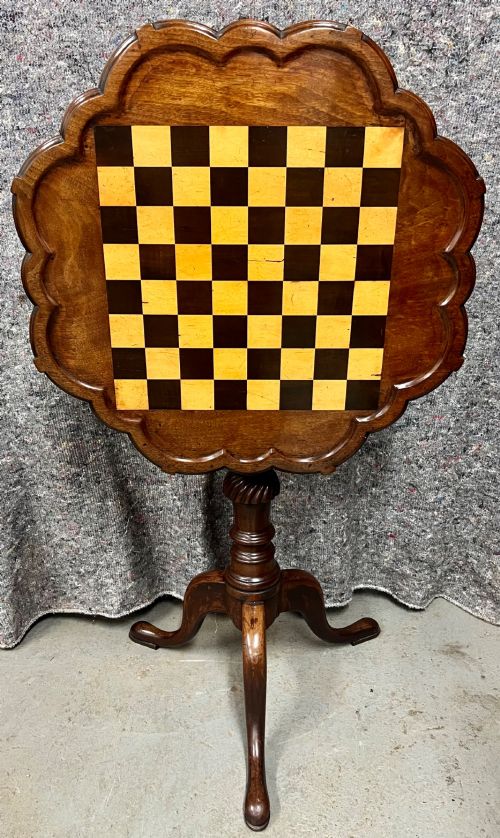
Decoration relied on precise wood inlay, boxwood stringing, and mother of pearl elements embedded flush into the timber ground. Marquetry panels depicted floral motifs and geometric chess boards, while tilt-top mechanisms utilised brass catches and pivoting hinges to store the table flat against a wall when not in use.
Listings feature walnut, mahogany, rosewood, and exotic satinwood veneers across Georgian, Regency, and Victorian periods.
Assessing the craftsmanship
The distinction between ordinary and exceptional pieces rests in the sharpness of the marquetry and the choice of veneer timbers. Finer examples display meticulously cut boxwood and ebony details with no visible gaps in the joinery, whereas lesser items rely on painted lines or simpler wood banding.
Structural integrity also separates the grades, visible in the harmony between the tripod base and the upper top. Superior tables maintain a balanced stance where the three legs meet the floor firmly without rocking, and the tilt mechanism operates smoothly without excess play in the pivot.
Gillows·Anton Seuffert·George Bullock
The Inlaid Tripod Side Table Glossary
- Tripod table
- A small freestanding table supported by a central pillar and three legs. This construction prevents wobbling on uneven historical floorboards.
- Marquetry
- Decorative patterns formed by fitting together thin slices of various woods, veneers, and shell. Craftsmen apply these intricate designs primarily to table tops.
- Tilt top
- A tabletop mounted on a hinged block that pivots vertically. This mechanism allowed tables to be stored against walls to save floor space.
- Stringing
- Thin inlaid lines of contrasting timber or brass set into channels cut into the surface. It outlines geometric shapes and panels on Regency and Victorian furniture.
- Teapoy
- A small cabinet or table designed originally to hold tea caddies and blending bowls. Many surviving examples incorporate tripod bases and interior compartments.
Inlaid Tripod Side Table: Frequently Asked Questions
What is an inlaid tripod side table?
An inlaid tripod side table is a small, portable piece of furniture raised on a central pedestal with three feet, featuring decorative wood veneers or stringing on the top surface. These tables were designed to be easily moved around a drawing room or parlour as needed.
Historically, they served specific domestic tasks such as holding a candle, serving wine, or providing a surface for board games. The combination of a compact footprint and decorative marquetry made them both practical and ornamental.
How do I identify a Georgian period table?
Georgian tables, particularly those from the George III era, typically feature solid mahogany or walnut construction with understated proportions and restrained carving on the knees of the tripod legs. The inlay work on these pieces tends to focus on geometric banding, classical urns, or subtle chess boards rather than dense floral marquetry.
Later Victorian interpretations often use burr walnut or rosewood with more exuberant floral marquetry and elaborate turned pedestals. Examining the timber species and the style of the inlay helps separate the earlier Georgian examples from mid nineteenth century revivals.
Where should I place this in my home?
An inlaid tripod side table fits naturally beside a sofa, in an empty hallway corner, or as a bedside stand where surface space is limited. Their compact circular or oval tops provide an ideal resting spot for a reading lamp, a small stack of books, or a beverage.
Because the decorated top is the main visual feature, place the table where overhead light can catch the contrasting wood veneers and marquetry details. Avoid positioning antique veneered pieces in direct sunlight or next to active heat sources to protect the historic finishes.