
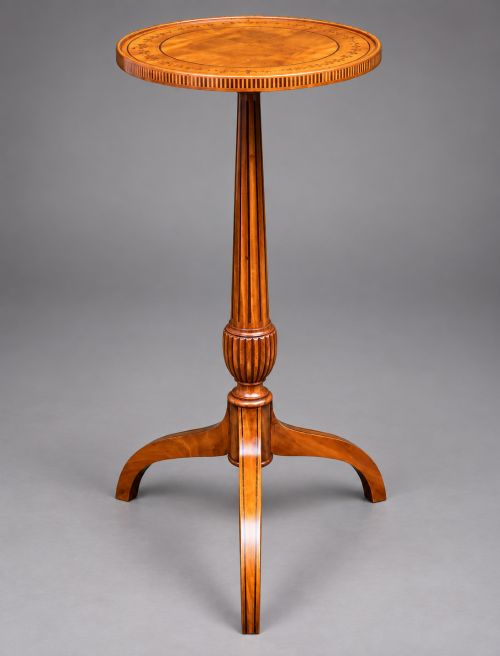
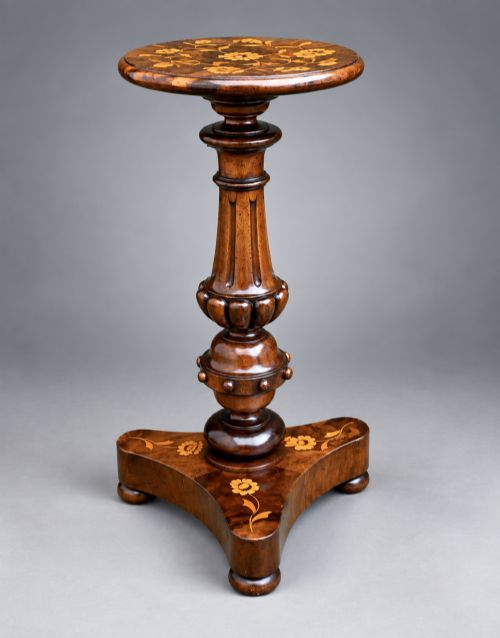
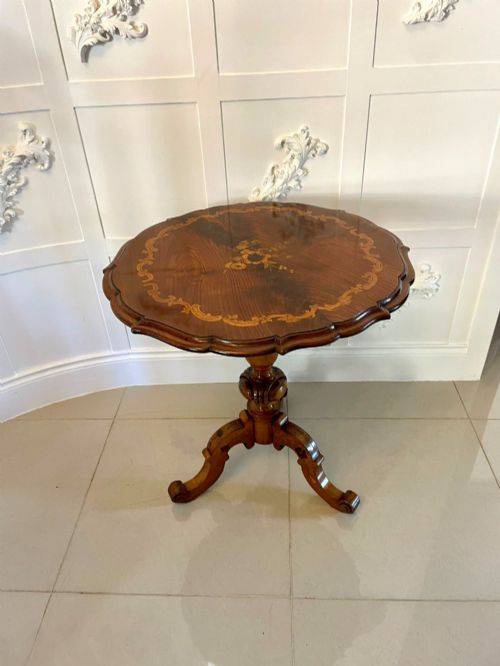
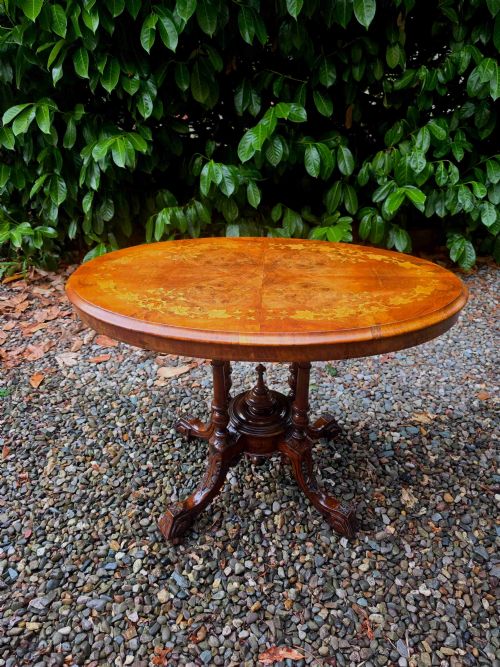
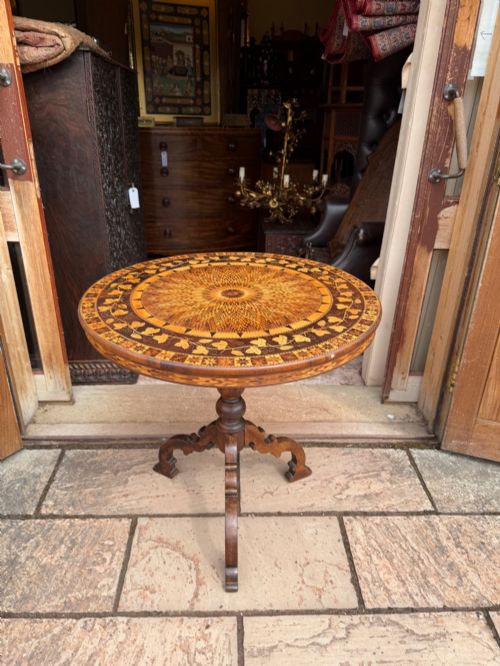
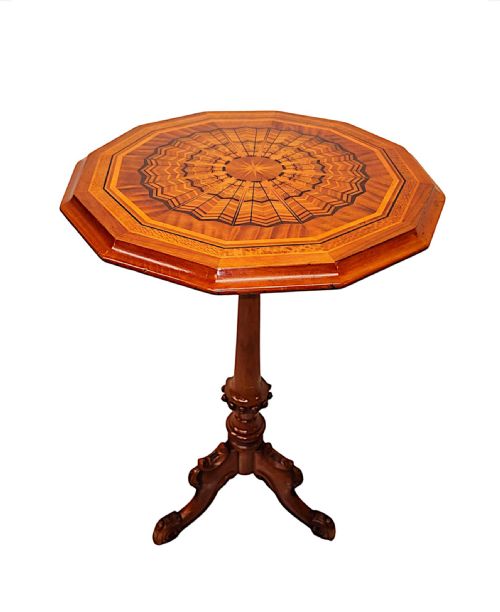
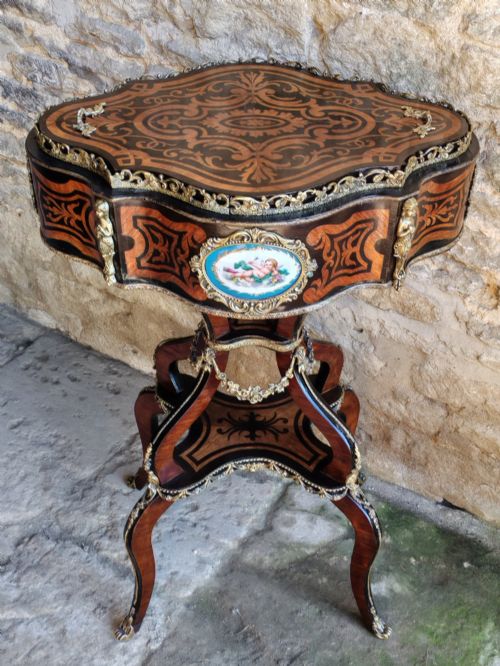


Victorian Marquetry Wine Table
A victorian marquetry wine table brings intricate patterned wood and polished surfaces to a corner, serving drinks or holding a lamp with historic charm.
Victorian Marquetry Wine Table
A victorian marquetry wine table combines a sturdy central pillar or tripod base with a detailed wooden top designed for display and utility. These pieces often overlap in form with occasional tables, lamp tables, and small plant stands.
Most examples found here date from the nineteenth century, drawing on Victorian cabinet-making traditions alongside continental influences from Italy and France. Walnut and burr walnut dominate the selection, frequently paired with elaborate decorative surfaces.
Materials and construction
Cabinet-makers relied on rich timbers such as walnut, mahogany, rosewood, and satinwood, often applying burr veneers to create striking natural patterns across the tabletop. Marquetry inlay, parquetry, and occasional bone details were painstakingly cut and fitted into the surface design.
Many of these tables utilise sturdy tripod bases or turned pedestals, sometimes incorporating tilt-top mechanisms or brass mounts to secure the structure.
What separates the best examples
Quality rests heavily on the precision of the marquetry and the choice of timbers used for the veneer, with finer pieces showcasing intricate floral or geometric compositions. The crispness of the carving on the pedestal and the stability of the tripod base further distinguish superior workshops from standard production.
Gillows·Collinson & Lock·Anton Seuffer
The Victorian Marquetry Wine Table Glossary
- Marquetry
- A decorative technique where small pieces of tinted wood, bone, or shell are fitted together to form pictorial or geometric designs on a surface.
- Burr walnut
- A prized timber cut from the gnarled growths of walnut trees, producing a dense, swirling grain pattern highly sought after by Victorian makers.
- Tripod base
- A support structure featuring three legs radiating from a central pillar, commonly found on small occasional and wine tables.
- Tilt-top
- A hinged tabletop mechanism that allows the surface to fold vertically when not in use, saving space in smaller rooms.
Victorian Marquetry Wine Table: Frequently Asked Questions
What was a wine table used for originally?
These small tables were designed to hold glasses and bottles during social gatherings in drawing rooms and parlours.
Their compact size allowed servants to move them easily to wherever guests were seated.
How do I identify a Victorian piece?
Look for dense hardwoods like walnut and mahogany, combined with hand-cut marquetry and traditional joinery methods.
Nineteenth-century items often display distinct patination and specific pedestal designs characteristic of the period.
Can I use a wine table daily?
These tables handle everyday items like lamps and small decorative objects comfortably.
Care should be taken with moisture and direct heat to protect the delicate wood veneers.
What is the difference between marquetry and parquetry?
Marquetry forms pictorial or floral motifs using varied wood veneers assembled into complex patterns.
Parquetry constructs geometric or repeating tiling patterns, often creating cube or checkerboard effects on the surface.