
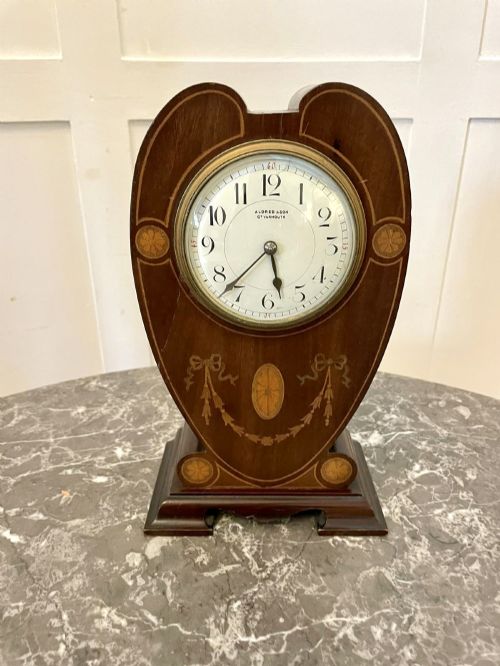
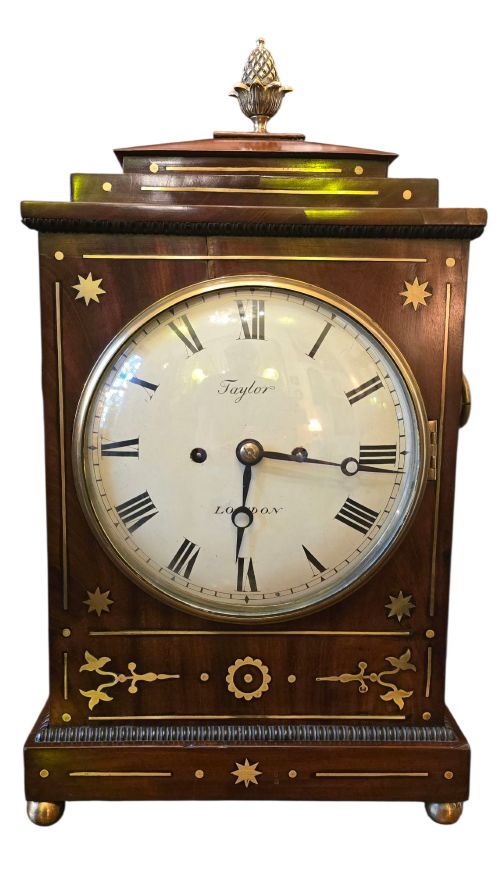
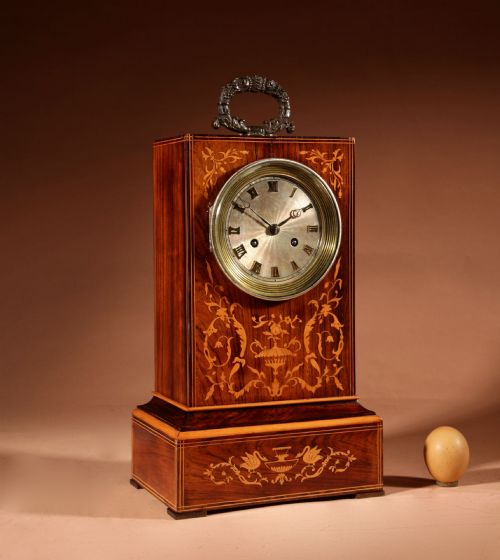
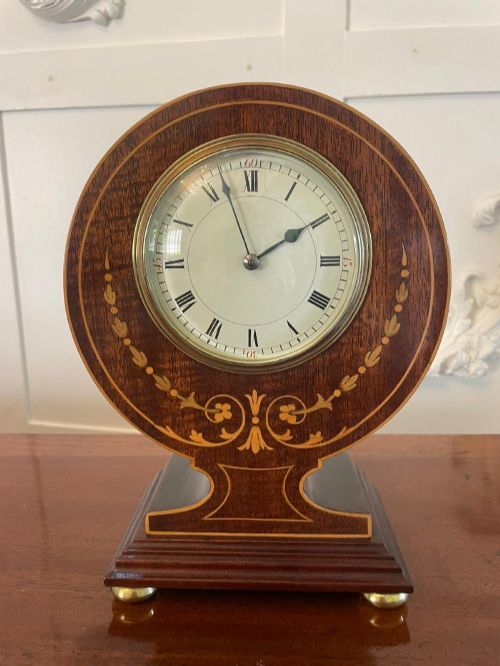
Inlaid Table Clock
An inlaid table clock brings precision timekeeping into domestic spaces through rich timber cases and decorative stringing.
Inlaid Table Clock
An inlaid table clock serves as a portable timekeeper designed for desks, brackets, and mantelpieces rather than walls or hallways. Buyers searching for an inlaid table clock encounter mantel clocks, bracket clocks, and library clocks spanning the Georgian, Regency, Victorian, and Edwardian eras.
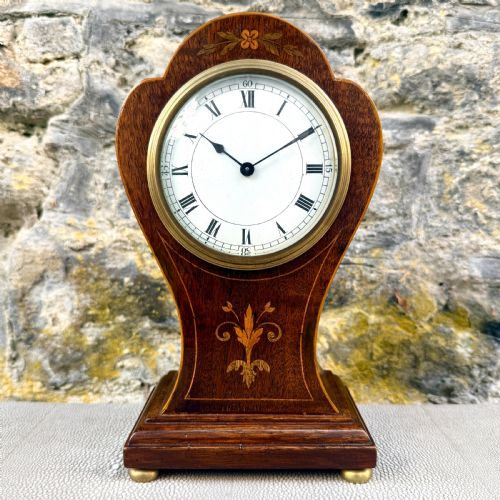
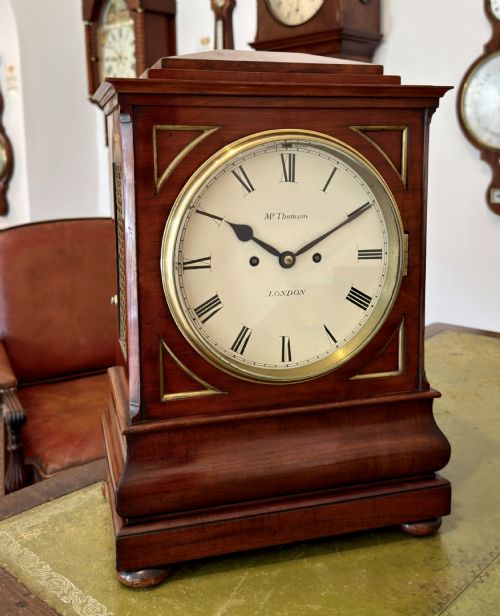
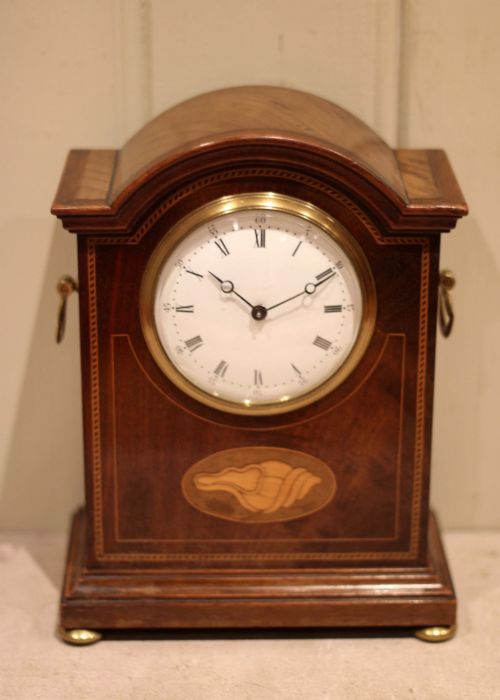
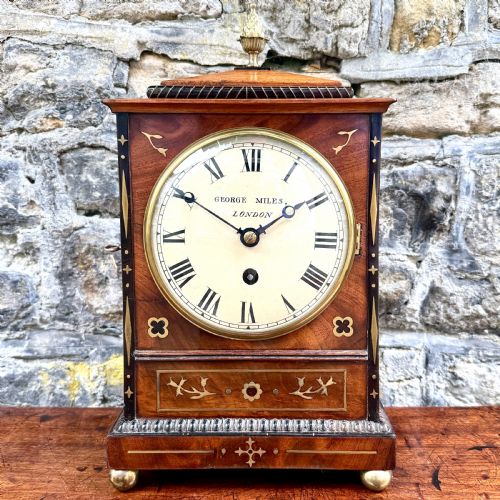
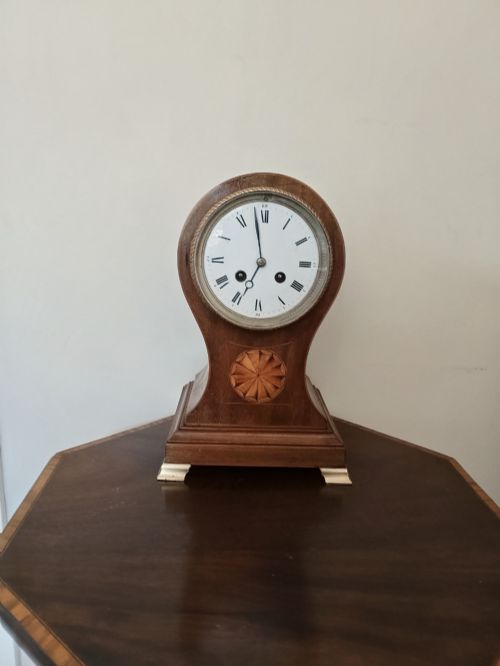
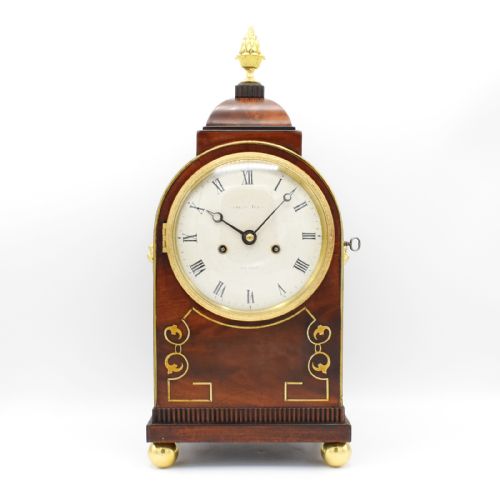
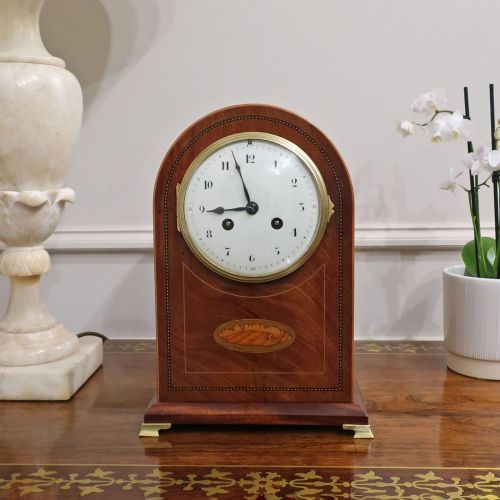
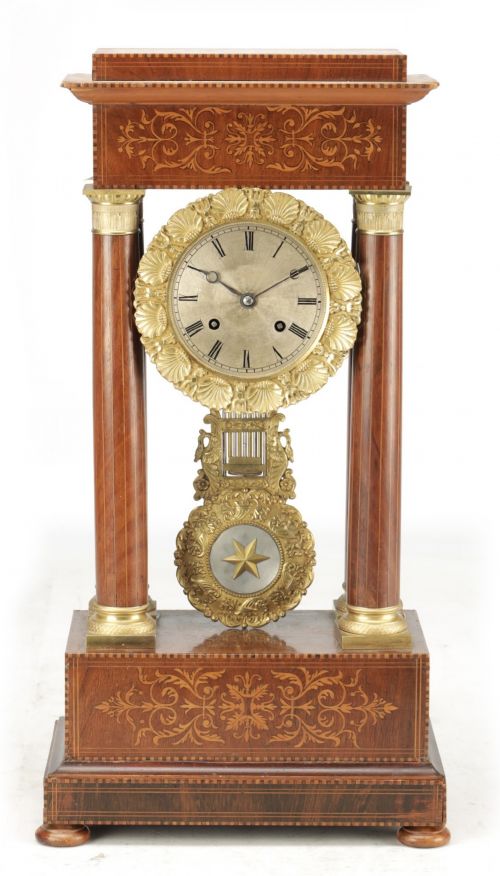
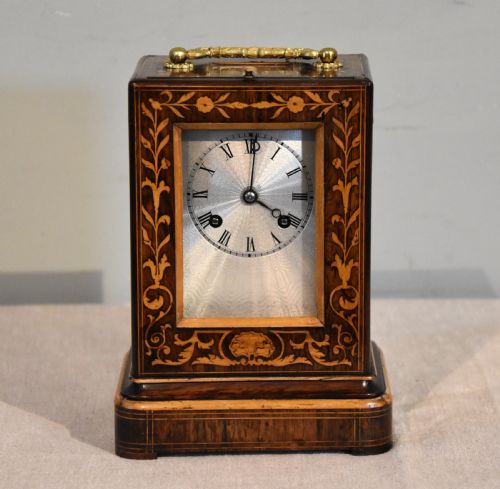
The versions most common on this page combine timber cases with contrasting wood stringing or marquetry. Examples stretch from early nineteenth-century English fusee bracket clocks to later Edwardian mahogany timepieces and French portico designs.
Formats range from small balloon and steeple models to grander architectural cases housing striking or chiming movements. Each piece reflects the interior tastes of its specific decade, utilising traditional cabinet-making forms adapted for domestic tables.
Materials and construction
Cabinet makers constructed these clock cases using dense hardwoods such as mahogany, rosewood, and walnut, often applying ebonised accents or oak frames. Surfaces received meticulous hand-polishing to highlight the natural grain of the timber before brass bezels and dial fittings were integrated.
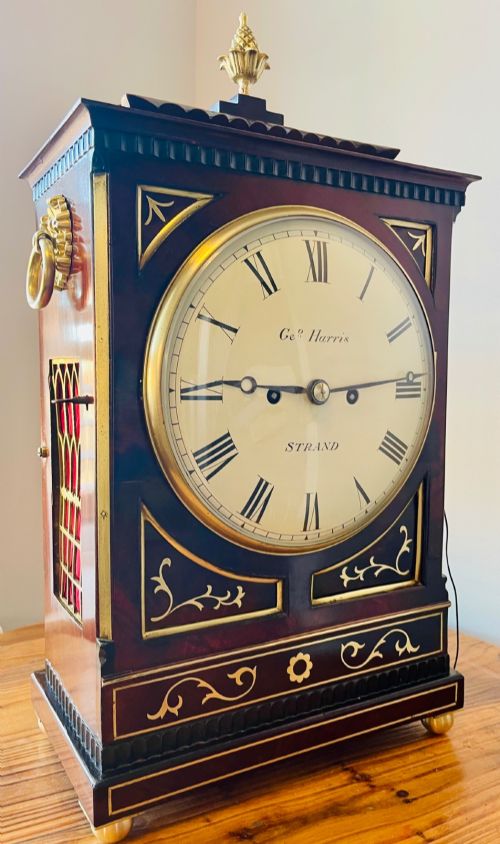
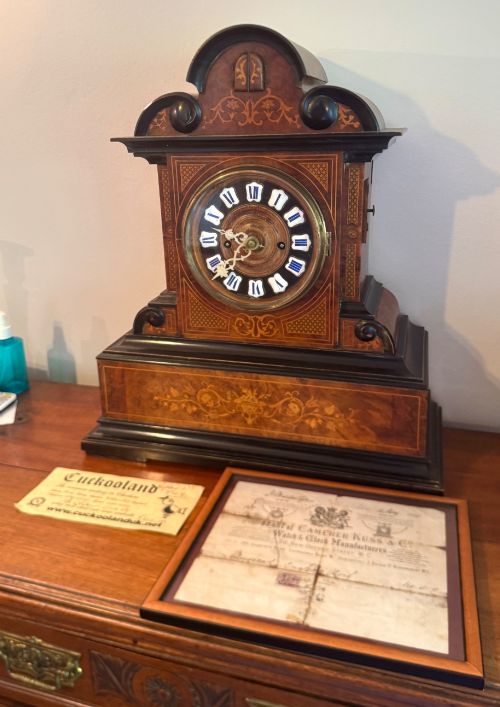
Decoration relied heavily on contrasting veneers, incorporating satinwood, lemon wood, and ebony stringing to trace geometric patterns or floral marquetry. Ormolu mounts and cast brass feet frequently augmented the design on French portico and Regency bracket models.
Movements required specialised mechanical engineering, featuring brass gear trains, escapements, and sometimes fusee cone pulleys to maintain even tension on the driving chain. Enamel or painted dials protected behind curved glass completed the housing of the internal mechanism.
Listings feature mahogany, rosewood, satinwood, and oak cases spanning the Georgian, Regency, Victorian, and Edwardian periods.
Judging execution and design
The standard of an inlaid table clock depends on the precision of the cabinet work and the crispness of the marquetry. Superior examples display seamless veneer matching where contrasting stringing flows continuously around curves and corners without splintering.
Movement complexity and signature craftsmanship separate standard items from superior pieces. Signed dials from notable makers indicate a higher grade of workshop production, whereas unsigned vernacular pieces reflect simpler domestic manufacturing.
Proportion and decorative restraint dictate visual success within each period style. The most accomplished clocks balance rich timber figures and gilt or ormolu mounts without crowding the architectural composition of the case.
Thomson of London·Webster London·Charles Pratt London·Turner of London·George Orpwood·Bush of London·L Vick of Stroud·Seller of Reading·Thomas Moss·S Simpson Southampton·Cording of London·Bryson Edinburgh
The Inlaid Table Clock Glossary
- Bracket clock
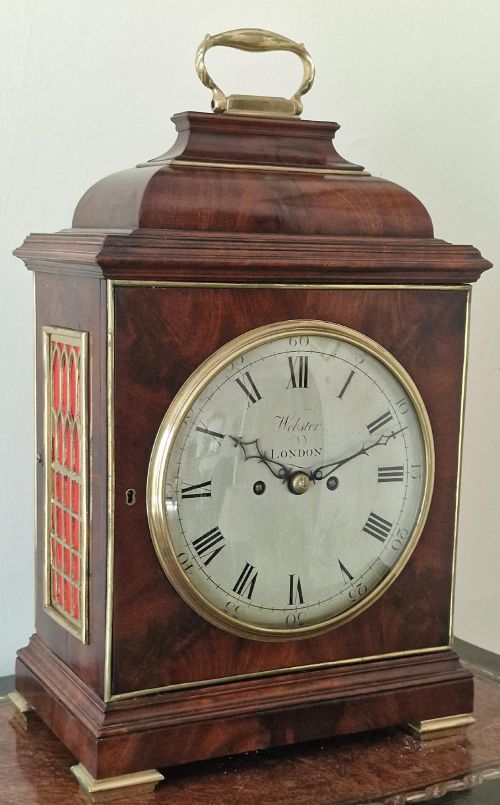
- A portable spring-driven timepiece historically designed to sit upon a matching wall bracket. These clocks often feature substantial mahogany or rosewood cases with brass carrying handles.
- Fusee
- A conical pulley mechanism connected to the mainspring by a chain or cord. This device equalises the diminishing torque of the spring as it unwinds to maintain steady timekeeping.
- Marquetry
- The art of applying decorative pieces of veneer to a structural structure to form pictorial or geometric designs. Craftsmen use contrasting woods like satinwood and lemon wood to create these surface patterns.
- Portico clock
- An architectural mantel clock styled to resemble a classical building with vertical columns supporting a pediment. This French form frequently employs mahogany or rosewood veneers.
- Stringing
- Thin lines of contrasting timber inlaid into the surface of a furniture piece or clock case. It provides delicate linear borders around panels and doors.
Inlaid Table Clock: Frequently Asked Questions
What is a bracket clock?
A bracket clock is a portable spring-driven timepiece originally built to rest on a wooden wall bracket or a table surface. They often feature robust mahogany or rosewood cases equipped with brass handles.
Many examples house complex movements that strike the hours and quarters, combining practical timekeeping with heavy decorative woodwork.
How do I identify a Regency clock?
Regency clocks typically display dark mahogany or rosewood cases with restrained brass inlay, classical architectural lines, and occasionally bracket feet. The dials are frequently white enamel framed by heavy cast brass bezels.
These pieces reflect early nineteenth-century British design preferences favouring clean proportions and dark, highly polished timber surfaces.
Where were table clocks placed?
Table clocks were designed for prominent display on mantelpieces, library desks, and dedicated wall shelves within domestic or institutional rooms. Their compact proportions allowed easy relocation around the home.
Unlike tall grandfather clocks, these portable units brought precise mechanical timekeeping directly into sitting rooms and studies.
What is wood stringing?
Stringing is a fine inlay technique where thin strips of contrasting light-coloured wood, such as satinwood or lemon wood, are set into darker timber surfaces. It outlines drawers, doors, and clock cases with crisp geometric borders.
This decorative method required steady hand-cutting and meticulous fitting by skilled cabinet makers to achieve sharp corners and smooth integration.