
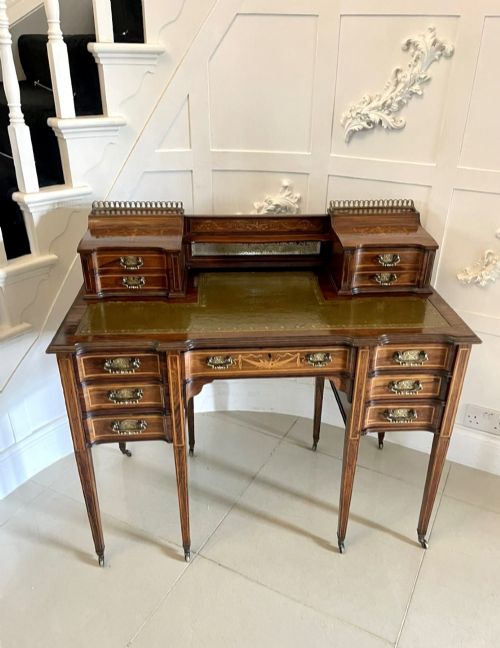
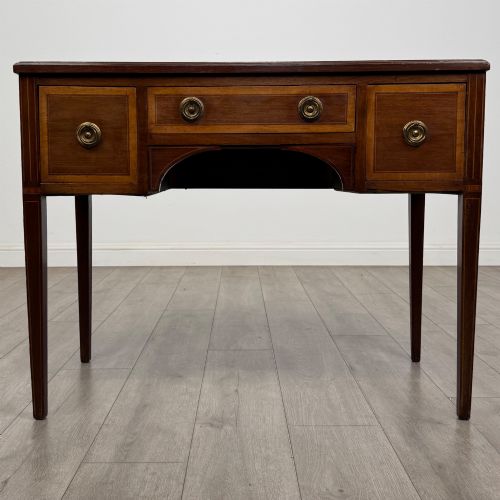
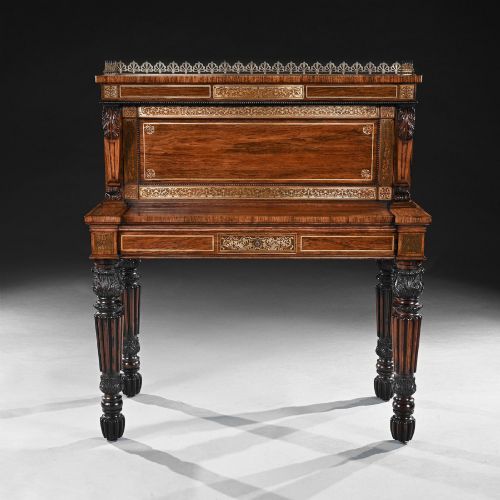
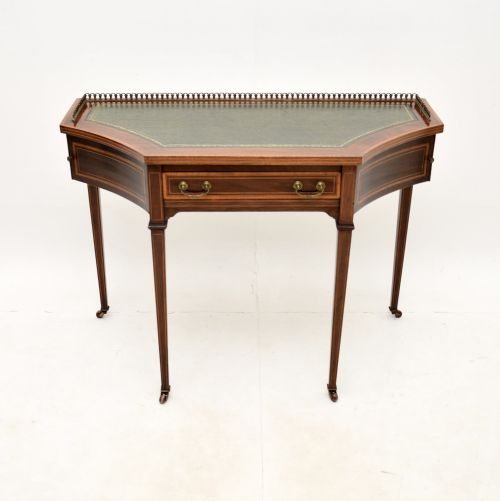
Inlaid Study Table
An inlaid study table brings classical elegance to domestic work, offering fitted surfaces of mahogany, rosewood or satinwood for daily writing.
Inlaid Study Table
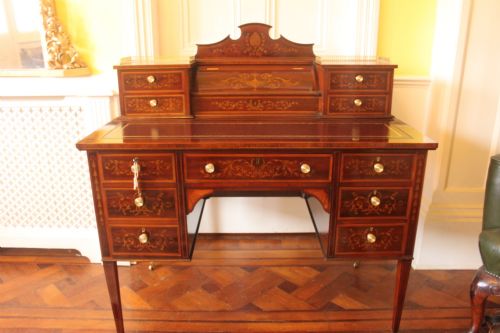
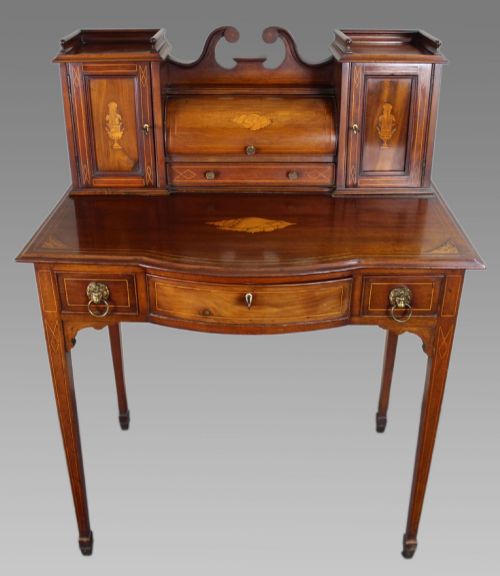
An inlaid study table is a dedicated piece of writing furniture designed for libraries, studies and private rooms, combining a functional writing surface with decorative woodwork. These tables appear across multiple periods, including the Georgian, Victorian and Edwardian eras, as well as the early twentieth century.
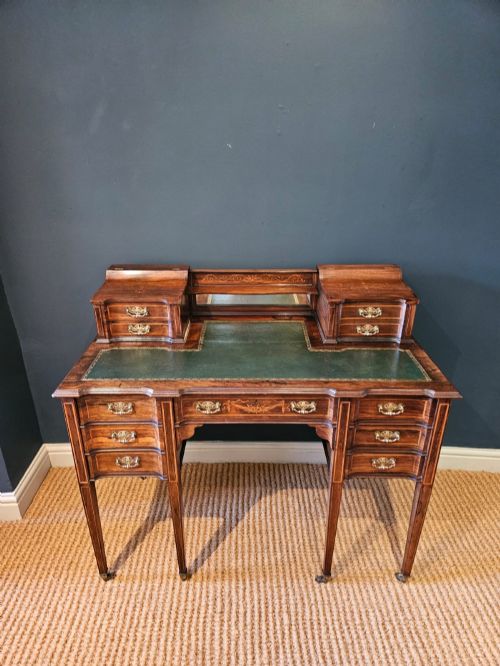
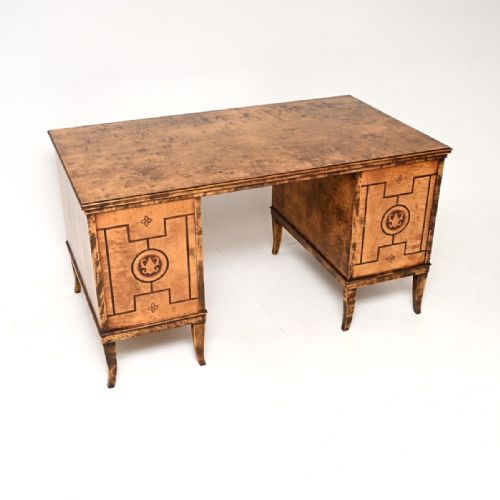
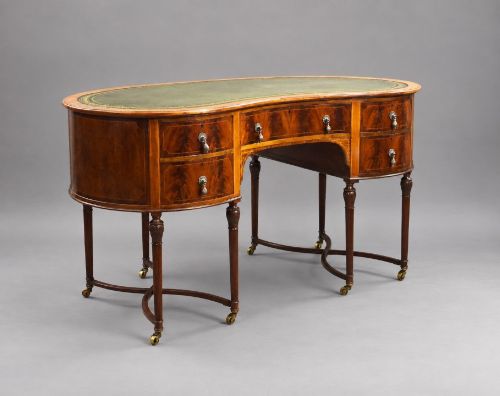
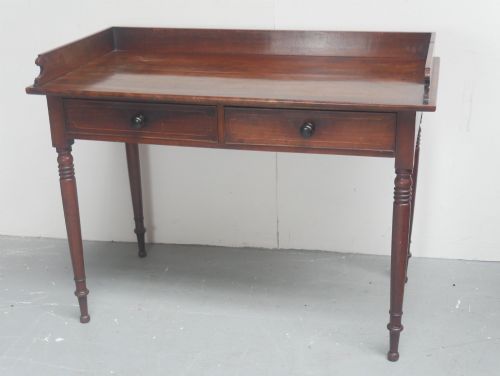
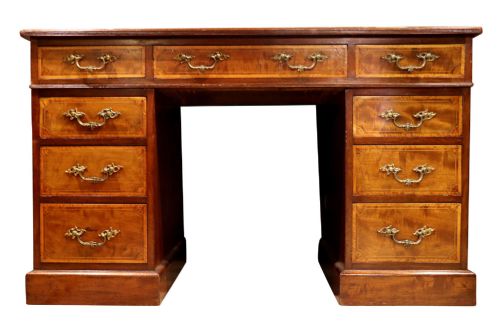
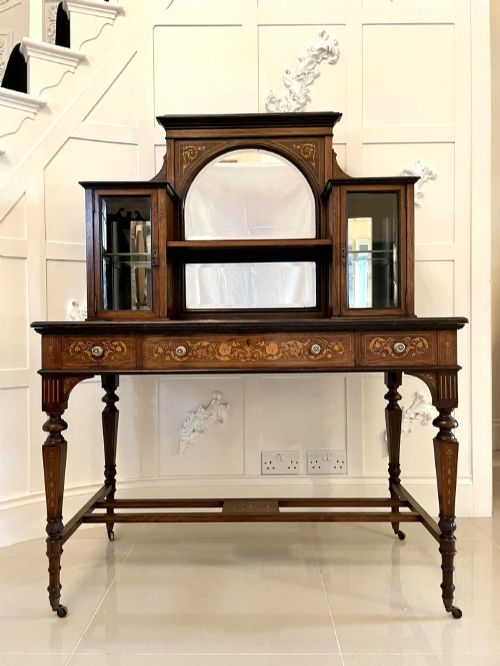
Buyers browsing this selection encounter various forms, from freestanding writing desks and library tables to pedestal desks, kidney-shaped tables and elaborate Carlton House desks. Mahogany, rosewood and satinwood provide the primary wooden structures, often enhanced by contrasting stringing, banding and marquetry details.
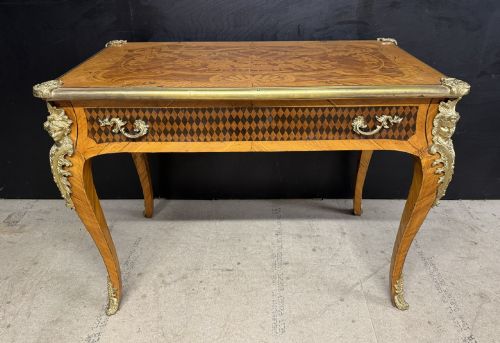
The Edwardian period and the late nineteenth century contribute a significant portion of the available pieces, frequently adopting Sheraton Revival styles. Alongside these English interpretations, French influences emerge through bureau plat designs and marquetry work.
How they were made
Cabinet makers constructed the foundational carcases using dense timbers such as mahogany, walnut and rosewood, frequently selecting flame mahogany or burr walnut for figured grain effects. Surfaces often incorporate inset panels of leather, providing a durable writing texture that contrasts with the polished wood surrounds.
Inlay work involved meticulous hand-cutting of contrasting woods like satinwood, boxwood and ebony, pressed into shallow channels or set as pictorial marquetry motifs. Metal components such as brass handles, gallery rails and ormolu mounts were cast and fitted to complement the woodwork.
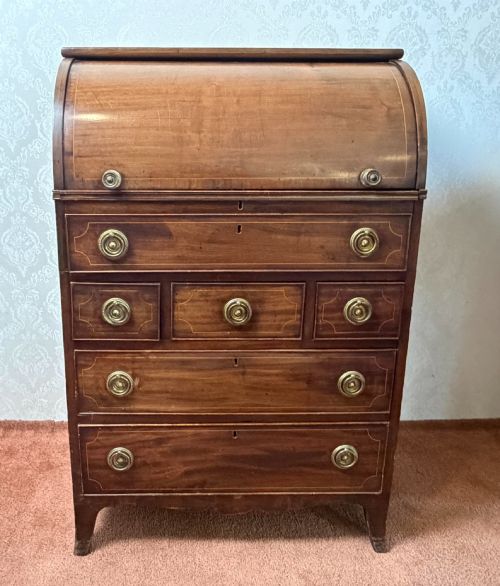
Structural complexity varied according to the desk type, ranging from simple kneehole forms to elaborate arrangements of small drawers, pigeonholes and tambour shutters found in Carlton House and cylinder top models.
Listings feature Edwardian, Victorian, Georgian and Regency periods, constructed from mahogany, satinwood, rosewood and walnut with brass and leather.
What varies in quality
The standard of an inlaid study table depends heavily on the precision of the cabinet work and the quality of the timber selection. Finer pieces display crisp, tight joints, well-figured veneers and intricate inlay without gaps or lifting along the grain.
Hardware and interior fittings reveal the maker's original intent, where solid brass handles, original leather writing surfaces and carefully dovetailed drawer linings elevate a piece above standard production. Pieces bearing workshop attributions or maker stamps demonstrate higher standards of design and execution.
Maple & Co.·Gillows Oxford Street Workshop·Edwards & Roberts·Jackson & Graham
The Inlaid Study Table Glossary
- Marquetry
- Decorative veneer work arranged in pictorial or geometric patterns using various coloured woods. This technique requires exceptional precision in cutting and fitting individual wooden elements.
- Carlton House desk
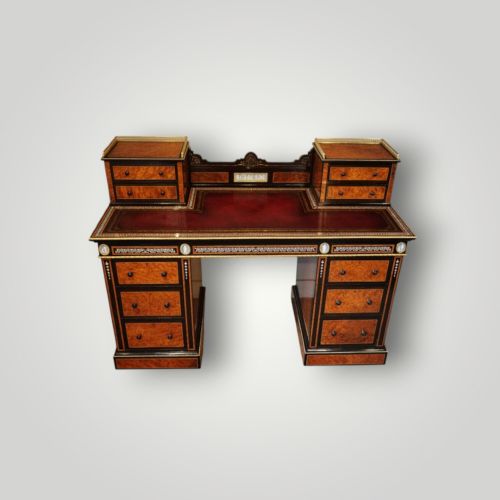
- A distinctive writing table featuring a curved superstructure of small drawers and compartments surrounding the rear and sides of the writing surface. Originating in the late eighteenth century, this form reappeared frequently during the Edwardian revival.
- Pedestal desk
- A heavy freestanding desk supported by two banks of drawers reaching down to the floor. These pieces often feature leather-lined tops and elaborate panelled construction.
- Satinwood
- A durable, lustrous timber native to India and Ceylon, prized for its golden-yellow colour and natural sheen. Cabinet makers utilised it extensively for banding, stringing and entire desk surfaces during the Georgian and Edwardian periods.
- Ormolu
- Gilded bronze used for decorative mounts, feet and gallery rails on fine furniture. The technique involves applying a mercury and gold amalgam to shaped bronze components.
Inlaid Study Table: Frequently Asked Questions
How do I identify a Victorian study table?
Victorian study tables typically employ darker timbers such as rosewood, walnut and solid mahogany, often featuring rich grain patterns and substantial proportions. Makers during this period frequently incorporated brass inlay, ivory details and extensive marquetry.
Construction methods reflect industrial advances combined with traditional hand joinery, producing sturdy freestanding desks, library tables and pedestal forms designed for formal nineteenth-century interiors.
What is Sheraton Revival furniture?
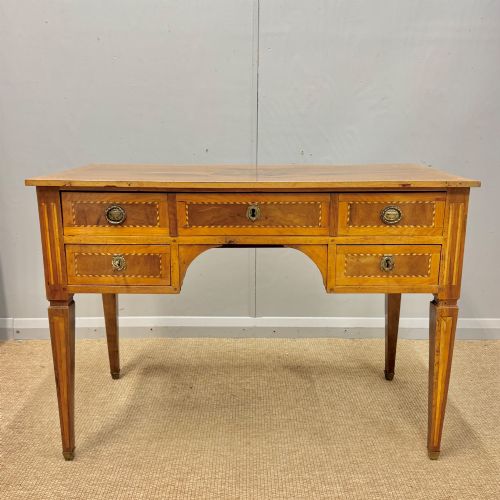
Sheraton Revival pieces emulate the elegant, neoclassical designs of late eighteenth-century designer Thomas Sheraton, using light-coloured woods, delicate proportions and precise stringing. Edwardian workshops embraced this style to create refined writing tables and kidney-shaped desks.
These pieces rely on satinwood inlay, tapered legs and subtle floral or geometric motifs rather than heavy carving to achieve their decorative effect.
How should I care for an inlaid leather top?
Maintaining an inlaid leather writing surface requires gentle cleaning with a slightly damp cloth, avoiding harsh chemical sprays or excessive moisture. Regular application of suitable leather balms preserves suppleness and prevents cracking across the writing area.
Surrounding wooden borders and inlay work benefit from occasional waxing with traditional beeswax to protect the polished finish and enhance the grain of the mahogany or satinwood.