
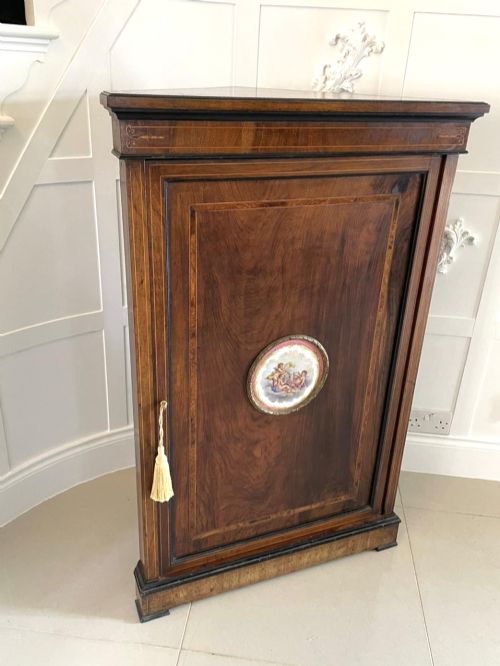
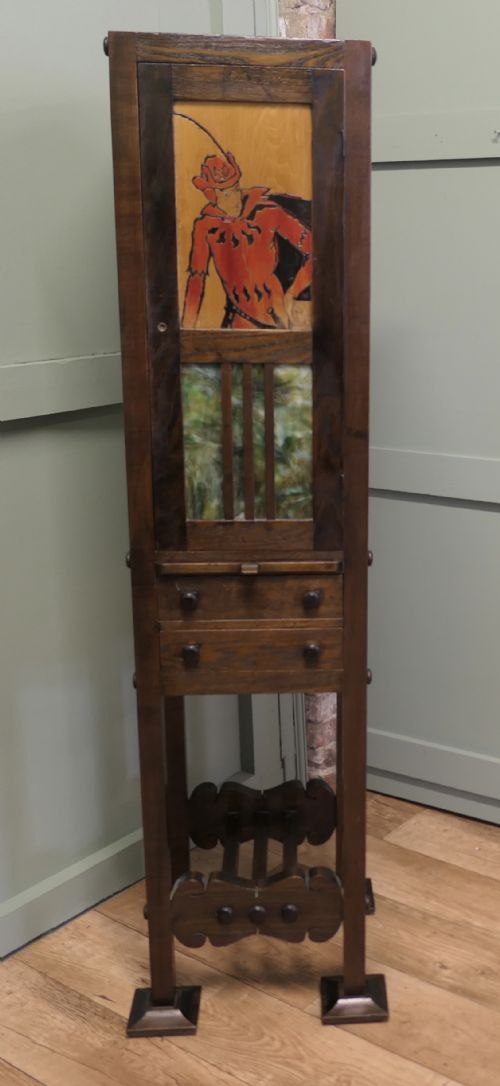
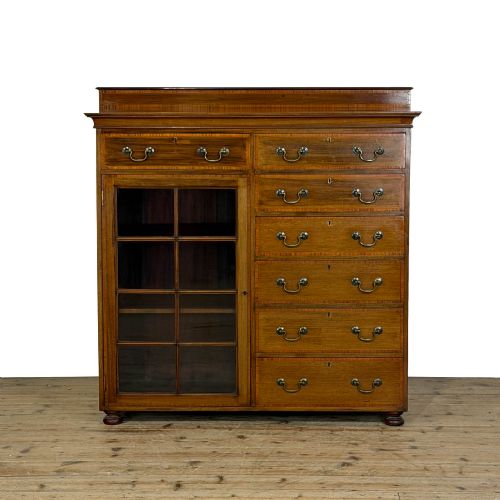
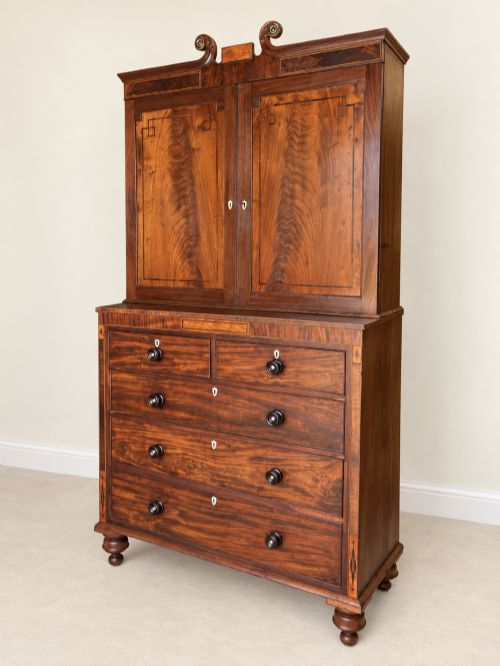
Inlaid Storage Cabinet
An inlaid storage cabinet brings disciplined timber work and precise contrasting veneers into domestic spaces.
Inlaid Storage Cabinet
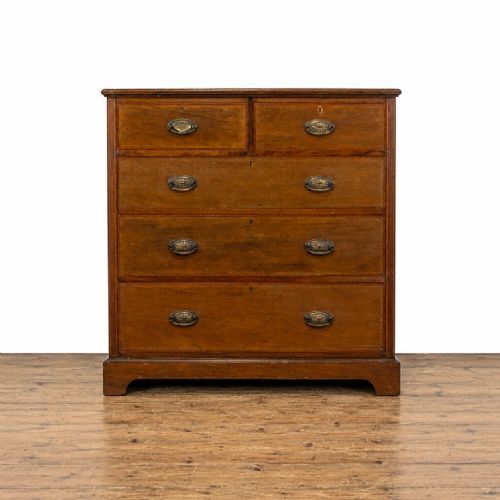
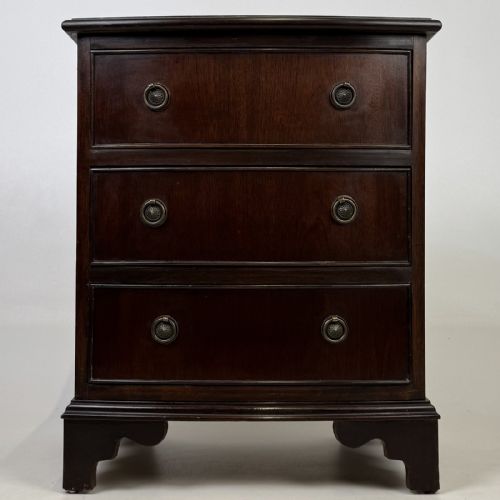
An inlaid storage cabinet spans a broad selection of domestic furniture built to contain clothing, books, and household goods. These pieces originate from periods including the Georgian era, the Victorian epoch, and the Edwardian years.
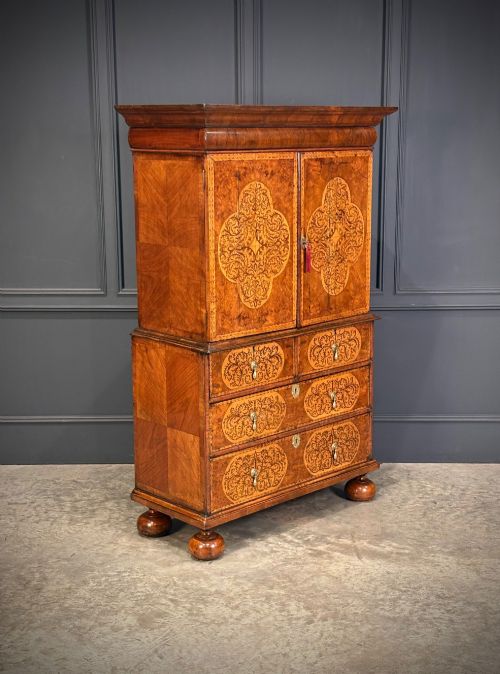
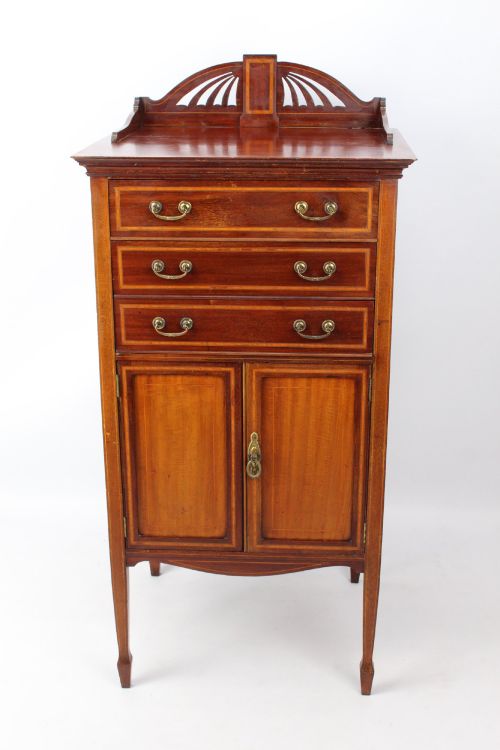
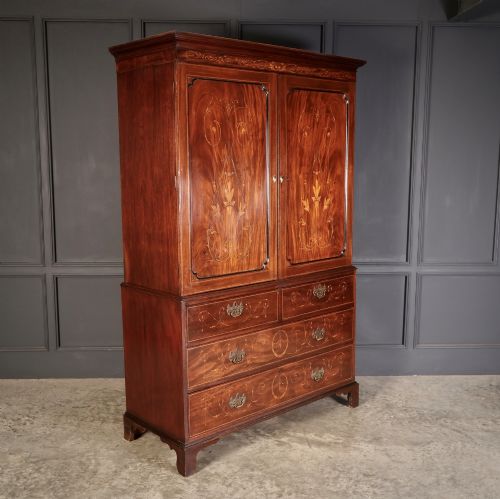
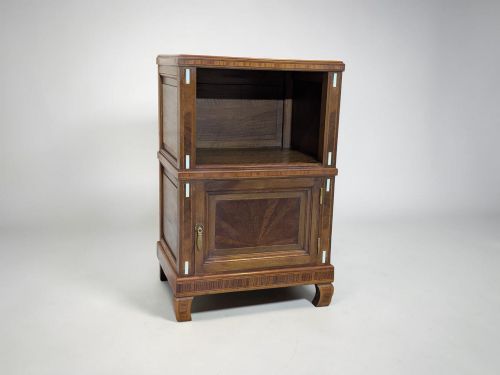
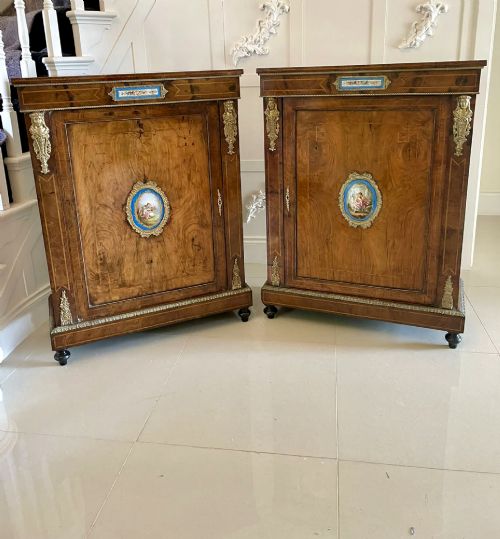
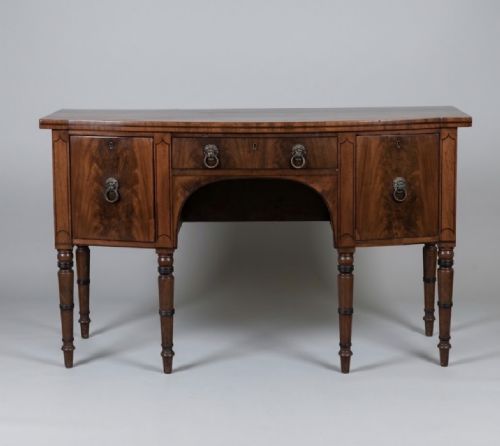
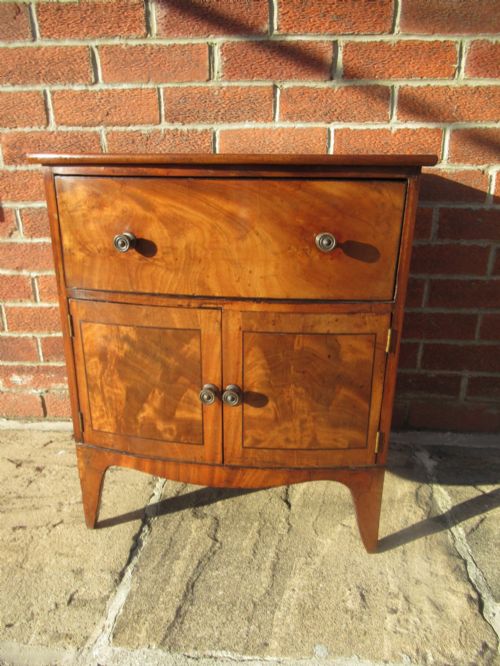
The most common formats met on this page include linen presses, wardrobes, side cabinets, and chests of drawers. Woods such as mahogany, satinwood, and walnut form the primary carcasses, decorated with contrasting stringing and marquetry panels.
Materials and construction
Cabinet makers utilised dense primary timbers such as mahogany, walnut, and oak to build sturdy carcasses, often applying finer veneers of satinwood and kingwood to external surfaces. Brass handles, ormolu mounts, and glass panels frequently complete the construction.
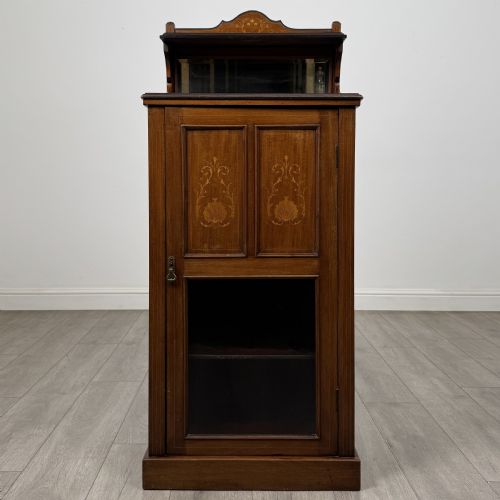
Decorative surface patterns rely on detailed marquetry and linear inlay work, contrasting light and dark woods to form floral or geometric motifs. These elements are set directly into the timber ground and secured with traditional adhesives.
Mahogany and satinwood dominate the listings, frequently paired with intricate marquetry and classical revival styles from the Georgian to the Edwardian eras.
Judging the work
Quality rests upon the precision of the timber matching and the crispness of the inlay work. Finer examples display seamless integration of contrasting veneers without visible gaps or lifted edges.
The architectural proportions and the selection of secondary timbers inside drawers and back panels also dictate the grade of the piece. Well-executed carving, balanced serpentine shaping, and original brass hardware elevate the status of a cabinet.
GM Elwood for JS Henry·maples & co·Maison Gagneau
The Inlaid Storage Cabinet Glossary
- Marquetry
- Decorative veneer work arranged in pictorial or geometric patterns using various coloured woods. This technique requires meticulous hand-cutting and fitting of individual timber segments.
- Serpentine
- A curved shape featuring a convex centre flanked by concave ends, common on high-status drawers and sideboards. This contour demands advanced woodworking skill to execute cleanly.
- Linen Press
- A tall storage piece designed with upper sliding trays for textiles and lower drawers for bulkier items. They frequently feature panelled doors with decorative wood grain.
- Ormolu
- Gilt bronze mounts applied to furniture edges and feet for decorative effect. The technique involves coating cast bronze with a mercury and gold amalgam.
- Satinwood
- A pale, lustrous timber native to India and Ceylon utilised extensively for contrasting stringing and decorative panels. It provides a bright golden sheen when polished.
Inlaid Storage Cabinet: Frequently Asked Questions
How do I date an inlaid storage cabinet?
Dating relies on observing the primary timber species, construction methods inside the drawers, and the prevailing decorative style. Georgian pieces often show hand-cut dovetails and solid mahogany frames, while Edwardian examples utilise lighter satinwood veneers and machine-assisted joinery.
Secondary woods and backboards also offer clues, as pine and oak usage shifted across the nineteenth century. Comparing the specific inlay motifs against known design periods helps narrow the manufacturing decade.
Where were these cabinets placed originally?
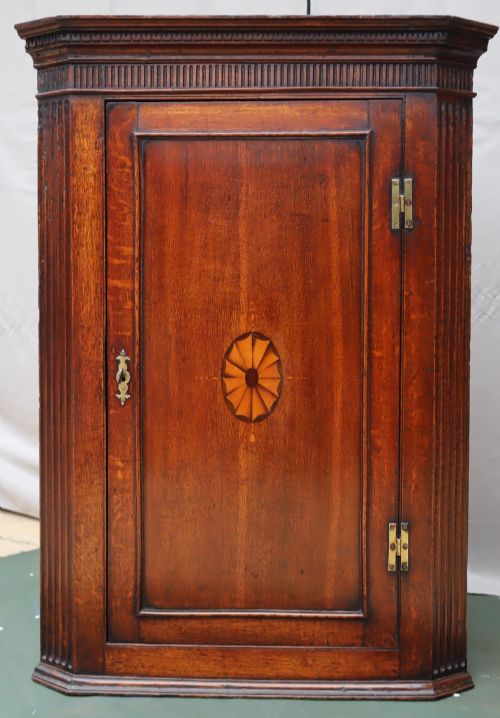
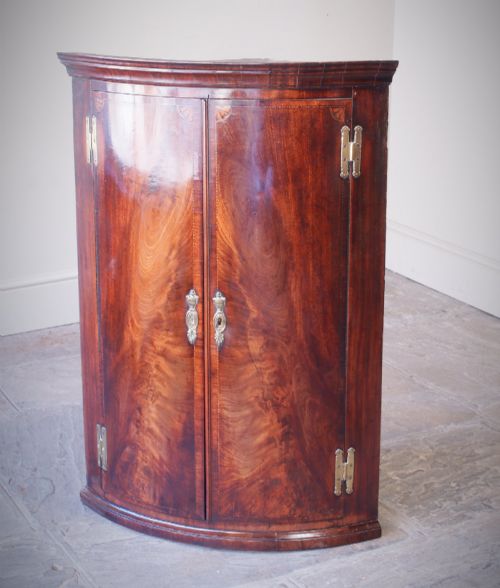
Linen presses and wardrobes stood in bedrooms and dressing rooms to hold garments and household textiles. Smaller side cabinets and corner cupboards occupied sitting rooms and halls to display ceramics or store dining accessories.
Display cabinets and bookcases found places in libraries and drawing rooms where owners showcased literature and decorative objects. Each room dictated the specific height, depth, and internal configuration of the timber piece.
How should I clean inlaid timber surfaces?
Dust surfaces regularly with a soft, dry cloth to prevent particulate accumulation on delicate veneer and marquetry. Avoid using modern aerosol polishes or water, which can penetrate old finishes and loosen the adhesive under the inlay.
Applying a traditional beeswax polish occasionally maintains the lustre of the timber without building up heavy residues. Professional conservation is recommended if any small sections of stringing begin to lift.
What is the difference between marquetry and inlay?
Inlay involves cutting recesses into a solid wood surface and inserting pieces of contrasting material to form a flat design. The surrounding timber remains the primary background for the composition.
Marquetry covers the entire surface in a veneer puzzle assembled on a backing sheet before application to the carcass. This method allows for complex pictorial scenes utilising numerous wood species.