


Antique Dutch Sideboard
These substantial antique dutch sideboard examples bring centuries of European craftsmanship into a room.
Antique Dutch Sideboard
An antique dutch sideboard encompasses robust storage furniture spanning from the 16th century through the 19th century. The pieces recorded on this page range from early oak dresser bases and cupboards to refined mahogany consoles, commodes, and credenzas.
Buyers meet varied forms including breakfront commodes, demi-lune tambour front cupboards, and marble top burr elm chests of drawers. Stylistic influences cross from Renaissance and Baroque through to Dutch Neoclassical and country traditions.
How they were made
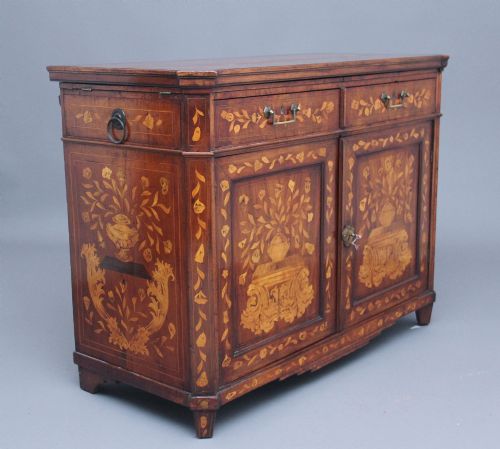
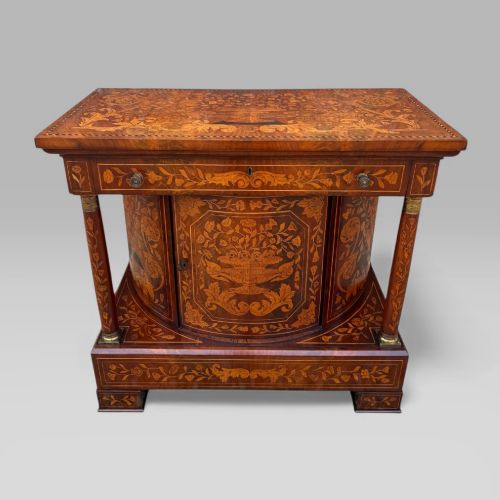
Cabinetmakers utilised heavy timbers such as oak, walnut, and mahogany, frequently incorporating fruitwood marquetry for intricate surface decoration. Iron and brass fittings provide structural reinforcement and functional detail on doors and drawers.
Surfaces receive varied finishes, from polished wood grains to original painted pine and inlaid veneers. Marble tops appear on select pieces, adding a contrasting working surface to wooden cabinetry.
Current listings demonstrate materials spanning from heavy oak and walnut to fruitwood marquetry, brass, iron, painted wood, and marble.
What varies in quality
The sophistication of the timber work and inlay dictates the distinction between standard utilitarian storage and high-status decorative furniture. Fruitwood marquetry execution and the precision of tambour fronts or breakfront geometry reveal the hand of a skilled maker.
Condition varies from items requiring complete restoration to well-preserved examples retaining original painted finishes and brass feet. The integration of materials like marble tops and burr elm veneers elevates the decorative presence of the piece.
The Antique Dutch Sideboard Glossary
- Marquetry
- Decorative veneer work using various woods to create pictorial or geometric patterns on furniture surfaces. This technique appears prominently in floral and pictorial motifs on 18th-century pieces.
- Demi-Lune
- A half-moon shape used in the design of tables and cabinets. This curved form allows furniture to sit flush against a wall while offering a softer profile than rectangular items.
- Tambour
- A flexible shutter made of narrow strips of wood glued to canvas, allowing cabinet doors to slide smoothly around curved corners. It is frequently seen on late 18th-century storage pieces.
- Credenza
- A sideboard or buffet cabinet historically used for displaying food or plate. The term covers low storage furniture fitted with doors and drawers.
- Commode
- A low chest of drawers or cabinet originating in France but widely produced across the Netherlands. These pieces often feature prominent hardware and decorative veneers.
Antique Dutch Sideboard: Frequently Asked Questions
What periods do these pieces come from?
The inventory spans from the 16th century up through the 19th century. Early examples typically feature heavy oak construction, while later items incorporate mahogany and detailed fruitwood marquetry.
Stylistic shifts trace a path from Renaissance and Baroque heaviness toward neoclassical restraint and country traditions. Each era brings distinct proportions and timber selections.
How were these cabinets used?
These pieces served primary storage functions in domestic interiors, holding household provisions, linens, or valuables. Cupboards, dressers, and commodes provided secure containment behind panelled or inlaid doors.
Some variants, such as dressing tables and console tables, functioned as specialised surface furniture for personal grooming or display. Their robust construction suited daily domestic service.
How do I identify Dutch marquetry?
Dutch marquetry involves elaborate wood inlay work, often depicting floral sprays, urns, or birds using contrasting fruitwoods and stained veneers. This decorative technique covers the visible surfaces of cabinets and commodes.
Mastery of the craft shows in the shading of individual petals and leaves through scorching techniques. It transforms functional storage into pictorial art.
Are these pieces suitable for modern homes?
These substantial pieces provide practical storage solutions while serving as focal points in dining rooms, hallways, or living spaces. Credenzas and commodes offer deep drawer and cabinet capacity.
Placing them requires careful measurement of floor space and ceiling height due to their solid proportions. Their historic materials blend effectively with contemporary interior schemes.