

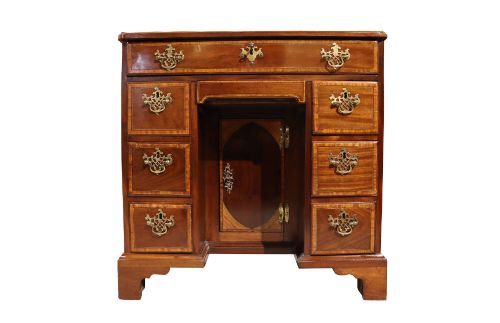
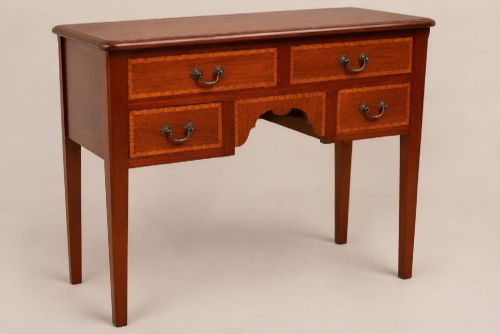
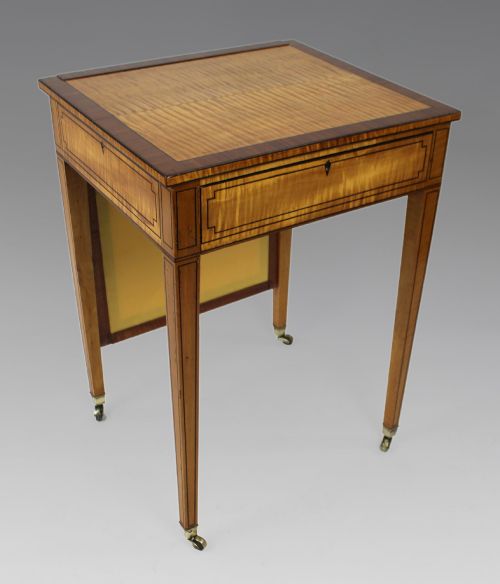
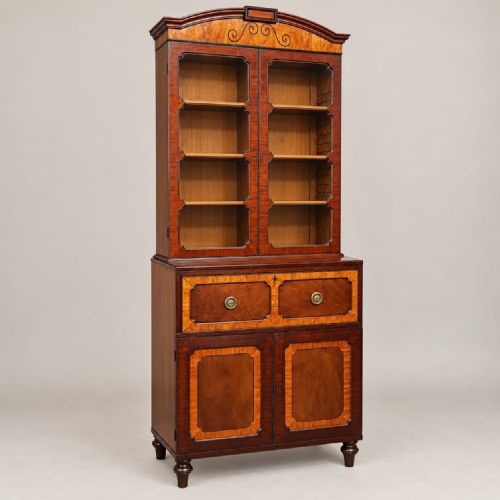
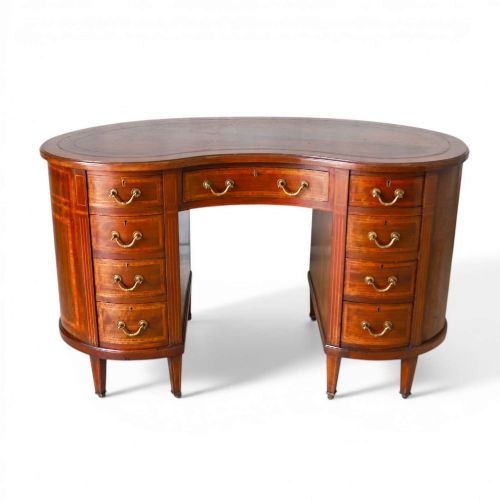


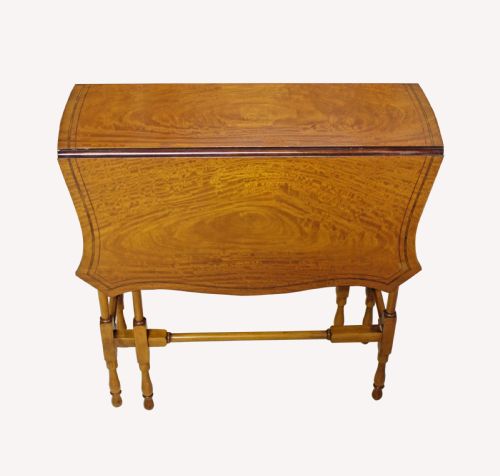


Inlaid Satinwood Crossbanded Desk
An inlaid satinwood crossbanded desk brings bright timber and crisp linear borders to a study, built to catch the morning light.
Inlaid Satinwood Crossbanded Desk
An inlaid satinwood crossbanded desk combines pale golden woods with darker contrasting borders, appearing across Georgian, Regency, and Edwardian eras. Buyers searching for an inlaid satinwood crossbanded desk will encounter writing tables, kneehole desks, and bureau forms executed in mahogany and satinwood.
The surviving examples range from George III Sheraton creations to Edwardian Sheraton Revival pieces. Makers balanced utility with decorativeveneers, resulting in refined writing furniture intended for principal rooms rather than back offices.
How these desks were made
Cabinetmakers laid fine veneers of satinwood and mahogany over stable secondary timbers like oak. Crossbanding strips were applied at right angles to the grain along the edges to create geometric framing.
Boxwood and rosewood stringing lines were inlaid into precision-cut channels to outline drawers and tops. Original leather writing surfaces and cast brass handles complete the traditional construction.
Inlaid Satinwood Crossbanded Desk Retail Price Guide 2026
Typical asking prices for inlaid satinwood crossbanded desk among the pieces listed under this phrase on Sellingantiques today, from the lower quarter to the upper quarter. They describe what is for sale here now, not the wider market.
Some Edwardian desks hide secret stationery wells beneath sliding tambour panels, designed for confidential letters written long before email.
What varies in quality
The crispness of the border inlay and the choice of figured timber determine the distinction between standard production and masterwork pieces. Superior examples display tightly matched satinwood grain across drawer fronts without patching or filler.
Proportion and structural restraint separate fine cabinet work from heavier later revivals. Well-executed crossbanding aligns cleanly at the mitres and remains flush with the surrounding veneer over centuries of environmental change.
The Inlaid Satinwood Crossbanded Desk Glossary
- Crossbanding
- A border of veneer laid with the grain running perpendicular to the main panel, framing the central surface.
- Satinwood
- A dense, lustrous tropical hardwood native to Ceylon and the West Indies, prized for its pale golden colour and reflective chatoyancy.
- Stringing
- Thin inlay lines of contrasting wood, such as boxwood or ebony, used to define geometric patterns on furniture surfaces.
- Sheraton Revival
- A late nineteenth and early twentieth century design movement that reinterpreted the light, neoclassical forms of the eighteenth century designer Thomas Sheraton.
Inlaid Satinwood Crossbanded Desk: Frequently Asked Questions
How do I care for satinwood veneer?
Keep these desks away from direct sunlight and excessive heat sources to prevent the pale satinwood from darkening unevenly or the veneer from lifting.
Apply a microcrystalline wax periodically and polish gently with a soft cloth to protect the timber surface without building up heavy residue.
Are these desks suitable for daily writing?
Most surviving pieces function well for modern correspondence and laptop use, provided the writing height matches comfortable seating requirements.
Original leather inserts require gentle handling, so many owners use a matching blotter to protect historic surfaces during active use.
How do I distinguish Georgian from Edwardian pieces?
Georgian pieces display eighteenth-century timber handling, hand-cut dovetails, and period lock mechanisms that differ from later manufacturing techniques.
Edwardian Sheraton Revival desks often utilise standardised internal construction methods and machine-cut veneers while closely copying earlier neoclassical proportions.
What is crossbanding?
Crossbanding involves applying narrow strips of veneer where the wood grain runs across the width of the band rather than along the length of the top.
This technique creates a decorative border that frames the primary wood panel and helps counter the natural movement of the underlying timber.