




Inlaid Rosewood Cupboard
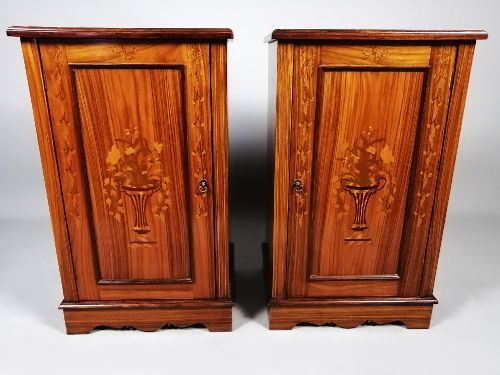
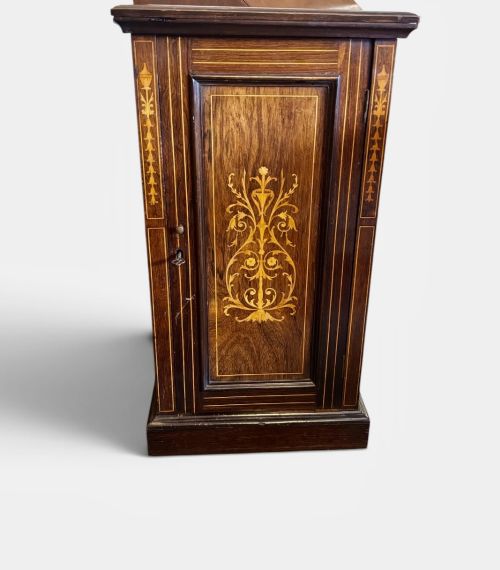
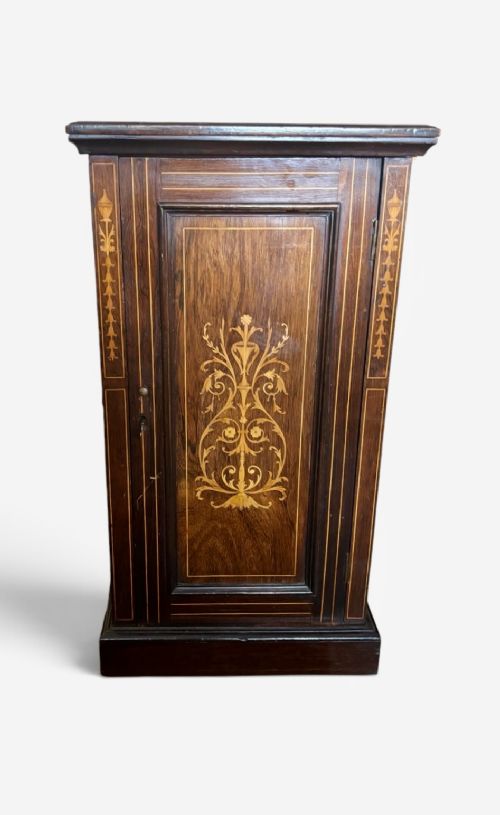
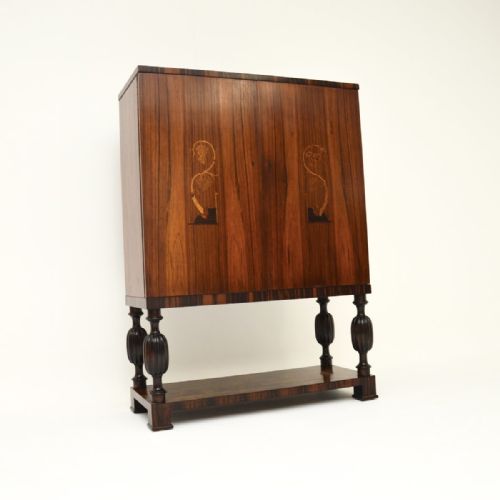
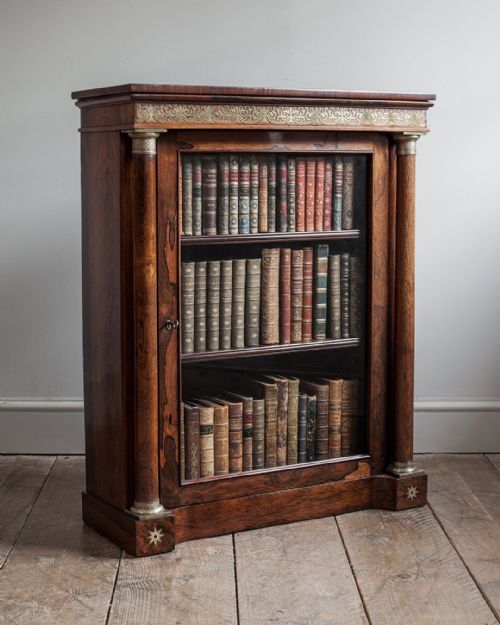
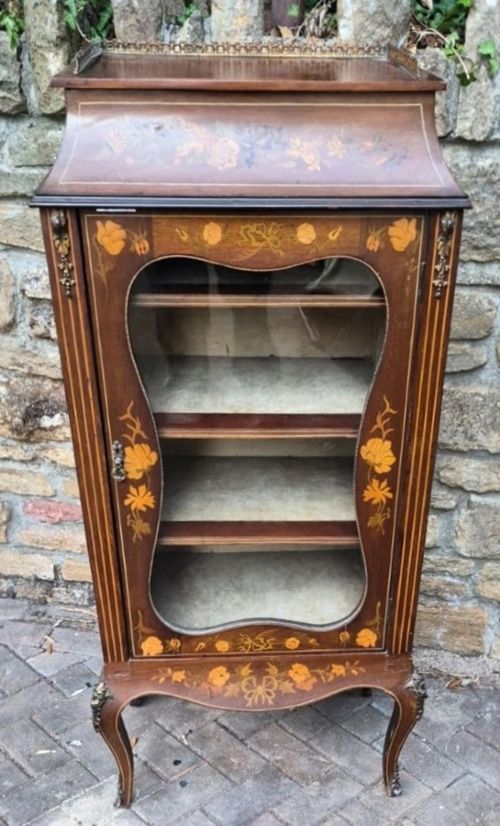
An inlaid rosewood cupboard brings dense, dark timber and precise botanical or geometric contrast into a room, spanning periods from Regency to Edwardian.

Inlaid Rosewood Cupboard
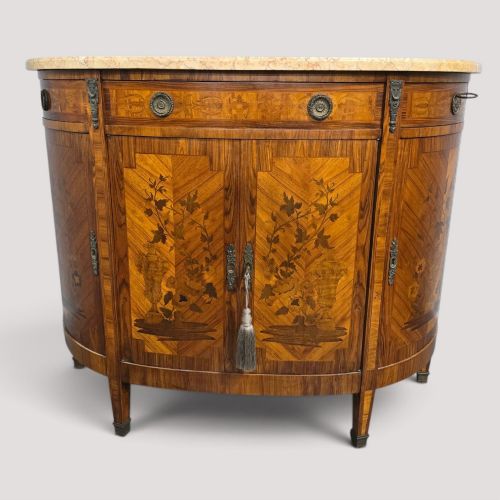
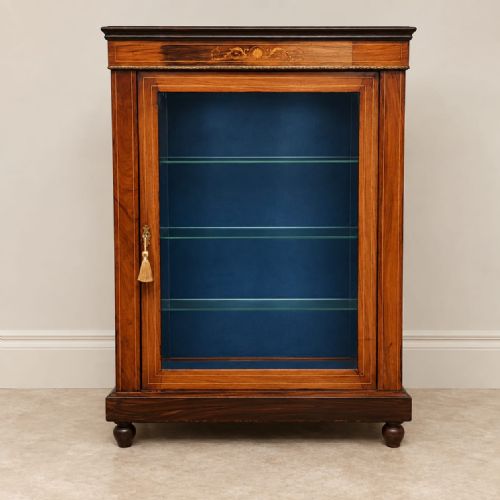
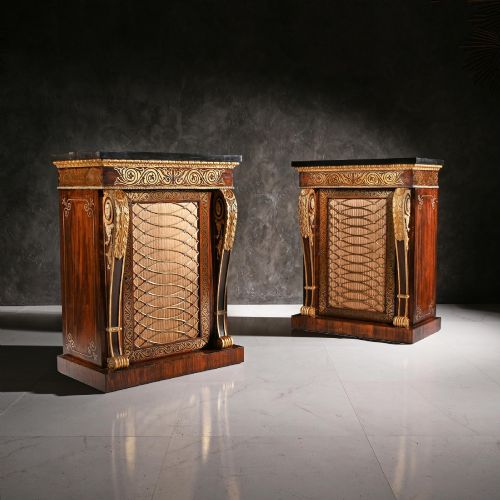
An inlaid rosewood cupboard encompasses a diverse group of case furniture, including compact bedside stands, narrow pier cabinets, and grand breakfront side units. Buyers searching for an inlaid rosewood cupboard frequently encounter Victorian and Regency pieces alongside Edwardian interpretations.
The domestic scale varies from corner units designed to utilise overlooked angles to low chiffoniers and tall display cabinets with glass doors. Surviving examples demonstrate how these forms adapted to changing interior requirements across the nineteenth and early twentieth centuries.
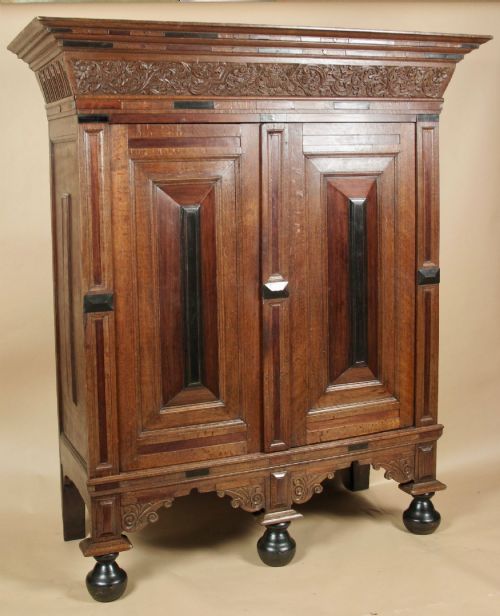
Origins span British workshops alongside French and Dutch influences, reflecting a wide geographical spread in the archive. Makers utilised the dense grain of the timber to anchor complex decorative schemes.
Materials and technique
Makers built these pieces using a foundation of solid timber or carcases faced with rosewood veneers, accented with contrasting timbers such as satinwood and kingwood for marquetry. Brass inlay provided sharp linear definition, often set flush into the dark ground of the wood.
Marquetry panels deployed varied natural tones to create floral or geometric motifs, integrated directly into the door fronts and friezes. Secondary materials like glass, marble tops, and mirror glass appeared in display and tabletop variants.
Materials recur across multiple decades, pairing rosewood with satinwood, brass, and occasional white marble tops.
Distinctions in craftsmanship
Quality rests upon the precision of the marquetry work and the crispness of any brass stringing embedded in the rosewood surface. Finer examples display seamless integration of contrasting timbers where individual leaf or geometric elements fit tightly without excessive filler.
Structural integrity of the carcase and the stability of the veneered surfaces determine the standing of a piece. Superior execution shows in the matching of wood grain across symmetrical doors and the harmonious ageing of contrasting light and dark veneers.
Louis Constantin Le Gaigneur·Edwards and Roberts
The Inlaid Rosewood Cupboard Glossary
- Marquetry
- Decorative veneer work forming pictures or patterns using various woods. Craftsmen cut thin sheets of timber to fit together within a prepared ground.
- Pier cabinet
- A low cabinet designed to fit wall spaces between windows. These pieces often feature glass doors and elaborate inlay.
- Chiffonier
- A low sideboard or cupboard developed during the Regency period. They frequently incorporate enclosed lower storage beneath open shelves or a raised back.
- Satinwood
- A pale, lustrous timber utilised for contrasting inlay work. Its yellow tone provides high visibility against dark rosewood.
- Breakfront
- A piece of furniture whose central section projects forward from the flanking sides. This configuration creates architectural depth on larger cabinets.
Inlaid Rosewood Cupboard: Frequently Asked Questions
How do I care for rosewood?
Keep wooden surfaces away from direct sunlight and excessive heat sources to prevent the rosewood and its delicate veneers from drying out.
Dust regularly with a soft, dry cloth and avoid applying modern chemical polishes that can degrade historical finishes.
Were these used for music?
Certain interior configurations and proportions indicate cabinets specifically built to store sheet music and scores in domestic parlours.
These pieces typically feature internal shelving calibrated for paper formats behind secure locking doors.
How do I date an inlaid rosewood cupboard?
Examine the construction methods, carcass timbers, and the style of the brass or marquetry inlay to establish a baseline period.
Regency pieces often display linear brass work, while Victorian and Edwardian examples lean heavily toward floral marquetry and satinwood contrast.
Where were corner cupboards placed?
Corner cupboards utilised dead space in dining rooms and parlours, holding glassware, ceramics, or small domestic items.
Their triangular footprints allowed them to anchor room perimeters without blocking circulation paths.